Halifax Nova Scotia: 10 Things to Do in a Weekend
I stepped off the ferry in Halifax Nova Scotia and the first thing I noticed was how close the whole city sat to the water. Halifax Nova Scotia is the Atlantic Canada city break I would send any friend who wants a hilltop fort, a working harbour and a lighthouse day trip in one weekend. It just landed on National Geographic’s Best of the World 2027 list as the only Canadian city picked, and the reason is the heritage revival happening right now. Here is my 2-day plan: 10 things to do, real prices, ferry times and the exact order I would do them in. I walked the boardwalk at sunrise, stood where the Noon Gun fires at noon and ate a donair at Pizza Corner, all in one weekend. Let’s get into it.

Here is the short version. Day one is the city: the Citadel, the Maritime Museum, the Public Gardens and a brewery tour. The second day is the harbour and the coast: Pier 21, the Seaport Market, the ferry to Dartmouth and Peggy’s Cove. Stay downtown near the waterfront if you can. My Toronto in 48 hours guide shows where Halifax sits among the Canadian city breaks, and my Niagara-on-the-Lake guide has the same small-town logic I use here.
- Why Visit Halifax Nova Scotia
- Best Time to Visit Halifax Nova Scotia
- How to Get to Halifax Nova Scotia
- 1. Halifax Citadel: Halifax Nova Scotia’s Hilltop Fort
- 2. Halifax Waterfront Boardwalk: Halifax Nova Scotia on Foot
- 3. Maritime Museum of the Atlantic: Halifax Nova Scotia’s Titanic Story
- 4. Canadian Museum of Immigration at Pier 21: Halifax Nova Scotia’s Front Door
- 5. Halifax Public Gardens: Halifax Nova Scotia’s Victorian Green
- 6. Peggy’s Cove: Halifax Nova Scotia’s Famous Day Trip
- 7. Alexander Keith’s Brewery: Halifax Nova Scotia’s Oldest Beer
- 8. Art Gallery of Nova Scotia: Halifax Nova Scotia’s Maud Lewis Home
- 9. Point Pleasant Park: Halifax Nova Scotia’s Wild South End
- 10. Halifax Donairs and Lobster Rolls: Halifax Nova Scotia on a Plate
- Halifax Nova Scotia in 2 Days: My Weekend Plan
- Questions About Halifax Nova Scotia
- Halifax Nova Scotia, Done Right
- You Might Also Like
Why Visit Halifax Nova Scotia
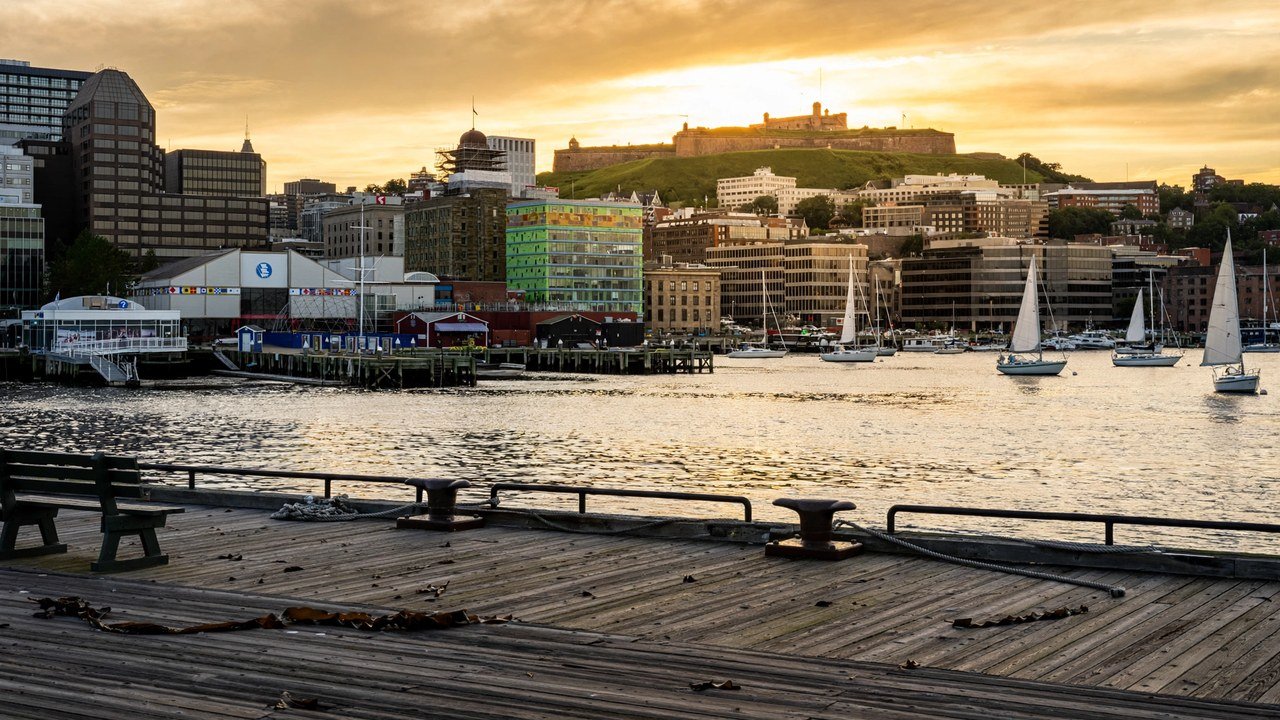
Halifax Nova Scotia is the Canadian city that rewards the visitor who walks everywhere. The downtown core is small, about 12 walkable blocks from Pier 21 in the south to the Hydrostone in the north, with the harbour on one side and Citadel Hill on the other. Its Mi’kmaw name is Kjipuktuk, meaning great harbour, and the name still fits.
One morning I stood on the Citadel ramparts looking down at the harbour, and the same evening I ate a lobster roll on the boardwalk while a busker played fiddle tunes. In October 2026 National Geographic named Halifax one of the best places in the world to travel in 2027, the only Canadian city on the list, for the heritage revival now unfolding downtown. My Vancouver guide has the same harbour-city logic I use here.
Local tip: Walk the boardwalk before 9 am, because the cruise crowds arrive after 10 am and the harbour at sunrise belongs to the fishermen and the gulls.
Best Time to Visit Halifax Nova Scotia
Mid-June through mid-October is the best season in Halifax Nova Scotia. Everything runs full hours, the patios are open and the harbour tours run daily. July and August are the warmest months, with highs around 22 to 24 C, and they are also the busiest, with cruise ships calling several days a week. September and early October are the weeks I would pick: the sea is at its warmest, the fog is gone, the crowds thin out and the fall foliage turns the coast roads gold.
Winter is the quiet season: the museums stay open and the prices drop, but the coast trips lose their appeal. Spring arrives late and foggy. My Charleston in winter guide has the same shoulder-season logic I use here.
Local tip: Go in September for the cruise-season light, because the weather holds, the foliage peaks and the boardwalk is half as crowded as August.
How to Get to Halifax Nova Scotia
Halifax Nova Scotia is an easy flight from Toronto, Montreal and Boston, and the airport sits 35 km north of downtown. The Regional Express 320 bus costs $4.75 to Scotia Square and takes about 45 minutes, while a flat-rate taxi costs about $70 and takes about 30 minutes. Once you are downtown, you do not need a car. The core is walkable end to end in about 20 minutes, and the harbour ferry to Dartmouth costs about $3 a ride and runs every 10 to 15 minutes.
The ferry is the best deal in the city. It crosses the harbour in about 12 minutes, it runs from around 6:30 am on weekdays, and the fare includes a 2-hour transfer on the HFXgo app. Buy tickets in the app before you board. My long flight hacks will help you arrive fresh.
Local tip: Download the HFXgo app before you land, because the ferry fare is about $3 a ride and the app ticket saves you the exact-change scramble at the terminal.
1. Halifax Citadel: Halifax Nova Scotia’s Hilltop Fort
The Halifax Citadel is the first place to go in Halifax Nova Scotia. Its star-shaped fort crowns Citadel Hill above downtown, and it was finished in 1856 after 28 years of building. From the ramparts you can see the harbour, the bridges and the whole downtown in one turn. Inside, the Army Museum and the period rooms tell the story of a garrison town that guarded the Atlantic for two centuries.
Adults pay $22, seniors 65 and over pay $18.75, and youth 17 and under go free. The full site is open daily from 9am to 5pm from May 7 to November 5, and the Noon Gun fires every day at noon, so time your visit for 11:30 am. From November 6 to May 6 the interior rooms and upper ramparts close, and only the grounds and Parade Square stay open. Give it 1.5 to 2.5 hours. My New Orleans guide has the same fort-first logic.
Local tip: Arrive before noon for the gun, because the firing is the moment the fort comes alive and the rampart views are clearest before the tour buses arrive.

2. Halifax Waterfront Boardwalk: Halifax Nova Scotia on Foot
The Halifax Waterfront Boardwalk is the walk that ties Halifax Nova Scotia together. It runs nearly 4 km along the harbour from Pier 21 in the south to Casino Nova Scotia in the north, and it costs nothing to walk. The boardwalk passes the Maritime Museum, the Seaport Market, the Historic Properties stone warehouses and the ferry terminal, with patios and street performers along the way.
Give it 1 to 3 hours at a slow pace, and walk it twice: once in the morning before the cruise crowds arrive, and once at sunset. Stop at the Hammock District for a sit-down, watch the boats at Bishop’s Landing, and keep going to the Seaport end where the market and Pier 21 sit. My San Diego guide has the same waterfront-walk logic.
Local tip: Walk the boardwalk after 5 pm, because the midday cruise crowds thin out and the sunset light on the harbour is the best free show in the city.
3. Maritime Museum of the Atlantic: Halifax Nova Scotia’s Titanic Story
The Maritime Museum of the Atlantic is the museum that explains why Halifax Nova Scotia matters to the sea. It sits at 1675 Lower Water Street right on the boardwalk, and it holds the world’s largest collection of Titanic wooden artifacts. Halifax was the closest major port when the Titanic sank in April 1912, and the city’s cable ships brought back the victims and the wreckage. The Titanic gallery holds deck chairs and personal items from the ship, and the 1917 Halifax Explosion exhibit tells the story of the city’s worst day through recovered objects.
Adults pay $11 in summer from May through October, and $5.15 in winter from November through April. Seniors pay $10 in summer, youth 6 to 17 pay $6.50, and under-5s go free. The museum is open daily from 9:30am to 4:30pm in summer, with Tuesdays open to 8pm, and it is closed on Mondays in winter. Admission is free every Tuesday from 4pm to 8pm. Allow about 2 hours. My Boston guide has the same harbour-museum logic.
Local tip: Go on a Tuesday evening, because admission is free from 4pm to 8pm and the galleries are quiet after the day-trippers leave.
4. Canadian Museum of Immigration at Pier 21: Halifax Nova Scotia’s Front Door
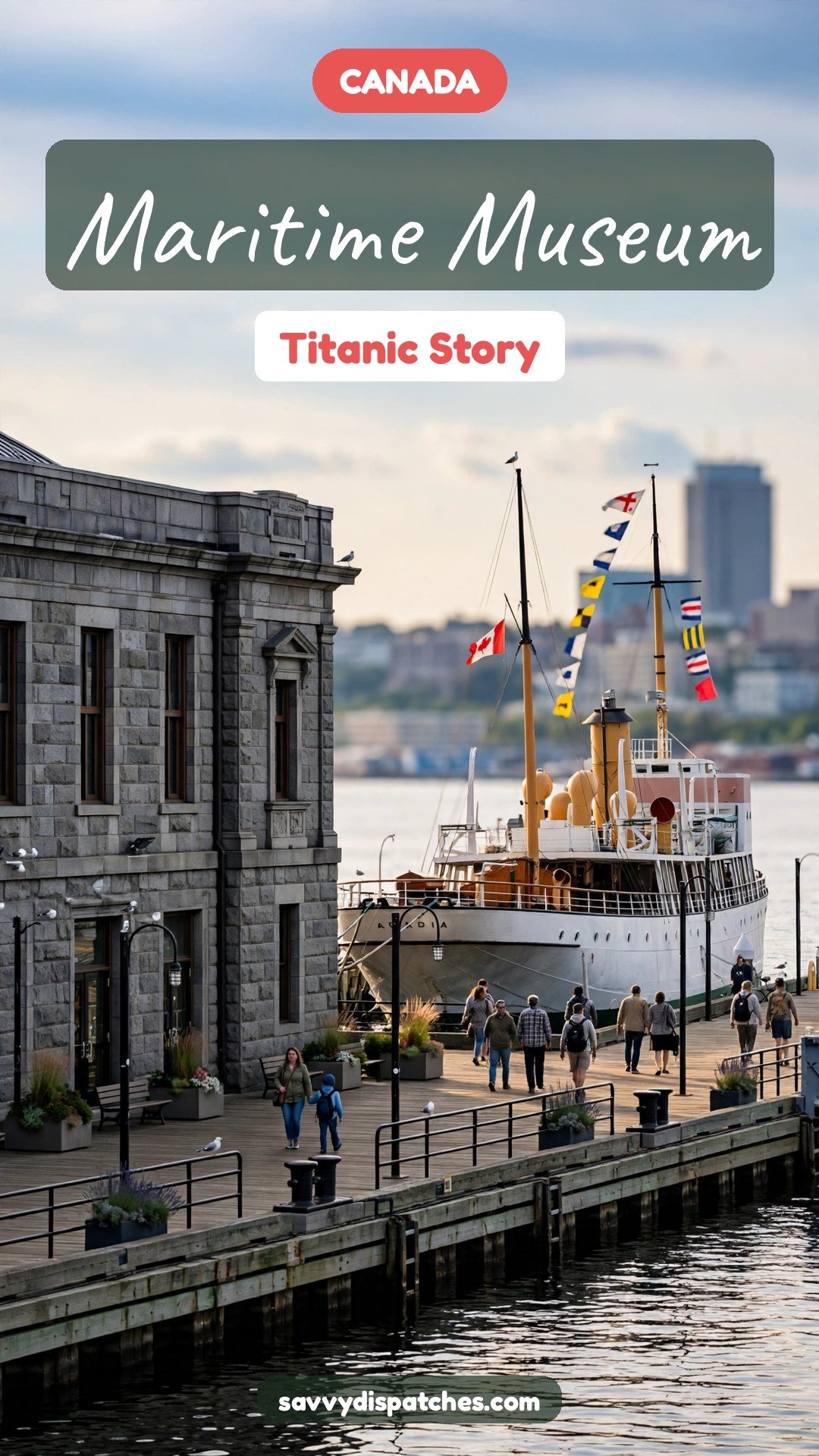
Pier 21 is where Halifax Nova Scotia becomes a story about people. The Canadian Museum of Immigration sits at 1055 Marginal Road in the former ocean-liner terminal where nearly one million immigrants first set foot in Canada between 1928 and 1971. Inside, the voices, photographs and suitcases of the people who walked through that hall carry the whole visit. It is the reason National Geographic named Halifax for 2027.
Adults pay $19, seniors 60 and over pay $15, and youth 6 to 16 and students with ID pay $13. Children 5 and under go free, and the family rate for 2 adults and 3 children is $50. From May to October 31 the museum is open seven days a week from 9:30am to 5:30pm, and from November to April 30 it is open Wednesday to Sunday from 10am to 5pm. Allow 1 to 2 hours. My Perugia guide has the same history-first logic.
Local tip: Do not plan Pier 21 for a Monday in winter, because the museum is closed on Mondays and Tuesdays from November to April and the morning will be wasted.
5. Halifax Public Gardens: Halifax Nova Scotia’s Victorian Green
The Halifax Public Gardens are the free sight that surprises first-timers in Halifax Nova Scotia. This 16-acre Victorian-era formal garden sits at 5665 Spring Garden Road, a short walk uphill from the harbour, and it has been open since 1867. Inside the wrought-iron gates you will find carpet bedding, ornamental trees, statues, fountains and a central pond with a bandstand.
Entry is free, and the gates open at 8am and close 30 minutes before dusk year round. Free one-hour guided tours run from May through October. Give it an hour at a slow pace. The gardens sit at the top of Spring Garden Road, so they pair with the Central Library rooftop and the shops on the same street. My Florence in 2 days guide has the same garden-first logic.
Local tip: Go at 8 am, because the gates open early, the morning light is soft on the pond, and the garden is empty before the tour groups arrive.

6. Peggy’s Cove: Halifax Nova Scotia’s Famous Day Trip
Peggy’s Cove is the day trip that every Halifax Nova Scotia visitor asks about. The fishing village sits 45 km southwest of the city on Route 333, about 45 minutes to an hour by car, and the Peggy’s Point Lighthouse stands on bare granite at the end of the road. Its lighthouse dates from 1915, and the granite rocks and the working harbour have changed little in a century.
There is no public transit to the cove, so you drive or you book a tour. The Ambassatours Peggy’s Cove Tour leaves from Lower Water Street in Halifax, runs 4 hours with about 2 hours at the cove, and cost from $91.09 per adult before tax in 2026. It is busiest from 11am to 3pm, so go early or late. Stay off the black rocks by the water: they are wet, slick and struck by sudden waves. My Santa Barbara guide has the same coastal-day-trip logic I use here.
Local tip: Go before 9 am, because the tour buses arrive after 10 am and the lighthouse at 8:30 am is empty with the best light of the day.
7. Alexander Keith’s Brewery: Halifax Nova Scotia’s Oldest Beer
Alexander Keith’s Brewery is the most fun hour in Halifax Nova Scotia. The brewery was founded in 1820 on Lower Water Street, and it is one of the oldest breweries in North America. Inside, the tour is theatrical: a costumed actor playing Keith himself leads groups through the restored rooms of Keith’s Hall with stories, live music and beer tastings, and it ends in the Stag’s Head pub. The building sits at 1496 Lower Water Street, right on the waterfront.
The tour runs about 1 hour, plus 20 to 30 minutes in the pub. Adults pay $36, students and seniors 60 and over pay $32, and youth 11 to 18 pay $16, with children 10 and under free. Tours run multiple times daily in summer from June 1 to October 31. Book at least a week ahead in July and August, because the popular slots sell out. My best places to travel in November guide has more brewery-first weekends.
Local tip: Book the 4 pm tour, because it is the most popular slot of the day and it ends in the pub right as the waterfront patios fill up.

8. Art Gallery of Nova Scotia: Halifax Nova Scotia’s Maud Lewis Home
The Art Gallery of Nova Scotia is the quiet museum that wins over first-timers in Halifax Nova Scotia. It sits at 1723 Hollis Street in two heritage buildings downtown, and it holds the world’s largest public collection of Maud Lewis paintings. Her tiny painted house stands inside the gallery, decorated inside and out with her bright folk art.
Adults pay $15, seniors 65 and over and youth 7 to 17 pay $13, and children under 7 go free. Nova Scotia residents under 25 enter free with a Free Access Pass from April 2026. Admission is free for everyone on Thursday evenings from 5pm to 9pm. Hours are 10am to 5pm daily except Thursday, when the gallery stays open to 9pm. Give it about 2 hours. My London guide has the same art-first logic.
Local tip: Go on a Thursday evening, because admission is free from 5pm to 9pm and the gallery is quiet enough to stand in front of the Maud Lewis house alone.
9. Point Pleasant Park: Halifax Nova Scotia’s Wild South End
Point Pleasant Park is where Halifax Nova Scotia goes to breathe. The 75-hectare wooded park sits at the southern tip of the peninsula, about 2.5 km from the city centre, with 39 km of free trails and open Atlantic on three sides. Inside the woods you will find five sets of military ruins from the 1790s to the 1860s, a beach at Black Rock, and the Prince of Wales Tower on the park’s high ground. The tower was begun in 1796 and was the first Martello tower built in North America.
The park is free to enter, with free parking in both lots, and it is open from 5am to midnight every day year round. Its perimeter loop runs 3.4 km and takes about an hour. Reach it on foot from the South End, or take bus Route 29 from Barrington Street. My winter bucket list has more park escapes for quiet days.
Local tip: Walk the perimeter loop at sunset, because the light on the Northwest Arm is the best of the day and the park is at its quietest.

10. Halifax Donairs and Lobster Rolls: Halifax Nova Scotia on a Plate
Halifax Nova Scotia has two dishes you have to try, and they sit at opposite ends of the day. The donair is the official food of Halifax, declared by city council in 2015 and invented in the city in the 1970s. It is spiced beef shaved off a spit into a warm pita with sweet garlic sauce, onions and tomato. Get the original at King of Donair downtown for about $12, and do not ask for tzatziki. Pizza Corner, the group of late-night takeout spots on the corner of Grafton and Blowers Streets, is where the locals go after midnight.
The lobster roll is the daytime dish. A proper roll costs $22 to $32 downtown: Salty’s on the waterfront serves a loaded buttered roll for $22, and The Bicycle Thief serves theirs with lemon aioli and truffle fries for $32. The Seaport Farmers’ Market is the third stop: North America’s oldest continuously operating market, trading since 1750, with 100 plus vendors at 961 Marginal Road. It runs Saturdays 8am to 2pm and Sundays 10am to 2pm. My affordable European destinations guide has more market-first food days.
Local tip: Eat the donair at Pizza Corner after midnight, because that is when the city eats it and the sweet garlic sauce tastes best after a night on Argyle Street.
Halifax Nova Scotia in 2 Days: My Weekend Plan
Day one is the city. Start at the Citadel before noon for the gun, walk down to the Maritime Museum, take the boardwalk to the Public Gardens, and finish with the Keith’s Brewery tour and a donair at Pizza Corner. The second day is the harbour and the coast: Pier 21 and the Seaport Market in the morning, the ferry to Dartmouth in the afternoon, and Peggy’s Cove on a third day. Here is what the weekend costs per person, before hotels and food.
| Item | Cost |
|---|---|
| Halifax Citadel | $22 |
| Maritime Museum of the Atlantic, summer | $11 |
| Canadian Museum of Immigration at Pier 21 | $19 |
| Art Gallery of Nova Scotia | $15 |
| Alexander Keith’s Brewery tour | $36 |
| Harbour ferry, return | $6 |
| Donair lunch | $12 |
| Total | About $121 |
The boardwalk, the Public Gardens and Point Pleasant Park are all free, which is why the total stays near $120. Go on a Tuesday evening and the Maritime Museum is free, which cuts the total to about $110. My carry-on packing tips will help you pack light for the trip.
Local tip: Do the paid museums on a Tuesday and Thursday, because the free evenings cut about $26 off the total and the galleries are quieter after 5 pm.
Questions About Halifax Nova Scotia
Is Halifax Nova Scotia worth visiting?
Yes. It packs a hilltop fort, a Titanic museum, an immigration museum, a Victorian garden and a lighthouse day trip into one walkable weekend, and most of the best sights are free or cheap. My best places to visit in the USA guide shows where Halifax sits among the North American trips.
How many days do you need in Halifax Nova Scotia?
Two days is right for the city, and three days is right if you want Peggy’s Cove and Lunenburg too.
What is Halifax Nova Scotia famous for?
Halifax is famous for its harbour, the Halifax Citadel and its Noon Gun, the Titanic connection and the 121 victims buried at Fairview Lawn Cemetery, Pier 21 and the donair, which is the city’s official food.
Can you do Halifax Nova Scotia without a car?
Yes. The downtown core is walkable end to end in about 20 minutes, the 320 bus runs from the airport for $4.75, and the harbour ferry costs about $3 a ride. A car helps only for Peggy’s Cove and Lunenburg, and my USA road trip essentials covers the driving kit if you road-trip the coast after the city.
What is the best time to visit Halifax Nova Scotia?
Mid-June through mid-October is best. September and early October are the sweet spot: warm days, fall foliage and thinner crowds. My most beautiful cities in the US guide shows where Halifax sits among the city breaks.
Where are the Titanic victims buried in Halifax Nova Scotia?
Fairview Lawn Cemetery in the North End holds 121 victims of the Titanic, the largest Titanic burial site in the world. Entry is free.
Halifax Nova Scotia, Done Right
Two days in Halifax Nova Scotia gives you a hilltop fort, a Titanic museum, an immigration museum, a Victorian garden, a brewery tour, a donair at midnight and a lighthouse on granite rocks. The Citadel costs $22 and the free sights cost nothing. Book the brewery tour ahead, ride the ferry instead of a harbour cruise, and get to Peggy’s Cove before 9 am. My Europe trip planning mistakes has the booking-ahead lesson I learned.
Local tip: Book the brewery tour before you fly, because the popular slots sell out in July and August and everything else in Halifax can be decided on the day.
You Might Also Like
If this guide helped, here are three more from my site. Read my Toronto in 48 hours guide for the Canadian city you will fly through. Check my Niagara-on-the-Lake guide if you want more small-town Canada with wine country. And save my Vancouver guide for your next harbour city on the other coast.