Baltimore Maryland: 10 Things to Do in a Weekend
I drove into Baltimore Maryland on a Friday morning and the first thing I noticed was how close everything sat to the water. For one walkable weekend, Baltimore Maryland packs a world-class aquarium, the fort that gave America its anthem, the birthplace of the railroad and a crab cake scene worth the trip alone. Baltimore Maryland is the East Coast city break I would send any friend who wants history, free museums and real neighbourhoods without New York prices. Here is my 2-day plan: 10 things to do, real prices, free bus routes and the exact order I would do them in. I watched the sun set over the harbour from Federal Hill, ate a crab cake at Lexington Market and stood where the flag flew in 1814, all in one weekend. Let’s get into it.
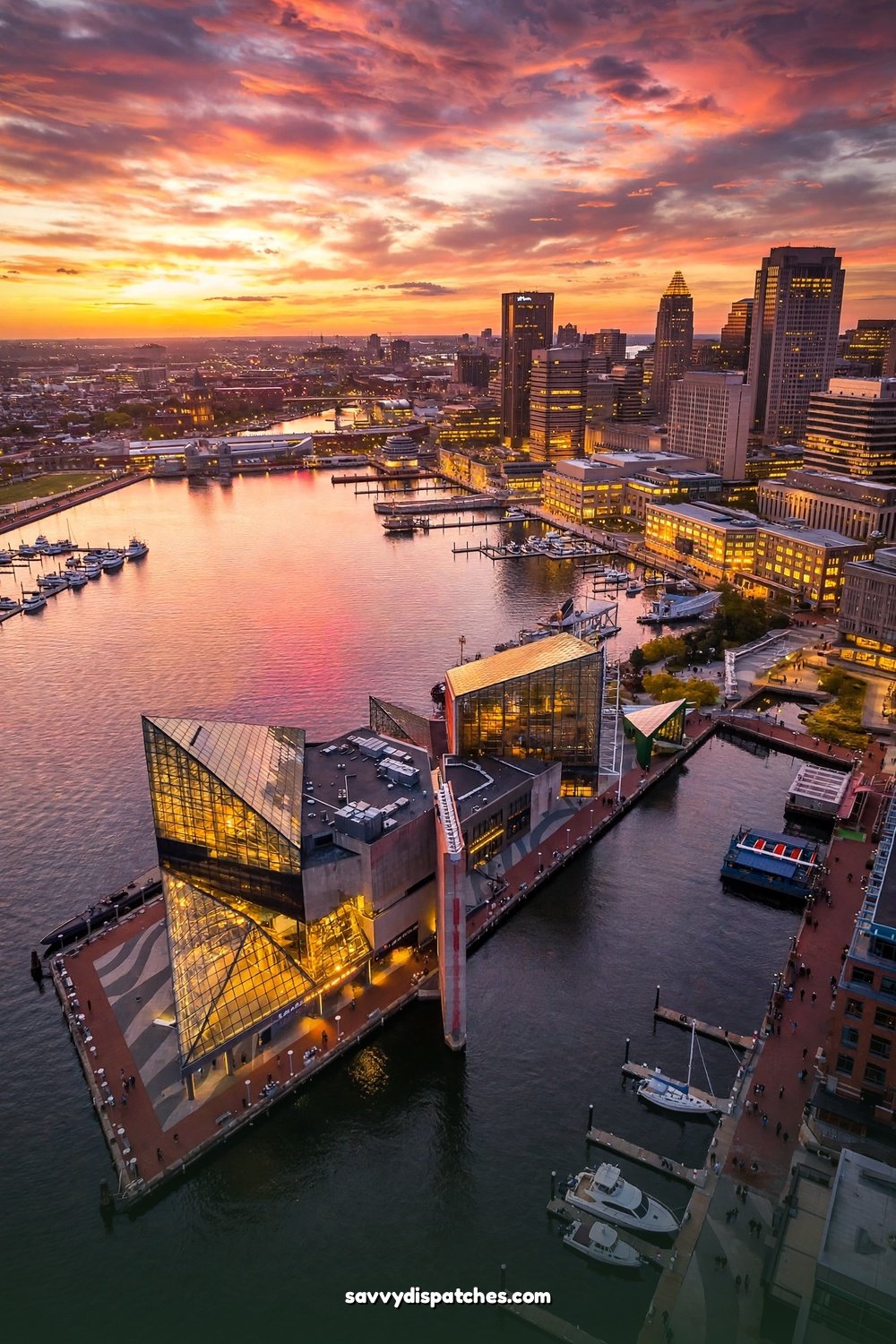
Here is the short version. Day one is the harbour: the aquarium, the historic ships and a Fells Point evening. The second day is history and art: Fort McHenry in the morning, the B&O railroad museum, and the free Walters and Baltimore Museum of Art. Stay near Harbor East or Fells Point if you can, and ride the free Circulator instead of paying for parking. My most beautiful cities in the US guide shows where Baltimore sits among the American city breaks, and my New Orleans guide has the same old-port logic I use here.
- Why Visit Baltimore Maryland
- Best Time to Visit Baltimore Maryland
- How to Get to Baltimore Maryland
- 1. National Aquarium: Baltimore Maryland’s Big Ticket
- 2. Fort McHenry: Baltimore Maryland’s Anthem Fort
- 3. Historic Ships: Baltimore Maryland on the Water
- 4. B&O Railroad Museum: Baltimore Maryland’s Railroad Birthplace
- 5. Fells Point: Baltimore Maryland’s Cobblestone Night
- 6. Lexington Market: Baltimore Maryland’s Crab Cake
- 7. The Walters Art Museum: Baltimore Maryland’s Free Art
- 8. Baltimore Museum of Art: Baltimore Maryland’s Second Free Museum
- 9. American Visionary Art Museum: Baltimore Maryland’s Wild Card
- 10. Camden Yards and Federal Hill: Baltimore Maryland at Sunset
- Baltimore Maryland in 2 Days: My Weekend Plan
- Questions About Baltimore Maryland
- Baltimore Maryland, Done Right
- You Might Also Like
Why Visit Baltimore Maryland
Baltimore Maryland is the American city that rewards the visitor who leaves the harbour. The Inner Harbor has the aquarium and the ships, but the city is really a dozen neighbourhoods: cobblestoned Fells Point, Federal Hill with its view, Mount Vernon with its free art museums, Hampden with its quirky Avenue, and Camden Yards with the ballpark that changed baseball. It is a real port city of rowhouses and corner bars, and it is affordable by East Coast standards.
One morning I stood in the fort that inspired the national anthem, and the same evening I ate a crab cake in a market that has served them since 1886. The next day I walked through a roundhouse full of locomotives and then saw a world-class art collection for free. In 2025 the city drew 28.7 million visitors, and most of them stayed downtown, while the smart ones branched out. My Charleston in winter guide has the same harbour-town logic I use here, and my best places to visit in the USA guide shows where Baltimore sits among the American trips.
Local tip: Leave the Inner Harbor after lunch, because the neighbourhoods are where Baltimore lives and the harbour is only the front door.
Best Time to Visit Baltimore Maryland
Mid-April to early June and September to October bring the best walking weather in Baltimore Maryland. Spring highs run 54 to 75 degrees, autumn runs 58 to 78 degrees, and the waterfront, the parks and the neighbourhood walks all work better together. Summer is hot and humid, but it is busy with baseball games and waterfront festivals. Winter is quieter and cheaper, and most museums are indoors.
Crab season is the other clock to watch. Maryland blue crab season runs May through October, with the August to September peak the fattest and most flavourful time of year. If crab cakes are the reason you are coming, go in September. My best Christmas towns in the USA guide has more cold-season escapes, and my Niagara-on-the-Lake guide covers another fall wine-and-food weekend.
Local tip: Go in September for the crab peak, because the weather is mild, the crowds thin out, and the crab cakes are at their best.
How to Get to Baltimore Maryland
Baltimore Maryland is an easy train ride from Washington, Philadelphia and New York, and BWI Marshall Airport sits about 20 minutes from the Inner Harbor by rail or taxi. The Light Rail runs direct from the airport to downtown for $2 each way. If you drive, know that the Key Bridge is gone until a replacement opens, targeted for late 2030.
Once you are there, you do not need a car. The Charm City Circulator is free, with 5 routes linking the Inner Harbor, Fells Point, Mount Vernon, Federal Hill and Fort McHenry. Buses run Monday to Thursday 7am to 8pm, Friday 7am to midnight, Saturday 9am to midnight and Sunday 9am to 7pm. The Water Taxi now runs on demand between the waterfront neighbourhoods, with a day pass of about $14. My long flight hacks will help you arrive fresh, and my USA road trip essentials covers the driving kit if you road-trip in.
Local tip: Ride the free Circulator Orange route, because it runs between Hollins Market and Harbor East every 10 minutes and it covers the whole harbour for free.
1. National Aquarium: Baltimore Maryland’s Big Ticket
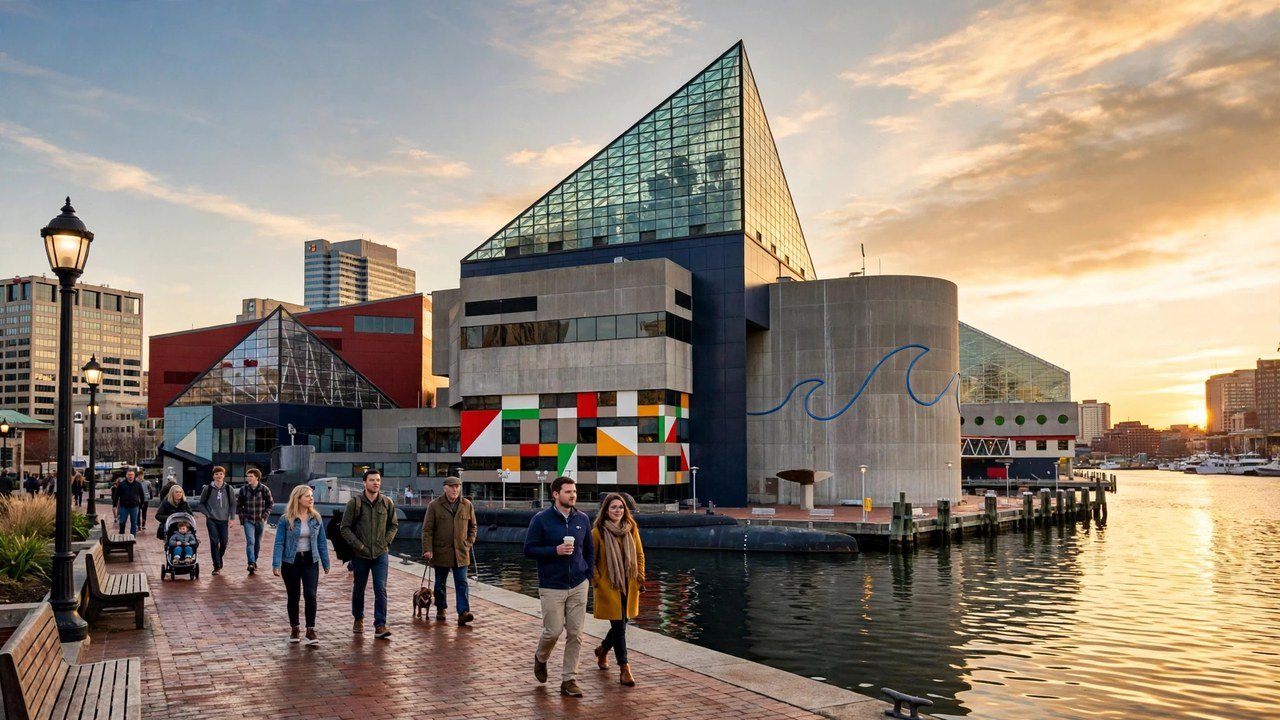
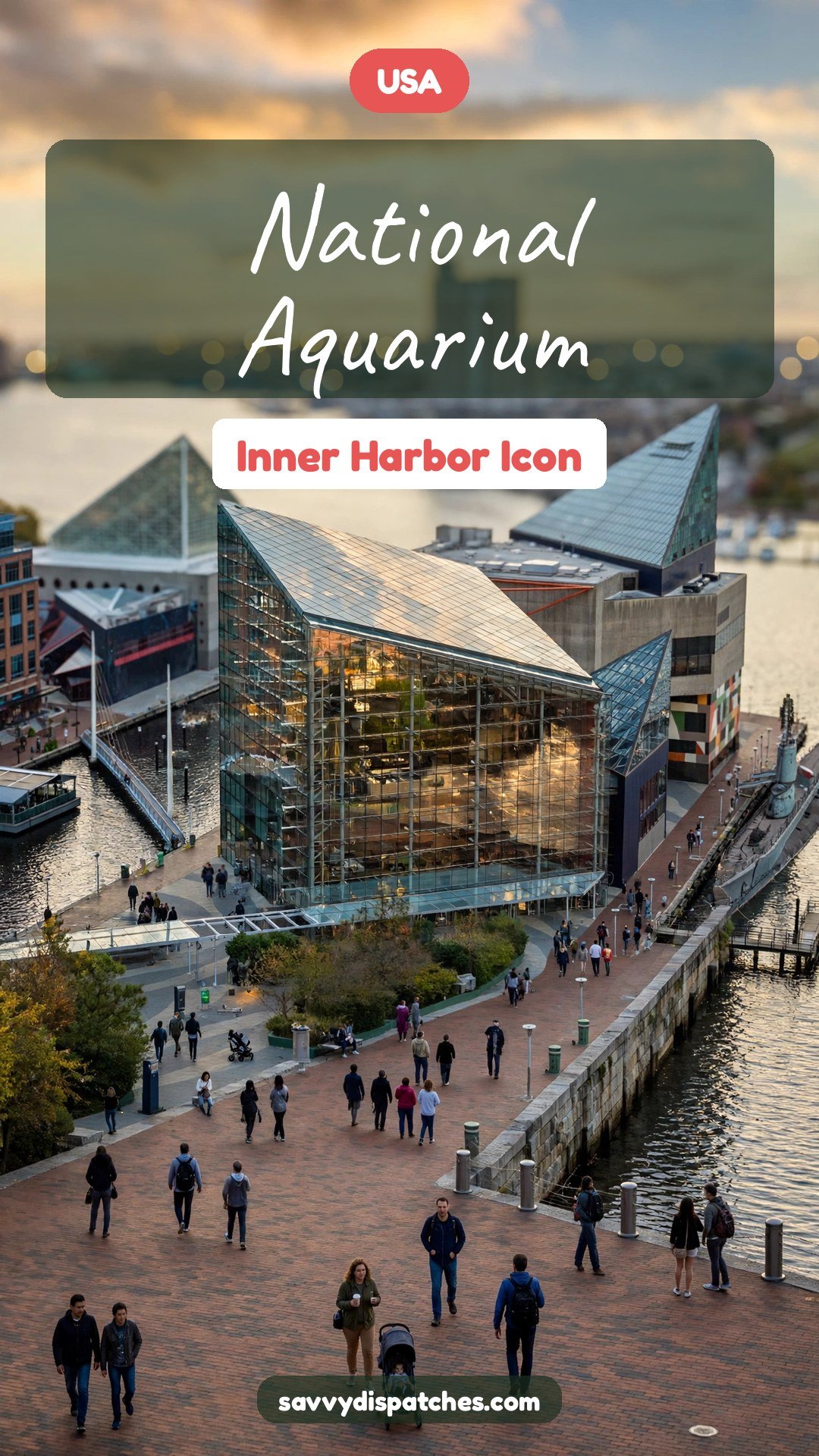
The National Aquarium is the one everybody asks for in Baltimore Maryland, and it earns the hype. It sits on the water at 501 E Pratt Street, a five-story glass building filled with more than 20,000 animals. The ramp spirals down through a huge ring-shaped shark tank, a walk-through Atlantic coral reef sits in the middle, and a tropical rainforest fills the glass pyramid on the roof.
Adults aged 21 to 69 pay $49.95, ages 5 to 20 and seniors 70 and over pay $39.95, and ages 4 and under go free. The best deal in Baltimore is Half-Price Friday Night, when tickets cost $24.95 from 5 to 9pm. Hours are Monday to Thursday 10am to 5pm, Friday 10am to 9pm, and Saturday and Sunday 10am to 6pm. Book timed tickets online for summer weekends, and plan on about 3 hours. My Ocean City Maryland guide has more Maryland coast days if you want to pair the beach with the city.
Local tip: Go on a Friday night, because the $24.95 half-price ticket saves $25 and the aquarium stays open until 9pm.
2. Fort McHenry: Baltimore Maryland’s Anthem Fort
Fort McHenry is where Baltimore Maryland becomes American history. The fort stands at 2400 E Fort Avenue in Locust Point, guarding the harbour entrance, and it is where the flag flew in 1814 that inspired the Star-Spangled Banner. Inside, the star fort, the visitor center and the film are the core of the visit, and the ranger programmes are included in the entry price. You can walk the seawall and look back at the skyline without paying a cent, because the grounds are free for all.
Entry to the historic area costs $15 for ages 16 and over, and under-16s go free. That pass is good for 7 days, and the park is open daily from 9am to 5pm, with last entry at 4:45pm. The star fort, visitor center and restrooms close 15 minutes before the park closes, so give it 2 hours and go in the morning before the tour buses arrive. My Toronto in 48 hours guide has the same fort-first logic I use here.
Local tip: Go before the last entry at 4:45pm, because the fort closes 15 minutes early and the late light on the harbour is the best of the day.
3. Historic Ships: Baltimore Maryland on the Water
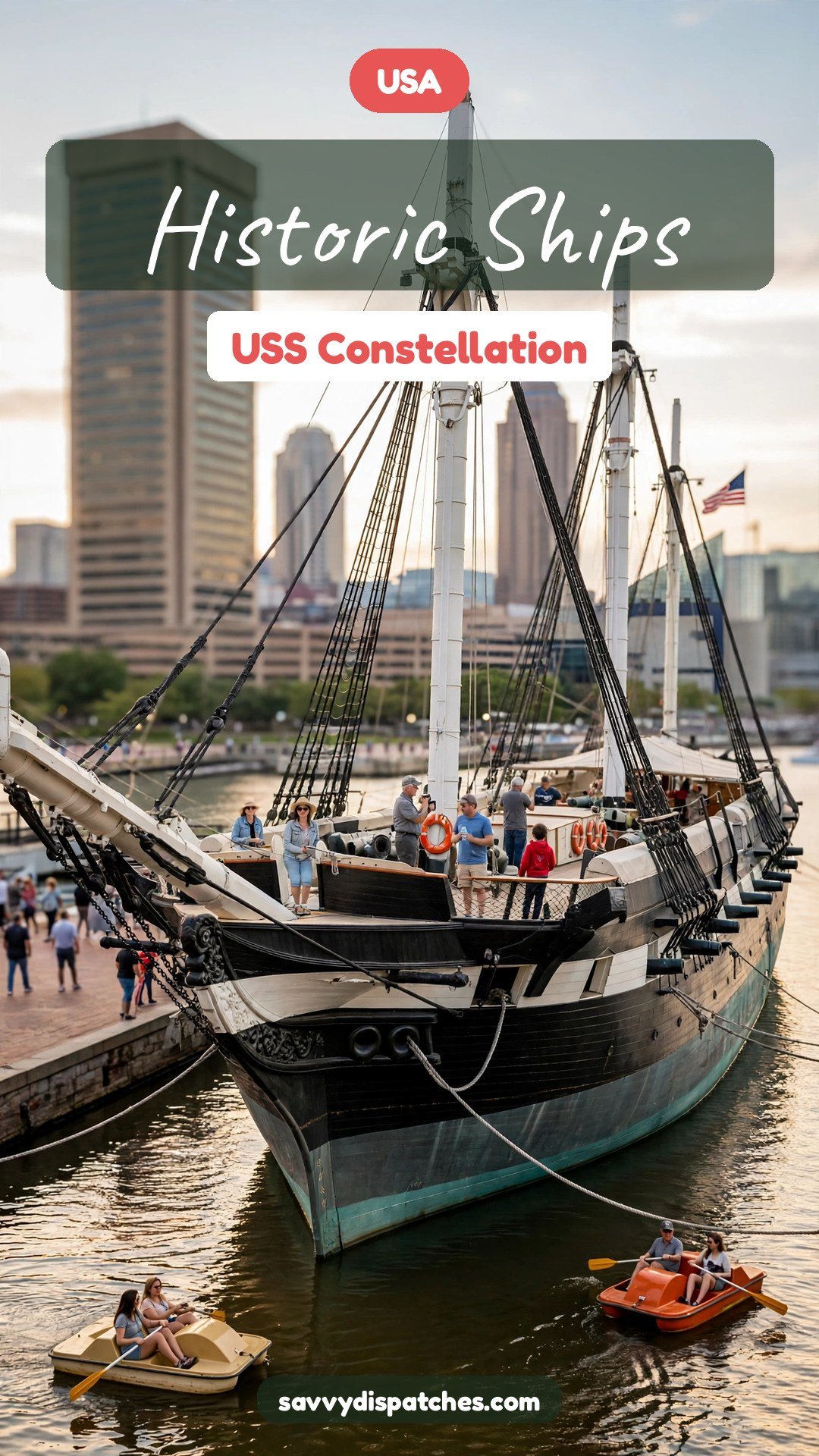
The Historic Ships in Baltimore are the floating museums that make the Inner Harbor feel like a working port. At the centre of it sits the USS Constellation, built in 1854 and the last all-sail warship built by the US Navy. Her masts rise over the promenade, and you can walk her decks and climb below to the gun deck. Nearby, the WWII-era submarine USS Torsk and the USCGC Taney, the last surviving warship from Pearl Harbor, are open for self-guided tours, along with a lighthouse that covers marine life from the mid-1800s to the 1980s.
A boarding pass costs $21.95 for adults and stays valid until used, so you can split the ships across the day. Give the Constellation an hour and the rest another hour. The ships sit right on the promenade, so they pair with the aquarium in a single morning. My Annapolis guide has more sailing history if you want to pair the two Maryland ports.
Local tip: Buy the boarding pass first thing, because it stays valid until used and you can tour the ships in whatever order the crowds allow.
4. B&O Railroad Museum: Baltimore Maryland’s Railroad Birthplace
The B&O Railroad Museum is the reason Baltimore Maryland matters to American history, and it changed its name in 2026. It is now the National Museum of Railroad History and Innovation, renamed on July 14, 2026, and it sits at 901 W Pratt Street in the 1884 roundhouse full of locomotives. Baltimore is the birthplace of American railroading, and this is the museum that tells that story.
Adults pay $20, seniors 65 and over pay $17, and children aged 2 to 12 pay $12. It is open daily from 10am to 4pm. Give it 2 to 3 hours, and ride the train if one is running on your day. The museum sits near the Camden Station Light RailLink stop, so it is an easy ride from the harbour. My Vancouver guide has the same rail-history logic I use here.
Local tip: Go on a Thursday to Sunday, because the B&O pairs with the Lewis Museum and Hampton National Historic Site in one day.
5. Fells Point: Baltimore Maryland’s Cobblestone Night
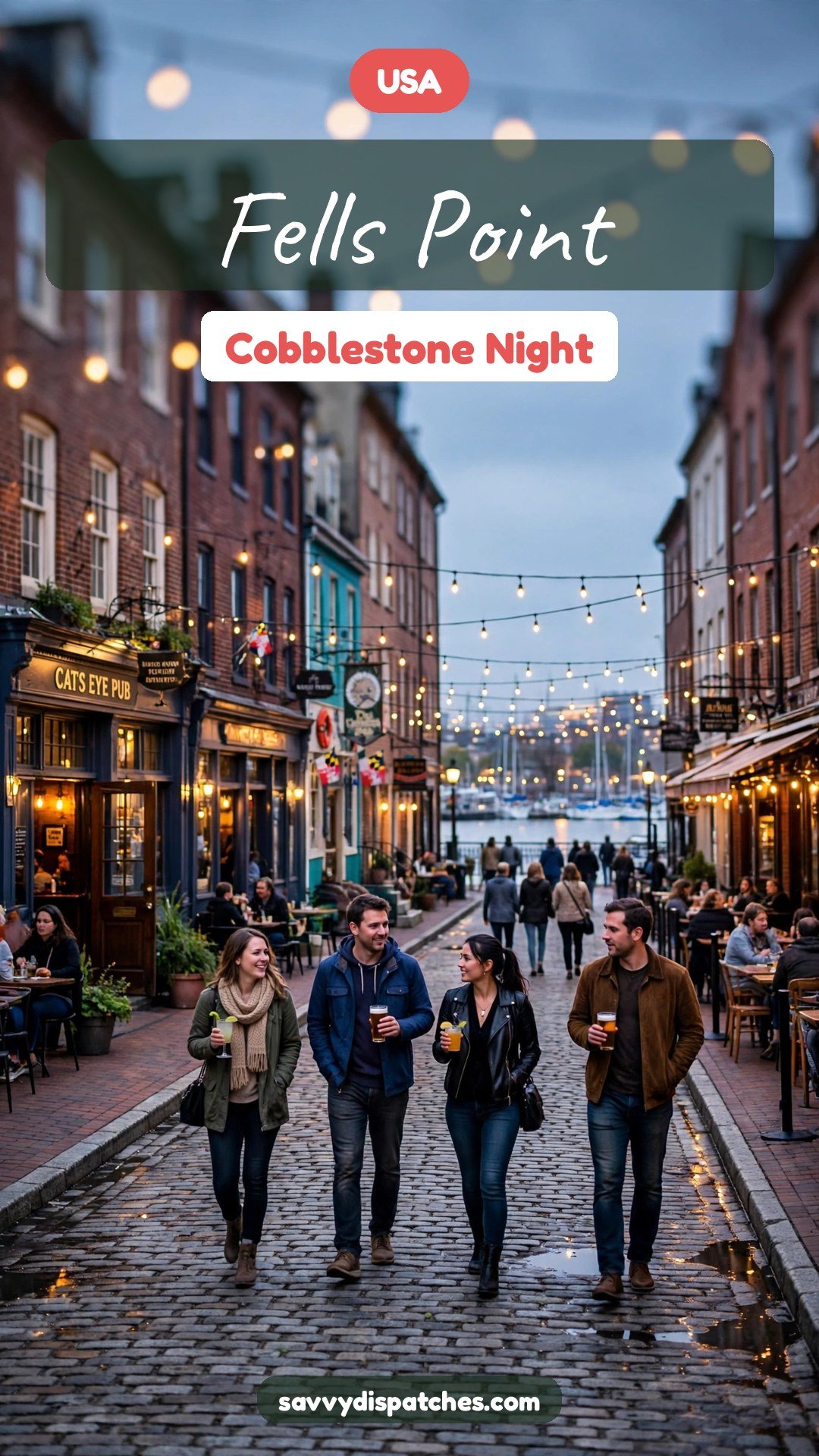
Fells Point is the neighbourhood that shows you the real Baltimore Maryland. It sits about 1.5 miles east of downtown, on cobblestoned Thames Street, with rowhouse bars, old port buildings and a waterfront that feels nothing like the Inner Harbor. Walking it is free, and it takes 2 hours at a slow pace. The food tour runs 3.5 hours with 4 tasting stops including crab cakes, from $109 per person, and it meets at Thames Street Park.
Go for the evening. Wear flat shoes, because the sidewalks are narrow and the streets are cobblestone. After dark the bars fill up and the restaurants run long. My San Diego guide has the same waterfront-neighbourhood logic I use here.
Local tip: Wear flat shoes, because the cobblestones are real and the sidewalks are narrow, and heels will ruin the evening.
6. Lexington Market: Baltimore Maryland’s Crab Cake
Lexington Market is where Baltimore Maryland eats. The market sits in a new hall since 2022-23, west of the harbour in the downtown district, and it is free to walk through. Find the Faidley’s Seafood counter, which has served crab cakes there since 1886. Their crab cake is the most famous one in the city: mostly jumbo lump blue crab meat with as little binder as possible, and it is the plate that other cities imitate.
A crab cake costs $18 to $35, and a Berger cookie from the market costs $2 to $4. Go for lunch, order at the counter, and eat standing up like the locals do. My places to visit in California guide has more market-first food days like this one.
Local tip: Order the crab cake at Faidley’s, because the 1886 counter is the original and the market stalls around it are the ones the locals use.
7. The Walters Art Museum: Baltimore Maryland’s Free Art
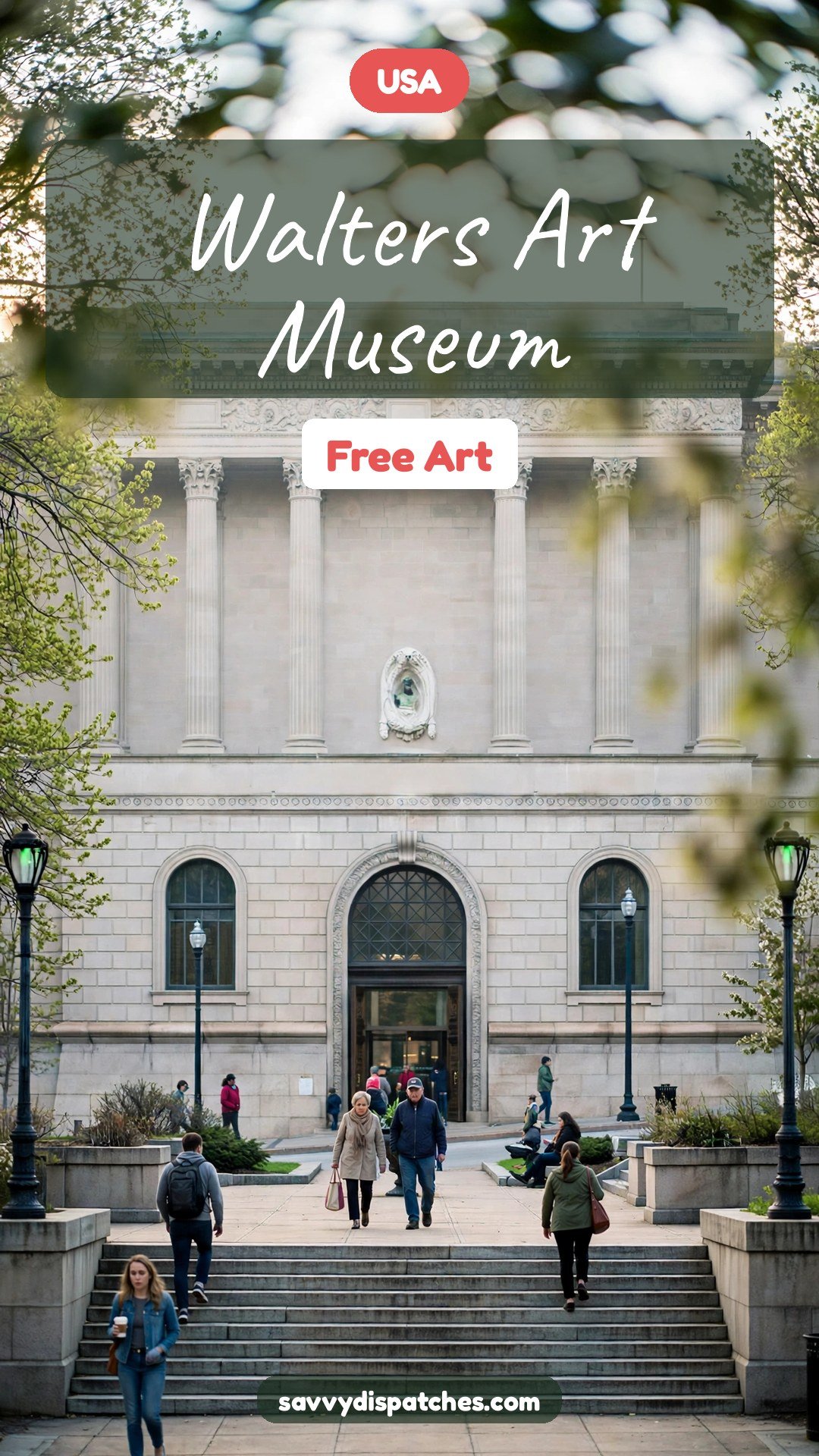
The Walters Art Museum is the free museum that surprises first-timers in Baltimore Maryland. It sits at 600 N Charles Street in Mount Vernon, in a grand building with a collection that runs from ancient Egypt to 19th-century Europe. Admission is free, and the building itself is worth the visit: the sculpture court, the arms and armour rooms, and the medieval manuscripts are the highlights.
The museum is open Wednesday to Sunday from 10am to 5pm, and it is closed on Monday and Tuesday. Give it 2 hours, and pair it with a walk around Mount Vernon Square, which is the most elegant square in the city. My San Diego guide has more free-museum days like this one.
Local tip: Go on a Wednesday morning, because the museum is quiet, the light in the sculpture court is at its best, and the square outside is empty.
8. Baltimore Museum of Art: Baltimore Maryland’s Second Free Museum
The Baltimore Museum of Art is the second free museum in Baltimore Maryland, and it is the one the locals love. It sits in Charles Village, near the university, with a collection that runs from old masters to modern art. Admission is free, and the museum is closed on Monday and Tuesday, like the Walters. Give it 2 to 3 hours. The modern wing is the highlight. Pair it with the Walters on the same day, and you will have seen two of the best collections in America without spending a dollar on tickets. My budget travel tips for expensive US cities has more free-museum days like this one.
Local tip: Pair it with the Walters on the same day, because both are free and both are closed on Monday and Tuesday, so a Wednesday to Sunday visit covers them both.
9. American Visionary Art Museum: Baltimore Maryland’s Wild Card
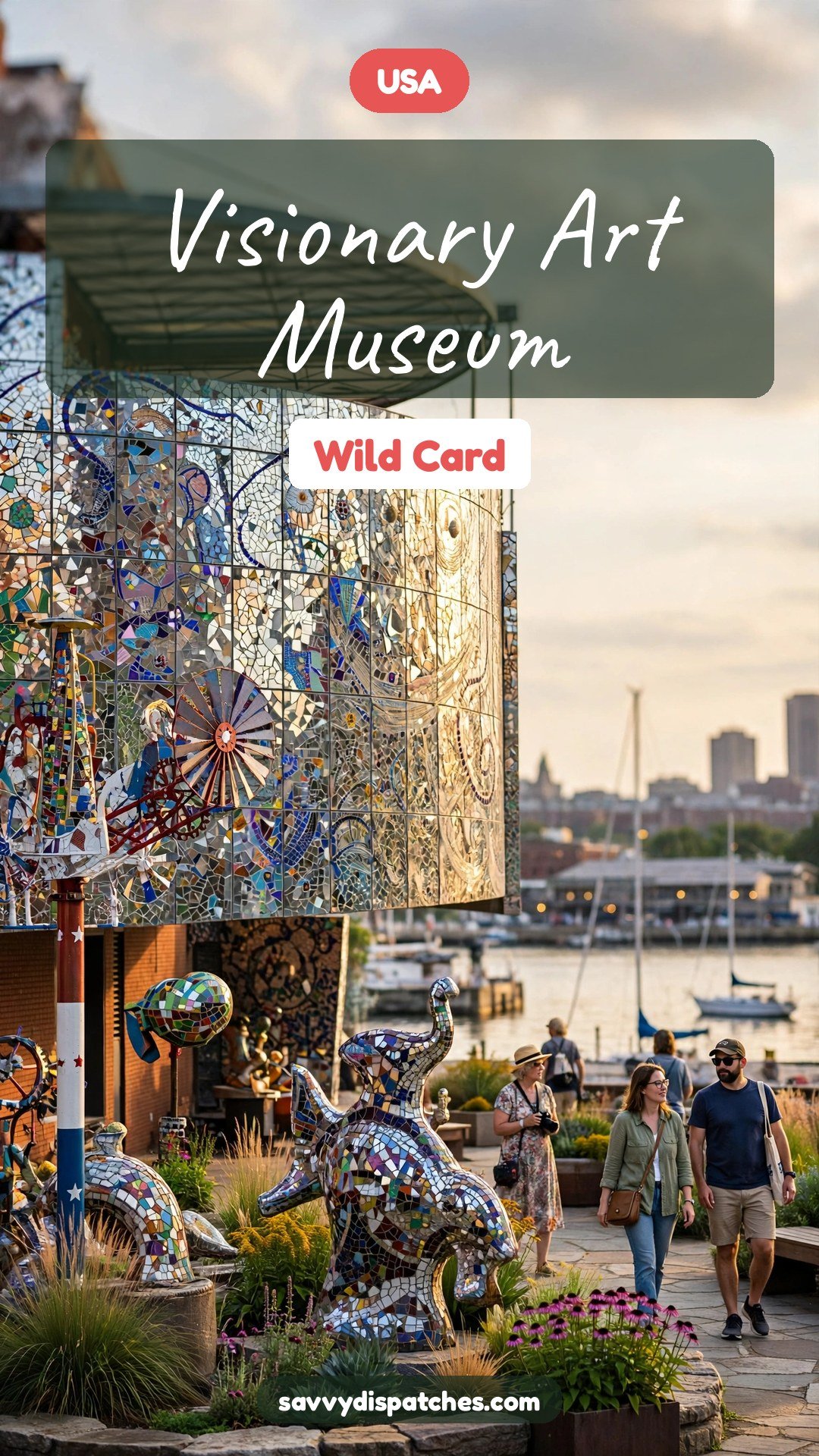
The American Visionary Art Museum is the wild card in Baltimore Maryland. It sits at 800 Key Highway on the harbour, and it shows outsider art: work by self-taught artists, visionaries and eccentrics, in a building covered in mosaics and mirrors. The museum divides visitors, and that is the point.
Adults pay $20, and the museum is open Wednesday to Sunday. Give it 2 hours, and go with an open mind. The work here is strange, funny and moving by turns, and the building itself is part of the show. It sits a short walk from Federal Hill Park, so it pairs with the sunset view in one afternoon. My Tweed Australia guide has more offbeat art stops like this one.
Local tip: Go in the afternoon, because the museum pairs with the Federal Hill sunset and the two together make the best late day in the city.
10. Camden Yards and Federal Hill: Baltimore Maryland at Sunset
Oriole Park at Camden Yards is the ballpark that changed baseball, and it is the last stop in Baltimore Maryland. It sits at 333 W Camden Street, downtown, in a brick warehouse district. The stadium tour costs $15, and Orioles game tickets run $20 to $80. Inside the ballpark, Eutaw Street has small bronze baseballs set into the pavement, each one marking where a home run landed. Even without a game, the tour is worth it for the warehouse and the field.
Finish the day at Federal Hill Park, a short walk from the ballpark. The park is free, and the view over the whole harbor at sunset is the best free sight in the city. From the hill, the skyline, the aquarium and the ships all line up, and the light at dusk is the one to photograph. My Santa Barbara guide has more sunset viewpoints like this one.
Local tip: Watch the sunset from Federal Hill, because the whole harbor lines up from the hill and the light at dusk is the best free sight in the city.
Baltimore Maryland in 2 Days: My Weekend Plan
Day one is the harbour. Start at the aquarium at 10am, walk the historic ships, eat a crab cake at Lexington Market, and finish the evening in Fells Point. The second day is history and art: Fort McHenry in the morning, the B&O railroad museum, the Walters and the Baltimore Museum of Art, and the sunset from Federal Hill. Here is what the weekend costs per person, before hotels and food.
| Item | Cost |
|---|---|
| National Aquarium | $49.95 |
| Fort McHenry | $15 |
| Historic Ships boarding pass | $21.95 |
| B&O Railroad Museum | $20 |
| American Visionary Art Museum | $20 |
| Water Taxi day pass | $14 |
| Crab cake lunch | $25 |
| Total | About $166 |
The Walters, the Baltimore Museum of Art, Fells Point and Federal Hill are all free, which is why the total stays under $170. Go on a Friday night and the aquarium costs $24.95 instead of $49.95, which cuts the total to about $141. My Paris in winter guide has more weekends at this price.
Local tip: Do the paid harbour sights on day one, because the Walters and the Baltimore Museum of Art are both closed on Monday and Tuesday and a Monday start wastes the morning.
Questions About Baltimore Maryland
Is Baltimore Maryland worth visiting?
Yes. It is a real port city of rowhouses and corner bars, with a first-rate art collection that costs nothing to see, the fort that inspired the national anthem, the ballpark that changed baseball, and crab cakes that other cities imitate, all at prices well below New York.
How many days do you need in Baltimore Maryland?
Two to three days is right for a first visit. One day covers the Inner Harbor and Fort McHenry, and a second day covers the neighbourhoods, the museums and Fells Point. Add a third day if you want more time in the museums.
What is Baltimore Maryland famous for?
Baltimore is famous for its harbour, Maryland crab cakes, Fort McHenry and the national anthem, Edgar Allan Poe, the B&O Railroad, and its distinctive neighbourhoods like Fells Point and Hampden.
Is Baltimore Maryland safe for tourists?
The visitor areas are busy and patrolled, but use big-city sense at night. Violence has fallen sharply, to 133 homicides in 2025, the fewest in about half a century, though the numbers are still higher than many visitors are used to.
What is the best time to visit Baltimore Maryland?
Mid-April to early June and September to October bring the best walking weather. September is best for crab season, when the blue crabs are at their fattest. Summer is hot and humid, and winter is quiet and cheaper.
Do you need a car in Baltimore Maryland?
No. The free Charm City Circulator covers the harbour and the neighbourhoods, the Water Taxi links the waterfront, and the Light Rail runs from the airport for $2. A car helps only for day trips out of the city.
Baltimore Maryland, Done Right
Two days in Baltimore Maryland gives you a world-class aquarium, a fort from 1814, a roundhouse full of locomotives, two free art museums, a crab cake from 1886 and a sunset over the harbour. The aquarium costs $49.95, the free museums cost nothing, and the best sights are a short walk apart. Book the aquarium ahead, ride the free Circulator, and watch the sunset from Federal Hill. My most beautiful cities in the US guide shows where Baltimore sits among the American city breaks.
Local tip: Book the aquarium before you fly, because the timed tickets sell out on summer weekends and everything else in Baltimore can be decided on the day.
You Might Also Like
If this guide helped, here are three more from my site. Read my Ocean City Maryland guide for the Maryland coast. Check my Annapolis guide if you want more sailing history in Maryland. And save my most beautiful cities in the US guide for your next American city break.