I went to Europe for the best Christmas markets in Europe with no plan, one small bag, and a list I had copied from a blog. I came home cold, happy, and smarter. The best Christmas markets in Europe are not all the same, and the best Christmas markets in Europe reward the people who show up at the right hour, in the right shoes, with cash in their pocket. Here are the 13 I would send a first-timer to, in the order I would visit them, with 2026 dates and a 7-day train route that links five of them.
- How to Plan Your First Christmas Market Trip
- My 7-Day First-Timer Christmas Market Itinerary
- 1. Vienna Christmas Market: Rathausplatz, Austria
- 2. Strasbourg Christmas Market: Christkindelsmarik, France
- 3. Nuremberg Christmas Market: Christkindlesmarkt, Germany
- 4. Dresden Christmas Market: Striezelmarkt, Germany
- 5. Prague Christmas Market: Old Town Square, Czech Republic
- 6. Budapest Christmas Market: Vorosmarty Square, Hungary
- 7. Tallinn Christmas Market: Town Hall Square, Estonia
- 8. Bruges Christmas Market: Winter Glow, Belgium
- 9. Colmar Christmas Market: Old Town, France
- 10. Copenhagen Christmas Market: Tivoli Gardens, Denmark
- 11. Cologne Christmas Market: Cathedral Market, Germany
- 12. Krakow Christmas Market: Main Market Square, Poland
- 13. Munich Christmas Market: Marienplatz, Germany
- Which of the Best Christmas Markets in Europe Should You Pick?
- You Might Also Like
How to Plan Your First Christmas Market Trip
Start with the dates, because the dates decide everything. In 2026 the big markets open between 13 November and 28 November, and most of them close on 23 or 24 December. All 13 markets in this guide are open at the same time from 28 November to 23 December, so that four-week window is the sweet spot for a first trip. If you travel after Christmas Day, pick from the short list that stays open: Vienna, Prague, Budapest, Tallinn, Bruges, and Copenhagen.
Pick two or three bases, not six. I tried to sleep in a new city every night on my first trip and I spent half the trip on platforms. Trains link the classic markets well, and a base lets you learn where the good stalls are. Vienna pairs with Prague, Dresden pairs with Prague, and Nuremberg pairs with Munich. Strasbourg pairs with Colmar on a 30-minute train ride, which makes Alsace the easiest two-market day trip in this guide.
Pack for standing outside for hours. Warm boots with grip, a hat, gloves you can still hold a mug in, and a crossbody bag beat a backpack in a crowd. Bring cash in small notes because some small stalls still take cash only, and keep your phone charged for train tickets. I budget a full afternoon per market, and I never plan more than one market per day. You will enjoy the second market less if your feet are already done.
Local tip: Go on a weekday morning. The stalls open around 10 or 11 am, the light is soft for photos, and you can walk the whole market before the evening crowd arrives.
My 7-Day First-Timer Christmas Market Itinerary
This route uses trains only, and it links five of the markets in this guide. Day 1 and 2: Vienna. Land, drop your bag, and spend your first evening at Rathausplatz when the lights come on. Use day 2 for the smaller markets at Schonbrunn and Spittelberg, which open earlier in the season and close earlier in the day. Day 3: take the morning train to Prague and spend the afternoon in Old Town Square. Day 4: a full day in Prague, with Wenceslas Square after dark.
Day 5: take the direct train from Prague to Dresden. The ride takes about 2 hours and 13 minutes, and the Striezelmarkt sits right on the Altmarkt, a short walk from the station. Day 6: train to Nuremberg for the Christkindlesmarkt, and be on the Hauptmarkt at 5:30 pm if you want the opening ceremony feel, though the market runs daily and you do not need a ceremony to enjoy it. Day 7: train to Strasbourg, walk the Grande Ile, and fly home from Strasbourg or take the train on to Colmar for one more morning. If seven days feels tight, cut Dresden and add the day to Vienna. The route still works.
I planned this route around the overlap window, 28 November to 23 December, when every market on it is open. Book trains early for the lowest fares, and keep one buffer hour in each travel day. Winter trains run on time most days, but one delay can eat a whole market visit if your schedule is tight. For more on keeping a Europe trip cheap, read my 9 Europe trip planning mistakes that waste money.
Local tip: Stay near the old town, not near the airport. The extra cost buys you a warm room to escape to between markets, and that matters more than a cheap bed an hour away.
1. Vienna Christmas Market: Rathausplatz, Austria
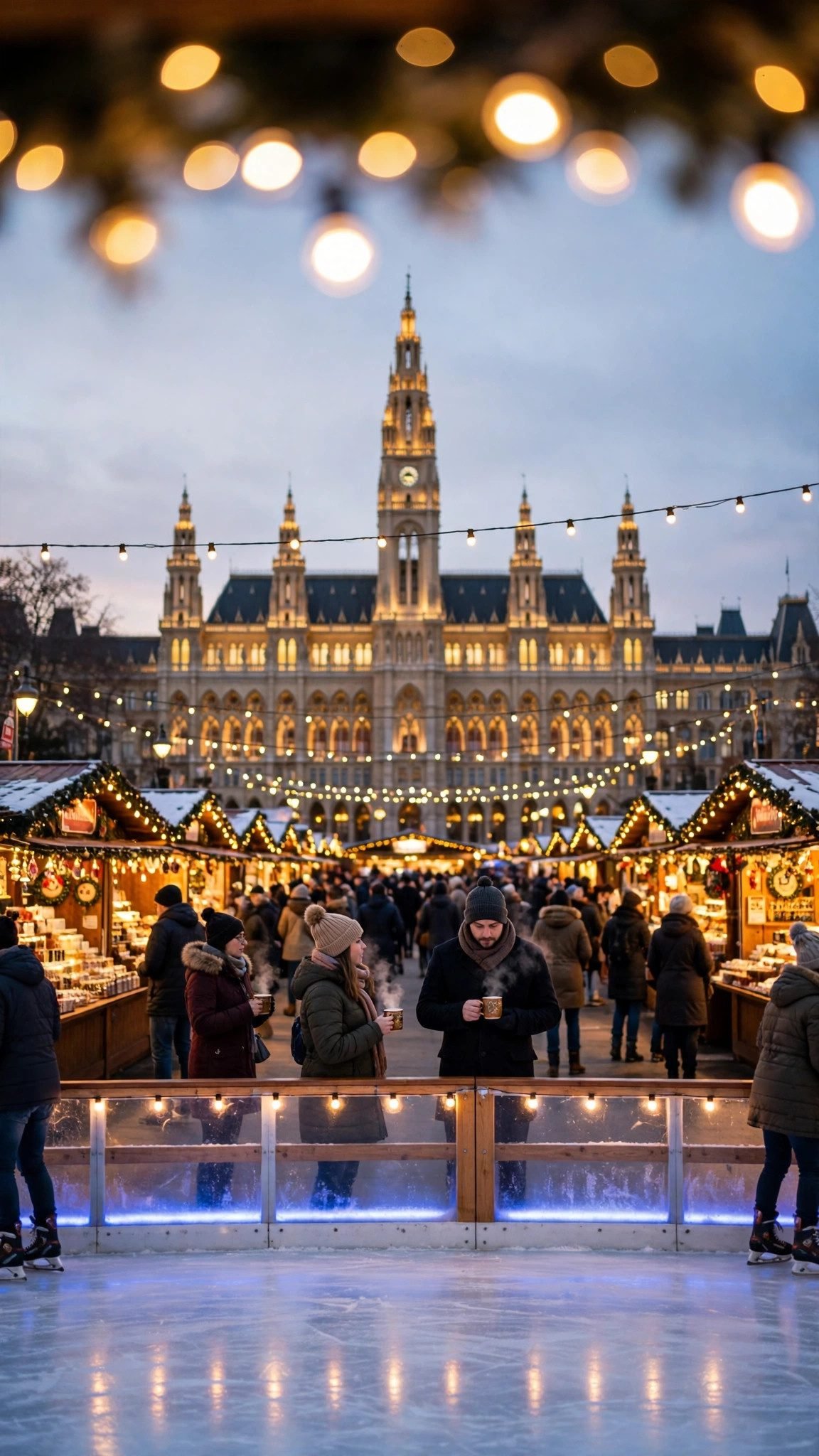
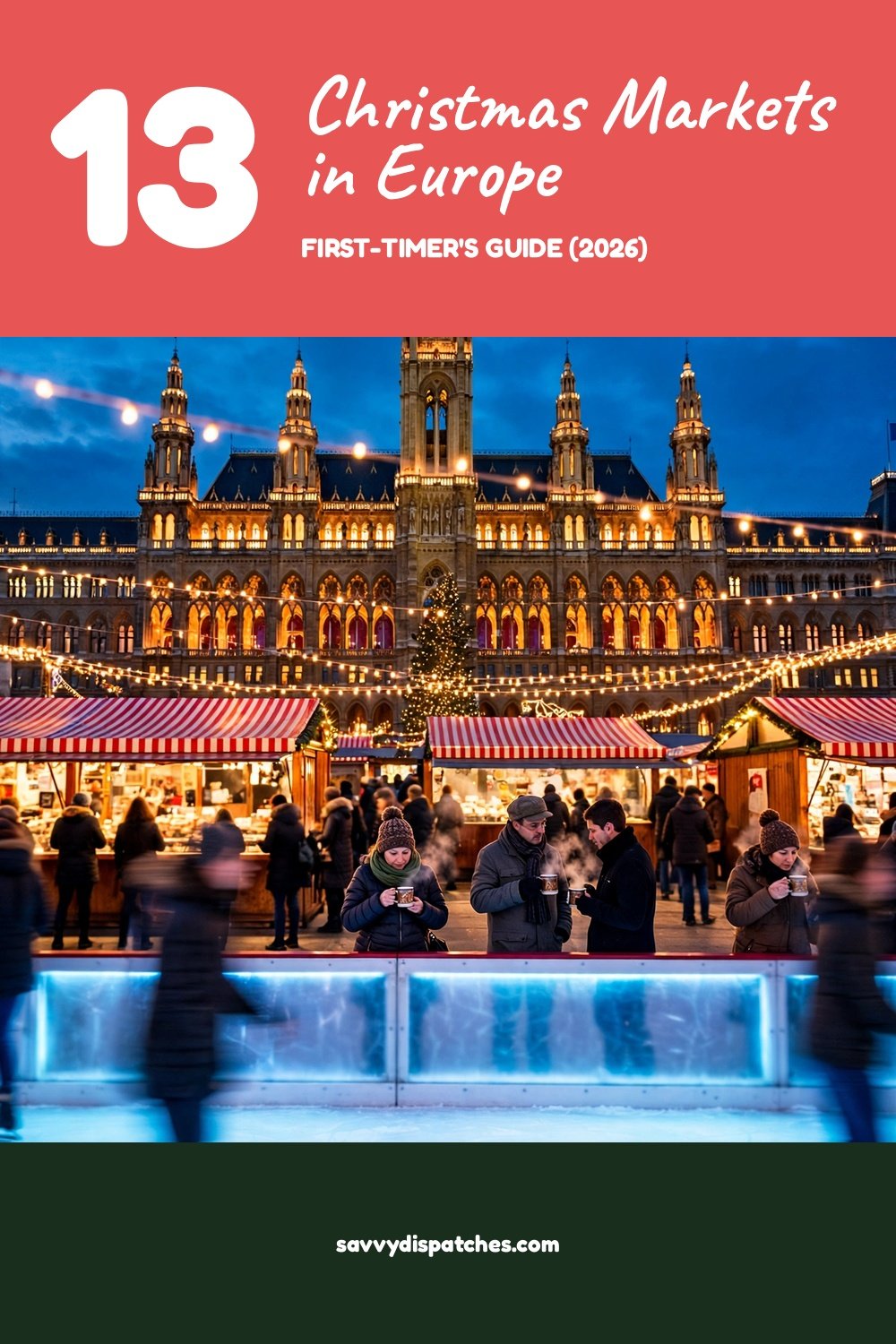
Vienna runs the biggest show in this guide, and the Rathausplatz market is the one to see first. The Christkindlmarkt sits in front of City Hall, and it runs from 13 November to 26 December 2026, daily from 10 am to 10 pm, closing at 6:30 pm on 24 December. The ice rink in City Hall Park stays open until 6 January 2027, so the square keeps its glow even after the stalls close.
I went in the late afternoon, when the lights switch on and the whole square turns gold. The market has around 150 stalls, and the best of them sell ornaments, wood carvings, and hot drinks you can hold with both hands. The punch and mulled wine come in a souvenir mug you pay a deposit for, and you can keep the mug or hand it back for the deposit. Eat something warm early, because the food stalls get long lines by 7 pm.
Vienna has more than one market, and the smaller ones are worth your time. Schonbrunn Palace opens on 6 November, a week before Rathausplatz, and Spittelberg has narrow lanes and craft stalls that feel more local. If you only have one day, do Rathausplatz in the evening and Schonbrunn in the morning.
Local tip: Take the U2 to Rathaus station and walk in from the park side. You get the full view of City Hall lit up, and you skip the worst of the crowd at the main entrance.
2. Strasbourg Christmas Market: Christkindelsmarik, France
Strasbourg calls itself the capital of Christmas, and it earns the title. The Christkindelsmarik runs from 27 November to 24 December 2026, spread across eight sites in the old town, and the market dates back to 1570. The stalls open from 11 am to 9 pm each day, with a later start on opening day and an early close at 6 pm on 24 December. No stalls open on Christmas Day, so plan around that.
The heart of it is Place Kleber, where a giant tree stands in the middle of the square, and the cathedral square, where the stalls press right up against the pink stone facade. I liked the small squares best. Each one has its own theme, and you can walk between them in minutes. The Alsatian food is the draw here: warm bredele biscuits, tarte flambee, and hot orange juice with spices for anyone skipping the wine.
Strasbourg rewards slow walking. The whole Grande Ile is a UNESCO site, and the half-timbered houses look better with lights on them than any postcard suggests. Go after dark for the lights, but do your shopping in the morning, when the stall owners have time to talk. If you want the full Alsace picture, pair Strasbourg with Colmar, 30 minutes away by train.
Local tip: Start at Place Kleber in the morning and end at the cathedral square at dusk. The light on the pink stone at sunset is the best free show in the city.
3. Nuremberg Christmas Market: Christkindlesmarkt, Germany
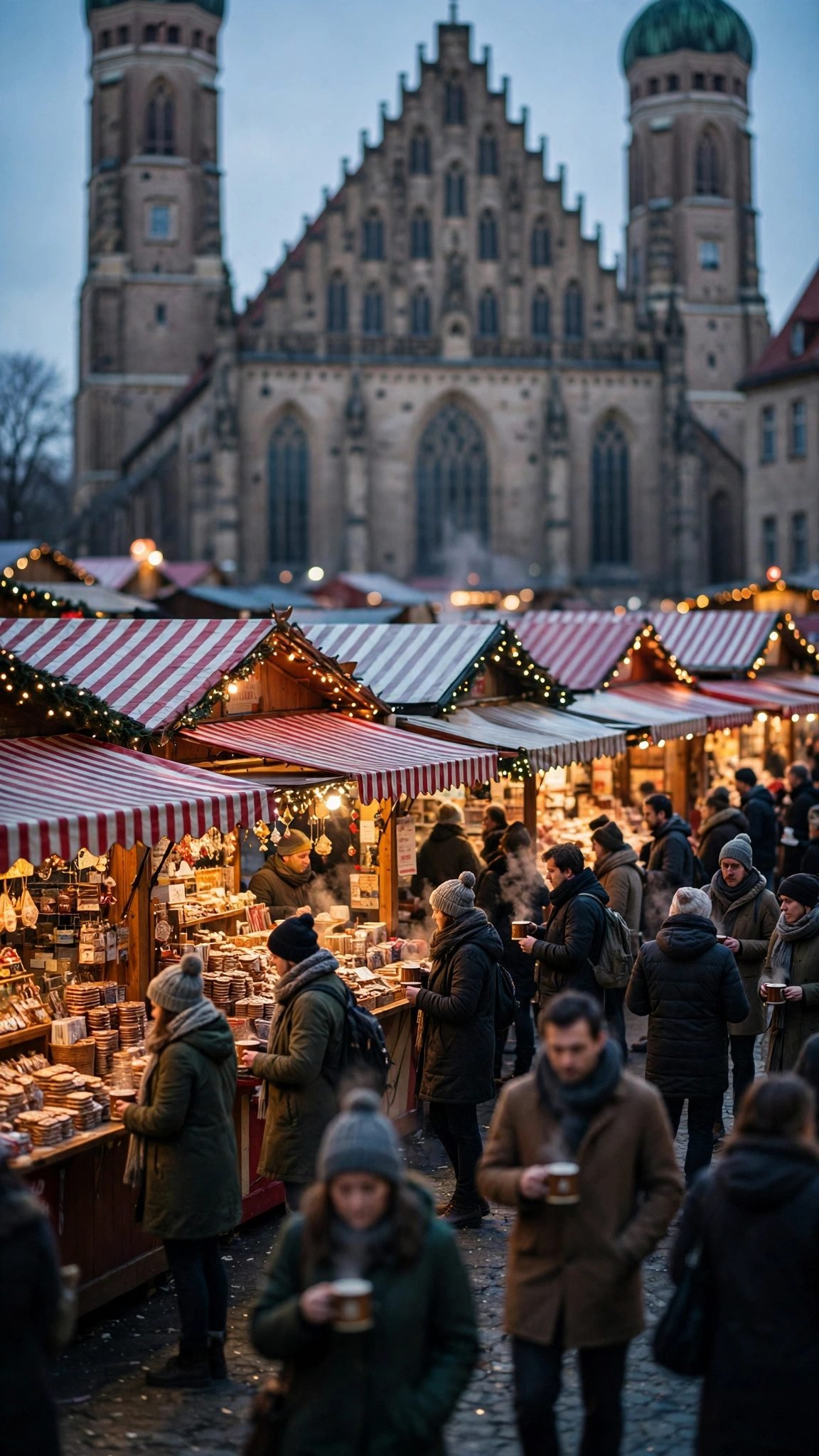
Nuremberg is the market most people picture when they hear the words Christmas market. The Christkindlesmarkt runs from 27 November to 24 December 2026 on the Hauptmarkt, daily from 10 am to 9 pm, and it closes at 2 pm on Christmas Eve. About 180 stalls stand in red and white stripes under the Frauenkirche, and the market is strict about keeping the goods traditional, which is why it feels different from the rest.
The opening ceremony is the moment to plan around. At 5:30 pm on Friday 27 November, the Christkind, the Christmas angel played by a young local, reads her prologue from the balcony of the Frauenkirche. Trading pauses for half an hour while it happens, and the square goes quiet in a way that stays with you. I stood near the back and could still hear every word. Get there an hour early if you want a spot near the front.
The food here is the point. Nuremberger Lebkuchen, the protected gingerbread, is sold everywhere, and the small sausages grilled three at a time are the snack to eat standing up. Buy the Lebkuchen from a stall that bakes on site if you can, and skip the stalls selling the same plastic goods you can find anywhere. For more on keeping a Germany trip cheap, read my 13 cheapest countries to visit in 2026.
Local tip: The market is the last of the big German markets to open, so do not plan a Nuremberg trip before 27 November. Arrive that Friday and you get the opening ceremony as a bonus.
4. Dresden Christmas Market: Striezelmarkt, Germany
Dresden holds the oldest Christmas market in Germany, and it shows its age in the best way. The Striezelmarkt was first held in 1434, and 2026 is its 592nd edition. It runs from 25 November to 24 December 2026 on the Altmarkt, opening at 4 pm on 25 November and running daily from 10 am to 9 pm after that, closing at 2 pm on Christmas Eve.
The market is built around craft. The stalls sell wood carvings from the Erzgebirge mountains, hand-painted ornaments, and the Stollen fruit bread the market is named for. I bought a small wooden angel from a carver who had worked the same stall for decades, and it is still the best thing I brought home from any market. The big Christmas pyramid in the middle of the square turns slowly, and the smell of the Stollen stalls carries across the whole square.
Dresden is an easy pair with Prague. The direct train takes about 2 hours and 13 minutes, and both markets are open together from 28 November to 24 December. Give Dresden a full afternoon and an evening, and walk the old town after the stalls close. The rebuilt Frauenkirche lit up at night is worth the walk on its own.
Local tip: Try the Stollen at the stall with the longest line of locals, not the one with the biggest sign. The line is the review.
5. Prague Christmas Market: Old Town Square, Czech Republic
Prague is the market to pick if you travel after Christmas Day. The main markets on Old Town Square and Wenceslas Square run from 28 November 2026 to 6 January 2027, daily from 10 am to 10 pm, which makes Prague one of the last big markets still open in January. That long season is a gift for anyone who can only travel between Christmas and New Year.
Old Town Square is the scene everyone photographs. A tall tree stands in the middle of the square, the Astronomical Clock tower rises on one side, and the stalls sell handmade goods, hot mead, and sweet chimney cakes you can watch being rolled and baked. I went on a snowy evening and the square looked like a film set, except the film set had better food. Wenceslas Square is bigger and busier, with more stalls and more room to walk, so I use it for shopping and Old Town Square for the atmosphere.
Prague is also one of the cheapest big-market cities in this guide. A hot drink and a snack cost less here than in Vienna or Strasbourg, and the trams make the whole city easy to cross. Stay in the Old Town if you can, and walk everywhere. If you want more ideas for cheap city breaks, read my 11 best budget travel destinations for 2026.
Local tip: Go to Old Town Square at 10 am when the stalls open. You get the square almost to yourself for an hour, and the light on the tower is the best it gets all day.
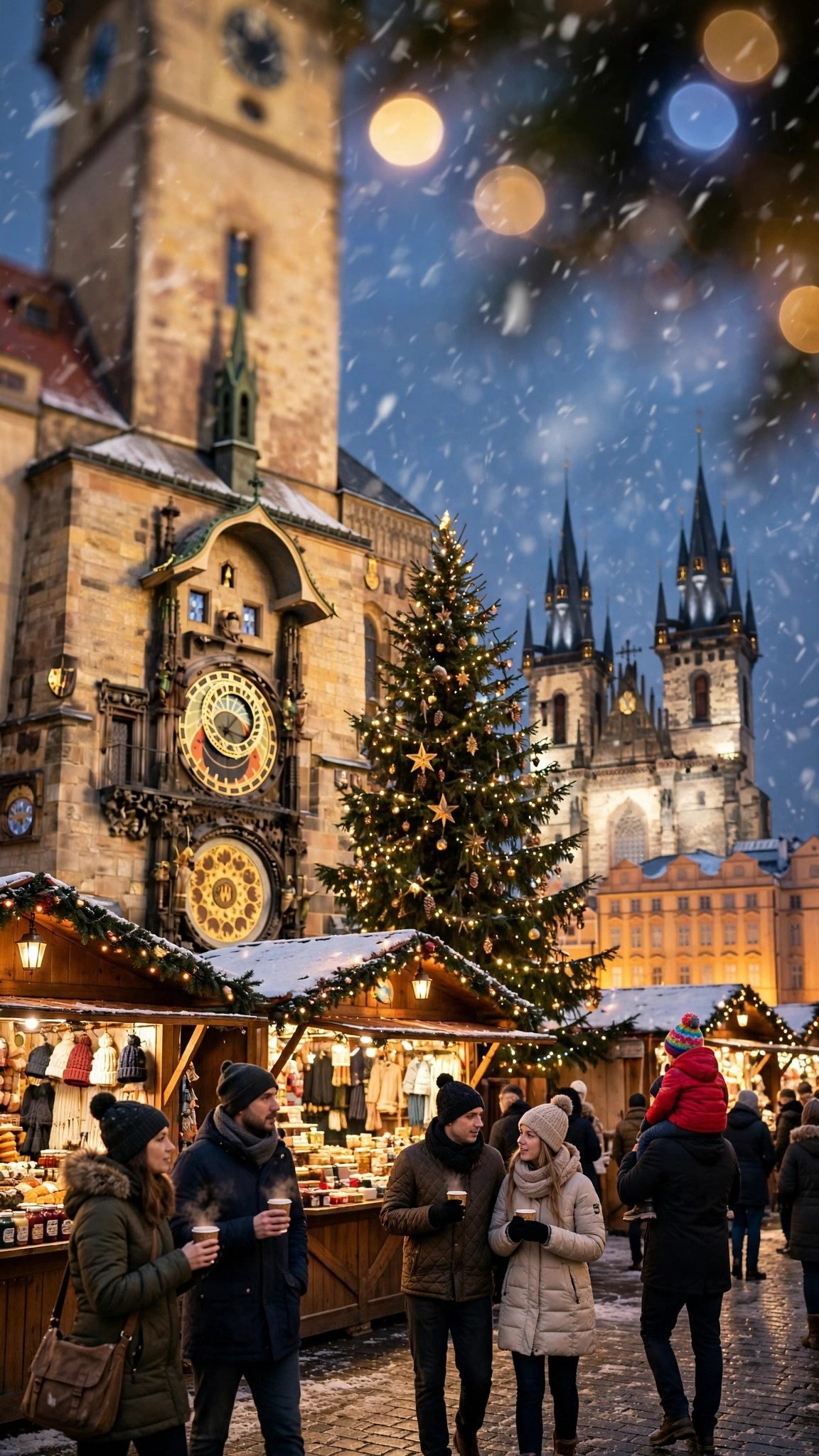
6. Budapest Christmas Market: Vorosmarty Square, Hungary
Budapest gives you two markets in one small area, and both are free to enter. The Advent Fair on Vorosmarty Square and the market at St Stephen’s Basilica run from 13 November 2026, with Vorosmarty Square closing on 31 December and the Basilica market running to 1 January. Stalls open from 11 am to 9 or 10 pm, and both close early in the afternoon on 24 December.
The Basilica market is the prettier of the two. A light show plays on the front of the basilica after dark, and the ice rink in front of it is small enough for first-time skaters. Vorosmarty Square is the better one for eating. The food stalls serve chimney cake, duck, and thick hot chocolate, and the prices run lower than the markets in Austria or France. I ate dinner at the market two nights in a row and spent less than one restaurant meal would have cost.
Budapest is also the best city in this guide for pairing a market trip with something else. The thermal baths are open all winter, and a hot bath after a cold afternoon at the market is the best recovery I know. Go to the baths in the morning, the market in the afternoon, and you have a full day that costs less than a day in Vienna.
Local tip: Watch the light show on the Basilica from the rink side, not from the front steps. You see the full facade and you are out of the crowd at the same time.
7. Tallinn Christmas Market: Town Hall Square, Estonia
Tallinn is the quiet surprise in this guide. The market on Town Hall Square runs from 20 November 2026 to 6 January 2027, daily from 10 am to 8 pm, with hot drinks served until 10 pm, and later on Fridays and Saturdays. The tree is lit on 29 November, and Tallinn claims some of the earliest Christmas tree records in Europe, which fits a town that looks like it was built for December.
The square is small, and that is the charm. You can see the whole market in one slow lap, and the medieval town hall and the old merchant houses close around it like a stage set. The stalls sell black bread, smoked meats, and hot glugg, and the cup deposit is 2 euros, which you get back when you return the cup. I liked that the market never felt rushed. People stood and talked, and nobody pushed past me to get to the next stall.
Tallinn is also one of the best value stops in this guide, and it stays open past Christmas, which makes it a strong pick for a trip between Christmas and New Year. The old town is small enough to walk in a day, and the snow, when it comes, makes the whole place look like a card. For more on cheap winter trips, read my 9 cheap places to travel in 2026 that still feel luxurious.
Local tip: Keep your cup and return it on your last lap. The 2 euro deposit is small, but the stall owners remember the people who return cups, and they pour a little more for them.
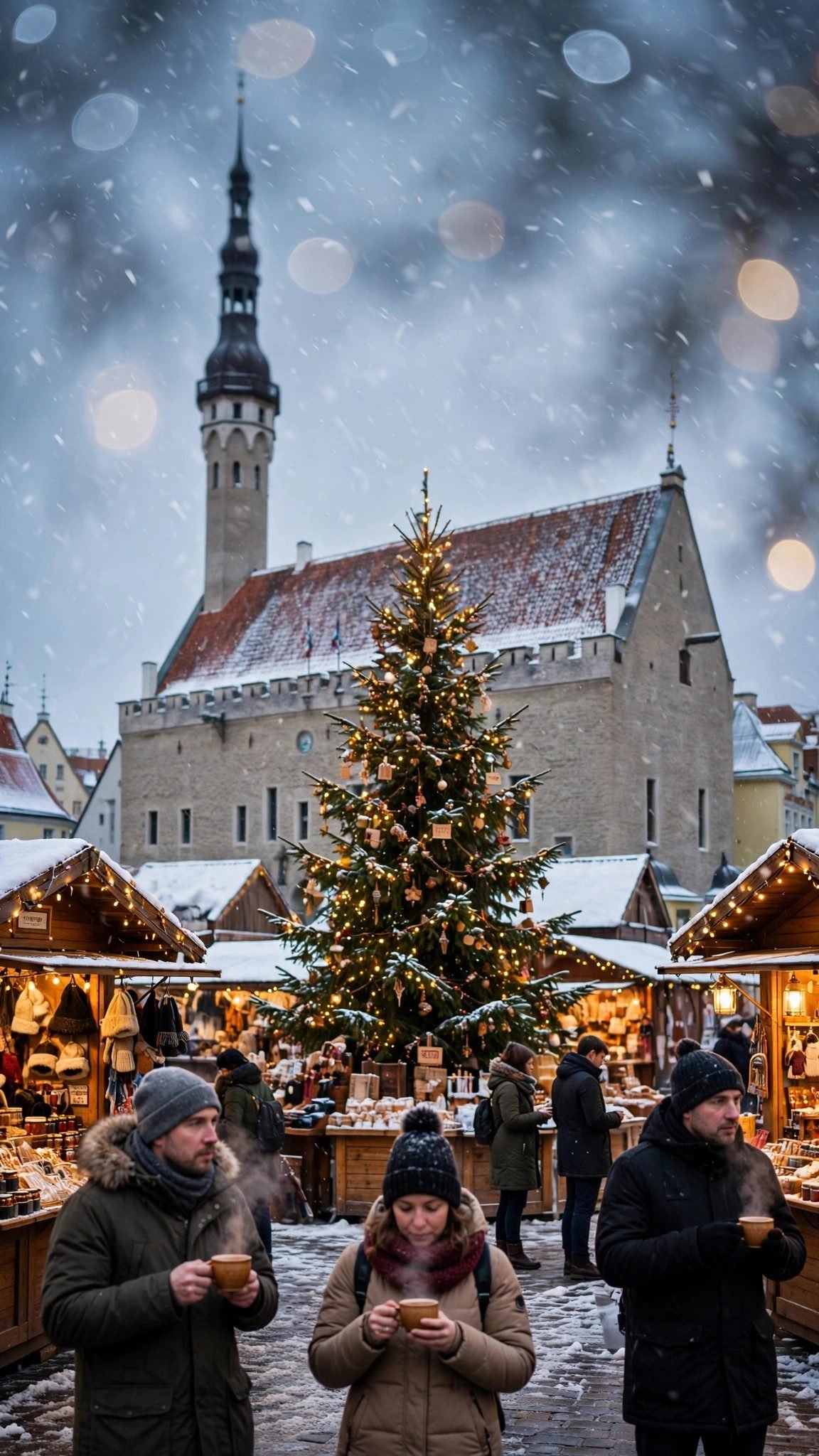
8. Bruges Christmas Market: Winter Glow, Belgium
Bruges in December is the closest thing to walking inside a snow globe, and the Winter Glow market runs from 20 November 2026 to 3 January 2027 on the Markt and Simon Stevinplein. Stalls open from 11 am to 10 pm Sunday to Thursday, and until 11:30 pm on Fridays and Saturdays. The market stays open past Christmas, which makes it a good pick for a late December trip.
The Markt is the main square, and the ice rink there costs 9 euros, which is fair for an hour on the ice with the Belfry lit up above you. Simon Stevinplein is the calmer of the two sites, with craft stalls and fewer crowds. I liked Bruges best after dark, when the canals catch the lights and the whole old town glows. The chocolate stalls are the ones to budget for. A box of handmade pralines costs more than a market snack, but it travels home better than anything else in this guide.
Bruges is small, and you can walk the whole old town in a day. That makes it a strong weekend trip, and it pairs well with Brussels, an hour away by train. Stay in the old town if you can, and bring shoes with grip, because the cobblestones get slick when it rains.
Local tip: Skate the rink at 11 am when it opens. The ice is fresh, the line is short, and the Belfry looks best in morning light.
9. Colmar Christmas Market: Old Town, France
Colmar is the small town that outshines the big cities in this guide. Its six Christmas markets run from 23 November to 29 December 2026 across the old town, and each one has its own feel. The stalls open from 10 am to 8 pm most days, and the town also runs a circuit of Alsace village markets on weekends, most of them from 27 November to 30 December.
The old town is the draw. Half-timbered houses in pink, yellow, and green line canals so pretty that the town calls one stretch Little Venice. I went on a Saturday and the whole town felt like a market, not just the squares with stalls. The food is Alsatian, like Strasbourg, but the portions run bigger and the prices run lower, and the white wine from the local vineyards is the drink to try with a warm pretzel.
Colmar works best as a day trip from Strasbourg, 30 minutes by train, or as a slow overnight stop. If you stay, walk the town after the stalls close. The lights stay on, the crowds thin out, and the canals reflect the whole town back at you. For packing ideas for a cold weekend like this one, read my 35 carry-on packing tips that beat every airline fee.
Local tip: Skip the main square at noon on Saturday and walk the canal streets instead. The light is better there, and the stalls along the water are the ones the locals shop at.
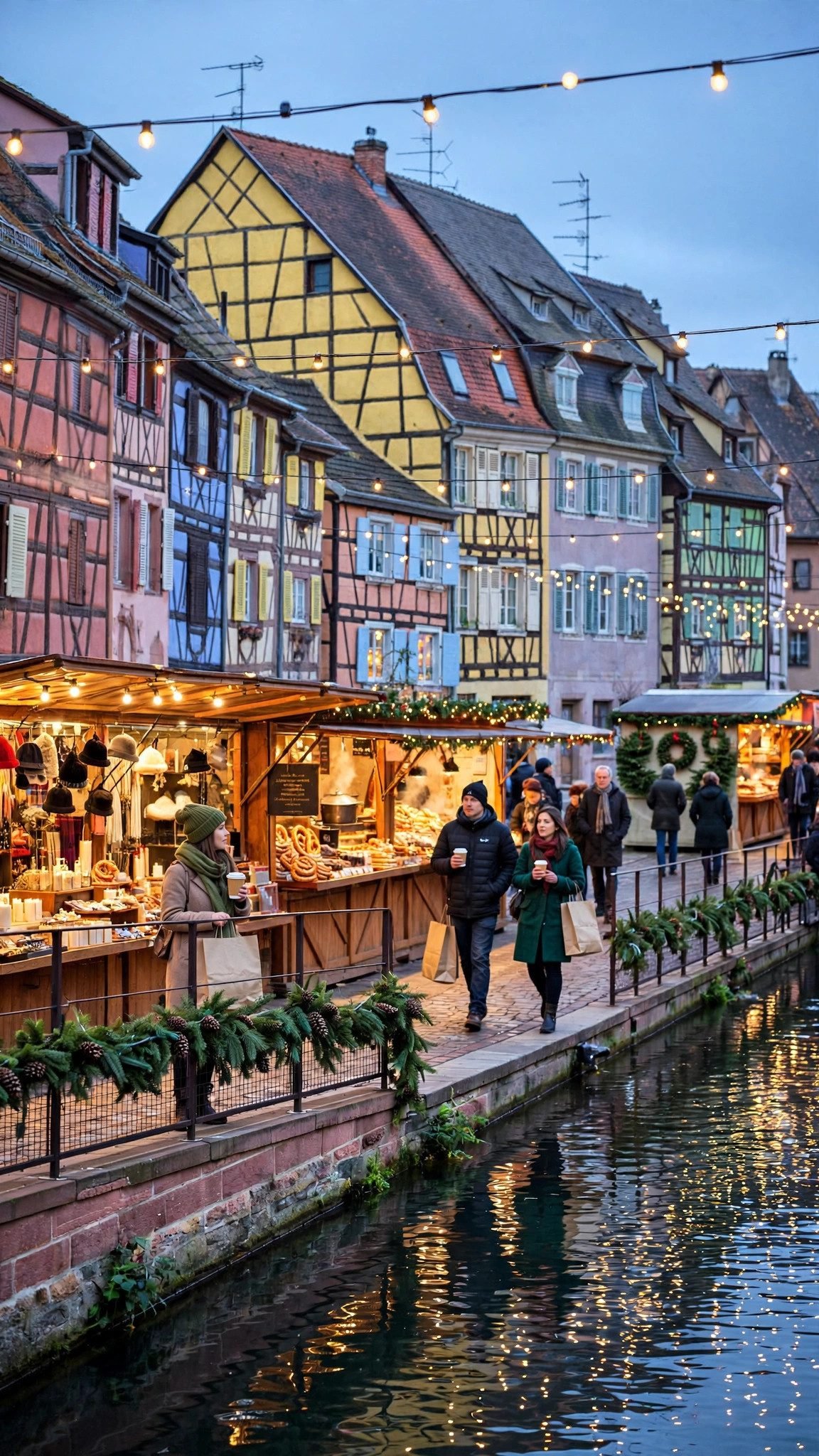
10. Copenhagen Christmas Market: Tivoli Gardens, Denmark
Copenhagen does Christmas inside a theme park, and it works better than it sounds. Christmas in Tivoli runs from 13 November 2026 to 3 January 2027, and entry is ticketed, with prices from about DKK 210. The gardens fill with lights, the rides run in the cold, and the market stalls sell Danish pastries, roast pork sandwiches, and hot glugg.
Tivoli is the market to pick if you travel with kids, or if you want the most lights per square meter in this guide. The whole park glows, the lake reflects it, and the fireworks on some nights add a finale. I went on a weekday evening and the park felt calm, which surprised me, because the lights make it look busy in photos. The food is the weak point on price. Copenhagen is the most expensive city in this guide, so eat a big lunch outside the park and snack inside it.
Copenhagen also has free street markets on Nytorv and Gammeltorv, which run from 6 November to 21 December. Use those for shopping in the daytime and save Tivoli for the evening, when the lights earn the ticket price. For more on keeping a pricey city cheap, read my 11 free things to do in London for the same habit of mixing free and paid stops.
Local tip: Go to Tivoli on a weeknight, not a Saturday. The lights are the same, the lines are half as long, and the rides run with no wait.
11. Cologne Christmas Market: Cathedral Market, Germany
Cologne puts its biggest market right under the cathedral, and the scale of the building does half the work. The Cathedral market runs from 16 November to 23 December 2026, and it closes a day earlier than the markets that run to Christmas Eve, so plan around the 23 December end. The market is one of the largest in Germany, and the stalls spread across the square in front of the Dom.
I liked Cologne for the view. Stand at the far end of the square at dusk and the cathedral towers rise black against the lights, with the market glowing at their base. The food stalls sell potato pancakes, sausages, and hot chocolate, and the mulled wine comes in a cathedral mug that changes design each year. Cologne has six other markets across the city too, including one at the harbor and one in the old town, so you can spend a full day moving between them.
Cologne is a good first German market because the city is easy to reach and easy to walk. The station sits next to the cathedral, so you step off the train and you are already at the market. Give it an afternoon and an evening, and take the train on to Dusseldorf or Bonn if you want a second market in the same trip. If you fly in for this one, read my 20 long flight hacks that make economy feel like business class first.
Local tip: Climb the cathedral tower in the morning, before the market opens. You see the whole market being set up from above, and the tower is quiet before the crowds arrive.
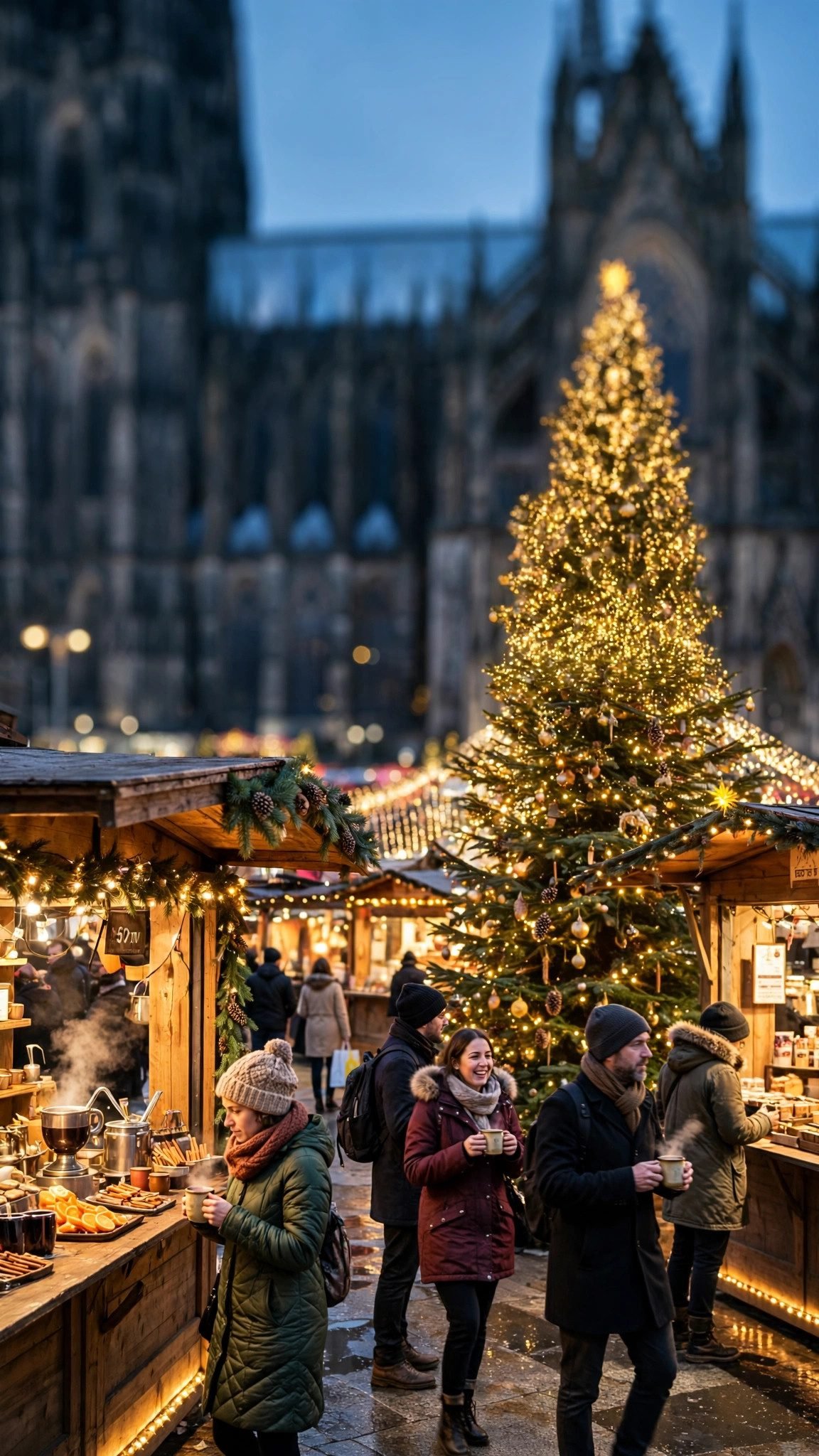
12. Krakow Christmas Market: Main Market Square, Poland
Krakow is the cheapest big market in this guide, and its Main Market Square is one of the largest medieval squares in Europe. The Christmas fair on the square is planned to run from 27 November 2026 into early January, with sales from 10 am to 8 pm. The dates were listed as planned by the organizer, so check them again before you book, but the pattern holds every year.
The square is the draw. The Cloth Hall sits in the middle, St Mary’s Basilica rises on one corner, and the stalls fill the space between them with smoked cheese, grilled sausages, and hot mead. I liked Krakow best in the snow, when the square goes quiet and the lights on the Cloth Hall reflect on the wet cobblestones. The food here costs about half what it costs in Vienna, and the portions run bigger, so this is the market to pick if you want to eat your way through the trip.
Krakow pairs well with a longer Poland trip, and the old town is small enough to walk in a day. Stay near the square if you can, and take a morning to walk the old town walls before the market opens. For more on planning a cheap Europe trip, read my 11 affordable European destinations for solo female travelers.
Local tip: Buy the smoked cheese from the stall with the grill running, not the one with the cheese in a cold case. The warm cheese with cranberry sauce is the snack to get here.
13. Munich Christmas Market: Marienplatz, Germany
Munich closes the list with the market that feels most like a local event. The Christkindlmarkt on Marienplatz runs from 20 November to 24 December 2026, and it closes at 2 pm on Christmas Eve. The stalls fill the square in front of the New Town Hall, and the Glockenspiel rings out above them at 11 am and noon.
I liked Munich because the market feels like part of the city, not a show put on for visitors. The stalls sell wood carvings, ornaments, and Lebkuchen, and the beer gardens nearby serve the same food with a roof over your head when the snow starts. The market is also the easiest one in this guide to pair with another city, since Nuremberg is a short train ride away and the two markets are open together from 27 November to 24 December.
Munich is the best base for a first Germany trip. The trains run on time, the old town is easy to walk, and the English Garden gives you a quiet morning away from the crowds. If you only have one day in Munich, do the market in the evening and the English Garden in the morning. For ideas on what to cook when you get home and miss the food, read my 12 travel-inspired recipes to make at home when you miss Europe.
Local tip: Watch the Glockenspiel at noon from the market side, then walk straight into the stalls while the crowd is still looking up. You get the market to yourself for ten minutes.
Which of the Best Christmas Markets in Europe Should You Pick?
If you only pick one, pick Vienna for the scale, Strasbourg for the atmosphere, or Prague if you travel after Christmas Day. If you pick two, pair Vienna with Prague, or Strasbourg with Colmar. If you pick a week, run the train route in this guide and let the overlap window do the work. The best Christmas markets in Europe are not a contest. They are a season, and the right one is the one that fits your dates, your budget, and how much cold you can take in one afternoon.
Book the trip around the overlap window, 28 November to 23 December, when all 13 are open. Pack warm, bring cash, and go in the morning. Save this guide for your planning, and pick your markets before the flights get expensive.
Local tip: If you can only go on a weekend, pick the Saturday and go to the market at 10 am, then leave by 4 pm before the evening crowd peaks.
You Might Also Like
- 9 Europe Trip Planning Mistakes That Waste Money (And What to Do Instead)
- 13 Cheapest Countries to Visit in 2026 (Real Daily Budgets From My Trips)
- 7 Things Nobody Tells You About Visiting the Faroe Islands on a Budget
Local tip: Read the Europe trip planning mistakes guide first if your dates are already set. It covers the booking errors that cost first-timers the most.