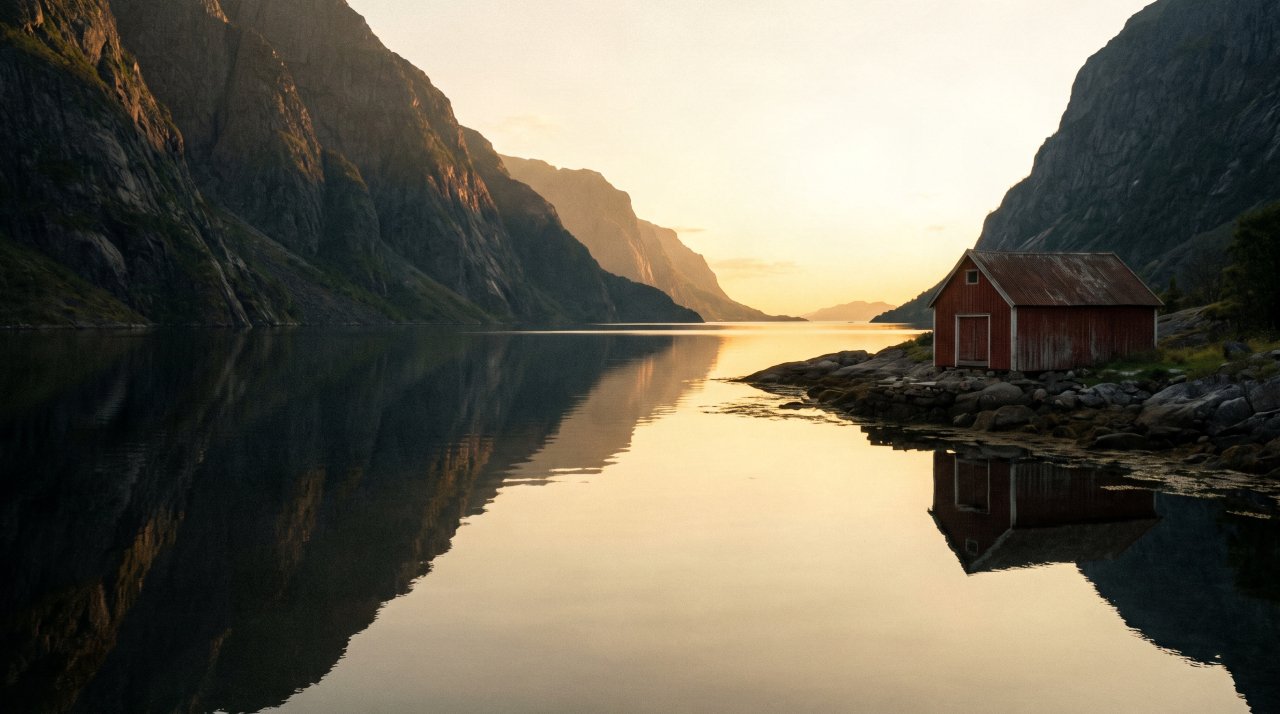
I had seen a thousand photographs of Norwegian fjords before I ever went. I thought I was prepared but I was not. No photograph — and I have been to a lot of places — captures the scale of standing at the edge of a fjord when the water below you is so still it looks like glass and the mountains above are disappearing into low cloud. Norway does something to you that most travel destinations simply do not.
- Walk the Lofoten Islands
- Drive the Atlantic Ocean Road
- Take the Flåm Railway
- Hike Preikestolen (Pulpit Rock)
- See the Northern Lights in Tromsø
- Explore Bergen and the Bryggen Wharf
- Cruise the Geirangerfjord
- Witness the Midnight Sun Above the Arctic Circle
- Hike in the Jotunheimen National Park
- Visit the Viking Ship Museum in Oslo
- Take the Hurtigruten Coastal Voyage
- Explore Sognefjord — Norway’s Longest Fjord
- Day Trip to Sommarøy Island from Tromsø
- See Puffins at Runde Island
- Watch the Sun Rise Over Preikestolen From the Water
- Norway Will Surprise You Every Time
This list of things to do in Norway is not the standard one. Yes, Lofoten is on it — it has to be, because Lofoten is genuinely extraordinary. But so is a boat trip you can take for 40 Norwegian kroner, a road that gets regularly swallowed by Atlantic waves, and a city that gives you access to three fjords within a 20-minute drive. This is what Norway actually offers, from someone who spent three weeks there in 2024. Let’s get into it.
Walk the Lofoten Islands
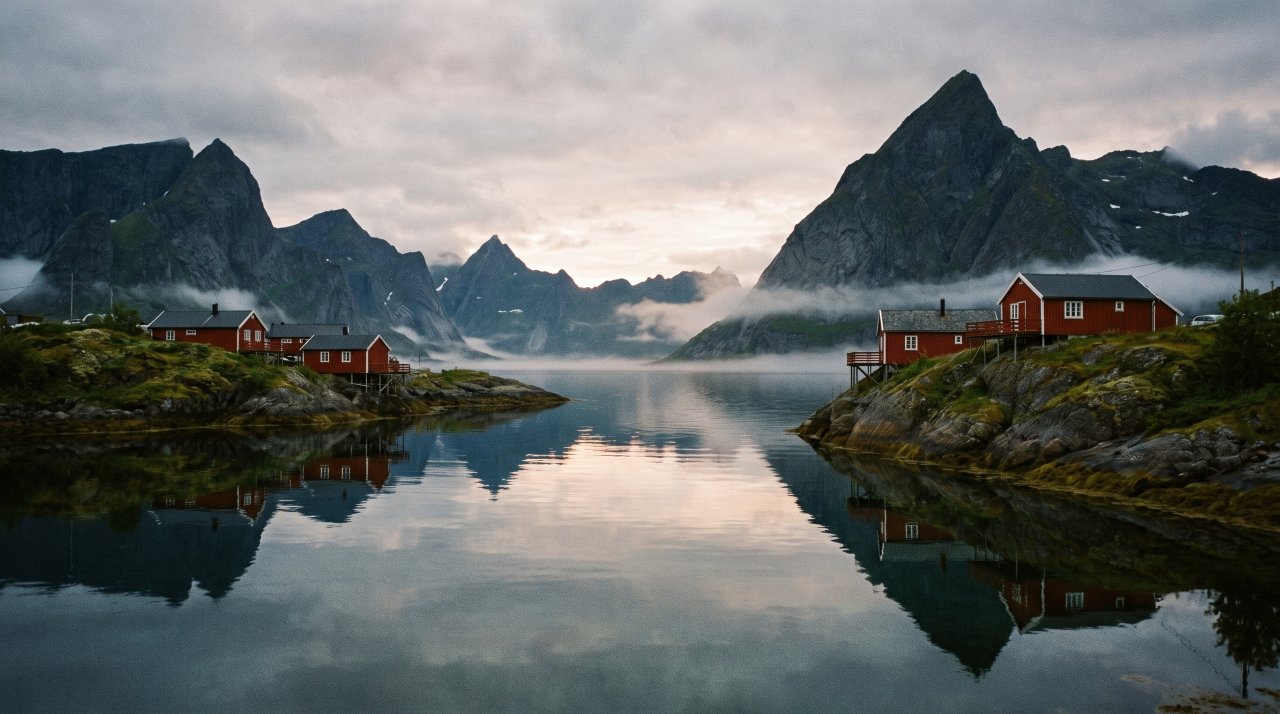
If you do one thing in Norway, make it Lofoten. The Lofoten archipelago sits inside the Arctic Circle, about 200 kilometers north of Bodø, and it is the closest thing to a landscape from a dream that I have encountered anywhere. Jagged mountain peaks rise directly from the sea, red and yellow fishing cabins (rorbu) cluster on rocky headlands above perfectly clear water, and on clear nights between September and April, the Northern Lights reflect in the fjords below.
Flying into Svolvær from Oslo takes about 1.5 hours and costs between £60-£150 return depending on booking date. Renting a car on arrival is essential — the E10 highway runs the length of the main islands and connects you to the smaller outer islands. Budget accommodation in a traditional rorbu cabin costs around £70-£120 per night for two people. Staying in a rorbu is not optional — it is the experience.
The best base is Svolvær for north Lofoten or Reine for south Lofoten. Reine is photographically superior (it was voted the most beautiful village in Norway) but gets very crowded in summer. Visit in September or October for a combination of autumn colours, Northern Lights probability, and reasonable crowd levels.
Local tip: The Reinebringen hike above Reine has steel steps that start before dawn is fully light — arriving at the top for sunrise at around 7am in October puts you above the clouds with the fjord lit below you, and the first few hikers of the day have it entirely to themselves.
Drive the Atlantic Ocean Road
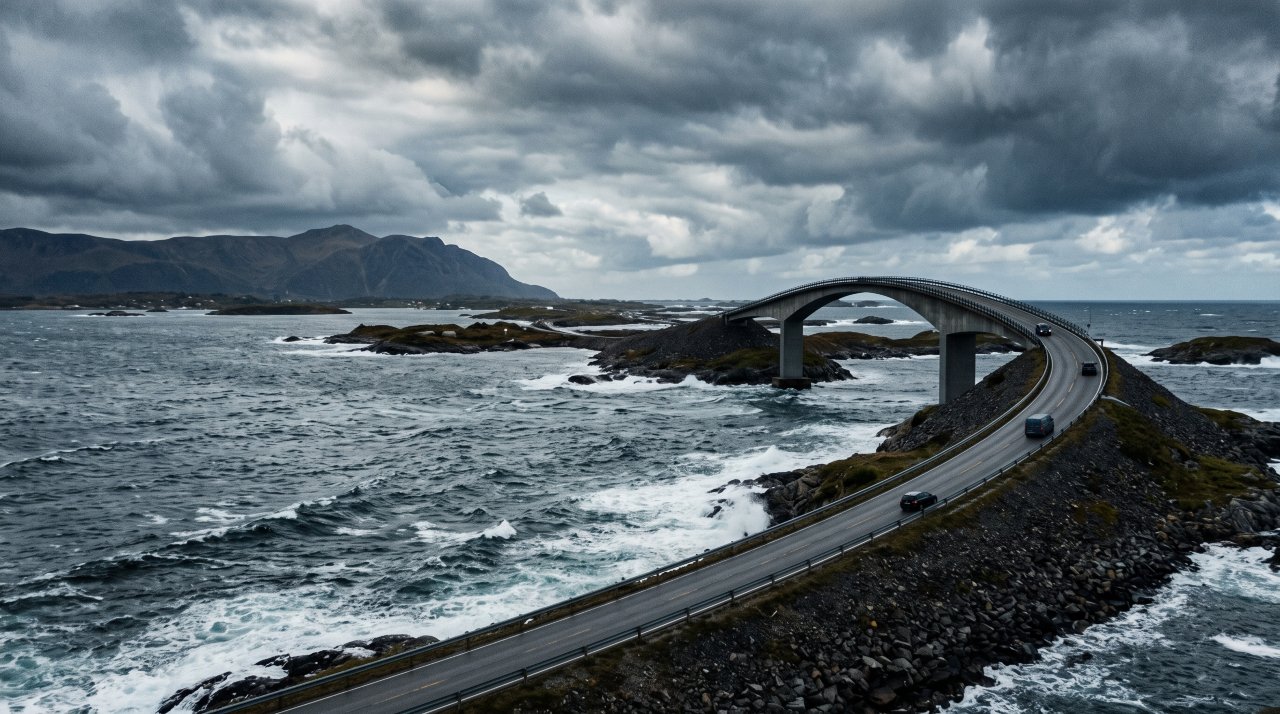
The Atlantic Ocean Road (Atlanterhavsveien) is an 8.3-kilometer stretch of road connecting the mainland to the island of Averøy, crossing a chain of small islands and skerries via eight bridges. In good weather it is spectacular. In a North Atlantic storm, it is one of the most dramatic things a car can legally drive through.
The Storseisundet Bridge — the most famous of the eight — curves and dips in a way that makes it look from certain angles as though the road ends in mid-air above the ocean. In winter storms, waves crash directly over the road surface. There are storm-watching platforms built into the seascape for people who want to get close to the spray without being on the road itself.
The road sits between Kristiansund and Molde and takes about 30 minutes to drive end to end at a normal pace. There is no toll on the road itself. The Atlantic Ocean Road Scenic Route (Nasjonale Turistveger) designation means the rest stops and viewing platforms are architecturally designed — some of the best public infrastructure design in Norway.
Go at high tide during rough weather for the full experience. But even in flat calm, the drive is worth it.
Local tip: There is a fishing platform built off the Askevågen bridge where local fishermen cast lines into the Atlantic — pull over and watch for 10 minutes and you will likely see something interesting.
Take the Flåm Railway
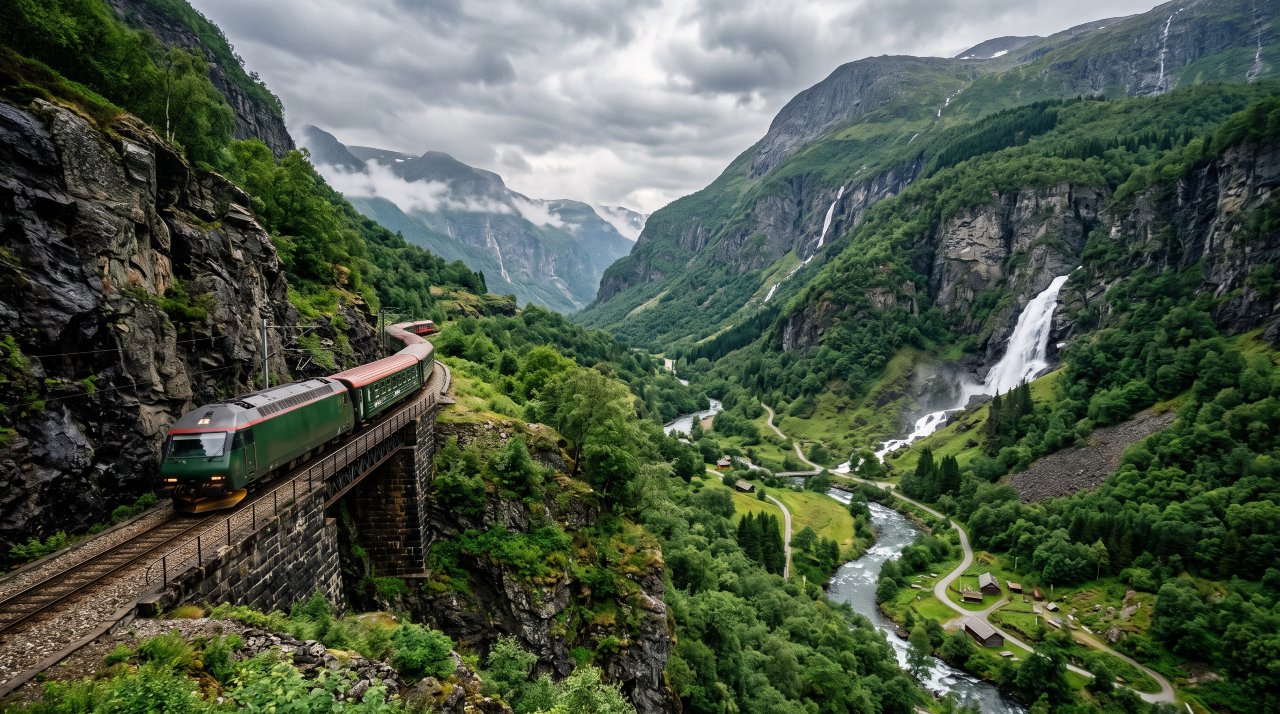
The Flåmsbana is a 20-kilometer railway line that runs from Myrdal on the Bergen Line down through the Flåm valley to the Aurlandsfjord at sea level. It descends 865 meters in altitude. The gradient — up to 55 per mille — is one of the steepest in the world for a standard railway. The journey takes 1 hour each way.
The train passes through 20 tunnels, crosses mountain waterfalls, and at one point stops at the Kjosfossen waterfall (87 meters high) so passengers can get off and photograph it. The scenery changes completely every 10 minutes — from high mountain plateau covered in snow to deep river gorge to fjord waterfront.
A return ticket costs around £50 per person. Book in advance, especially for summer travel — this is one of the most visited railway journeys in Scandinavia and sells out weeks ahead. The best seats are on the left side of the train going down (heading from Myrdal to Flåm) for maximum waterfall views.
From Flåm you can take a Nærøyfjord cruise (from £20) — the Nærøyfjord is a UNESCO World Heritage site and one of the narrowest fjords in Europe.
Local tip: The return train from Flåm back to Myrdal in the late afternoon hits the valley light at a completely different angle — the shadows on the mountains are longer and the colours more dramatic than the morning descent.
Hike Preikestolen (Pulpit Rock)
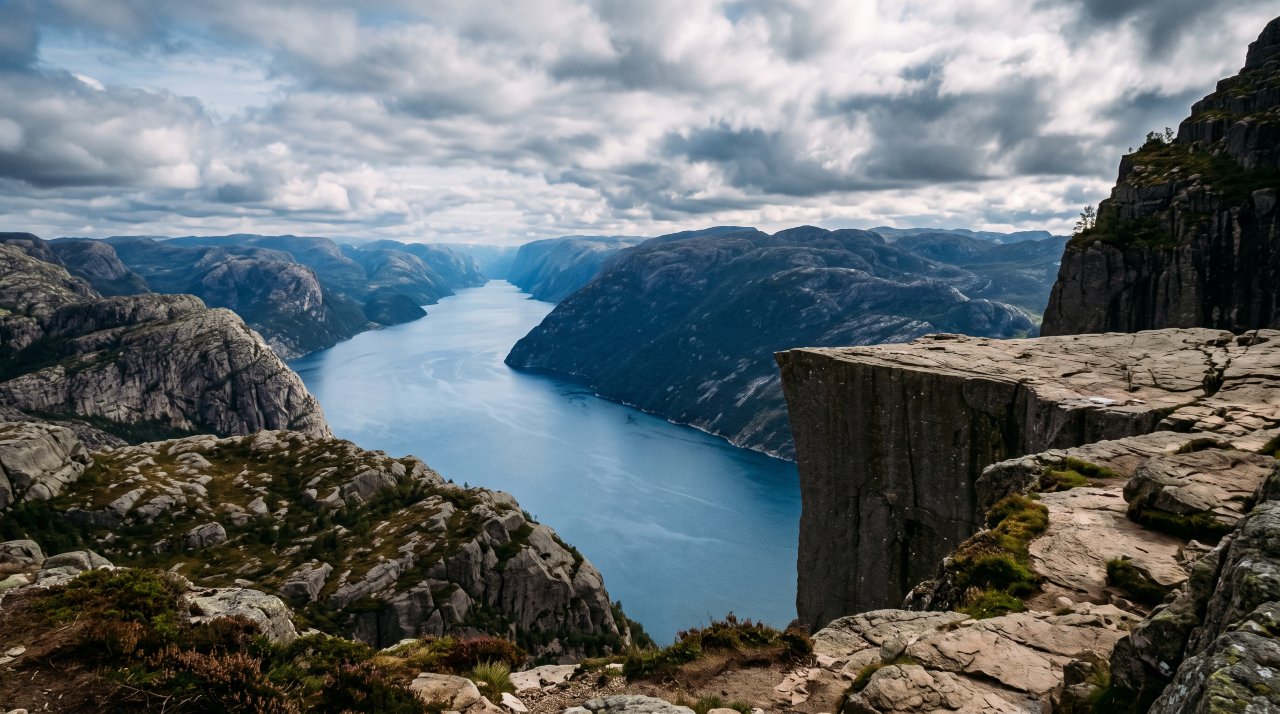
Preikestolen is a flat-topped cliff that rises 604 meters above the Lysefjord. The plateau at the top is about 25 by 25 meters square. Standing on the edge of it — there is no fence — looking down at the fjord is the kind of moment that rearranges your sense of scale.
The hike takes approximately 4 hours return (8 kilometers round trip) with an elevation gain of about 330 meters. It is classified as moderately challenging. The trailhead is at Preikestolen Fjellstue (a mountain lodge with a car park) and is accessible by ferry from Stavanger plus a connecting bus — the combination costs around £20 return. The ferry departs from Stavanger Strandkaien dock.
The hike is popular — very popular in summer. July and August see 300,000+ visitors per year at peak. Go in May or September for fewer people and better light. The summit is most dramatic in early morning or late afternoon when the sun is low enough to throw shadows across the fjord below.
There is no entry fee for the hike itself. The car park at Preikestolen Fjellstue costs about £15 per day.
Local tip: About 1 kilometer before the summit there is a small lake (Preikestolvatnet) that reflects Preikestolen perfectly on calm days — this shot appears on almost zero travel accounts because everyone rushes past it to get to the top.
See the Northern Lights in Tromsø
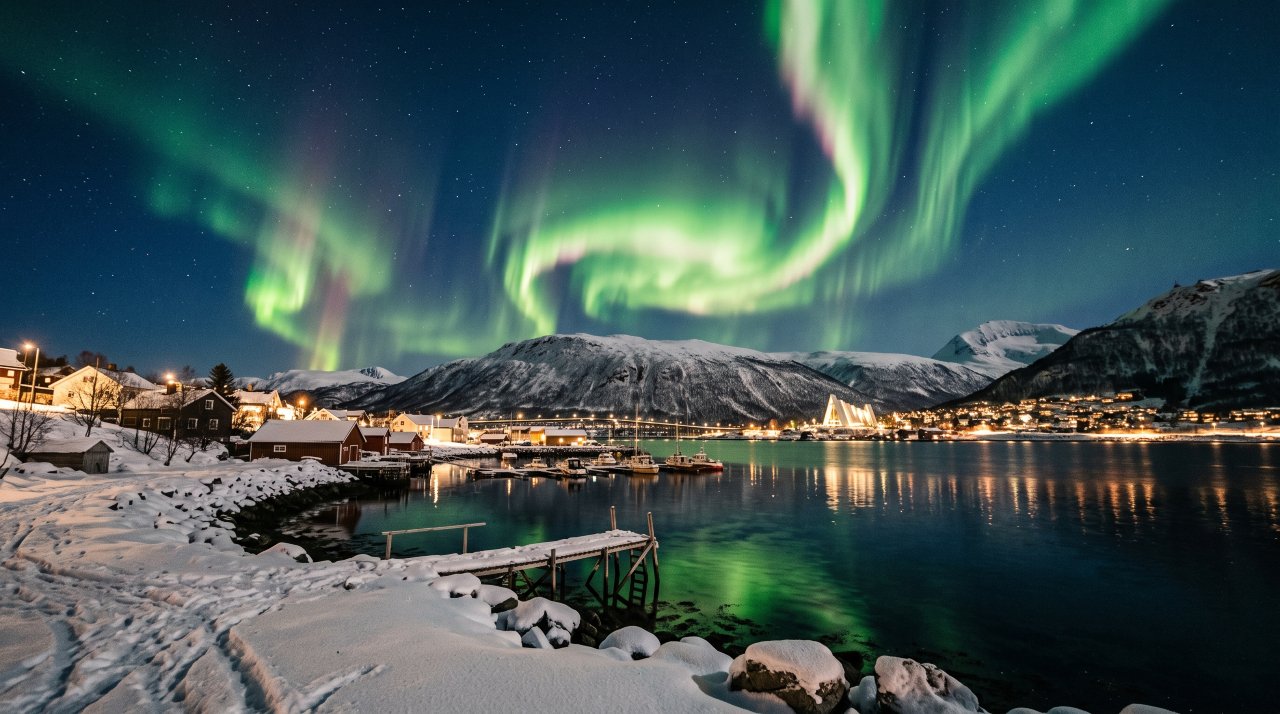
Tromsø sits at 69 degrees north — well inside the Arctic Circle — and is consistently one of the best places in the world to see the Northern Lights. The aurora season runs from late September to late March, when the sky is dark enough. The peak probability period is November through February.
Seeing the Northern Lights requires darkness and clear skies. Tromsø averages 40-50 nights per winter when conditions are right. A guided tour (essential for first-timers who do not know the landscape or the weather patterns) costs around £80-£120 per person and usually runs from 8pm to midnight, driving you out of the city light pollution to the right conditions.
Tromsø itself is worth 2-3 days at minimum: the Arctic Cathedral (Ishavskatedralen) is a stunning piece of 1960s architecture with a 140-square-meter stained glass window on the east facade. The Polaria museum explains Arctic ecosystems. The Fjellheisen cable car takes 4 minutes to rise 421 meters above the city and gives a view over the snowy islands and fjords below.
Local tip: The Aurora Forecast website (spaceweather.com/aurora) rates Northern Lights probability on a scale of 0-9. Anything above 4 in Tromsø on a clear night is worth chasing.
Explore Bergen and the Bryggen Wharf
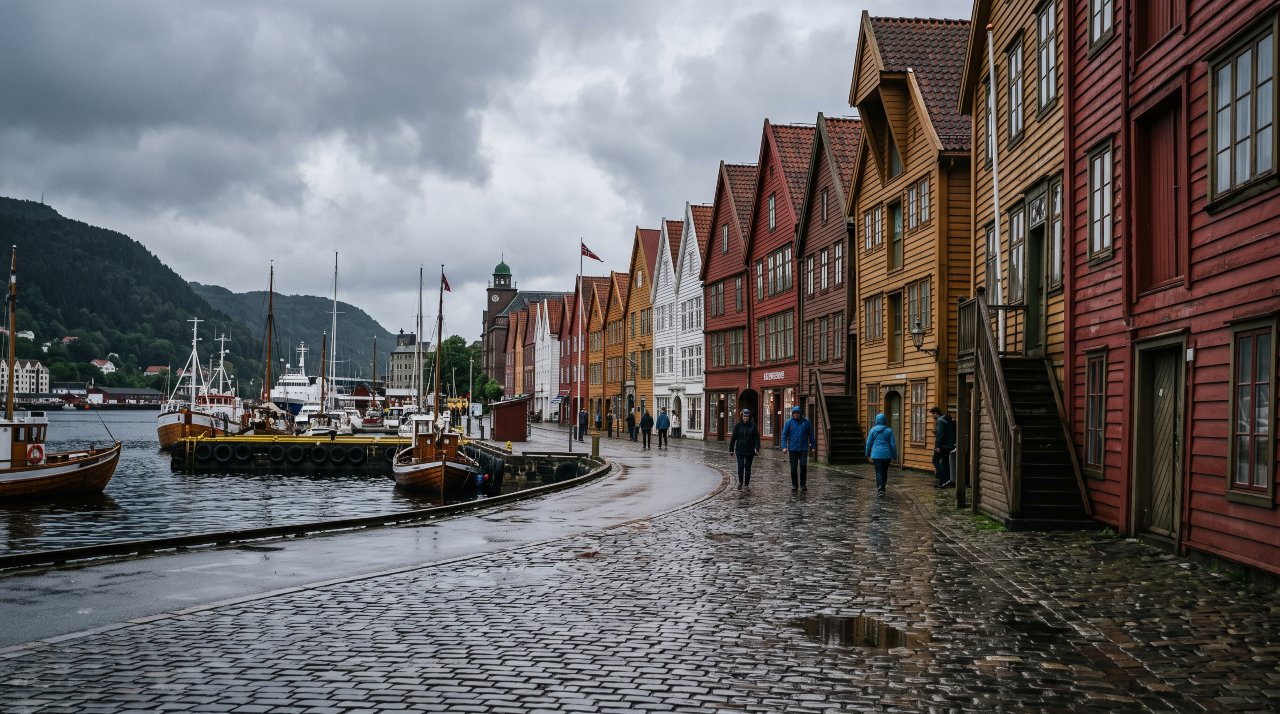
Bergen is Norway’s second city and the gateway to the western fjords. The Bryggen wharf — a row of medieval Hanseatic trading houses built from the 13th century onward — is a UNESCO World Heritage site and the visual symbol of Bergen. The wooden buildings lean at various angles from centuries of settlement, and the alleyways between them are narrow enough that two people can barely pass each other.
Bryggen is also home to some of Bergen’s best small shops, art galleries, and cafés. A tunnel through the back of the wharf buildings leads to a courtyard most visitors never find. The Theta Museum inside Bryggen (£5 entry) is a tiny, single-room museum preserving a secret World War II radio room used by the Norwegian resistance.
Bergen itself is compact and walkable. The Fløibanen funicular (£12 return) takes you up to Mount Fløyen in 8 minutes for panoramic city and fjord views. The Bergen Fish Market on the waterfront (open 7am to 11pm daily) is the real thing — not a tourist market — and breakfast at the fish market costs around £8-£12 for smoked salmon and bread.
Bergen gets 240 days of rain per year. Pack accordingly. But the rain is often brief, and a wet Bergen in evening light is not a bad place to be.
Local tip: The wooden houses of Nordnes peninsula (a 15-minute walk from Bryggen) are largely unknown to visitors and show what the historic wooden city of Bergen looked like before the great fires of the 18th and 19th centuries.
Cruise the Geirangerfjord
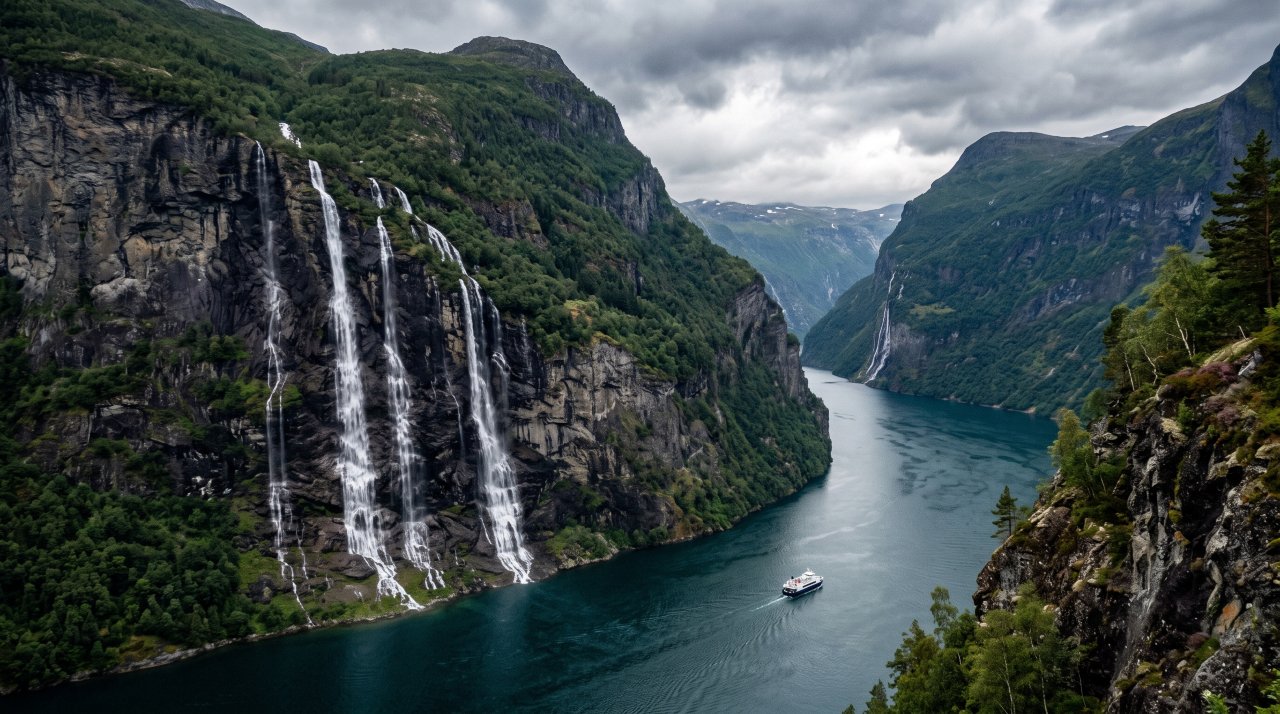
The Geirangerfjord is a UNESCO World Heritage site and one of the most photographed places in Norway. The fjord is 15 kilometers long and surrounded by snow-capped mountains, with waterfalls including the Seven Sisters (seven separate streams tumbling 250 meters down a vertical cliff face) visible from the water.
Ferry crossings between Geiranger and Hellesylt take 1 hour and cost around £30 per person (bikes and cars additional). This is a public ferry, not a tourist cruise — it runs on schedule regardless of weather and carries locals alongside visitors. The views from the ferry deck are essentially the same as on a dedicated sightseeing cruise at twice the price.
Geiranger village itself is worth a day: the viewpoint at Ørnesvingen (Eagle Road), a switchback road with 11 hairpin bends above the fjord, gives you the classic Geiranger photograph from above. Dalsnibba viewpoint (£10 toll) at 1476 meters altitude shows the fjord from directly above — a completely different and equally extraordinary perspective.
Local tip: The Seven Sisters waterfall is best seen in June when snowmelt is at its peak — the flow in July and August reduces significantly and the waterfall loses some of its drama.
Witness the Midnight Sun Above the Arctic Circle
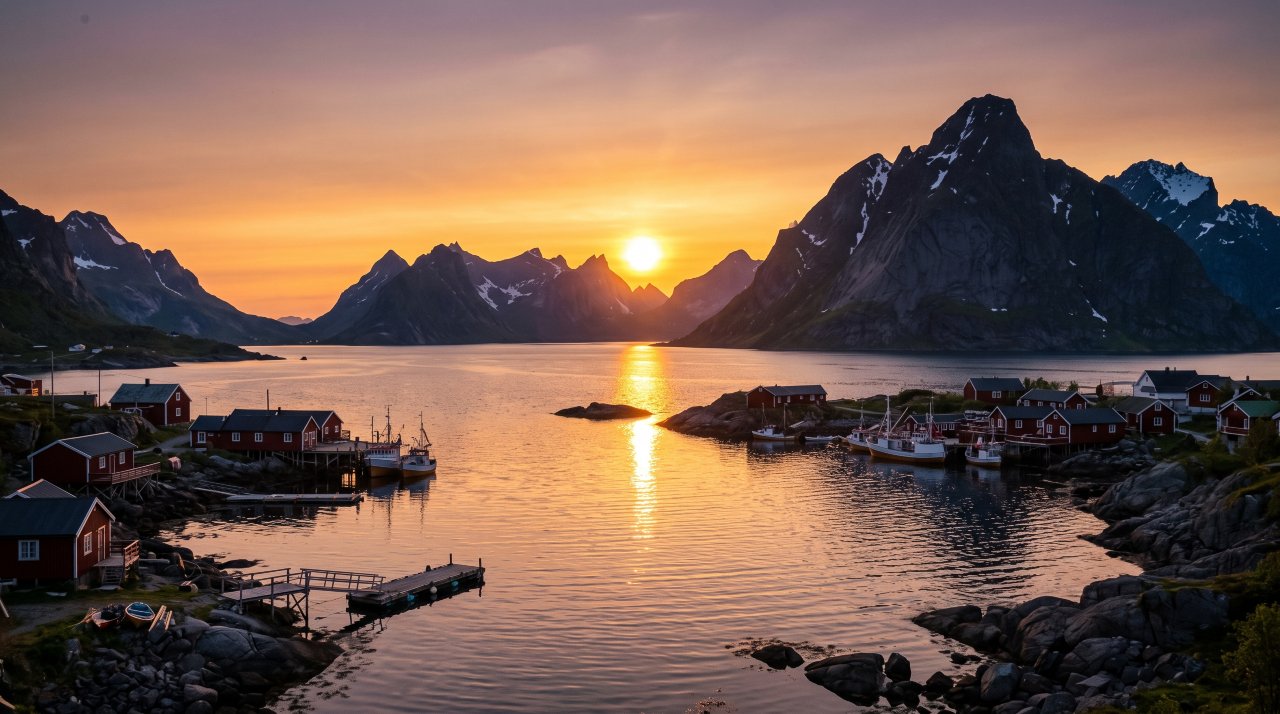
North of the Arctic Circle, from around mid-May to late July, the sun does not set. It dips toward the horizon, turns everything amber and gold, and then rises again without ever reaching dark. Experiencing the Midnight Sun for the first time is genuinely disorienting — your body insists it should be night and the sun insists otherwise.
The Arctic Circle crossing point on the E6 highway north of Bodø (the Arctic Circle Centre, Polarsirkelsenteret) is the landmark point, but for the best Midnight Sun experience you want to be further north. Mo i Rana (just south of the Arctic Circle) and Bodø are the most accessible southern options. Svolvær in Lofoten is better. Tromsø, Nordkapp, and Svalbard are extraordinary.
Bodø is a 1.5-hour flight from Oslo (around £40-£80 return). Midnight Sun cruises operate from Bodø at around £30 per person. The Saltstraumen Maelstrom near Bodø — one of the strongest tidal currents in the world — is best viewed during the Midnight Sun at maximum flow (check the tidal tables before going), which creates a genuinely strange sight.
Local tip: The Midnight Sun disrupts sleep badly for most people. Pack a proper sleep mask — the blackout curtains in most Norwegian hotels are good but rarely perfect.
Hike in the Jotunheimen National Park
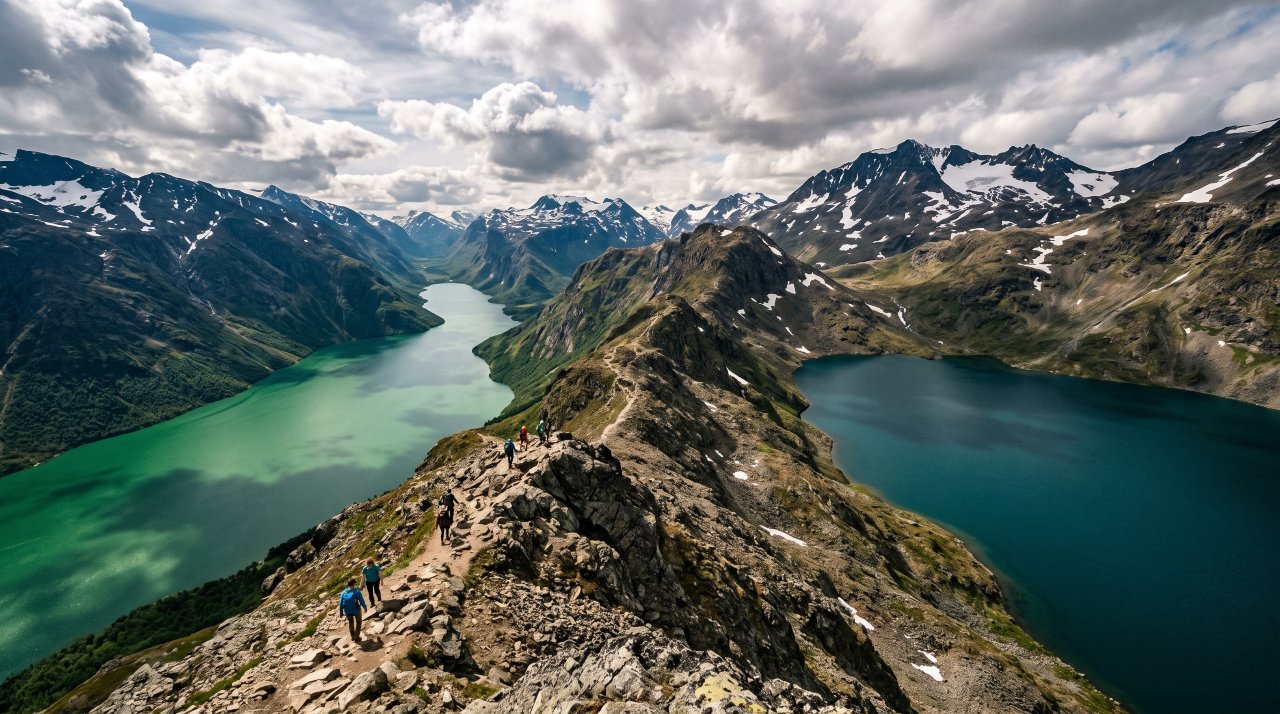
Jotunheimen means “Home of the Giants” in Norwegian and contains Norway’s two highest mountains — Galdhøpiggen (2469 meters) and Glittertind (2452 meters). But the national park also has accessible day hikes that do not require alpine experience or special equipment.
The Besseggen Ridge trail is considered one of the most spectacular ridge hikes in Europe. It runs 15 kilometers above Lake Bessvatnet (green) on one side and Lake Gjende (blue-green) on the other. The ridge is narrow enough in places that you walk with one foot on each side. The hike takes 5-8 hours. A morning boat from Gjendesheim to Memurubu (£20) starts the loop; you walk back along the ridge to the start.
Access to Jotunheimen is from Otta or Lillehammer by car (2-3 hours from Oslo). Accommodation inside the park ranges from staffed mountain huts (£60-£90 per person including dinner and breakfast) to camping. The staffed huts are the better option for a first Jotunheimen visit — the food is good and the staff know the trails.
Local tip: The boat on Gjende lake runs from early June to early October. Outside those dates Besseggen is only accessible to winter mountaineers — plan accordingly.
Visit the Viking Ship Museum in Oslo
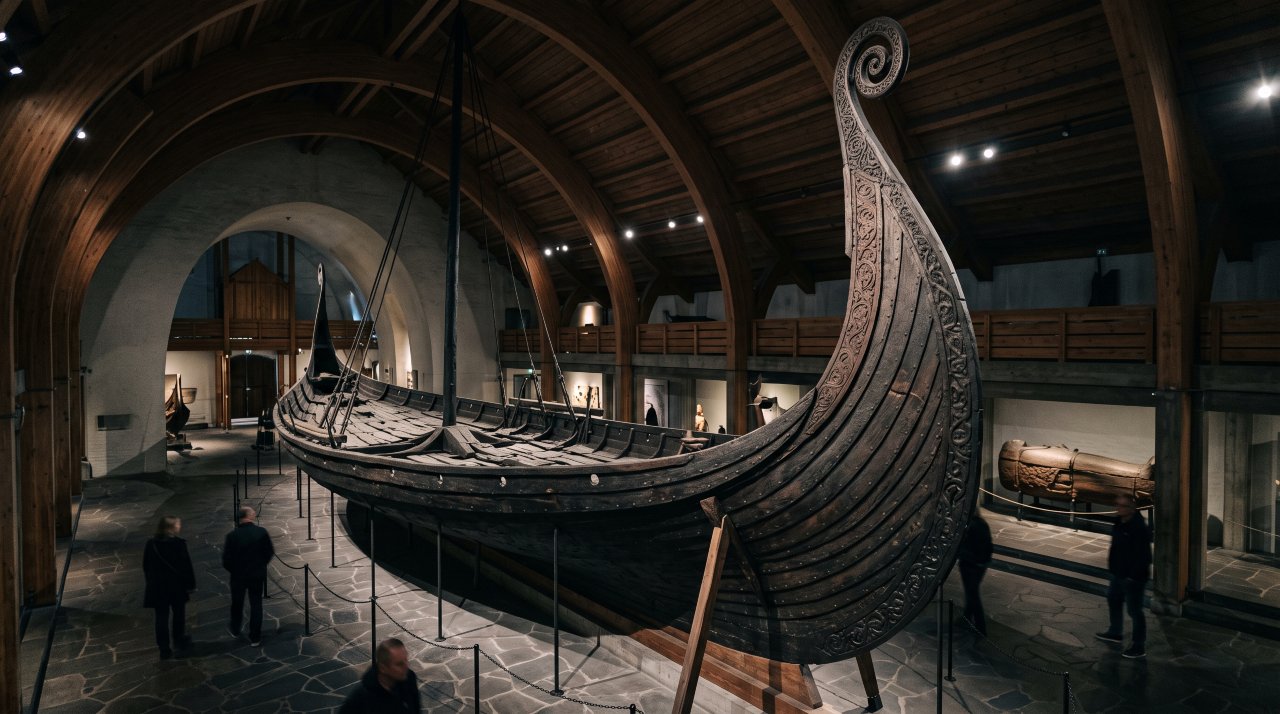
The Viking Ship Museum in Oslo houses three of the best-preserved Viking ships in the world — the Oseberg, Gokstad, and Tune ships, buried as grave ships between 800 and 900 AD and excavated from the Vestfold burial mounds south of Oslo in the 19th and early 20th centuries.
The Oseberg ship is the one that stops you in your tracks. It is 22 meters long, elaborately carved at bow and stern, and survived buried in a blue clay mound for over 1100 years. The burial goods found with it — including carved wooden sledges, textiles, kitchen equipment, and the skeletons of two women — are displayed around the ship and show the level of craftsmanship these people reached.
Admission costs £15 per adult. The museum is on the Bygdøy peninsula, a 10-minute bus ride from central Oslo (Bus 30 from Jernbanetorget, around £3). Allow 1.5 to 2 hours.
Note: the museum was undergoing expansion as of 2024. Check the current opening situation before visiting — some galleries may still be reconfigured.
Local tip: The museum café looks directly at the Oseberg ship through a glass wall — getting a coffee and sitting with the ship visible while you process what you have just seen is an underrated experience.
Take the Hurtigruten Coastal Voyage
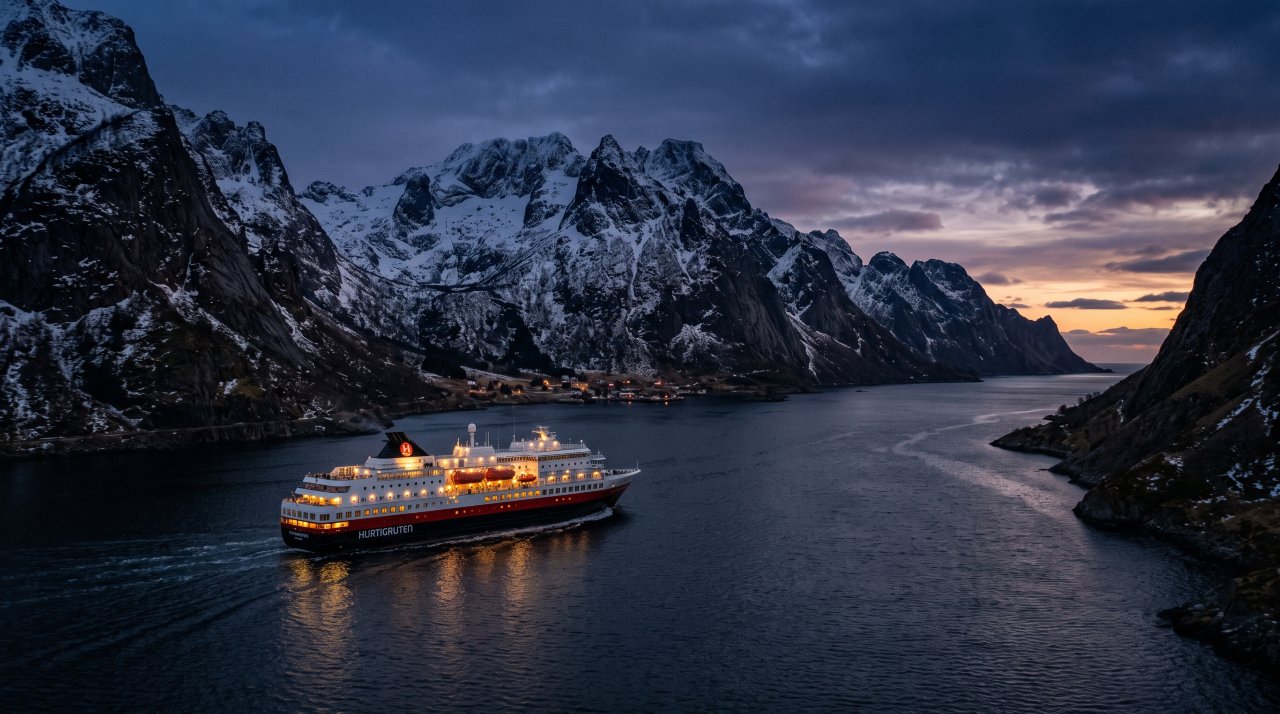
The Hurtigruten is Norway’s historic coastal express — a working mail and passenger ship that has connected Bergen to Kirkenes (near the Russian border) since 1893. The full round trip takes 12 days. But you can book individual legs as a cruise, starting from Bergen or Ålesund or Tromsø, and stay for as many nights as your budget allows.
What makes the Hurtigruten different from a standard cruise is that it is still a working ship. It stops at 34 ports — some of them so small the stop lasts 15 minutes — and carries everything from packages to hospital supplies to local passengers heading one village up the coast. You are not in a resort at sea. You are on a ship that matters to the communities it serves.
Prices vary enormously depending on the cabin and the season. A 4-night segment in an inner cabin in shoulder season costs around £400-£600 per person including meals. The Northern Lights are visible from the upper deck between September and March. Some segments cross the Arctic Circle, where the ship’s captain plays a traditional horn fanfare.
Local tip: Book a cabin with a window or balcony facing the port side (left side) if traveling south to north — that is where the fjord views are on the most dramatic section between Ålesund and Tromsø.
Explore Sognefjord — Norway’s Longest Fjord
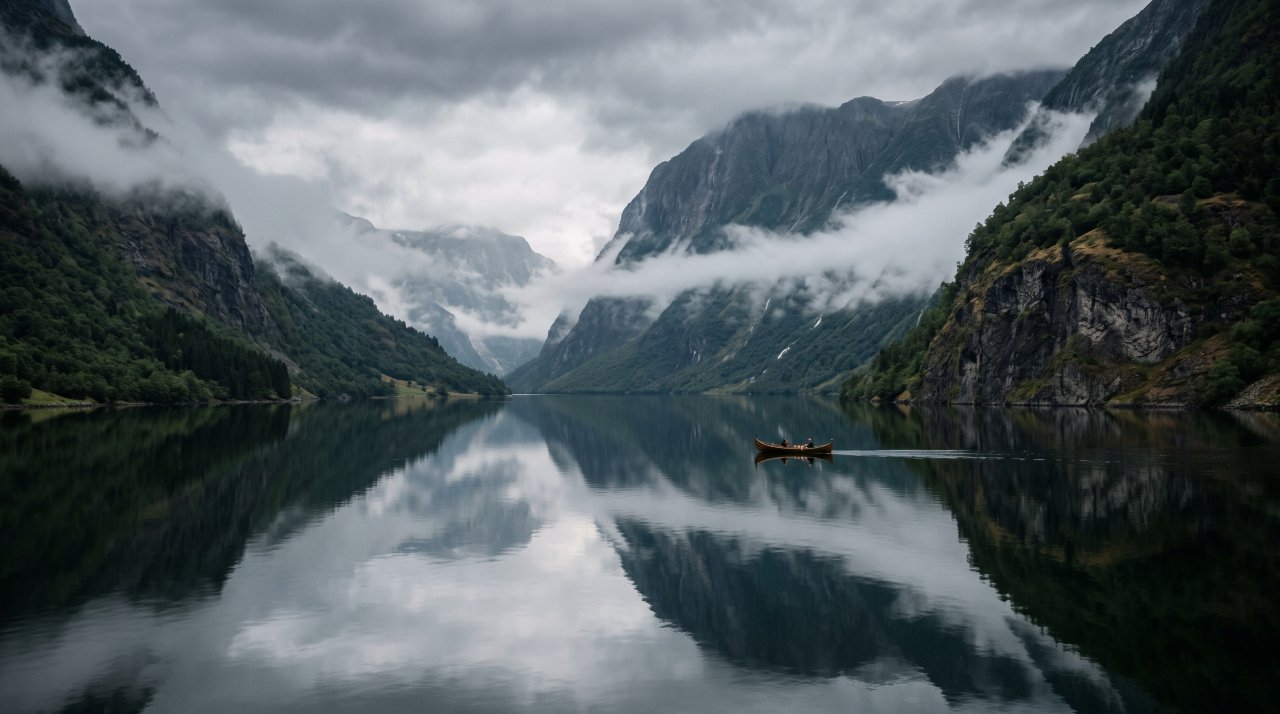
Sognefjord is the longest fjord in Norway at 204 kilometers, and the deepest at 1308 meters. That number — 1308 meters of water depth — is worth sitting with. The fjord extends so far inland that at its eastern end you are surrounded by snow-capped mountains with barely any salt smell remaining in the air.
The most popular access point is Flåm, at the end of the Aurlandsfjord (a branch of Sognefjord). But the broader Sognefjord experience requires either a Hurtigruten connection or a self-drive itinerary. The drive along the southern shore from Bergen to Flåm follows the E16 through tunnels and across mountain passes, taking about 3 hours.
The Borgund Stave Church — 45 minutes east of Flåm — is the best-preserved of Norway’s medieval stave churches, built in 1180. Entry costs around £12. The carved dragon-heads on the roof posts and the layered wooden construction make it look like something from a fantasy world. Inside, it smells of centuries-old pine tar preservation treatments.
Local tip: The Aurlandsfjord ferry from Flåm to Gudvangen (1.5 hours, £20) passes through the Nærøyfjord — the narrowest UNESCO-listed fjord in the world — and is the best value boat journey in Norway.
Day Trip to Sommarøy Island from Tromsø
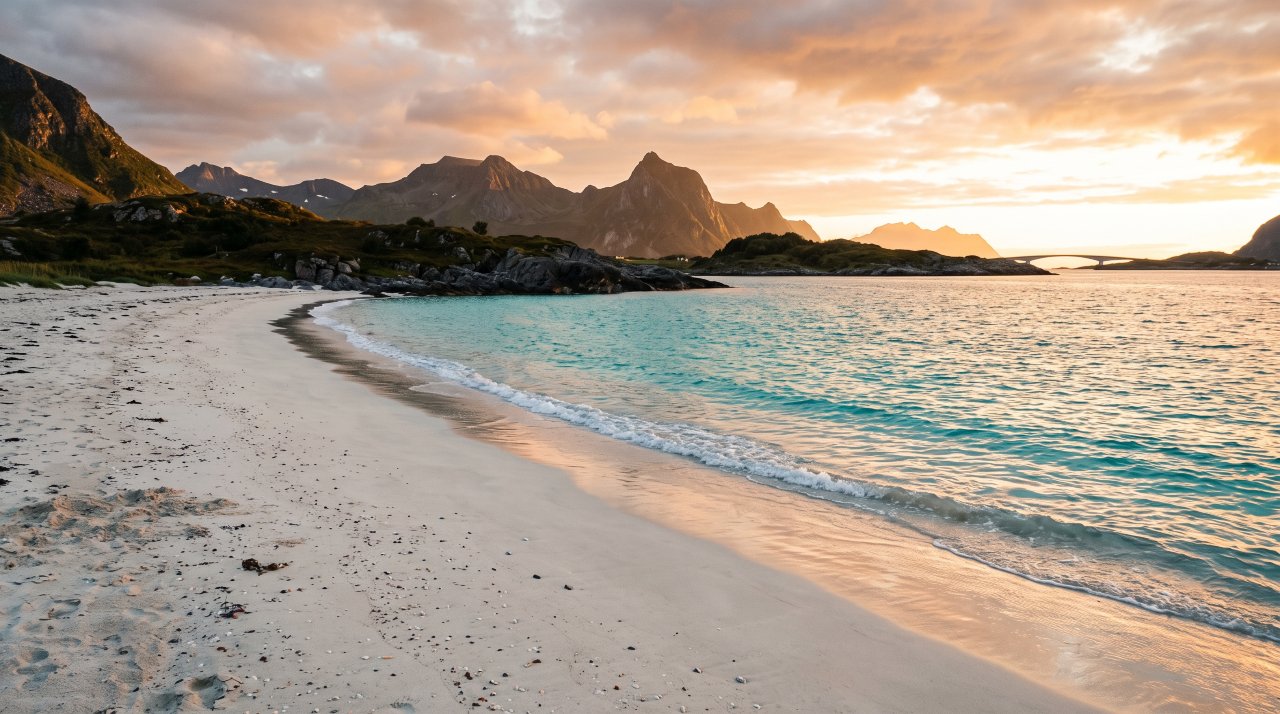
Sommarøy is a small island about 60 kilometers west of Tromsø, reached by a 1-hour drive along the FV862 coastal road. The name means “Summer Island” and the beaches here — white shell sand, turquoise water — look more Caribbean than Arctic. In July, under the Midnight Sun, the light on the water is unlike anything else in Norway.
The island has a local hotel, a few cafés, and a single main village. The population is around 300 people. The drive from Tromsø takes you across a series of mountain passes and over a bridge to the island. At the far end of the island, a short walk through low coastal vegetation leads to Hillesøy — a linked island with a small hiking trail to a summit viewpoint that covers the entire outer archipelago.
Sommarøy became briefly internet-famous in 2019 when residents proposed making it the world’s first “time-free zone” during the Midnight Sun period. The proposal was largely tongue-in-cheek, but the sentiment is real — time moves differently when the sun does not set.
Local tip: The island’s beaches face west. For the best light on the turquoise water and sand, go in the late afternoon when the sun is lower and the colour contrast is at its most vivid.
See Puffins at Runde Island
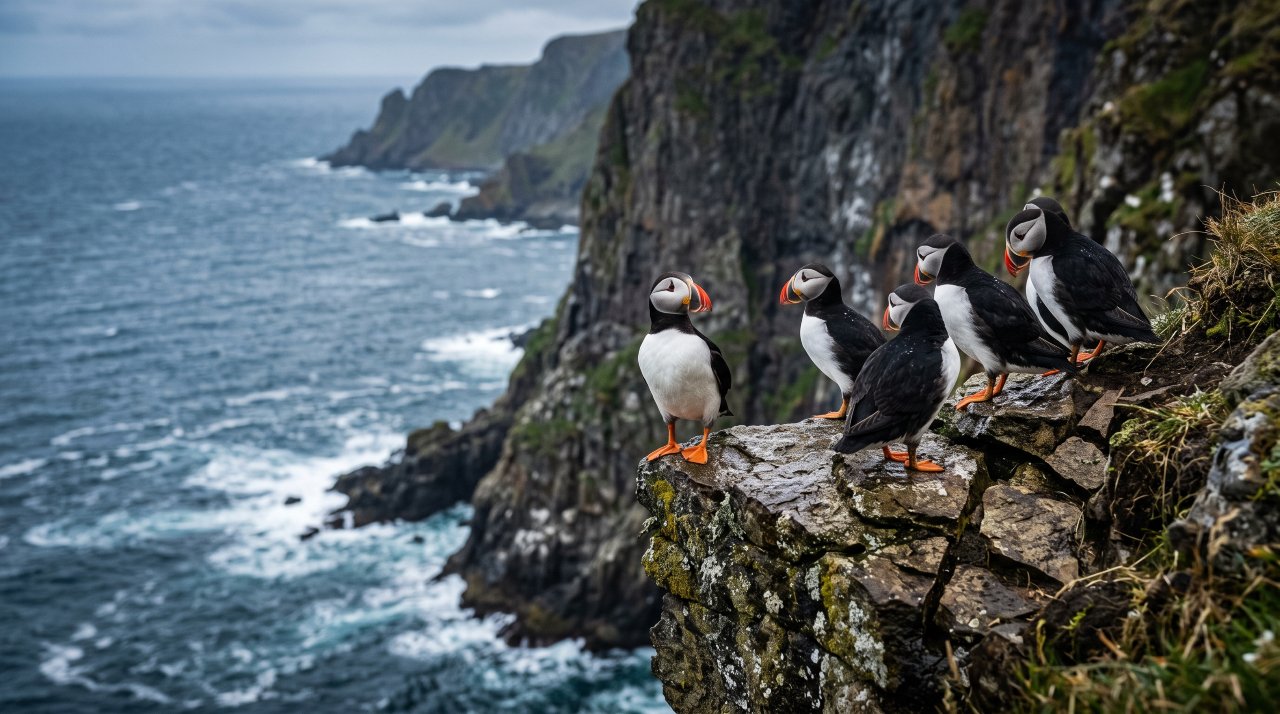
Runde is a small island off the western coast of Norway, about 2 hours by car from Ålesund. It is home to over 500,000 nesting seabirds, including around 100,000 puffins — the largest puffin colony in Norway. The cliffs on the southern coast rise 300 meters from the sea.
The hike to the bird cliffs takes about 45 minutes from the main village, with an elevation gain of 200 meters. The trail is moderately challenging but manageable in good footwear. At the top, the birds circle at eye level and in some places the puffins — who are surprisingly unafraid of humans near their burrows — can be photographed from a meter away.
The best time to visit is May to July, when puffins are present (they leave in late July). Evening visits around 8-9pm are ideal because the birds return from the ocean to their cliff burrows as the light softens. Runde is reached from the mainland by a series of bridges from Ålesund — no ferry required.
Local tip: Bring a longer camera lens than you think you need. Even though the birds come close, you will want reach for shots of puffins on the cliff face — 200mm minimum, 300mm ideal.
Watch the Sun Rise Over Preikestolen From the Water
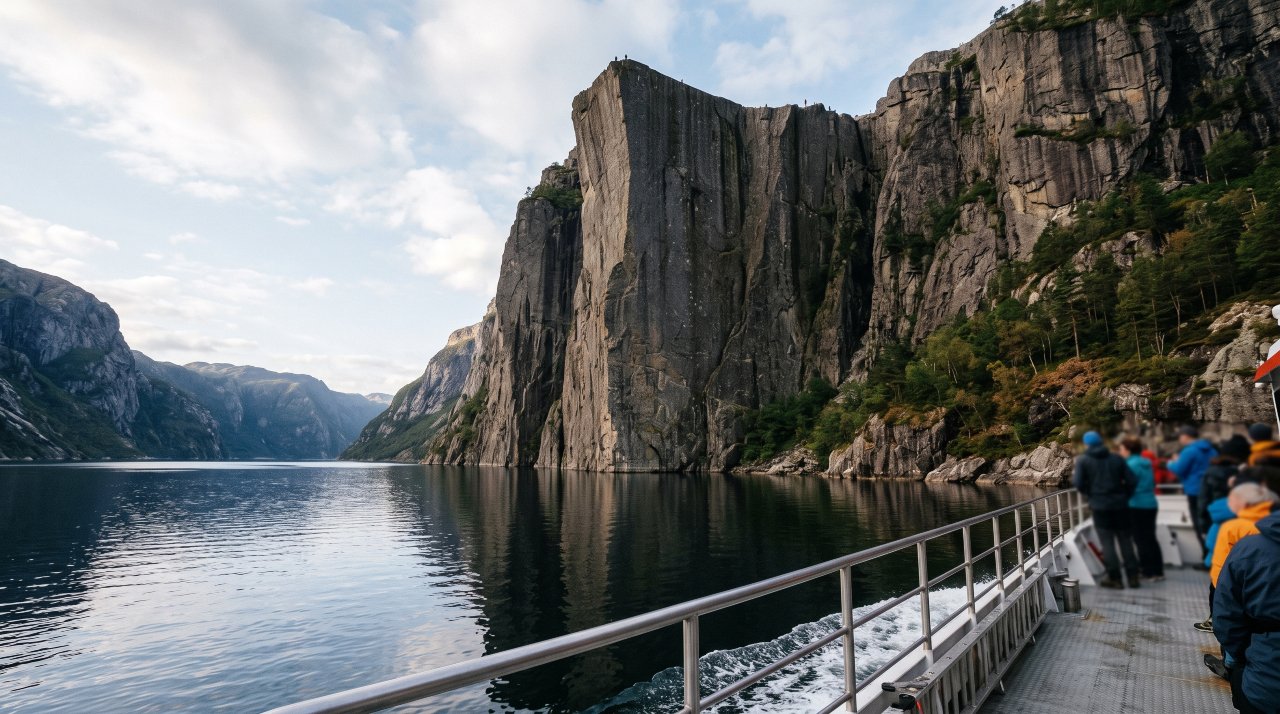
Most people see Preikestolen from the top. Few people look up at it from the Lysefjord below. A small number see it at the exact moment the morning sun hits the cliff face from the water.
The Fjord Cruise Lysefjord departs from Forsand (near Stavanger) at various times, including an early morning departure. The boat takes you deep into the fjord until Preikestolen appears above you — 604 meters of vertical cliff, topped by the flat rock where dozens of tiny human figures are visible. From the boat, looking up, the scale is genuinely staggering in a way that the hike to the top does not fully convey.
The cruise costs around £30 per person and takes 2 hours return. The combination — cruise in the morning, hike in the afternoon — gives you both perspectives on the same day and uses a full light range as the fjord moves from morning shadow into afternoon sun.
Local tip: Sit on the upper deck at the front of the boat for the best unobstructed view of Preikestolen as you approach. The covered lower deck gets the photographs of other passengers, not the cliff.
Norway Will Surprise You Every Time
The things to do in Norway pile up quickly once you are there. Most first-time visitors underestimate the country and book five days. Most people who have been come back to do it differently — longer, slower, further north. The fjords, the midnight sun, the silence at 3am when it is still bright outside — these are not things you can fully prepare for.
Save this Norway travel guide for your trip. Share it with anyone who is on the fence about making the journey. Norway is worth every kr you spend there.