

Portugal is the country I recommend most when friends ask where to go next. It has the food, the weather, the coast and the prices that the rest of Western Europe lost years ago. I have been four times, and I still have a list of places I have not reached. The best places to visit in Portugal are not only Lisbon and Porto, though both belong on any first trip. Portugal rewards you for going one town further: a walled village an hour from the capital, a wine valley with no crowds, an island of green craters in the middle of the Atlantic. This guide covers 12 of them, with the 2026 prices and ticket tips I checked before writing. I picked the best places to visit in Portugal for a first trip and a second trip, so you can use this list whether you have a week or a month. Prices in Portugal can change, so check the official site before you book anything. My best Christmas towns in Europe guide covers the winter side of the continent, and my best budget travel destinations list has more countries that keep costs down. Here are the 12 best places to visit in Portugal in 2026.
1. Lisbon
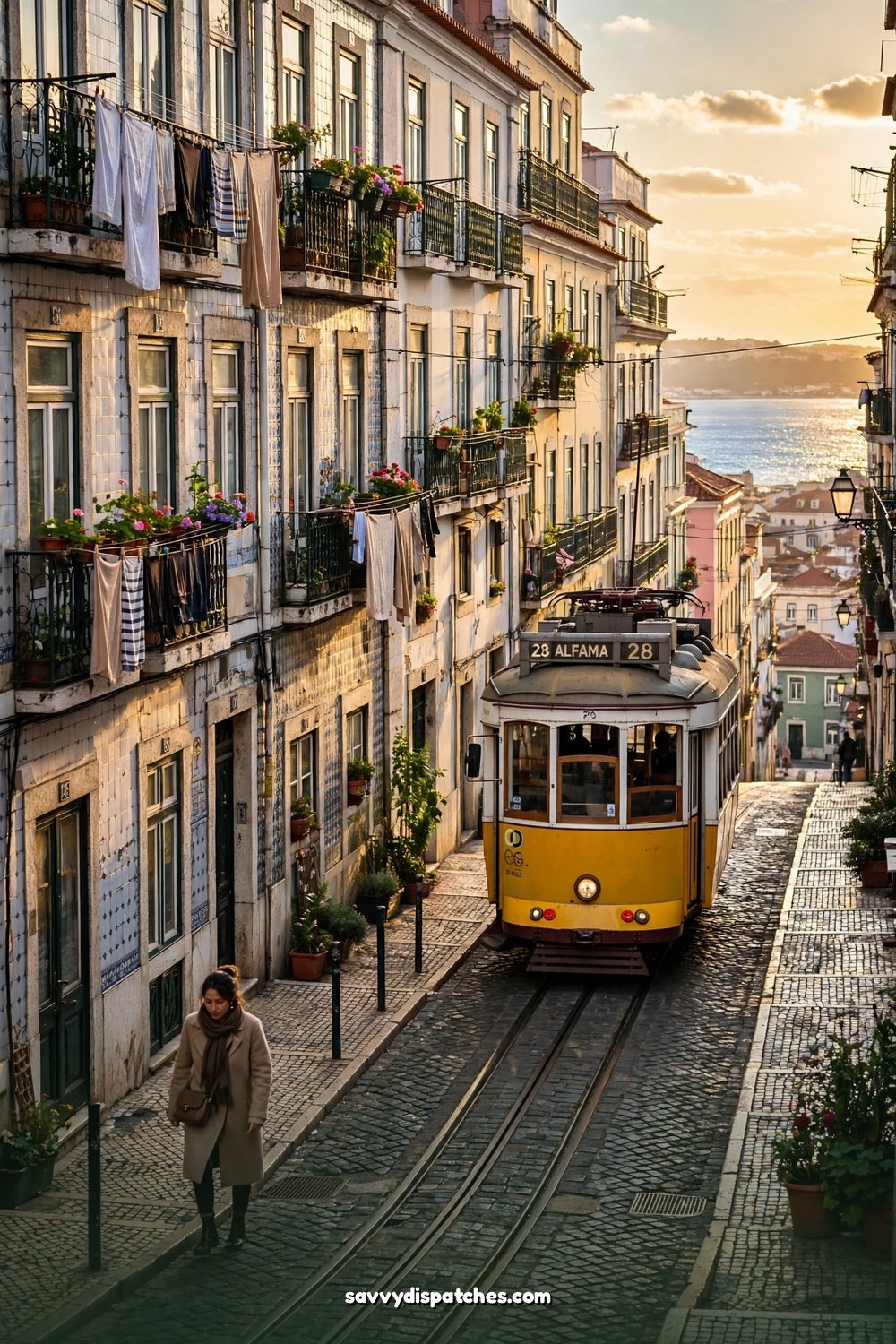
Lisbon is the capital, and it is the right place to start. The city sits on seven hills above the Tagus River, and the yellow trams, the tiled facades and the viewpoints make it one of the prettiest capitals in Europe. I spent my first morning riding Tram 28 through Alfama, the old Moorish quarter, where the streets are too narrow for cars and the laundry hangs over the cobbles. A ride costs 3.30 euros on board, or 1.90 with a Navegante card, so get the card if you plan to ride more than once. Castelo de Sao Jorge costs 17 euros and gives you the best view in the city. The Jeronimos cloister runs about 18 euros, and Belem Tower costs 15. A Lisboa Card costs 31, 51 or 62 euros for 24, 48 or 72 hours and covers transport plus many sights, so it pays for itself if you visit three or more paid places in a day. One metro ride is 1.90 euros, a 24 hour pass is 7.25, and the 24 hour pass that includes CP trains is 11.40. Lisbon charges a city tax of 4 euros per person per night, which hotels add to your bill.
Stay in Alfama or Baixa if you want to walk everywhere. Alfama is quiet and old, Baixa is flat and central. I ate my best meals in the small tascas off the main squares, where a full dinner with wine cost less than 20 euros. Go to Belem early, because the tower and the monastery draw lines by midday. My Paris in winter guide has the same city-break pacing I use here, and my carry-on packing guide covers the one-bag setup that works for Lisbon’s hills and stairs.
Local tip: Buy the Lisboa Card at the airport and use it from the first metro ride. The airport metro is included, and the card starts paying for itself by lunch.
2. Sintra
Sintra is a day trip from Lisbon, and it is the most storybook place in the country. The Pena Palace sits on a hilltop painted yellow and red, surrounded by forest, and it looks like a palace from a fairy tale. An Essential ticket costs 20 euros and covers the park plus the palace. The Complete ticket costs 45 euros, and the park alone costs 12. Entry is timed and mandatory, and the palace gives no grace for lateness, so arrive at your slot. Quinta da Regaleira costs 20 euros and has the famous Initiation Well, a spiral staircase that drops nine stories underground. The Moorish Castle costs 12 euros and gives you the best view of the palace from across the valley. Trains from Lisbon cost 2.55 euros one way and take about 40 minutes.
Go early and see Pena first, because the crowds build by late morning and the palace interior gets tight. I took the 8 AM train, walked up through the park, and had the terrace almost to myself. The town center has small cafes and shops, and the walk between the sights is steep. My Faroe Islands budget guide has the same day-trip planning I use here, and my Europe trip planning mistakes guide covers the timed-ticket trap that catches people at Pena.
Local tip: Book the first Pena slot of the day and take the train, not a tour bus. The bus drops you at the gate with a hundred other people, and the train lets you walk up through the forest.
3. Porto
Porto is smaller than Lisbon, steeper, and in my view more fun. The old town climbs the hill above the Douro River, and the Ribeira waterfront is where I spent most of my evenings. Dom Luis I Bridge connects Porto to Vila Nova de Gaia across the river, where the port wine lodges sit. A tasting costs 10 to 20 euros depending on the lodge, and the views back across the river are free. Porto charges a city tax of 3 euros per person per night, a euro less than Lisbon. The food here is cheaper than the capital, and the francesinha sandwich is the local test of courage: bread, ham, sausage, steak, melted cheese and beer sauce, all in one plate.
Stay in Ribeira or Cedofeita. Ribeira puts you on the water, Cedofeita puts you near the cafes and shops. I took the train from Lisbon, which takes about three hours and drops you at Sao Bento station, famous for its blue tile panels. Walk the station slowly, because the tiles tell the history of the country in pictures. My cheap places that still feel special guide has more cities like Porto, and my Turkey travel tips guide shares the same slow-evening approach I use on the Ribeira.
Local tip: Cross the bridge to Gaia at sunset and watch the light hit the Porto side. The lodges stay open late, and the walk back over the top deck is free.
4. The Algarve and Lagos
The Algarve is the southern coast, and Lagos is the town I keep returning to. Here the cliffs are golden, the water is clear, and the beaches sit between rock arches that look carved by hand. Ponta da Piedade is the famous headland, and the boat trip through the arches costs about 20 euros. Benagil Cave is the most photographed spot on the coast, and since August 2024 landing or swimming inside is illegal. You can only see it from a licensed boat or kayak, so book a licensed operator and skip anyone offering to drop you off inside. The best time for the Algarve is April to June or September to October, when the water is warm enough to swim and the beaches are not packed.
Lagos old town is small and walkable, with whitewashed streets and a marina full of boats. I rented a kayak one morning and paddled the grottos before the tour boats arrived. The fish restaurants on the harbor serve the catch of the day, and a full meal with wine runs about 25 euros. My packable hiking snacks guide works for the coastal walks here, and my cute hiking outfits guide has the layers I wore on the cliff paths.
Local tip: Book the Benagil boat for the first slot of the morning. The cave is quiet, the light is better, and the sea is usually calmer before noon.
5. Douro Valley
The Douro Valley is where port wine comes from, and it is one of the most beautiful river valleys I have seen. Terraced vineyards climb the hills on both sides of the river, and the small towns along the water feel a world away from Porto. I took the train from Porto to Pinhao, which runs along the river for two hours and costs about 15 euros. The ride alone is worth the trip. A wine tasting at a quinta costs 10 to 25 euros, and most include a walk through the vines. The valley is quiet, slow and green, and it is the opposite of a city break.
Stay in Pinhao or Peso da Regua if you want to base yourself in the valley. I stayed in Pinhao and walked to two quintas in one day. The train station in Pinhao has blue tile panels showing the harvest, and they are worth a stop on their own. Go in September for the harvest, or in May when the vines are green and the river is calm. My Christmas bucket list has the same slow-travel idea, and my best budget travel destinations list has more valleys and wine regions that cost less than you think.
Local tip: Take the train one way and the boat back. The river cruise from Pinhao to Porto takes most of a day and shows you the valley from the water.
6. Evora
Evora is a walled Roman town in the Alentejo, about 90 minutes east of Lisbon by train. The Roman temple sits in the middle of the old town, and the whole center is a UNESCO site. Inside the old town, the Chapel of Bones is the famous stop: a small chapel lined with the bones of 5,000 monks, with the words “We bones, here, await yours” over the door. It is strange, quiet and worth the small entry fee. The town is whitewashed and slow, with cork oaks and wheat fields outside the walls. I ate the best black pork of my trip here, in a small restaurant off the main square, for less than 15 euros.
Evora works as a day trip from Lisbon, but I liked it better as an overnight. The town empties after the day trippers leave, and the evening light on the white walls is lovely. Around Evora, the Alentejo is the wine region, and the local reds are some of the best value in the country. My grocery store meals guide helps if you self-cater here, and my affordable European destinations list has more towns like Evora.
Local tip: Stay overnight and walk the walls at dusk. The day crowds leave by 6 PM, and the town belongs to the locals after that.
7. Obidos
Obidos is a walled medieval village about an hour north of Lisbon, and it is one of the prettiest small towns in the country. The walls are walkable, the streets are whitewashed with blue and yellow trim, and the castle sits at the top of the hill. I walked the full wall circuit in about an hour, and the views over the rooftops and the countryside were the best part. The town is famous for ginjinha, a sour cherry liqueur served in a chocolate cup for about 2 euros. You drink the liqueur, then eat the cup.
Obidos is small, so a half day covers it. I came as a day trip from Lisbon and paired it with the coast at Peniche. The town fills with visitors by midday, so go early or stay late. Bookshops are a local specialty, and the town hosts a chocolate festival in spring and a medieval fair in summer. My Scotland without a car guide has the same small-town walking approach I use here.
Local tip: Walk the walls first thing in the morning. The light is soft, the streets are empty, and the ginjinha shops are just opening.
8. Nazare
Nazare is a fishing town on the silver coast, and it is famous for two things: the biggest waves in the world and a very good beach. The waves at Praia do Norte can reach 30 meters in winter, and the lighthouse at the fort is the viewing point. I went in October and the sea was rough enough to watch from the cliffs for an hour. The old town sits on the beach, and the funicular runs up to Sitio, the clifftop village with the best views. On the beachfront, the fish restaurants serve grilled sardines and caldeirada, the local fish stew.
Nazare is a good stop between Lisbon and Porto, and the beach is long enough for a proper walk. The town is working class and friendly, and the prices are lower than the Algarve. I stayed one night and wished I had stayed two. My trekking outfits guide has the layers I wore on the cliffs, and my hiking rain outfits guide covers the wind and spray up at the fort.
Local tip: Check the wave forecast before you go. The giant waves only happen on big swells, and the town posts the forecast at the fort.
9. Aveiro
Aveiro is called the Venice of Portugal, and the nickname is fair. Canals run through the center, colorful moliceiro boats carry visitors along them, and the Art Nouveau buildings line the water. The boat ride costs about 15 euros and takes 45 minutes. I took one in the late afternoon and the light on the canals was lovely. The town is also famous for ovos moles, a sweet made from egg yolk and sugar in the shape of shells and fish. Costa Nova beach is 15 minutes away, with striped wooden houses in every color.
Aveiro is a half day from Porto, and it is easy to pair with a beach afternoon. The town is flat and walkable, and the university gives it a young feel. I ate at a small restaurant near the canal and paid less than 15 euros for a full lunch. My cheapest countries to visit guide has more towns like Aveiro, where a day costs less than a dinner in Paris.
Local tip: Ride the boat at golden hour and walk to Costa Nova after. The striped houses photograph best in the late light, and the beach is empty by then.
10. Madeira and Funchal
Madeira is an island in the Atlantic, about 90 minutes by plane from Lisbon, and Funchal is its capital. The island is green, steep and warm all year, which makes it a good winter escape. Its levadas are the famous walks: old irrigation channels with paths alongside them, running through laurel forest and past waterfalls. I walked one in the morning and ate lunch in a mountain village by noon. The cable car from Funchal runs up to Monte, where the botanical gardens sit, and the toboggan ride back down is a wicker basket on runners, steered by two men in white. It costs about 30 euros and it is as fun as it sounds.
Funchal has a good food scene, a working harbor and a market full of tropical fruit. The island is small enough to drive in a day, and the coastal road is one of the best drives in Europe. I stayed in Funchal and rented a car for two days to reach the north coast. My best budget travel destinations list has more island escapes, and my carry-on packing guide covers the one-bag setup for a short island hop.
Local tip: Book the levada walks for the morning and the cable car for the afternoon. The clouds roll in over the mountains by midday, and the coast stays clear.
11. The Azores and Sao Miguel
The Azores are nine volcanic islands in the middle of the Atlantic, and Sao Miguel is the biggest and the easiest to start with. Sao Miguel is green from end to end, with crater lakes, hot springs and black sand beaches. Sete Cidades is the famous twin lake, one blue and one green, sitting in a volcanic crater. I drove up to the viewpoint at dawn and the mist was still in the crater. Furnas is the town with the hot springs and the cozido, a stew cooked underground by volcanic heat for seven hours. A soak in the thermal pools costs about 8 euros, and the stew costs about 20.
Sao Miguel is a nature trip, not a city trip. The towns are small, the roads are quiet, and the weather changes every hour. I rented a car and drove the island in three days, stopping at lakes, waterfalls and viewpoints. The flights from Lisbon take about two hours and cost 50 to 100 euros if you book ahead. My Dolomites hiking guide has the same island-hiking approach, and my Scotland Highlands budget guide covers the car-rental and weather planning I used here.
Local tip: Rent the car and drive the island yourself. The buses are slow, the viewpoints are spread out, and the best spots are the ones you find by pulling over.
12. Coimbra
Coimbra is the old university city, and it feels like a town built for students and scholars. The University of Coimbra is one of the oldest in Europe, and the Joanina Library is one of the most beautiful rooms I have seen anywhere. Entry to the library costs about 13 euros and the tickets sell out, so book ahead. The students wear black capes, the fado music here is sung by men in the university tradition, and the old town climbs the hill above the Mondego River. I spent an afternoon walking the university hill and the riverside, and the town felt calm after the crowds of Lisbon and Porto.
Coimbra sits halfway between Lisbon and Porto, so it is an easy stop on the train. I stopped for a night and used it as a base for the Roman ruins at Conimbriga, 15 minutes away by bus. The ruins are some of the best preserved in the country, and the mosaics are still in place. My free things to do in London guide shares the same idea: a university town always has free sights if you know where to look.
Local tip: Book the library ticket online before you arrive. The daily slots sell out, and the walk-up line is long.
Quick Tips Before You Go
The best time for Portugal is April to June or September to October, when the weather is warm and the crowds are thin. Book Pena Palace and the Joanina Library ahead, because both sell out. Get a Navegante card in Lisbon and use the metro and trams instead of taxis. Carry some cash for small restaurants and markets, though cards work almost everywhere. And learn five words of Portuguese: hello, please, thank you, the bill, and cheers. The effort gets you better service everywhere.
Local tip: Base yourself in Lisbon for three nights, Porto for two, and add one island or valley trip. That is the trip most first-timers wish they had taken.
Portugal rewards the traveler who goes one town further. Start in Lisbon, take the train north, and finish on an island if you can. Save this list and build your trip around the places that sound like you.
You Might Also Like
If Portugal is on your list, my best Christmas towns in Europe guide has the winter version of this trip, my best budget travel destinations list has more countries that cost less than you think, and my Paris in winter guide covers the other great European city break.
