
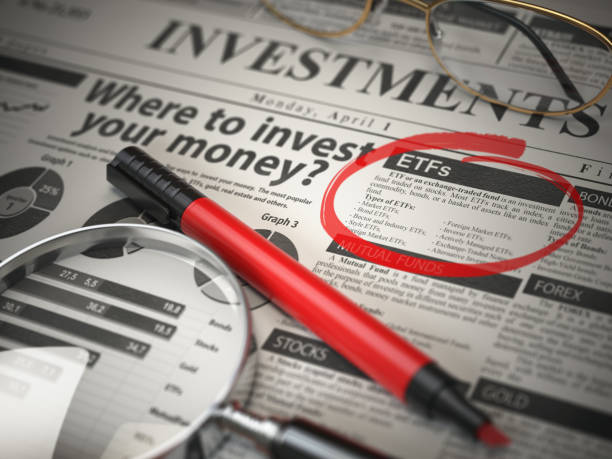
Starting your investing journey can feel overwhelming—individual stocks, mutual funds, crypto, risk levels, market timing. Where do you even begin? The good news is: you do not have to figure it all out at once. That’s where ETFs (Exchange-Traded Funds) come in.
ETFs are one of the easiest, most flexible ways for beginners to start investing, build a diversified portfolio, and avoid decision fatigue. They’re used by everyone from casual investors to institutional money managers—and for good reason.
In this guide, we’ll break down exactly what ETFs are, why they’re beginner-friendly, and how you can start investing in them with confidence.
What is an ETF, Really?
An ETF is a basket of investments—like stocks, bonds, or other assets—that you can buy and sell just like a regular stock on an exchange. For anyone exploring investing in ETFs, the idea is simple: one purchase gives you exposure to a wide mix of companies or assets without needing to build that portfolio from scratch.
Here is the simple version:
- When you buy one ETF, you are buying a slice of many different companies or assets at once.
- Most ETFs track an index (like the S&P 500), a sector (like clean energy), or a theme (like tech innovation).
- They trade all day like stocks, so you can enter or exit anytime during market hours.
Think of an ETF as a pre-built investment package that removes the need to handpick each stock yourself.
Why ETFs Are Great for Beginners
ETFs have become a go-to tool for new investors because they offer:
- Built-in Diversification
Instead of betting on one company (which could underperform), an ETF spreads your investment across dozens—or even hundreds—of companies.
Example:
The VOO ETF (Vanguard S&P 500) holds 500 of the largest U.S. companies in one fund. If one stock drops, others can balance it out.
- Low Fees. Most ETFs are passively managed, meaning they simply track an index and do not require expensive management teams. Many top ETFs charge fees as low as 0.03% per year (compare that to 1–2% for actively managed mutual funds).
- You can usually see exactly what’s inside an ETF. No surprises. Most funds publish their holdings daily.
- You can start investing in ETFs with small amounts—as little as the price of a single share, or even fractional shares through platforms like Fidelity, Vanguard, or Robinhood.
Types of ETFs You Can Invest In
There are thousands of ETFs, but here are a few common types worth knowing:
- Index ETFs. Track major indexes like the S&P 500 (VOO), NASDAQ-100 (QQQ), or Total Market (VTI). Great for long-term investing.
- Sector ETFs. Focus on specific industries like Technology (XLK), Healthcare (XLV), or Energy (XLE). Good for when you believe a certain sector will outperform.
- Thematic ETFs. Follow trends or ideas—like AI, blockchain, clean energy, or space exploration. High growth potential but more risk.
- Bond ETFs. Including the U.S. Treasury, corporate, or municipal bonds. Examples: BND, AGG. Used to balance out stock-heavy portfolios.
- International ETFs. Let you invest in companies outside your country. Examples: VEA (Developed Markets), VWO (Emerging Markets).
How to Start Investing in ETFs (Step-by-Step)
You do not need a finance degree or thousands of dollars to begin. Here is how to get started with ETF investing in five simple steps:
Step 1: Open a Brokerage Account
You’ll need a platform to buy and sell ETFs. Popular options include:
- Vanguard
- Fidelity
- Schwab
- Robinhood
- Webull
- eToro
Most platforms are beginner-friendly and offer mobile apps.
Step 2: Decide Your Budget
You do not need to invest everything at once. Start with what you can afford—even $50 to $100 per month adds up over time. Many brokerages offer fractional shares, meaning you can invest part of a share if the full price is too high.
Step 3: Pick Your ETFs
Stick to broad, diversified ETFs when you are just starting. Examples:
- VTI (Total U.S. Market)
- VOO (S&P 500)
- BND (Bond market)
- VXUS (International stocks)
If you want to get more specific, consider one or two sector or thematic ETFs, but keep them a smaller part of your portfolio.
Step 4: Set Up Auto-Invest (Optional)
Some brokerages let you automate monthly purchases. This helps with dollar-cost averaging, where you invest regularly regardless of market conditions—a proven strategy for building wealth over time.
Step 5: Stay Consistent
The market will go up and down. do not panic. Long-term investing works when you stay the course.
Example ETF Portfolio for Beginners
- 60% VTI (U.S. Total Stock Market)
- 20% VXUS (International Market)
- 20% BND (Bonds)
This gives you exposure to thousands of companies across the world and a bond cushion to reduce volatility. If you are younger or more risk-tolerant, you could go 80/20 with more stocks. If you are closer to retirement, flip that.
Common ETF Myths (Debunked)
Let’s clear up a few misconceptions:
“ETFs are only for rich people”. Not true. ETFs are one of the most accessible investing tools. You can invest with just a few dollars using fractional shares.
“I need to time the market”. Nope. Time in the market beats timing the market. The key is consistency and a long-term horizon.
“I’ll get rich fast with thematic ETFs”. Thematic ETFs (like AI or blockchain) are exciting, but they’re also more volatile. Use them to supplement, not replace, your core holdings.
Tips to Maximize ETF Investing in 2025
- Reinvest dividends: Many ETFs pay out regular dividends. Turn on automatic reinvestment to keep growing.
- Check the expense ratio: Lower is better. Anything under 0.10% is considered excellent.
- Avoid overlap: Holding VTI and SPY? You might be duplicating the same stocks. Keep your portfolio efficient.
- Use tax-advantaged accounts: If available, invest through an IRA, Roth IRA, or retirement account to save on taxes.
Final Thoughts: Keep It Simple, Stay Consistent
ETF investing in 2025 doesn’t have to be complex. You do not need to track 100 charts or watch the market all day. With just a few well-chosen ETFs, you can:
- Diversify your portfolio
- Minimize your risk
- Save on fees
- Invest for your future—with confidence
So if you are overwhelmed by investing headlines or confused about where to start—start here. ETFs offer the perfect balance of simplicity, flexibility, and long-term performance.
And the best part? You can start today.