My first trip to the Christmas markets in Germany had no plan at all, and I paid for it. I spent my first evening in the wrong part of Cologne, cold and hungry, while the best Christmas markets in Germany were glowing two streets away. That night taught me how these markets actually work. This guide covers the Christmas markets in Germany I would go back for, with the 2026 dates I checked, what to eat at each one, and a 2-week train plan that links them all. I built this list from the markets I have actually walked through, not from a roundup I copied. If you only have a long weekend, start with Cologne and Nuremberg and save the rest for the full trip. Let’s get into it.
- 1. Cologne: Germany’s Biggest Christmas Market Under the Cathedral
- 2. Nuremberg: Germany’s Most Traditional Christmas Market
- 3. Dresden: Germany’s Oldest Christmas Market
- 4. Munich: Germany’s Classic Christmas Market on Marienplatz
- 5. Rothenburg ob der Tauber: Germany’s Prettiest Small-Town Christmas Market
- 6. Berlin: Germany’s Biggest Christmas Market City
- 7. Aachen: Germany’s Coziest Border-Town Christmas Market
- 8. Hamburg: Germany’s Best Christmas Market by the Water
- 9. Leipzig: Germany’s Most Underrated Christmas Market
- 10. Frankfurt: Germany’s Christmas Market with the Oldest Roots
- 11. Stuttgart: Germany’s Christmas Market for Food Lovers
- The 2-Week Christmas Markets in Germany Train Itinerary
- What Christmas Markets in Germany Cost in 2026
- What to Pack for Christmas Markets in Germany
- Before You Go: My Last Word on Christmas Markets in Germany
- You Might Also Like
1. Cologne: Germany’s Biggest Christmas Market Under the Cathedral
Cologne is where I tell first-timers to start. The cathedral market fills Roncalliplatz right below the twin spires, and the scale of it stops you for a second when you walk out of the station. More than 120 stalls spread out under a huge fir tree, and the smell of cinnamon and roasted almonds hits you before you even reach the first stall. I went straight for a mug of Gluhwein and stood under the light canopy watching the crowd, and that first hour sold me on the whole trip.
The cathedral market runs November 16 to December 23, 2026, and it closes on Sunday, November 22, for Totensonntag, a quiet day of remembrance. Hours are 11 am to 9 pm Sunday to Wednesday, 11 am to 10 pm Thursday and Friday, and 10 am to 10 pm on Saturday. Entry is free. A cup of Gluhwein costs 5 euros at the cathedral market, and the organic Bratwurst is 6 euros this year. Cologne has seven more markets beyond this one, so you can spend a full day hopping between them, and the city is easy on the wallet, which is why it made my list of affordable European destinations for winter trips. The old town Heinzels Wintermarchen runs November 23 to December 23 with an ice rink on the Heumarkt.
My advice is to do the cathedral market at dusk, when the lights come on and the crowd thins a little, then walk ten minutes to the old town for a second round. The harbour market down by the Chocolate Museum stays open until January 3, so it works as a backup if your dates fall late. If you want a quieter evening, the Stadtgarten market in the Belgian Quarter draws locals instead of tour groups. That is the one I went back to twice.
Local tip: Go to the cathedral market on a weekday evening, not a Saturday, because Saturday brings the biggest crowds and the longest lines at every food stall.
2. Nuremberg: Germany’s Most Traditional Christmas Market
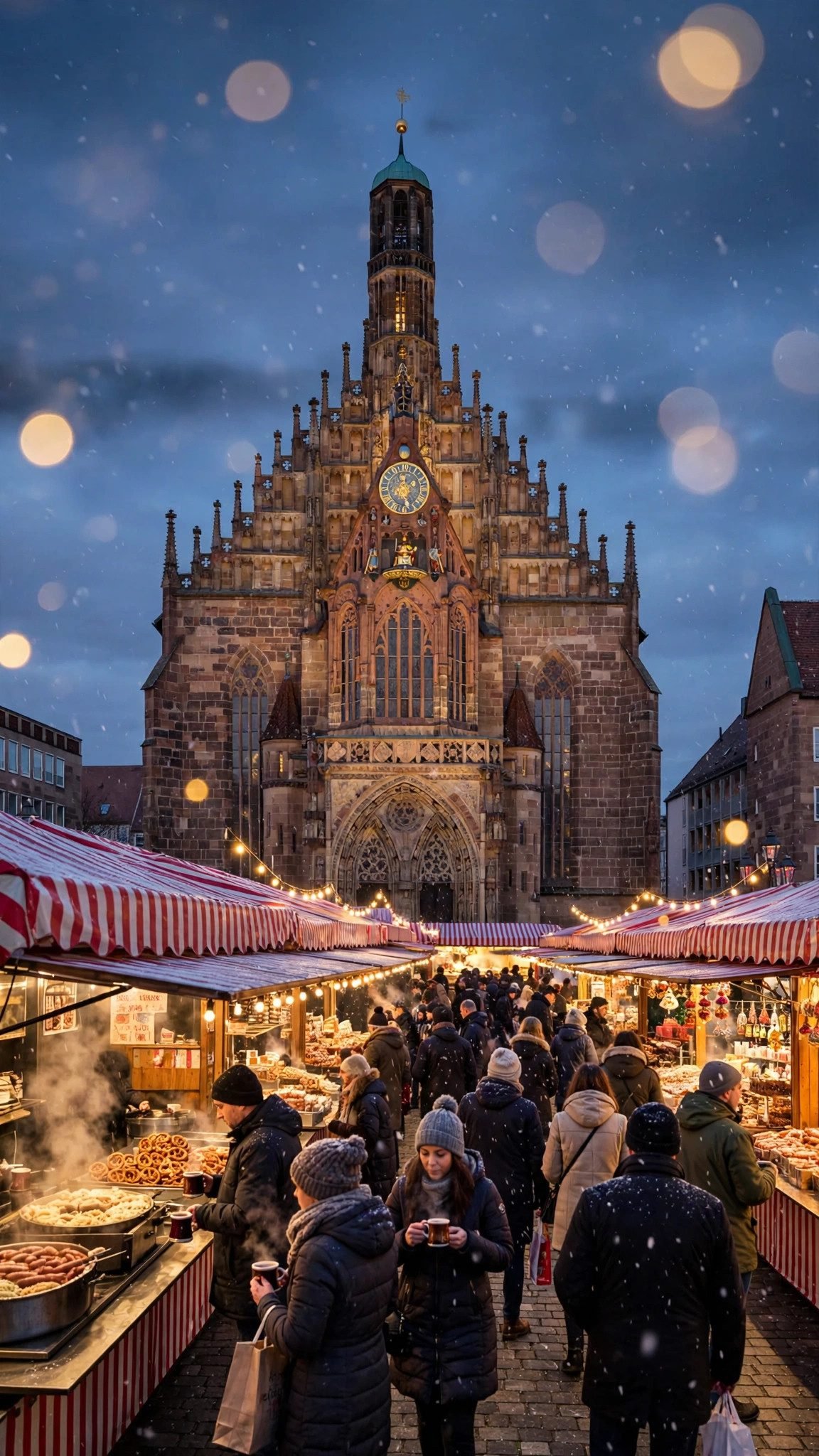
Nuremberg is the market every other German market gets compared to, and it earns the comparison. The Christkindlesmarkt fills the Hauptmarkt in the old town with red and white striped stalls, and the whole square smells like gingerbread from the first step. I bought Lebkuchen within five minutes of arriving, and I still think about it. The opening ceremony is the part that makes this market different from the rest. On November 27 at 5:30 pm, the Christkind, a young woman in gold robes and a crown, reads the opening prologue from the balcony of the Frauenkirche, and the square goes quiet for it.
The market runs November 27 to December 24, 2026. Hours are 10 am to 9 pm every day, and it closes at 2 pm on Christmas Eve. Entry is free. Nuremberg enforces strict rules on its stalls: no plastic goods, no canned music, and every vendor has to show a traditional craft or a regional connection. That rule is why the market feels handmade instead of mass produced. Try the small Nuremberg sausages, three to a roll, and the soft Lebkuchen, which is the city’s signature sweet. If the Lebkuchen wins you over the way it won me over, my travel inspired recipes from Europe has more European dishes worth cooking at home.
Walk the Hauptmarkt first, then cross to the Kinderweihnacht, the children’s market, and the Sister Cities market nearby. The Bratwurst stalls cluster on one side, so follow the smoke. I spent two full evenings here and still did not try every stall I wanted to. That is a good problem to have.
Local tip: Stay for a weekday if you can, because the first two weekends in December are the busiest, and the market closes early at 2 pm on December 24, so do not plan a Christmas Eve visit.
3. Dresden: Germany’s Oldest Christmas Market
Dresden is the one I would pick if you only care about tradition. The Striezelmarkt has run on the Altmarkt since 1434, which makes it the oldest documented Christmas market in Germany, and 2026 is its 592nd edition. A giant wooden Christmas pyramid towers over the stalls as the centerpiece, and the whole square smells like fresh Stollen. I watched the pyramid turn slowly while a brass band played, and it felt like a scene from another century.
The market runs November 25 to December 24, 2026. It opens at 4 pm on November 25, then runs 10 am to 9 pm daily, and closes at 2 pm on Christmas Eve. Entry is free. The name comes from Striezel, the old word for Dresdner Christstollen, the fruit bread the city is famous for. Buy a loaf from one of the licensed Stollen bakers, not from a generic stall, because the real thing has a seal on the box. The Stollen Festival falls on Saturday, December 5, 2026, when a giant Stollen is carried through the old town in a parade and cut up for the crowd.
Dresden has more than one market, and the smaller ones are worth your time too, which is why the city sits on my list of best budget travel destinations for 2026. Advent on the Neumarkt opens the same day and closes December 23, and the stalls on Prager Strasse run into early January. I liked the Neumarkt best in the morning, before the tour groups arrived, when the stalls were just opening and the square was quiet.
Local tip: Time your visit for the Stollen Festival on December 5 if you can, because it is the one day the whole city turns out, and the parade is free to watch from the street.
4. Munich: Germany’s Classic Christmas Market on Marienplatz
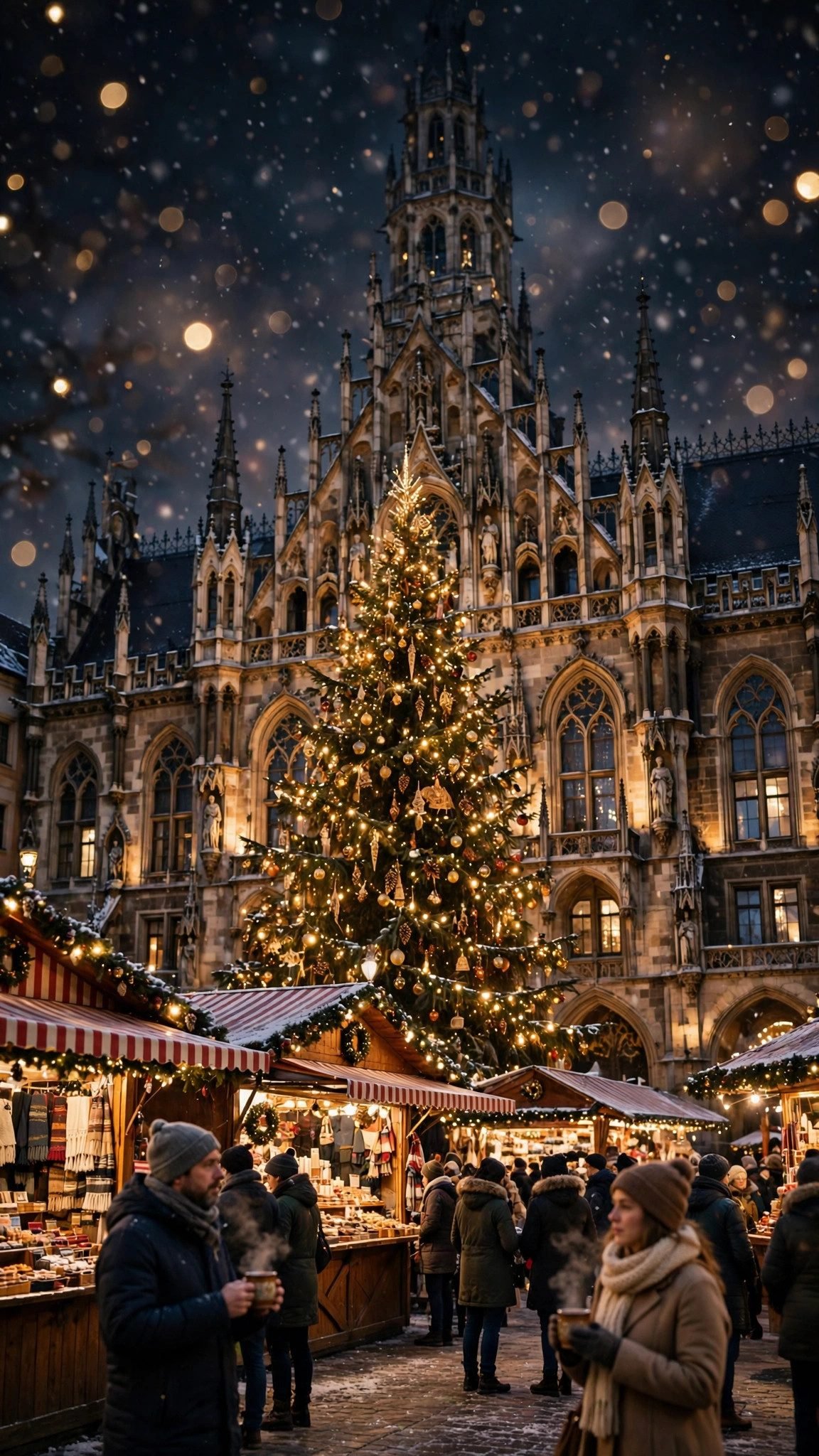
Munich is the market I picture when someone says Christmas market. The Christkindlmarkt fills Marienplatz in front of the Neues Rathaus, and the tree in the middle of the square is the first thing you see when you walk out of the station. Records for this market go back to 1310, and it still feels like the original. I spent my first Munich evening eating Reiberdatschi, crispy potato cakes, from a stall near the Rindermarkt, and I went back the next day for more.
The market runs November 20 to December 24, 2026, and it closes on Sunday, November 22, for Totensonntag. Hours are 10 am to 9 pm Monday to Saturday, 10 am to 8 pm on Sunday, and 10 am to 2 pm on Christmas Eve. Entry is free. A cup of Gluhwein costs 3.50 to 5 euros, plus a 3 to 5 euro deposit on the mug, which you get back when you return it. The medieval market on Wittelsbacherplatz runs the same dates and is worth the five minute walk, and the Tollwood Winter Festival runs November 24 to December 23 for something louder and more modern. On Sunday, December 13, the Krampus run crosses the market in the afternoon, and it draws a big crowd.
Munich works best as a base for two or three days, not as a quick stop. The market is compact enough to cover in an evening, but the city has a dozen smaller markets, and the food is the best of any city on this list. I ate my way across Marienplatz twice and still missed stalls I wanted to try. If you fly into Munich, book the hotel early, because December weekends fill up fast, and my long flight hacks will help you land rested enough to enjoy the first evening.
Local tip: Go on a weekday evening, because the market is at its best after dark and before the Saturday crowds arrive, and climb the tower of St. Peter’s Church for the view down over the stalls.
5. Rothenburg ob der Tauber: Germany’s Prettiest Small-Town Christmas Market
Rothenburg is the smallest market on this list, and that is exactly why I love it. The Reiterlesmarkt fills the Marktplatz of a walled medieval town, and the whole place looks like a postcard. Half timbered houses lean over the square, and the stalls are small enough that you can walk the whole market in an hour. I went for one night and wished I had booked two, because the town is quiet after the day trippers leave, and the market feels like it belongs to the people who stayed.
The market runs November 20 to December 23, 2026, and it closes on Sunday, November 22, for Totensonntag. Hours are 11 am to 7 pm Sunday to Thursday, and 11 am to 8 pm on Friday and Saturday. Entry is free. The market is named for the Reiterle, the legendary horseman of local folklore, who rides across the Marktplatz at the opening ceremony on November 20, when the mayor lights the big tree. A second ceremony follows on November 27 at 5 pm. There are only about 60 stalls, so treat this as a day trip or a single night, not a base.
Walk the town walls in the late afternoon, then come down to the square as the lights come on. The Kathe Wohlfahrt Christmas shop on Herrngasse is open all year and is separate from the market, and it is worth a look even if you buy nothing. I bought a wooden ornament there that now hangs on my tree every year. Dress warm, because the town sits on a hill and the wind finds you, and my travel outfit ideas will help you layer without looking like a snowman.
Local tip: Stay overnight if you can, because the town empties after the last tour bus leaves, and the market at 7 pm with almost nobody in the square is the best version of Rothenburg.
6. Berlin: Germany’s Biggest Christmas Market City
Berlin does not have one Christmas market. It has more than 80 of them, and that is both the fun and the problem. I spent three days there and still missed markets I wanted to see. The two to anchor your trip are the WeihnachtsZauber on Gendarmenmarkt, the prettiest square in the city, and the big market on Alexanderplatz. Gendarmenmarkt sits between the French and German cathedrals and the Konzerthaus, and it feels like a stage set. Alexanderplatz is louder, with rides and a curling lane, and it is free.
The WeihnachtsZauber runs November 23 to December 31, 2026. Hours are 11 am to 10 pm Sunday to Thursday, 11 am to 11 pm on Friday and Saturday, and noon to 6 pm on Christmas Eve. Entry costs 2 euros, but it is free Monday to Friday between 11 am and 2 pm, except on December 24, 25, 26 and 31, and children under 12 always go in free. The Alexanderplatz market runs November 23 to December 26, open 11 am to 10 pm daily and until 2 pm on Christmas Eve, and entry is free. Charlottenburg Palace market runs November 23 to December 27, and the Rotes Rathaus market runs November 23 to January 3, 2027, so Berlin is the one city where you can still find a market after Christmas. A cup of Gluhwein costs 3.50 to 5.50 euros, plus a 2 to 3 euro deposit on the mug.
Plan your days by neighbourhood, not by market name. Do Mitte one day, Charlottenburg the next, and Spandau if you have a third. The U-Bahn and S-Bahn make it easy, and the markets are close enough to chain two or three in one evening. I made the mistake of crisscrossing the city on my first day, and I lost two hours to trains. My Europe trip planning mistakes covers the rest of what I got wrong so you do not have to.
Local tip: Go to Gendarmenmarkt on a weekday between 11 am and 2 pm, because entry is free then, the crafts stalls are fully open, and the weekend crowds have not arrived yet.
7. Aachen: Germany’s Coziest Border-Town Christmas Market
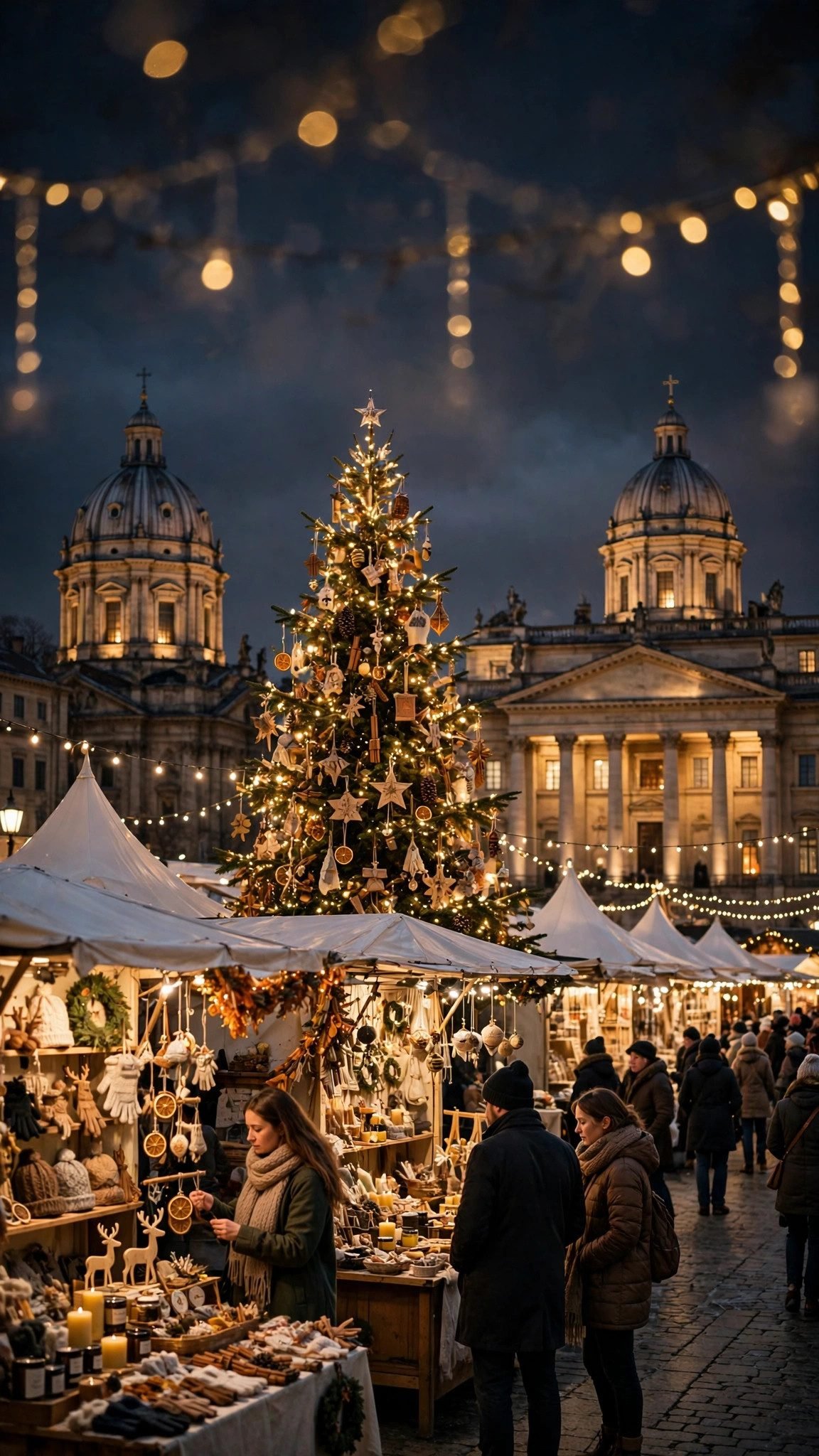
Aachen is the market I send people to when they want the Christmas feeling without the crowds. The market wraps around the cathedral and the town hall, and the whole old town is small enough to walk in an evening. Aachen sits near the borders with Belgium and the Netherlands, so you hear three languages at the Gluhwein counter, and the stalls mix German, Belgian, and Dutch treats. I liked it best after dark, when the cathedral is lit and the square goes quiet.
The market runs November 20 to December 23, 2026. Hours are 11 am to 9 pm daily, and it closes at 8 pm on December 23. On Sunday, November 22, it opens only in the evening, from 6 pm, because of Totensonntag. Entry is free. This is the 53rd edition of the market. Try the Aachener Printen, the spiced gingerbread the city is known for, and buy a box to take home, because it keeps well and it is the one food souvenir I always recommend from this trip. The cathedral itself is worth an hour before the market opens, and it is one of the oldest cathedrals in northern Europe.
Aachen works as a day trip from Cologne, about 45 minutes by train, or as a first stop if you fly into Dusseldorf. I did it as a day trip and it was the right call, because one evening is enough to see the whole market, and the train back to Cologne runs late. Pack snacks for the train ride, and my road trip snacks work just as well on a train as they do in a car.
Local tip: Go after 6 pm on November 22 if that is your only day, because the market opens late that Sunday and the evening crowd is smaller than the daytime one.
8. Hamburg: Germany’s Best Christmas Market by the Water
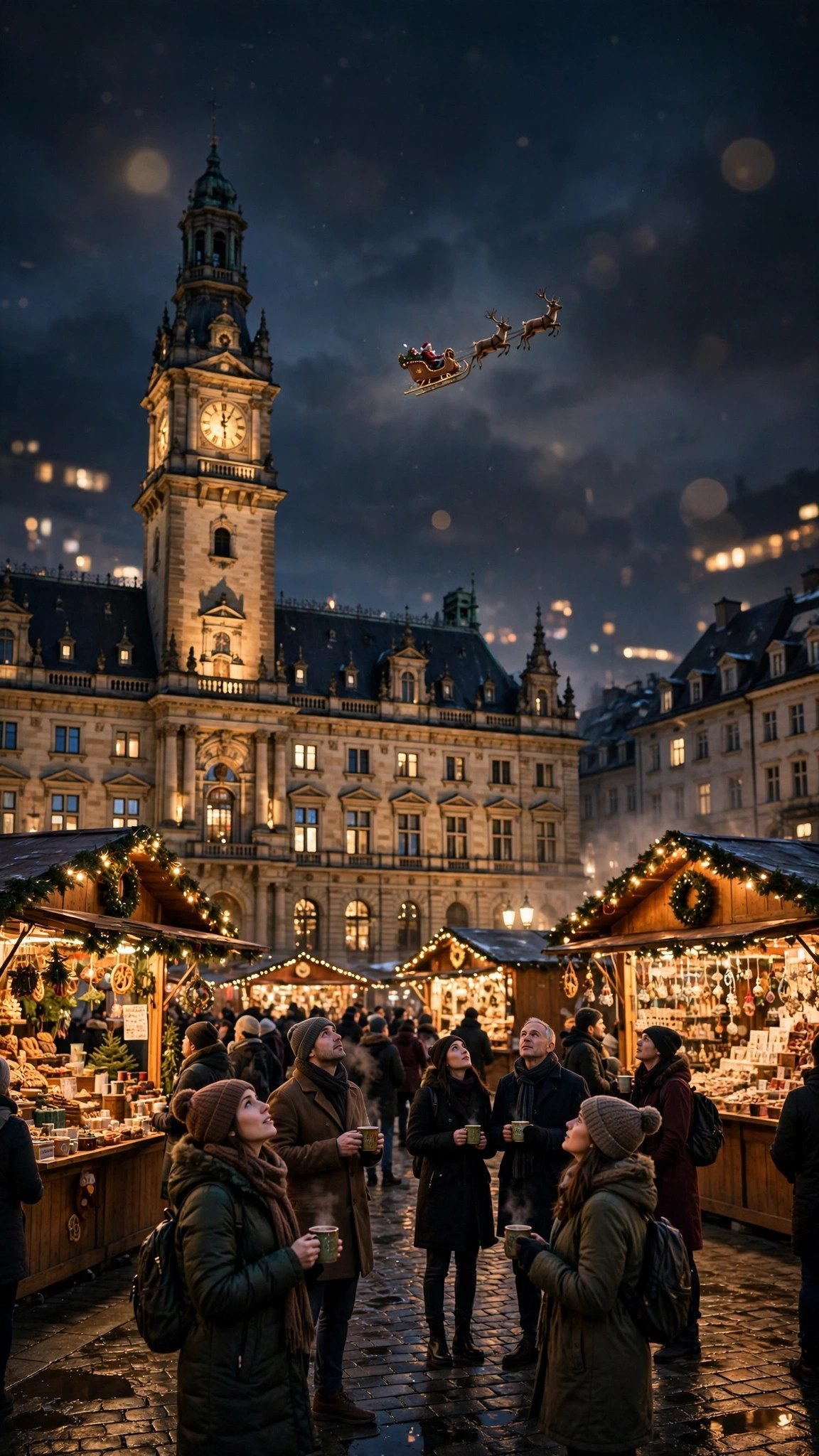
Hamburg surprised me. I expected a port city with a small market, and I found one of the best historic markets in the country. Roncalli’s Historic Christmas Market fills the Rathausmarkt in front of the neo-Renaissance city hall, and the whole square is framed by the building’s towers. The market has a flying Santa, a sleigh that crosses the square above the stalls at 4 pm, 6 pm, and 8 pm, and kids stop and point every single time. I stopped and pointed too.
The market runs November 23 to December 23, 2026. Hours are 11 am to 9 pm daily, and entry is free. The Santa Pauli market in the St. Pauli district runs November 9 to December 23 for a louder, adults only alternative, and the WeisserZauber market on the Jungfernstieg runs November 18 to December 23. Hamburg is a good place to try the local pastries, and the stalls near the city hall have the best selection I found in the north. A cup of Gluhwein costs about 4 to 5 euros, plus the usual mug deposit.
Hamburg is worth two days, not one. Do the Rathausmarkt in the evening, then spend a morning at the harbour and the Speicherstadt, the old warehouse district, before a second market round. The city is flat and easy to walk, and the U-Bahn covers the rest. If you want more northern Europe in winter after Hamburg, my things to do in Norway picks up where this trip leaves off.
Local tip: Be at the Rathausmarkt at 4 pm for the first Santa flight, because the square fills up fast after that, and the 6 pm flight is the most crowded of the three.
9. Leipzig: Germany’s Most Underrated Christmas Market
Leipzig is the market nobody talks about, and that is the reason to go. The Leipziger Weihnachtsmarkt spreads across the whole city center, with stalls on the Marktplatz and the surrounding streets, and it feels like a local market that happens to welcome visitors, not a tourist show. I found the best handmade ornaments of my whole trip here, from woodcarvers from the Erzgebirge mountains, and the prices were lower than in Nuremberg or Munich.
The market runs November 24 to December 23, 2026. Hours are 11 am to 9 pm daily, and until 10 pm on Friday and Saturday. The opening evening is November 24 at 5 pm. Entry is free. Leipzig has a long trading history, and the market reflects it, with craft stalls, regional food, and a big Ferris wheel on the Augustusplatz. The market is compact enough to walk in two hours, which leaves time for the rest of the city. I used the extra time for the Bach museum and a long lunch, and that slower pace was the best part of my Leipzig day.
Leipzig works as a stop between Berlin and Dresden, and it deserves a full day, not a drive by. The city center is flat and walkable, and the stalls stay open late on Fridays and Saturdays, so plan an evening visit if you can. Dress for standing outside for hours, and my cabin trip outfit and packing ideas will help you layer for a cold night at the stalls.
Local tip: Go on a Friday evening, because the stalls stay open until 10 pm, the Ferris wheel is lit, and the market feels like a local night out instead of a tourist stop.
10. Frankfurt: Germany’s Christmas Market with the Oldest Roots
Frankfurt is the market I almost skipped, and I am glad I did not. The main market fills the Romerberg, the old town square with gabled houses, and its roots go back to 1393, which makes it one of the oldest markets in the country. Its tree is huge, and the square fills with light as soon as the sun goes down. I stood in the middle of the square with a cup of hot apple wine and thought this was the best looking market square I had seen all trip.
The main Romerberg market opens November 23, 2026, and runs until just before Christmas. Sachsenhausen, the smaller market across the river, opens earlier, on November 16, and runs to December 20. A cup of Gluhwein or hot apple wine costs about 4.50 to 6 euros, plus a 3 to 5 euro deposit on the mug. Try the hot apple wine, because Frankfurt is an apple wine city, and the market version is spiced and warm and different from anything I had in the south. The stalls also sell Bethmannchen, the marzipan and almond cookies that are the city’s Christmas sweet.
Frankfurt is the easiest city to fly into for this trip, and it works as a first stop. The market is a ten minute walk from the main station, and the old town is compact. If you want sun after the cold, my South America travel destinations are the opposite end of the spectrum, but Frankfurt in December is where I would start a Germany trip every time.
Local tip: Try the hot apple wine instead of Gluhwein at least once, because it is the Frankfurt specialty, and the Sachsenhausen market is the one locals use, so go there for a quieter evening.
11. Stuttgart: Germany’s Christmas Market for Food Lovers
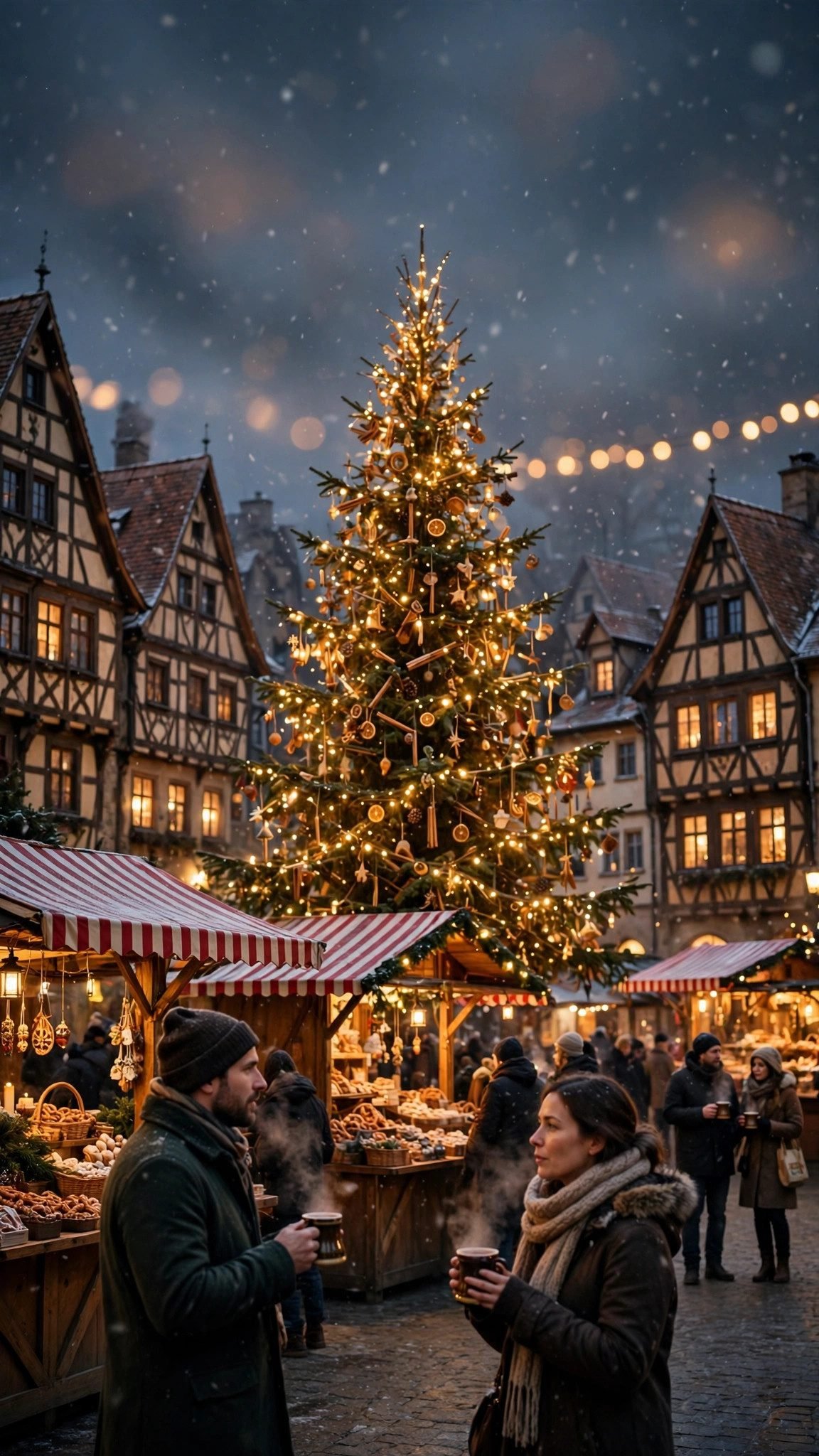
Stuttgart is the market I send food lovers to. The market fills the Schlossplatz and the surrounding streets in the city center, and the food stalls are the best I found anywhere in Germany. Gluhwein here is the cheapest of the big city markets, at 3.50 to 4.50 euros a cup, and the food is the reason to come. I ate my way across the market in one evening and still missed stalls I wanted to try.
The market opens November 25, 2026, and runs into the week before Christmas. Entry is free. A mug deposit of 3 euros applies to the Gluhwein, and a stem glass costs 5 euros to keep. The market is known for its decorated stall roofs, which the stallholders compete over every year, and the best ones are worth a slow walk just to look at. Try the local Swabian food, and save room for the sweets, because the bakers here take Christmas seriously.
Stuttgart works as a stop between Frankfurt and Munich, and it deserves a full evening, not a lunch break. The city center is compact, and the market is a short walk from the main station. I bought groceries for the train the next morning from a bakery near the market, and my grocery store meals for travelers will help you do the same without wasting money on station food.
Local tip: Walk the market twice, once for the food and once for the stall roofs, because the roof decorations are a competition and the best ones are easy to miss when you are focused on eating.
The 2-Week Christmas Markets in Germany Train Itinerary
Here is the plan I would follow if I did the whole trip again. It starts in Frankfurt, where most flights land, and ends in Munich, where most flights leave. The best window is November 27 to December 22, when every market on this list is open at the same time. Book hotels early, because the last two weekends before Christmas fill up first.
Days 1 and 2 are Frankfurt. Land, drop your bags, and spend the first evening at the Romerberg market. Use day 2 for the Sachsenhausen market and the old town. Days 3 and 4 are Cologne. Take the ICE train from Frankfurt, which takes about an hour, and spend two evenings on the cathedral market and the old town markets. Day 5 is a day trip to Aachen from Cologne, about 45 minutes by train each way, and you are back in Cologne for dinner.
Days 6 and 7 are Hamburg. The train north takes most of a morning, so treat day 6 as a travel day and do the Rathausmarkt that evening. Day 7 is the harbour and a second market round. Days 8 and 9 are Berlin. The train from Hamburg is a short ride, and two days lets you cover Mitte one day and Charlottenburg the next. Day 10 is Leipzig, a stop between Berlin and Dresden, and the market stays open until 10 pm on Fridays and Saturdays.
Days 11 and 12 are Dresden. The Striezelmarkt is the oldest on the list, and two days lets you see it at night and in the morning, when it is quieter. Day 13 is Nuremberg, and the Christkindlesmarkt is the one market I would not rush. On day 14, I go back to Rothenburg in the morning and end in Munich in the evening, with the Marienplatz market as the last stop, and you fly home on day 15.
One warning for 2026: the high speed line between Nuremberg and Munich is closed for track work until December 12, so ICE trains on that route run slower and take detours. Check the DB Navigator app on the day you travel, and allow extra time for any leg that touches Munich or Nuremberg before December 12. The fastest Munich to Nuremberg trains normally take 1 hour 41 minutes, but the closure adds time, so do not book a tight connection. My carry-on packing tips will help you keep your bag light enough to move fast between trains.
Local tip: Start the trip on November 27 or later, because Nuremberg does not open until then, and every market on this list is open at the same time from that date until December 22.
What Christmas Markets in Germany Cost in 2026
Here is the honest part. The markets themselves are almost free, and the money goes to food, drink, and your hotel. Entry is free at every market on this list except one. The WeihnachtsZauber on Gendarmenmarkt in Berlin charges 2 euros, and it is free on weekdays between 11 am and 2 pm, except on December 24, 25, 26 and 31, and children under 12 always go in free. Every other market on this list costs nothing to walk into.
A cup of Gluhwein costs 3.50 to 5.60 euros in Germany in 2026, plus a 2 to 5 euro deposit on the mug. The deposit is called Pfand, and you get it back when you return the mug to any drinks stall at the same market, or you keep the mug as a souvenir, because most cities release a new design each year. At the Cologne cathedral market, Gluhwein is 5 euros and the Bratwurst is 6 euros. In Frankfurt, Gluhwein or hot apple wine runs 4.50 to 6 euros. Stuttgart is cheaper still, at 3.50 to 4.50 euros. Plan on 15 to 25 euros per person per evening for food and drink if you eat at the stalls, and less if you eat one real meal and snack at the market.
Trains are the other big cost. The Deutschlandticket costs 63 euros a month in 2026, and it covers regional and local trains, buses, and trams across Germany, but it does not cover ICE, IC, or EC long distance trains. For this trip, you want ICE trains between cities, so book those early for the lowest fares, and use the Deutschlandticket only if your trip runs across a full calendar month. Hotels cost the most in the final two weekends before Christmas, so book early and stay a little outside the old town to save money. My Faroe Islands budget guide uses the same approach I use here: set a daily food budget, book the hotel first, and let the market spending stay flexible.
Local tip: Keep your mug deposits in a separate pocket, because the coins add up fast, and returning five mugs at the end of the night gets you 10 to 25 euros back.
What to Pack for Christmas Markets in Germany
Pack for standing outside for hours in the cold. That is the whole packing list, really. Layers matter more than one heavy coat, because you will be warm in a crowded stall and cold five minutes later on an open square. I wear a thermal base layer, a sweater, and a waterproof coat, with a scarf and gloves I can stuff in a pocket. Waterproof boots with grip are the one item I would not skip, because the squares get wet and icy, and the cobblestones are slick after rain.
Bring cash in small bills and coins, because some stalls do not take cards, and the mug deposit comes back in coins. A small crossbody bag beats a backpack, because the markets are crowded and a backpack bumps into people and stalls. Pack a reusable tote for ornaments and food, because the paper bags from stalls tear in the rain. My trekking outfits for women have the same layering logic I use for cold market nights, and they work for the town wall walk in Rothenburg too.
Do not overpack. You will buy things, and you need room in your bag for a Stollen loaf, a box of Printen, and at least one mug you decide to keep. If you fly home with a bag full of ornaments, wrap them in your clothes, because the wooden ones chip easily in a suitcase.
Local tip: Pack hand warmers, because they cost almost nothing, weigh nothing, and they turn a cold hour at the stalls into a comfortable one.
Before You Go: My Last Word on Christmas Markets in Germany
Germany does Christmas markets better than anywhere else I have been, and it is not close. The markets are old, the food is real, and the train system lets you see eleven of them in two weeks without ever getting in a car. Start with Cologne and Nuremberg if you only have a long weekend. Do the full two weeks if you can, and go between November 27 and December 22, when every market on this list is open. Book the hotel first, check the train times on the day you travel, and save this guide so you have the dates with you. I will be back in Germany next December, and I will be eating Lebkuchen in Nuremberg again.
Local tip: Save this article before you book anything, because the 2026 dates are the ones I checked, and the best window closes on December 22.

You Might Also Like
- 13 Reasons Christmas in Chicago Is Worth the Trip
- 13 Turkey Travel Tips for First-Time Visitors (2026)
- 9 Europe Trip Planning Mistakes That Waste Money
Local tip: Read my Christmas in Chicago guide next if you want a second Christmas city, because it pairs well with this Germany trip and the dates overlap.