I arrived in Perugia Italy by train from Rome, and the first thing I noticed was the climb. The city sits on a hilltop 484 metres above the Tiber valley, and the old town rewards every step up with another view. Perugia Italy is the medieval heart of Umbria: a fountain carved with the months of the year, a gallery full of Perugino, underground streets under a papal fortress, and chocolate at every turn. This Perugia Italy guide covers the two days I spent there, with real prices, train times, and the mistakes I made on the hill. I came for the fountain and the gallery and stayed for the chocolate and the underground streets, and the hill never once felt like a chore. Let’s get into it.
- Why Visit Perugia Italy: Umbria’s Medieval Heart
- Best Time to Visit Perugia Italy
- How to Get to Perugia Italy From Rome and Florence
- Piazza IV Novembre and Fontana Maggiore: Perugia Italy’s Front Room
- Galleria Nazionale dell’Umbria: Perugia Italy’s Art in One Palace
- Rocca Paolina: Perugia Italy’s Underground Streets
- Etruscan Perugia Italy: The Arch, the Well, and the Old Walls
- Chocolate in Perugia Italy: Baci, Perugina, and Eurochocolate
- Where to Stay in Perugia Italy
- Perugia Italy Travel Budget: What Three Days Cost
- Perugia Italy Travel Tips: What I Wish I Knew Before I Went
- Frequently Asked Questions About Perugia Italy
- Perugia Italy, Done Right
- You Might Also Like
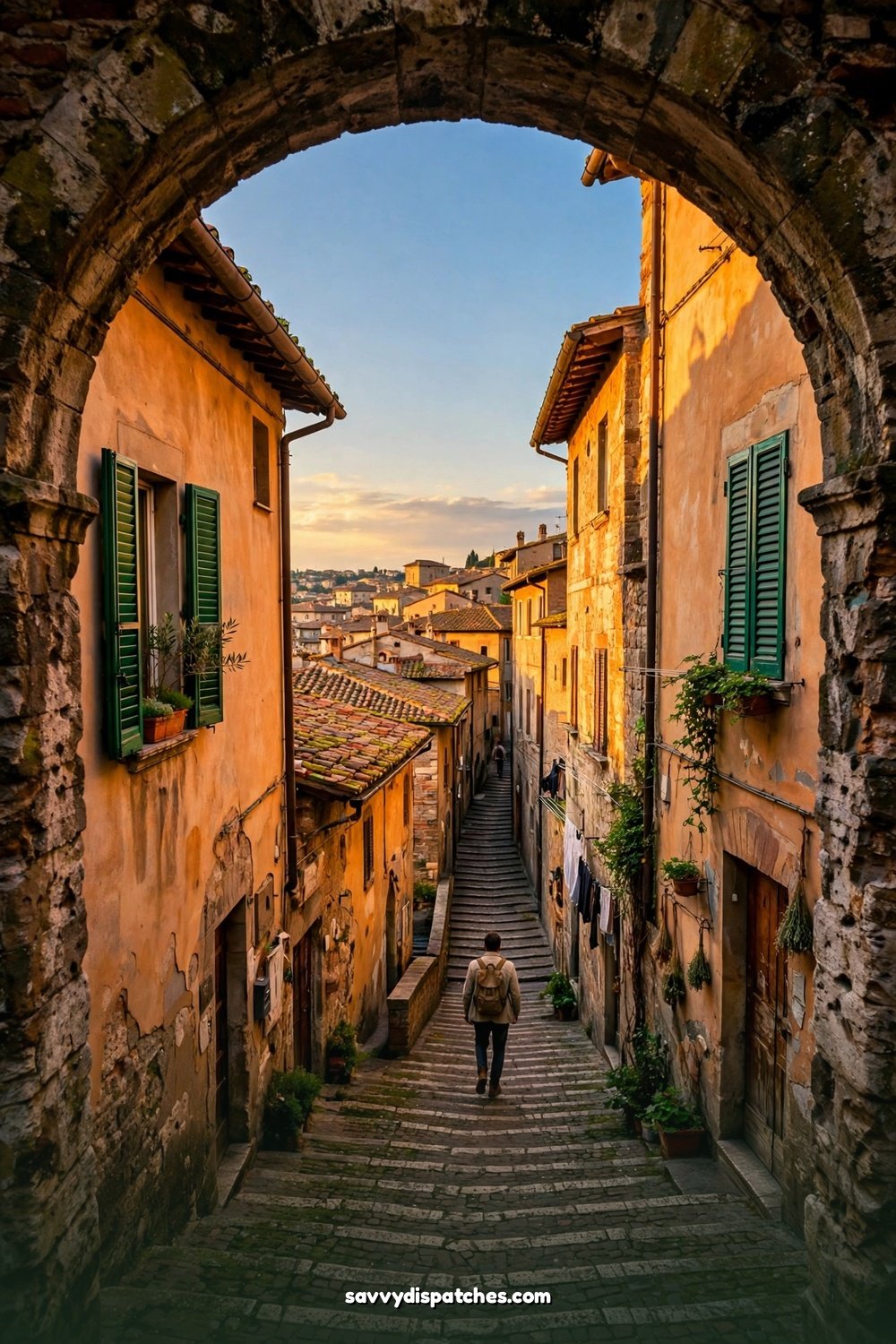
Here is the short version. Day one is the old centre: Piazza IV Novembre, the Fontana Maggiore, the Galleria Nazionale, and the Rocca Paolina underground. The second day is the deeper layers: the Etruscan Arch and Well, the aqueduct walkway, and a chocolate afternoon at the Perugina house. Sleep in the old town if you can, and use the Minimetro to beat the hill. My Florence in 2 days guide covers the famous neighbour to the north, and my 5 things to know before traveling to Italy for the first time will help you plan the rest of the trip.
Why Visit Perugia Italy: Umbria’s Medieval Heart
Perugia is the capital of Umbria, and it feels nothing like Rome or Florence. Rome is grand and crowded. Florence is art on every corner, with the crowds to match. Perugia is a hilltop university city of about 162,000 people, with Etruscan walls under medieval streets, three universities, and a chocolate factory that has run since 1907. The old town is compact enough to walk in a day, and the views across the Tiber valley open up at every stairway.
Slow walking pays off here. One morning I stood in Piazza IV Novembre with a coffee and watched the Fontana Maggiore catch the light, and the same afternoon I was underground in the Rocca Paolina, walking streets that a pope buried in the 1540s. That range is the reason to come. It is Italy beyond the big two, with medieval art, Etruscan history, and food that costs less than a Florence dinner. My 10-day Tuscan itinerary shows the region next door, and Perugia makes the quieter half of that trip.
Local tip: Stay in the old town, because the hill is the whole trip and a room near Corso Vannucci puts the fountain, the gallery, and the evening walk within five minutes.
Best Time to Visit Perugia Italy
Perugia works in every season, but spring and autumn are my picks. April, May, September, and October bring mild air, clear skies, and the hillsides at their best. The old town is made for walking in that weather, and the viewpoints stay clear all day. Summer is hot on the hill, and the stone streets hold the heat into the evening.
Two festivals set the calendar. Umbria Jazz runs July 9 to 18 in 2027, and the city fills with music and late nights. Eurochocolate takes over the old town in the autumn; the 2026 edition ran November 13 to 22, and the dates move each year, so check the programme before you book a chocolate trip. Winter is the quiet season. The days are short and the nights are cold, but the crowds are gone and the gallery is empty. My winter bucket list has more cold-season escapes if you like travelling when the crowds thin out.
Local tip: Go in late September, because the summer heat is gone, the autumn light is warm on the pink stone, and the evening passeggiata still runs long.
How to Get to Perugia Italy From Rome and Florence
The train is the easy way in. Perugia Fontivegge station sits about 2 km below the old town, and the ride from Rome takes 2.5 to 3 hours, with fares from about 12 to 25 euros. From Florence it takes about 2 hours, usually with a change at Terontola, for about 12 to 18 euros. Assisi is the quick hop: 20 to 30 minutes and about 3 to 5 euros for the 25 km ride. Book the Rome and Florence trains ahead, because the cheap fares go first.
Getting from the station to the old town is the part most guides skip. The walk is about 25 minutes uphill, so take the Minimetro instead. It opened in 2008, runs about 3 km with 7 stations from the Pian di Massiano parking area to Pincetto below the old centre, and a single ride costs 1.50 euros, valid for 70 minutes. From Pincetto, escalators carry you up through the Rocca Paolina and into the centre. Flying in is simple too: Perugia San Francesco d’Assisi Airport sits 12 to 15 km from the centre, and the bus takes about 30 minutes for about 2 to 3 euros. My Europe trip planning mistakes covers the booking errors that cost the most on a trip like this one.
Local tip: Take the Minimetro from the station, because the 25-minute uphill walk with luggage is the first mistake every first-timer makes in Perugia.
Piazza IV Novembre and Fontana Maggiore: Perugia Italy’s Front Room
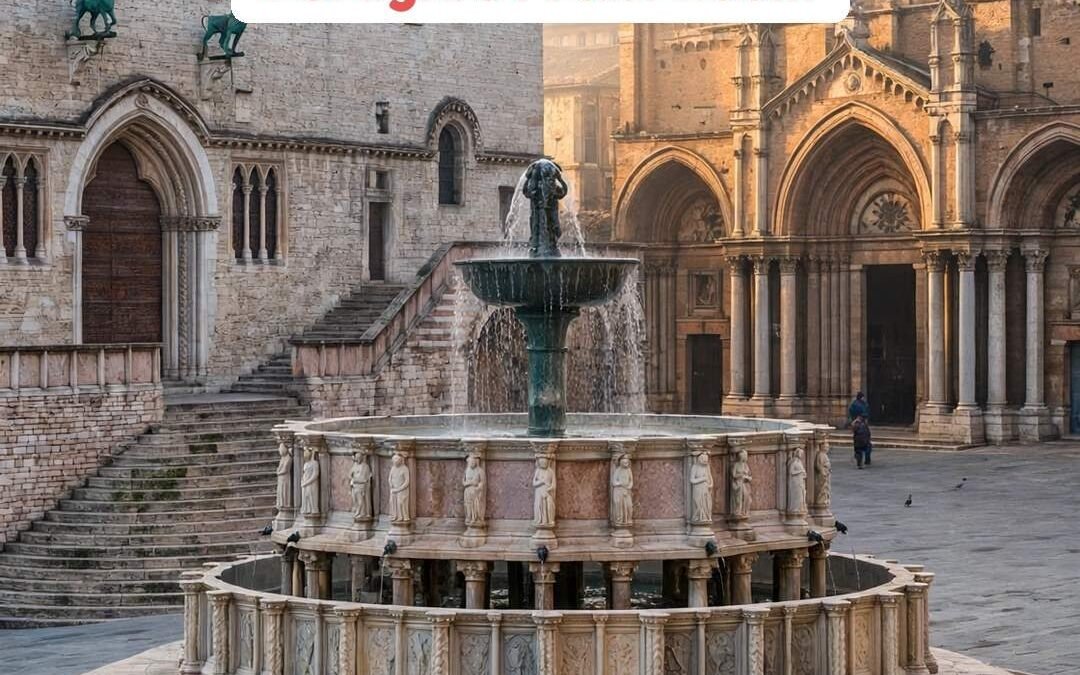
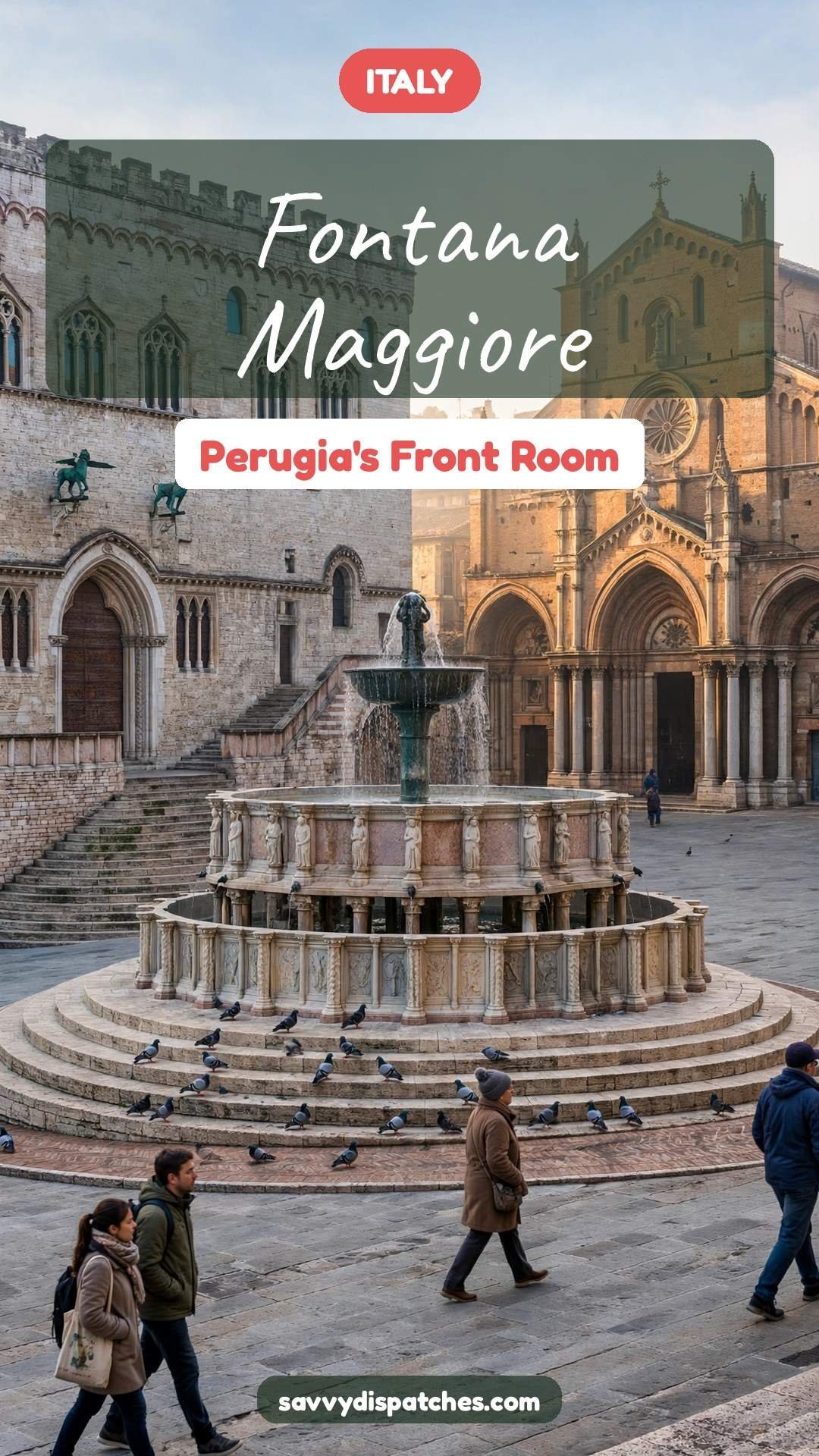
Piazza IV Novembre is the heart of Perugia, and it is the best place to start. The square brings together the Cathedral of San Lorenzo, the Palazzo dei Priori, and the Fontana Maggiore, which many call the most beautiful medieval fountain in Italy. It is a 25-sided polygon of pink and white stone, built between 1275 and 1278 to mark the new aqueduct that brought water from Mount Pacciano to the upper town. That aqueduct was the first since Roman times, and the city marked it with its best work.
Look closely and the fountain reads like a book. Nicola Pisano and his son Giovanni carved 48 double relief panels around the lower basin, and 12 of them show the Labours of the Months, each with its zodiac sign. Between them sit scenes from Roman legend, Aesop’s fables, and the lives of saints. The upper basin holds 24 saints and figures from Perugia’s history, with three water nymphs keeping them company. Across the square, the cathedral has an unfinished facade in warm pink marble quarried near Assisi, and the Palazzo dei Priori faces it with the confidence of a city that ran itself. My Dolomites hiking budget guide uses the same free-view-first logic I use here: the best sight in Perugia costs nothing to stand in front of.
Local tip: Go to the square at 8 am, because the fountain is empty, the pink stone glows in the low light, and the cafes are just opening for the first coffee of the day.
Galleria Nazionale dell’Umbria: Perugia Italy’s Art in One Palace
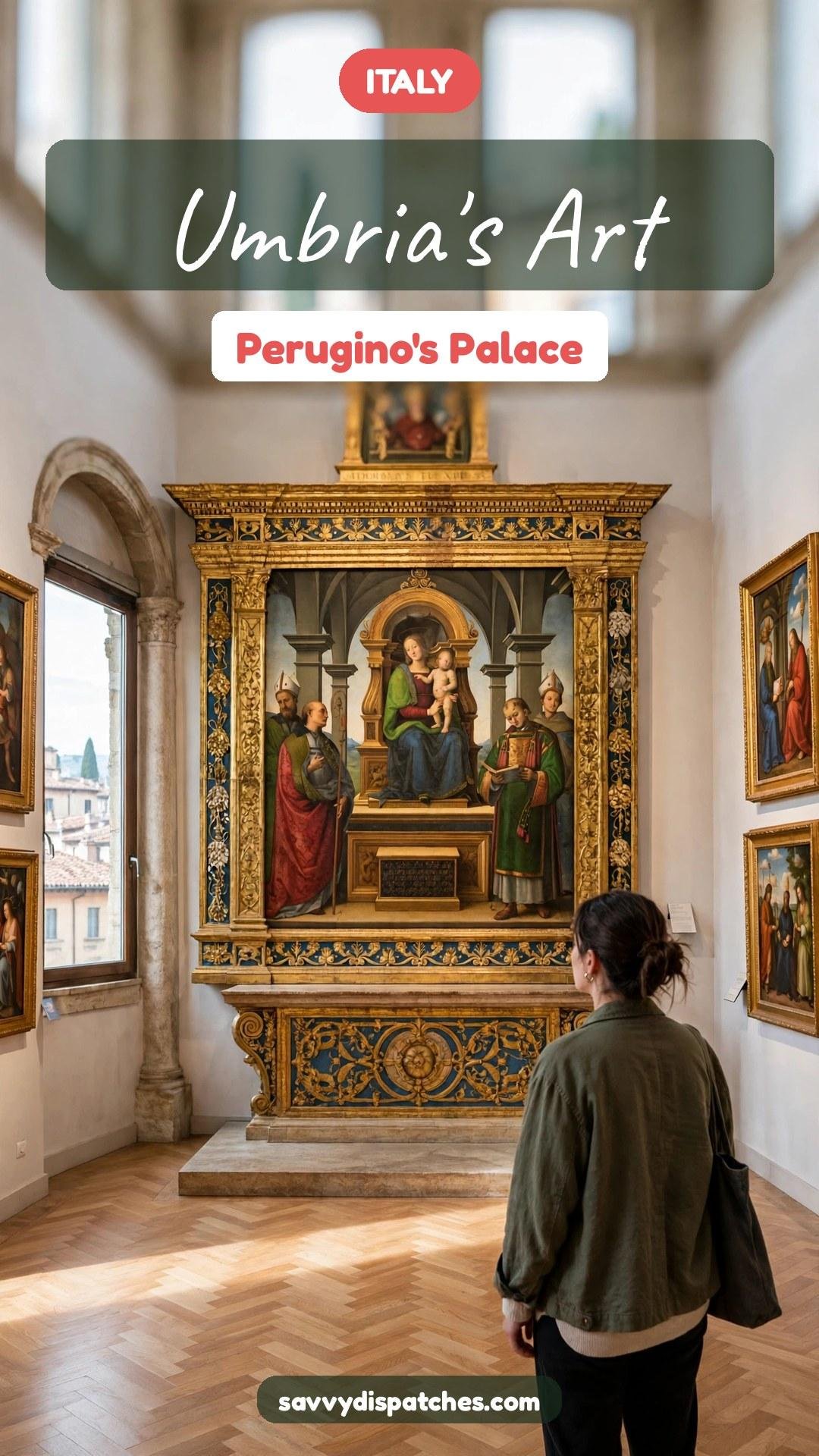
The Galleria Nazionale dell’Umbria sits inside the Palazzo dei Priori, on the top floors of the palace that faces the fountain. It holds one of the finest collections of Umbrian painting anywhere, spanning 1200 to 1900, and it was established in 1878. The rooms run from early crucifixes and gold-ground panels to the work of Perugino, the painter Perugia is named for in art history, plus Piero della Francesca, Duccio da Buoninsegna, Beato Angelico, and Pinturicchio. Two hours here covers the best of it, and the windows give you views over the rooftops between rooms.
The ticket is 10 euros for an adult, or 12 euros when a special exhibition is on. Visitors under 18 go in free, and EU citizens aged 18 to 25 pay 2 euros. Admission is free on the first Sunday of the month if you pick up the ticket at the ticket office. The Collegio del Cambio, in the same palace, holds Perugino’s frescoes for 6 euros, and the Cathedral Museum costs 8 euros. Go in the morning, when the light in the top-floor rooms is best and the groups have not arrived yet. My travel-inspired recipes from Europe brings the trip home in a different way, if the art leaves you hungry for the region.
Local tip: Go on the first Sunday of the month, because the gallery is free that day and the morning rooms are quiet before the lunch crowds arrive.
Rocca Paolina: Perugia Italy’s Underground Streets
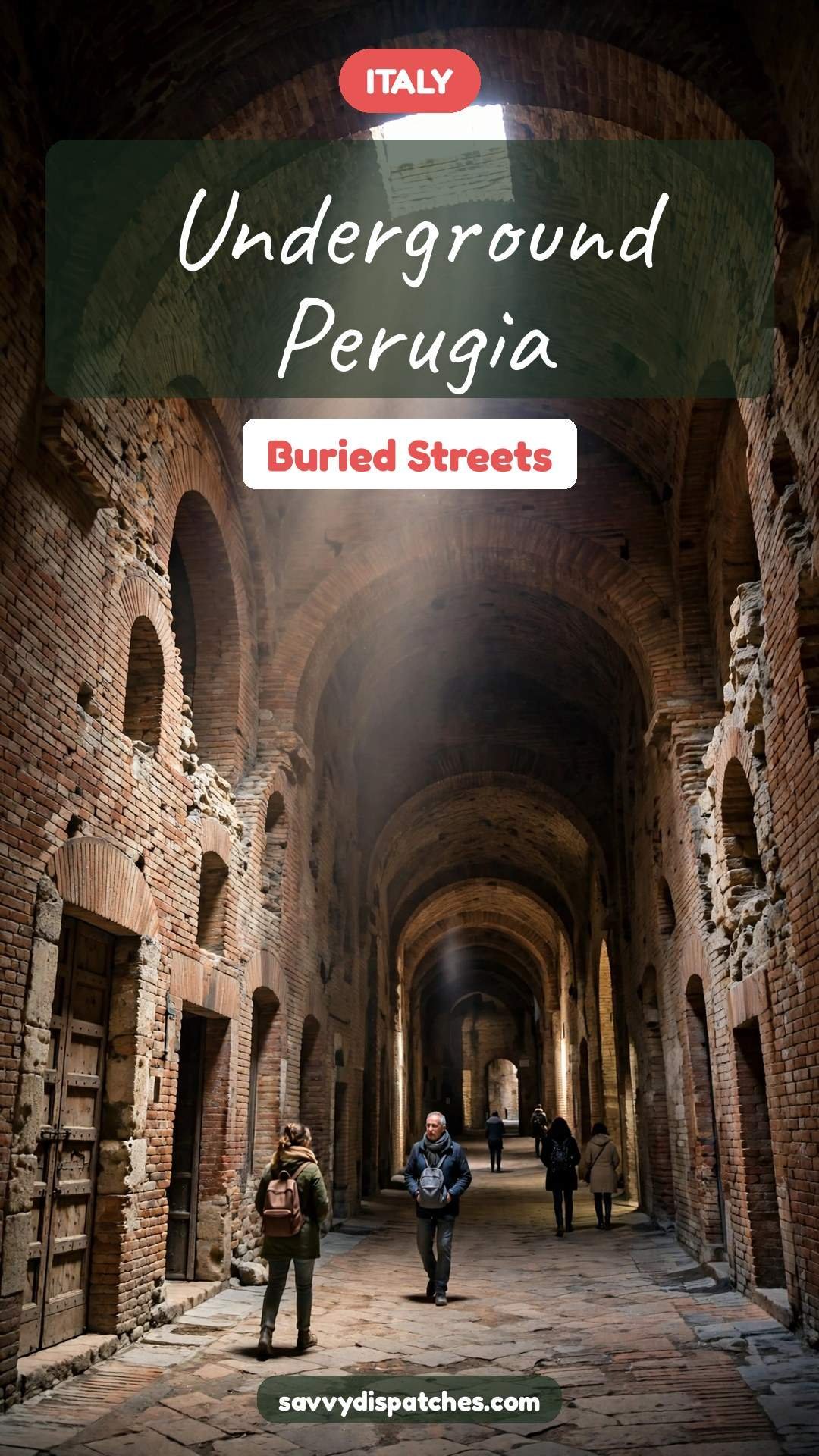
The Rocca Paolina is the strangest sight in Perugia, and the one most visitors walk through without knowing it. Pope Paul III built the fortress between 1540 and 1543, and to do it he buried whole medieval streets under it. Those streets are still there, underground, and you can walk them today. The escalators from the lower city pass right through the vaults, so the ride up to the old town is also a tour of a buried neighbourhood.
Walk the underground streets slowly. The vaulted passages run under the fortress walls, and the old doorways, arches, and street levels are still visible in the stone. It costs nothing to walk through, and 30 minutes is enough to see the main passages. The fortress above is mostly gone now, but the underground part survived because nobody could build over it. Come here in the middle of the day, when the sun is high and the cool vaults are the best break in the city. My affordable European destinations for solo female travellers has more towns built the same way, where the best sight is the one under your feet.
Local tip: Ride the escalators up through the Rocca Paolina instead of walking the streets, because the vaults are free, cool, and the fastest way into the old town.
Etruscan Perugia Italy: The Arch, the Well, and the Old Walls
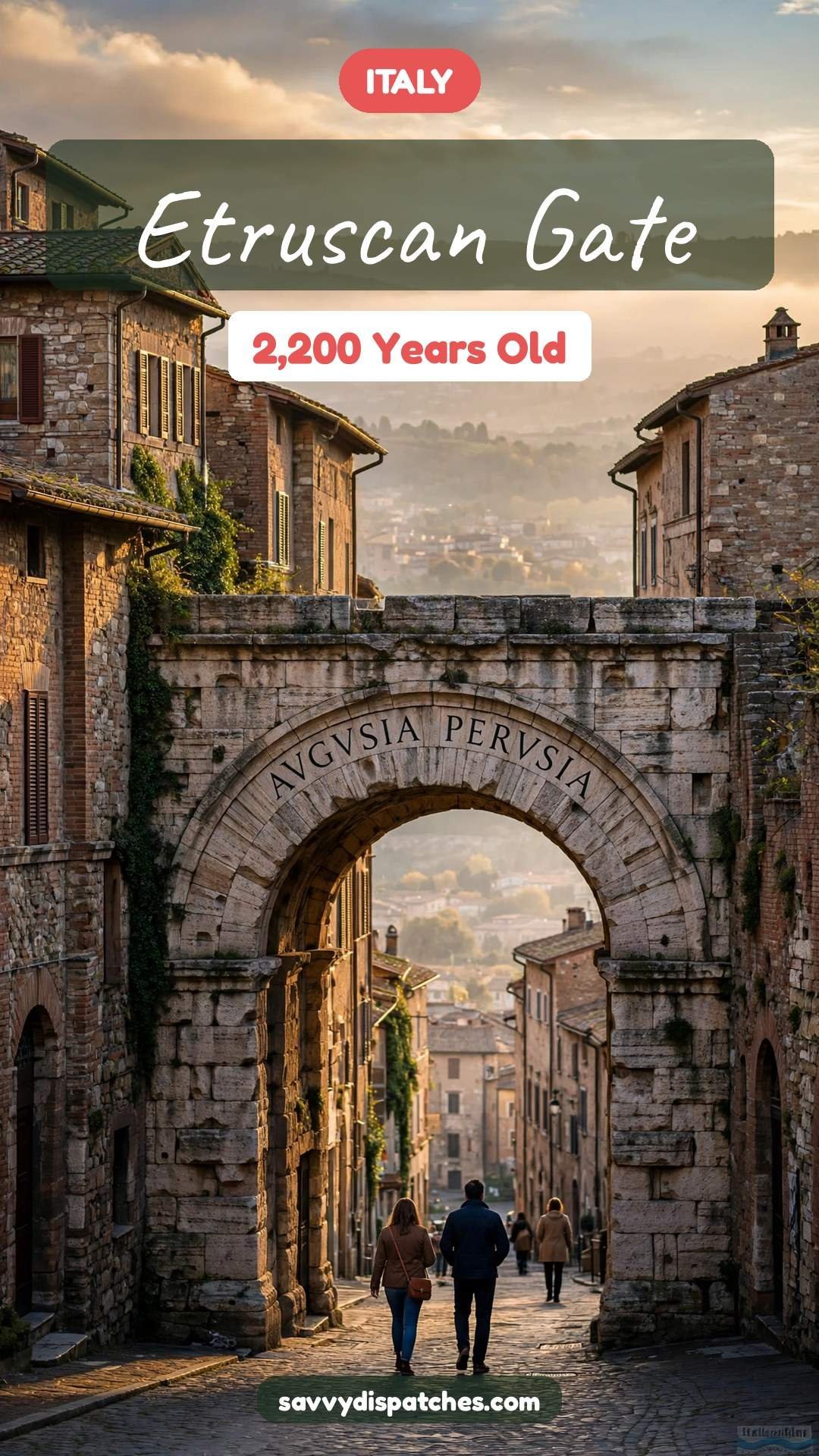
Perugia is older than its medieval face. The city was Etruscan first, and the Etruscan layer is still standing in the open. Its gate, the Etruscan Arch or Arco Etrusco, is a 3rd-century BC city gate, one of the oldest standing gates in Italy, and it still carries traffic through its arch. Stand under it and you are standing in a gate that has worked for more than 2,200 years. The old walls run on from the arch, and the walk along them gives you the Tiber valley on one side and the medieval town on the other.
Underground, the Pozzo Etrusco tells the deeper half of the story. That shaft dates to the 3rd century BC, runs more than 30 metres down, and is up to 5.60 metres wide. Entry costs 4 euros, and 20 minutes is enough to stand at the edge and look down into the dark. The Chapel of San Severo, a short walk away, holds a Raphael fresco and also costs 4 euros. For the full underground story, the Perugia Sotterranea guided tours run about 15 to 25 euros and take you through an Etruscan-Roman road and a 1st-century BC Roman house under the cathedral complex. The medieval aqueduct walkway is the free counterpoint: a raised path across the rooftops with views over the valley. My best places to visit in Portugal has more old towns where the walls are the walk.
Local tip: Walk the aqueduct at sunset, because the raised path puts you above the rooftops with the valley open in front of you, and it costs nothing.
Chocolate in Perugia Italy: Baci, Perugina, and Eurochocolate
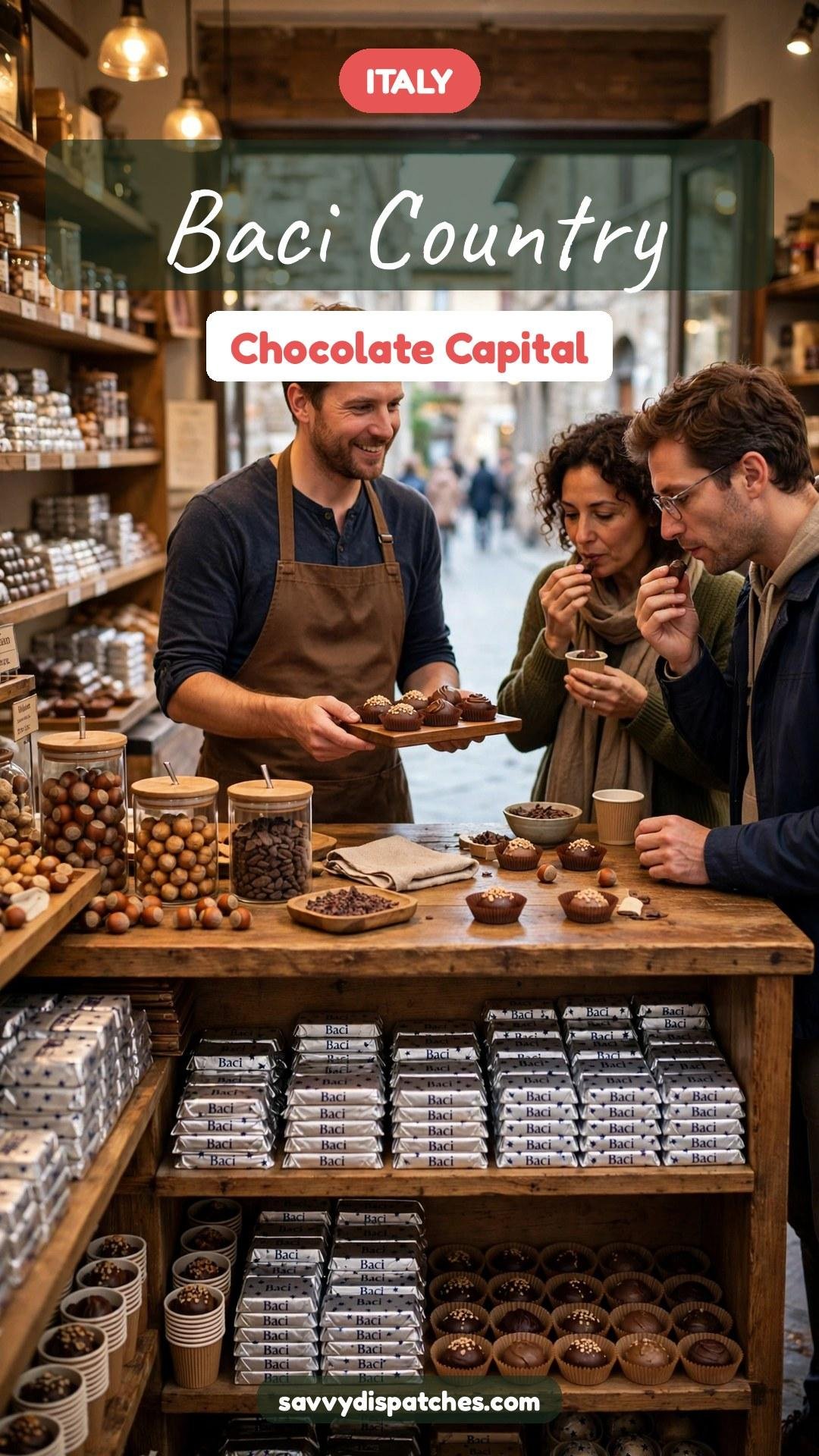
Perugia is the chocolate capital of Italy, and it earns the title. The Perugina company has made chocolate here since 1907, and its Baci are the hazelnut kisses in silver foil with a love note inside the wrapper. You will find them in every shop in the old town, and the Perugina store on Corso Vannucci is the place to taste before you buy. The smaller artisan makers are worth your time too: their handmade pieces cost more, and they taste like it.
For the real chocolate day, go to the Casa del Cioccolato Perugina, at San Sisto about 5 km from the centre. Each guided tour runs 75 minutes through the chocolate museum, with a view of the factory floor from an overhead walkway and a tasting at the end. Tickets run about 15 euros per adult, and you should book ahead, because the tours fill up. Take a car or a taxi out there, since the bus is slow. If your trip lands in the autumn, Eurochocolate takes over the old town with stalls, tastings, and chocolate sculptures; the 2026 edition ran November 13 to 22, and the dates move each year. My Paris in winter guide has the same festival-first logic I use here: plan the trip around the event, not the other way round.
Local tip: Book the Perugina tour before you fly, because the 75-minute tours fill up weeks ahead and walk-in tickets are rare.
Where to Stay in Perugia Italy
Pick your base by the hill, because the hill decides your days. The old town is the best base for a first trip: rooms near Corso Vannucci put the fountain, the gallery, and the evening passeggiata within a five-minute walk, and you will use the Minimetro only for the station run. Rooms there cost more, and they are smaller, but the location pays for itself in saved climbs.
The lower town, around the station and Pian di Massiano, costs less and suits drivers, since the parking is down there and the Minimetro runs up to the centre in minutes. It suits a longer stay with day trips, because Assisi is 25 km away and Lake Trasimeno is 30 km west, and both are easier with a car. I stayed in the old town and walked everywhere, and I would do the same again. My carry-on packing tips will help you pack light for the stairs, because Perugia is a city of steps and a big suitcase is a burden here.
Local tip: Sleep in the old town for a first trip, because every climb you save is an hour you spend in the square instead of on the stairs.
Perugia Italy Travel Budget: What Three Days Cost
Here is what three days in Perugia cost, staying in the old town and using the train in and the Minimetro around the hill. Prices are in euros, per person.
| Item | Cost |
|---|---|
| Train Rome to Perugia, one way | 12-25 euros |
| Minimetro rides, 3 days | About 9 euros |
| Galleria Nazionale dell’Umbria | 10 euros |
| Collegio del Cambio | 6 euros |
| Cathedral Museum | 8 euros |
| Etruscan Well | 4 euros |
| Chapel of San Severo | 4 euros |
| Perugina chocolate tour | About 15 euros |
| Meals, 3 days | About 70-120 euros |
| Mid-range hotel, 3 nights | About 300-480 euros |
| 3-day total, per person | About 400-650 euros |
The fountain, the square, the Rocca Paolina vaults, the aqueduct walkway, and the evening passeggiata are all free. Your hotel is the big spend, and the old town rooms cost more than the lower town. Go on the first Sunday of the month and the gallery is free, which saves 10 euros. My best budget travel destinations for 2026 list has more trips built the same way, and my long flight hacks cover the flight into Rome if you are flying in from far away.
Local tip: Go on the first Sunday of the month, because the Galleria Nazionale is free that day and the 10 euros you save buys the chocolate tasting.
Perugia Italy Travel Tips: What I Wish I Knew Before I Went
Wear shoes with grip, because Perugia is a city of stairs and the old stone gets slick when it rains. The hill is real: the old town sits 484 metres up, and the walk from the station is 25 minutes uphill, so use the Minimetro and the escalators through the Rocca Paolina instead of fighting the climb. Distances on the map lie, because a 500-metre walk in Perugia can mean 100 steps.
Book the Perugina chocolate tour before you fly, because the 75-minute tours fill up and walk-in tickets are rare. Go to the gallery on the first Sunday of the month if you can, when it is free. And give Assisi a full morning, not a rushed hour: the train takes 20 to 30 minutes and costs about 3 to 5 euros, but the walk up to the basilica takes time of its own. My cheapest countries to visit in 2026 list has more trips where the small towns cost less than the famous ones.
Local tip: Wear shoes with grip and pack light, because the stairs are the trip and a heavy bag turns every climb into a chore.
Frequently Asked Questions About Perugia Italy
How many days do you need in Perugia?
Two days covers the old town well: one day for the square, the gallery, and the Rocca Paolina, and a second day for the Etruscan sights, the aqueduct, and chocolate. Add a third day for Assisi or Lake Trasimeno.
Is Perugia worth visiting after Rome and Florence?
Yes. Rome and Florence are grand and crowded, while Perugia is a hilltop university city with Etruscan walls, medieval art, and chocolate, all at a slower pace and a lower price.
How do you get from Rome to Perugia?
Take the train from Rome to Perugia Fontivegge station. The ride takes 2.5 to 3 hours and costs about 12 to 25 euros. From the station, take the Minimetro up to the old town.
What is the Fontana Maggiore?
It is the 25-sided pink and white fountain in Piazza IV Novembre, built between 1275 and 1278 to mark Perugia’s new aqueduct. Nicola Pisano and his son Giovanni carved its 48 relief panels.
Is Perugia good for chocolate lovers?
Yes, it is the chocolate capital of Italy. Perugina has made Baci here since 1907, the Casa del Cioccolato runs 75-minute tours for about 15 euros, and Eurochocolate fills the old town each autumn.
What is the best day trip from Perugia?
Assisi, 25 km away by train in 20 to 30 minutes for about 3 to 5 euros. The Basilica of St. Francis is a UNESCO site, and the hilltop town needs a full morning.
When is Eurochocolate in Perugia?
Dates move each year. In 2026 it ran November 13 to 22, so check the official programme before you book a trip around the festival in Perugia.
Local tip: Plan your two days by height, not by list, because the old town sits on a hill and a day that fights the climb wastes an hour on stairs.
Perugia Italy, Done Right
Two days in Perugia gives you a fountain carved with the months of the year, a gallery full of Perugino, underground streets under a pope’s fortress, a gate that has stood for 2,200 years, and chocolate at every turn. The train from Rome takes under 3 hours, the Minimetro costs 1.50 euros, and the best views are free. I came for the medieval art and stayed for the hilltop light. You will probably do the same. Book the chocolate tour early, take the Minimetro up, and walk the aqueduct at sunset. My cheap places to travel that still feel luxurious has more trips built the same way: one big meal, and a lot of free walking.
Local tip: Book the chocolate tour and the Rome train before you fly, because those are the two things that sell out, and everything else in Perugia can be decided on the day.
You Might Also Like
If this guide helped, here are three more from my site. Read my Florence in 2 days guide for the famous neighbour to the north. Check my 10-day Tuscan itinerary if you want the region next door. And save my best budget travel destinations for 2026 for your next adventure.