I drove into Niagara-on-the-Lake Canada from Toronto, and the first thing I noticed was how quiet the streets were. It is the wine-country town 30 minutes past the Falls: a Victorian main street, more than 30 wineries, a theatre festival, and a fort from the War of 1812, all within a 15-minute walk. Niagara-on-the-Lake Canada is the romantic getaway the Falls town is not, and it is the place I would send any couple planning a slow weekend. This guide covers my two days in Niagara-on-the-Lake Canada, with real prices, bike routes, and the January festival dates. I came for the wine and stayed for the theatre and the fort, and the town gave me all three without a single rushed morning. Let’s get into it.
- Why Visit Niagara-on-the-Lake Canada: Wine, Theatre, and History
- Best Time to Visit Niagara-on-the-Lake Canada
- How to Get to Niagara-on-the-Lake Canada From Toronto
- Queen Street: Niagara-on-the-Lake Canada’s Front Room
- Niagara-on-the-Lake Canada Wineries: Where to Taste
- The Niagara Icewine Festival: Niagara-on-the-Lake Canada in January
- Fort George: Niagara-on-the-Lake Canada’s War of 1812 History
- The Shaw Festival: Niagara-on-the-Lake Canada After Dark
- Where to Stay in Niagara-on-the-Lake Canada
- Niagara-on-the-Lake Canada Travel Budget: What Two Days Cost
- Niagara-on-the-Lake Canada Travel Tips: What I Wish I Knew Before I Went
- Frequently Asked Questions About Niagara-on-the-Lake Canada
- Niagara-on-the-Lake Canada, Done Right
- You Might Also Like
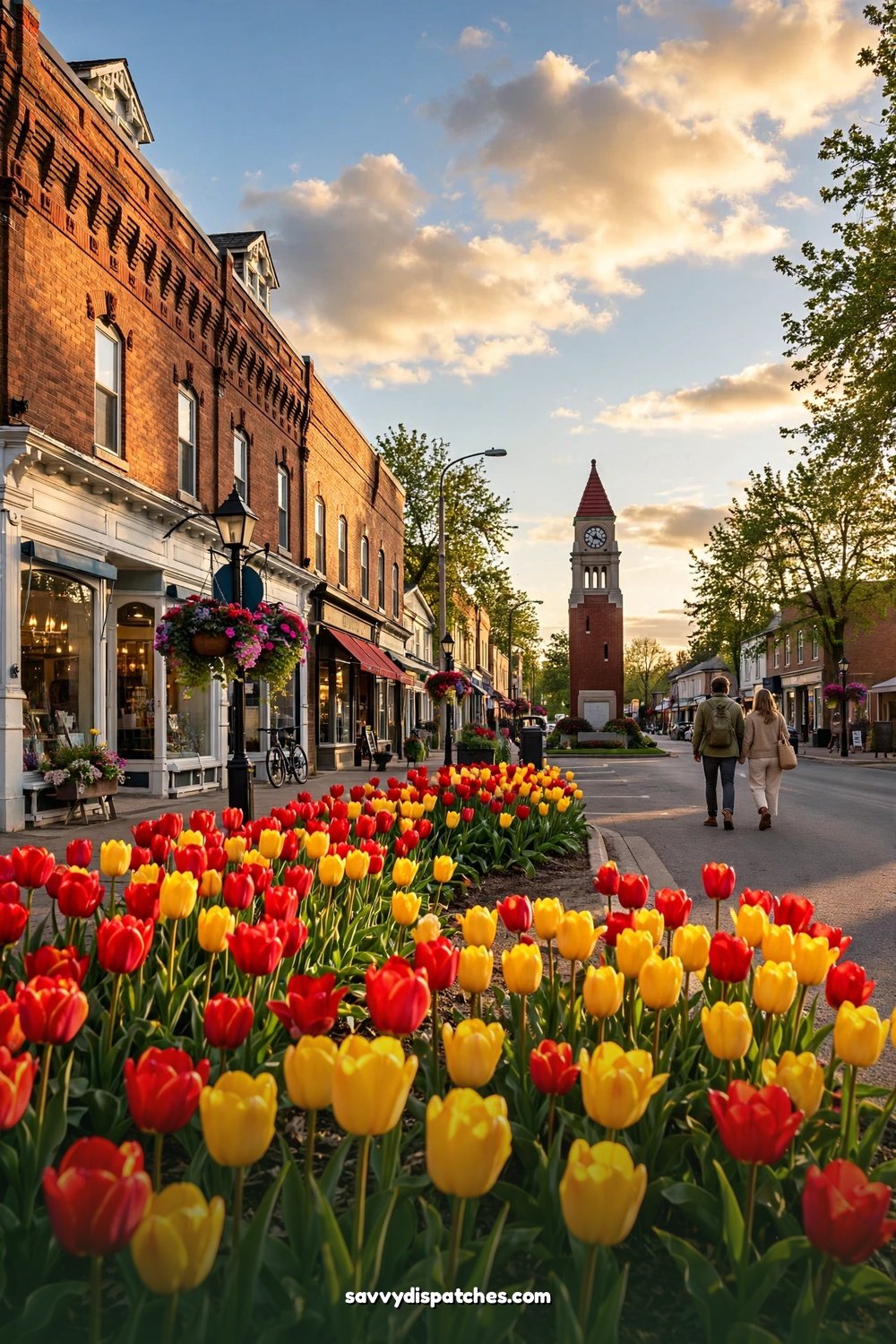
Here is the short version. Day one is the town: Queen Street, Fort George, and a Shaw Festival evening. The second day is wine country: three wineries by bike or tour, a long lunch, and the lake at sunset. Stay in town if you can, and do not drive between tastings. My Toronto in 48 hours guide covers the city you will fly into, and my Vancouver guide shows the other side of Canada.
Why Visit Niagara-on-the-Lake Canada: Wine, Theatre, and History
Niagara-on-the-Lake is the town the Falls made possible and the crowds forgot. It was once the capital of Upper Canada, and the Victorian main street still looks the part: tree-lined, flower-filled, and built for walking. The wineries spread out from the town along Niagara Stone Road and the side roads, the Shaw Festival runs from April to December, and Fort George stands at the edge of town with costumed interpreters and musket drills. It is three trips in one, and the whole town fits in a 15-minute walk.
The draw is the mix. One morning I tasted icewine at Inniskillin, and the same evening I watched a Shaw play in a theatre on Queen Street. The next day I walked the fort where the War of 1812 was fought and ate lunch at a winery restaurant. No other town in Ontario packs wine, theatre, and history that tightly. The Falls are 20 to 30 minutes away, so you can see them and still sleep somewhere quiet. My best Christmas destinations bucket list shows where this town sits among the winter escapes, and January is its best-kept secret.
Local tip: Stay in town, because the whole old town fits in a 15-minute walk and a room on Queen Street puts the wineries, the theatre, and the fort within reach on foot.
Best Time to Visit Niagara-on-the-Lake Canada
May to October is the best season, and the town knows it. The vines are green, the patios are open, the Shaw Festival is in full swing, and Fort George is open with its full programme. Summer is the busiest time, and the weekends fill up, so book tastings and theatre seats ahead. September brings the harvest, and the wineries run their harvest festival on the last weekend of the month.
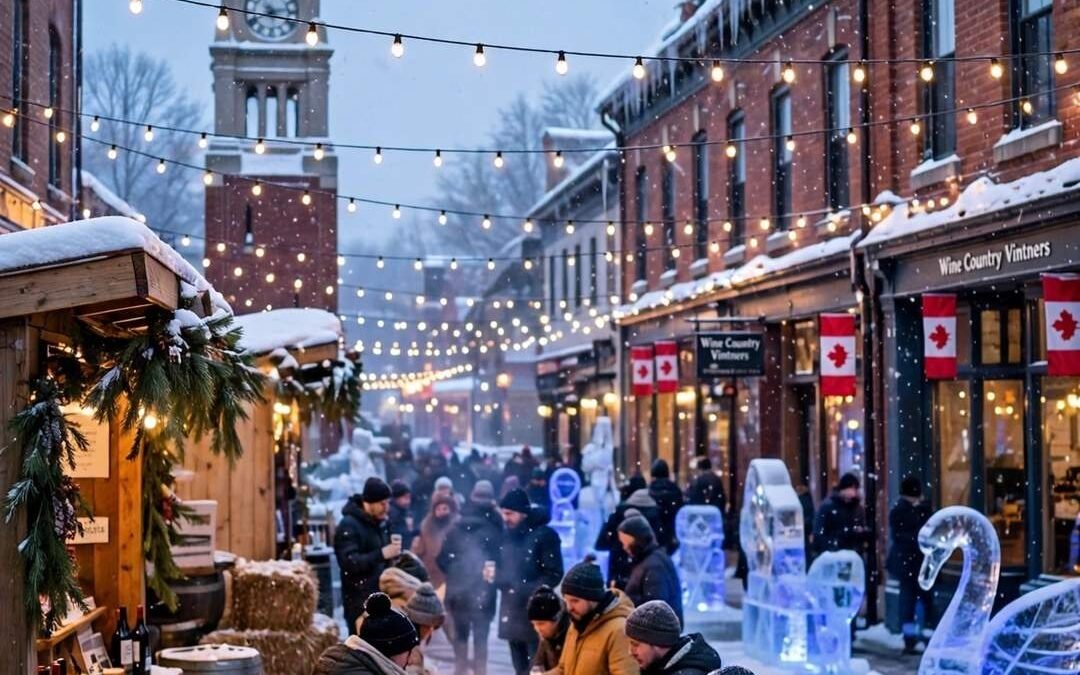
January is the surprise. The Niagara Icewine Festival runs January 15 to 31 in 2027, and the town turns into a winter village with ice sculptures, fire pits, and tastings at more than 20 wineries. Wineries stay open all winter with shorter hours, and the town is quiet enough that the people pouring have time to talk. Fort George closes for the season on November 1, and the WEGO shuttle from the Falls ends on October 3, so the winter trip is about wine and theatre, not the fort. I went in late September and got harvest light, empty mornings, and a theatre night without the summer crowds. My winter bucket list has more cold-season escapes if you like travelling when the crowds thin out.
Local tip: Go in January for the Icewine Festival, because the town is quiet, the tastings are unhurried, and the winter village on Queen Street is free.
How to Get to Niagara-on-the-Lake Canada From Toronto
Toronto is the way in. The drive from Toronto to Niagara-on-the-Lake is about 130 km via the QEW, and it takes 90 minutes to 2 hours. From Niagara Falls it is a 20 to 30 minute drive north along the Niagara Parkway, which is the prettiest road in the region. A taxi from the Falls costs CAD $45 to $60, and Uber runs in both Niagara-on-the-Lake and Niagara Falls.
The seasonal shuttle is the catch. That shuttle, the WEGO 604, ran between Niagara Falls and Niagara-on-the-Lake for CAD $25 round trip, but it ended for 2026 on October 3, and the winter timetable from November 1, 2026 to April 3, 2027 covers only the Falls-area lines. In winter you need a car, a taxi, or a tour. Once you are in town, you do not need the car: the old town is a flat grid, and the Prince of Wales Hotel, the Shaw Festival Theatre, Fort George, and Queen’s Royal Park all sit within a 15-minute walk of each other. My carry-on packing tips will help you pack light for a trip that runs from tastings to theatre in one day.
Local tip: Drive the Niagara Parkway from the Falls, because it is the prettiest 30 minutes in the region and the direct highway misses all of it.
Queen Street: Niagara-on-the-Lake Canada’s Front Room
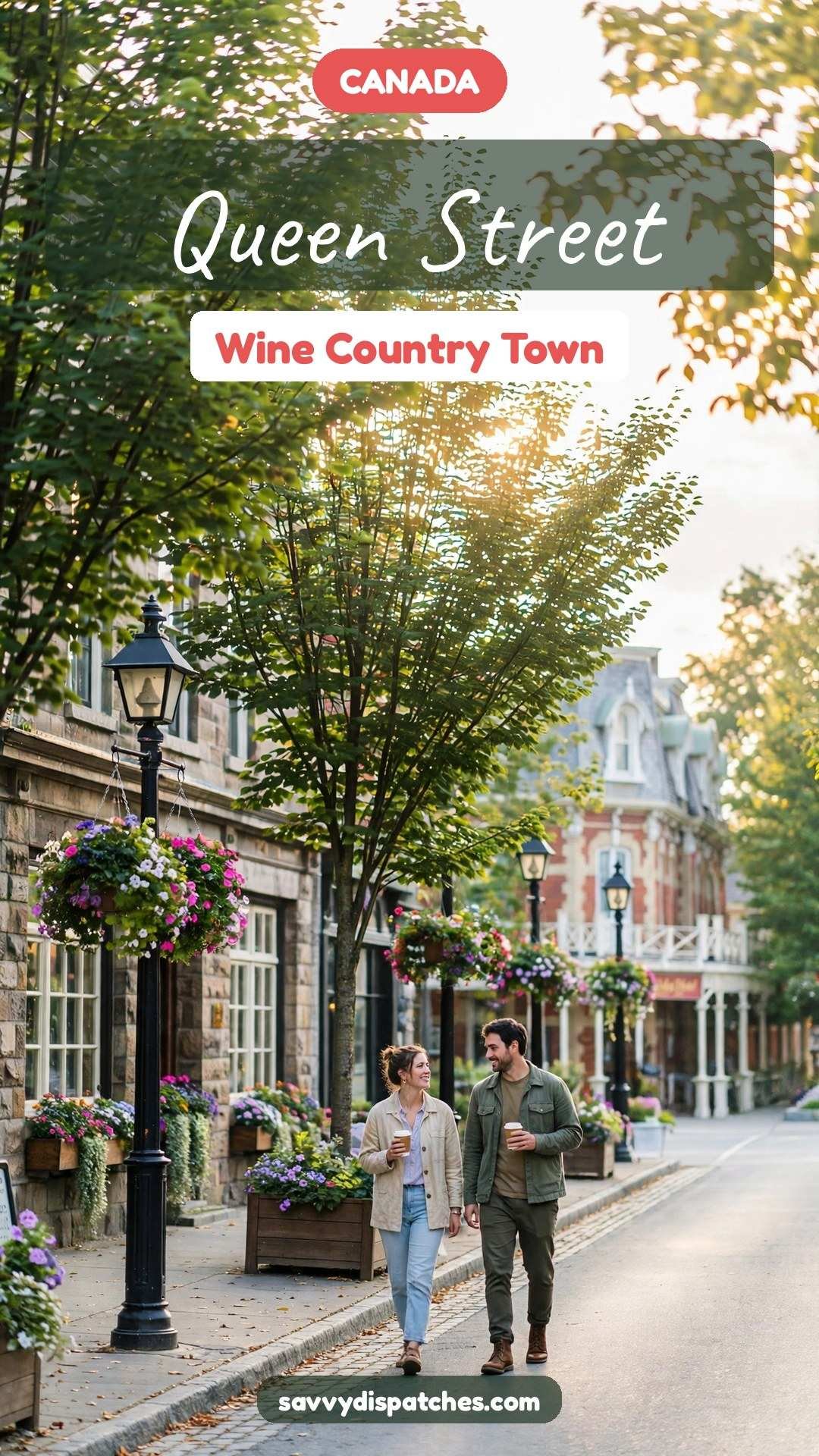
Queen Street is the historic downtown, and it is the best place to start. The street runs through the heritage district with boutiques, restaurants, and galleries in Victorian shopfronts, and the flowers in the planters are a point of local pride. At one end, the Prince of Wales Hotel anchors the street, the Court House Theatre and the Royal George Theatre sit on the street itself, and Queen’s Royal Park looks out over Lake Ontario at the other end. The whole town was laid out as a flat grid when it was the capital, and it is one of the most walkable towns in Ontario.
Walk it slowly. The Niagara Apothecary at 5 Queen Street is free, quick, and fascinating: a restored 1860s pharmacy with its original fittings. Shops here are small and local, and the restaurants run from cafes to the winery dining rooms. Parking is free or low-cost a few blocks off the main street, so do not pay for the closest spot. I spent a morning here with an ice cream in hand, and the breeze off Lake Ontario carried the smell of roses from every planter. My Paris in winter guide has the same old-town-stroll logic I use here: the main street is the sight.
Local tip: Walk Queen Street at 8 am, because the shops are just opening, the planters are in full flower, and the lake breeze is at its best.
Niagara-on-the-Lake Canada Wineries: Where to Taste
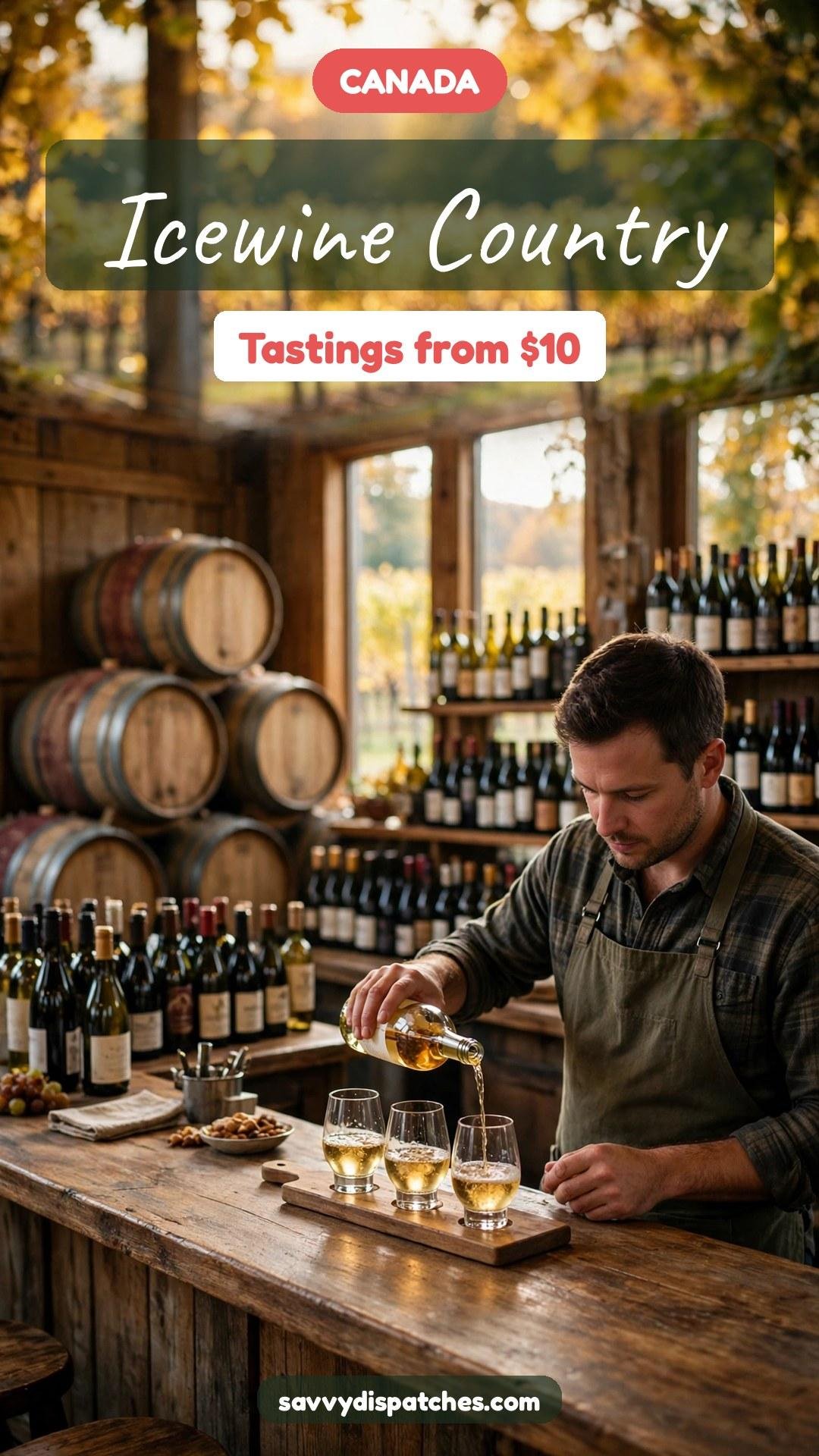
The wineries are the reason most visitors come, and the town has more than 30 of them. Start with the three names every guide mentions, because they are the best introduction. Peller Estates, at 290 John Street East, is the grand dame: immaculate grounds, a fine restaurant, and the 10Below Icewine Lounge, where you put on a parka and sip icewine in a minus 10C cellar. A standard tasting starts at about $15, and the 10Below experience runs about $45. Inniskillin is the pioneer: its 1989 Vidal Icewine won the Grand Prix d’Honneur at Vinexpo in 1991 and put Ontario on the wine map. A basic tasting flight runs about $10 to $15, and the 75-minute Icewine Experience costs $240 flat for up to 4 guests. Jackson-Triggs runs tastings from $12, and its estate is the most modern of the three.
Individual winery tours with tastings run about $35 per person at most properties, and organised group tours visiting 3 to 5 wineries run $85 to $150 per person including transport. Most wineries require reservations for tastings, especially on weekends, so book 1 to 2 days ahead. In winter the wineries stay open with shorter hours, and tastings run from $30 a flight in November, when the town is quiet enough that the people pouring have time to talk. My best places to visit in Portugal has more wine country built the same way, where the tasting room is the sightseeing.
Local tip: Book tastings 1 to 2 days ahead, because the weekend slots go first and a winery that looks open from the road can be fully booked.
The Niagara Icewine Festival: Niagara-on-the-Lake Canada in January
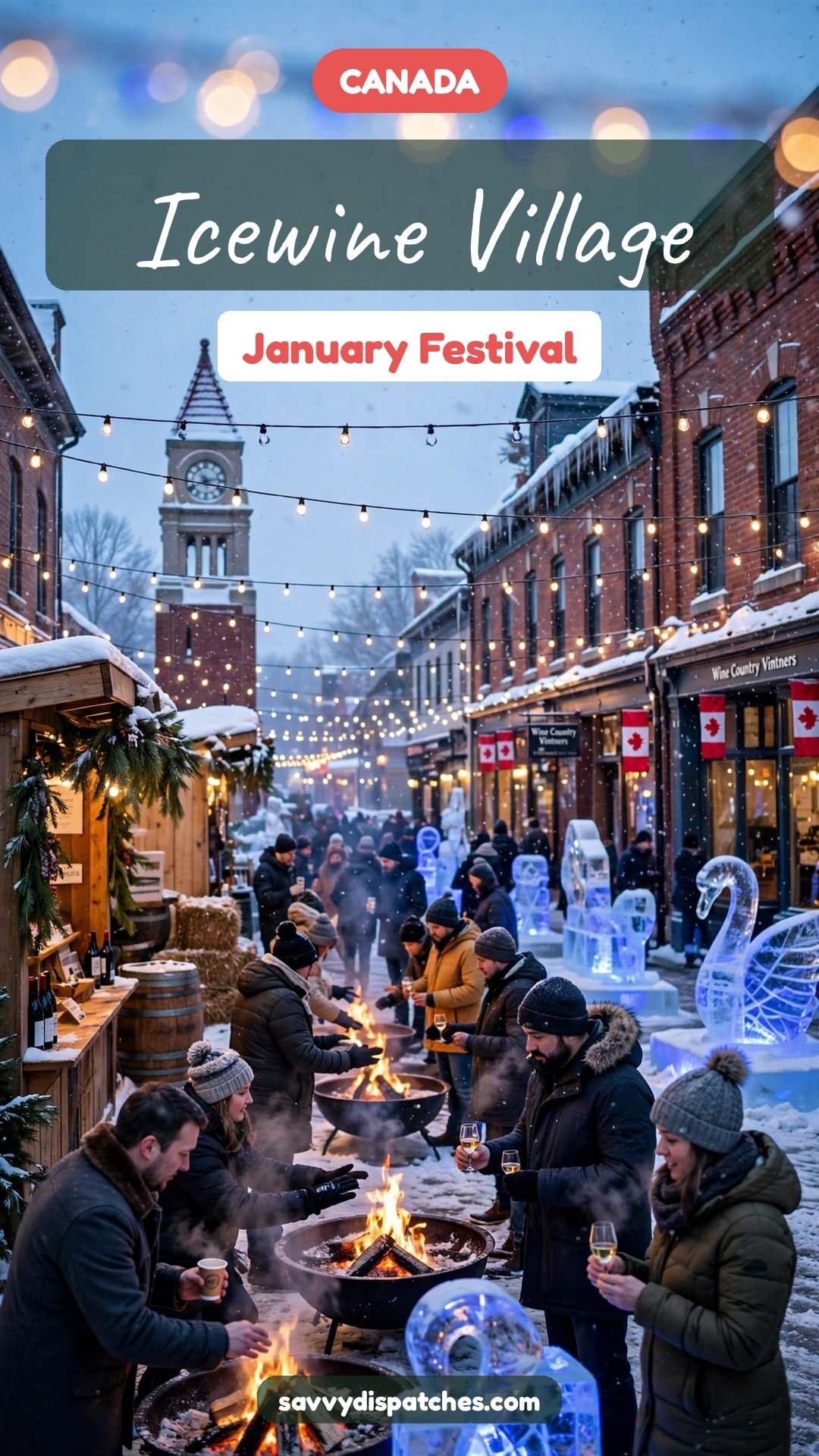
The Niagara Icewine Festival is the town’s winter claim to fame, and it is the best reason to visit in January. It began in 1996 to celebrate the region’s icewine, the wine made from grapes frozen on the vine, and it now runs across three weekends each January. The 2027 festival runs January 15 to 31, with the Icewine Village on Historic Queen Street on January 16 to 17 and January 23 to 24. Admission to the village is free, and more than 20 wineries pour their icewines among the ice sculptures, fire pits, and festival lights.
The Icewine Discovery Pass is the way to do it. It runs Fridays to Sundays through January 2027, and it costs $35 for 3 pairings or $59.50 for 6, with a $49.50 mocktail pass for designated drivers. The pass is self-guided, so you build your own route between the wineries at your own pace. Closing the festival, the Cool As Ice Gala runs on Saturday, January 30, 2027, at the Niagara Parks Power Station in Niagara Falls, with tastings and chefs inside the historic building and a tunnel out to the Falls, at about $250 per person. Book your stay early: the festival is the busiest time in the region. My first ski trip tips cover the layers you will want for a January day outdoors like this one.
Local tip: Buy the Discovery Pass for the 6 pairings, because the 3-pairing pass runs out of stops by lunch and the 6 gives you a full day across the wineries.
Fort George: Niagara-on-the-Lake Canada’s War of 1812 History
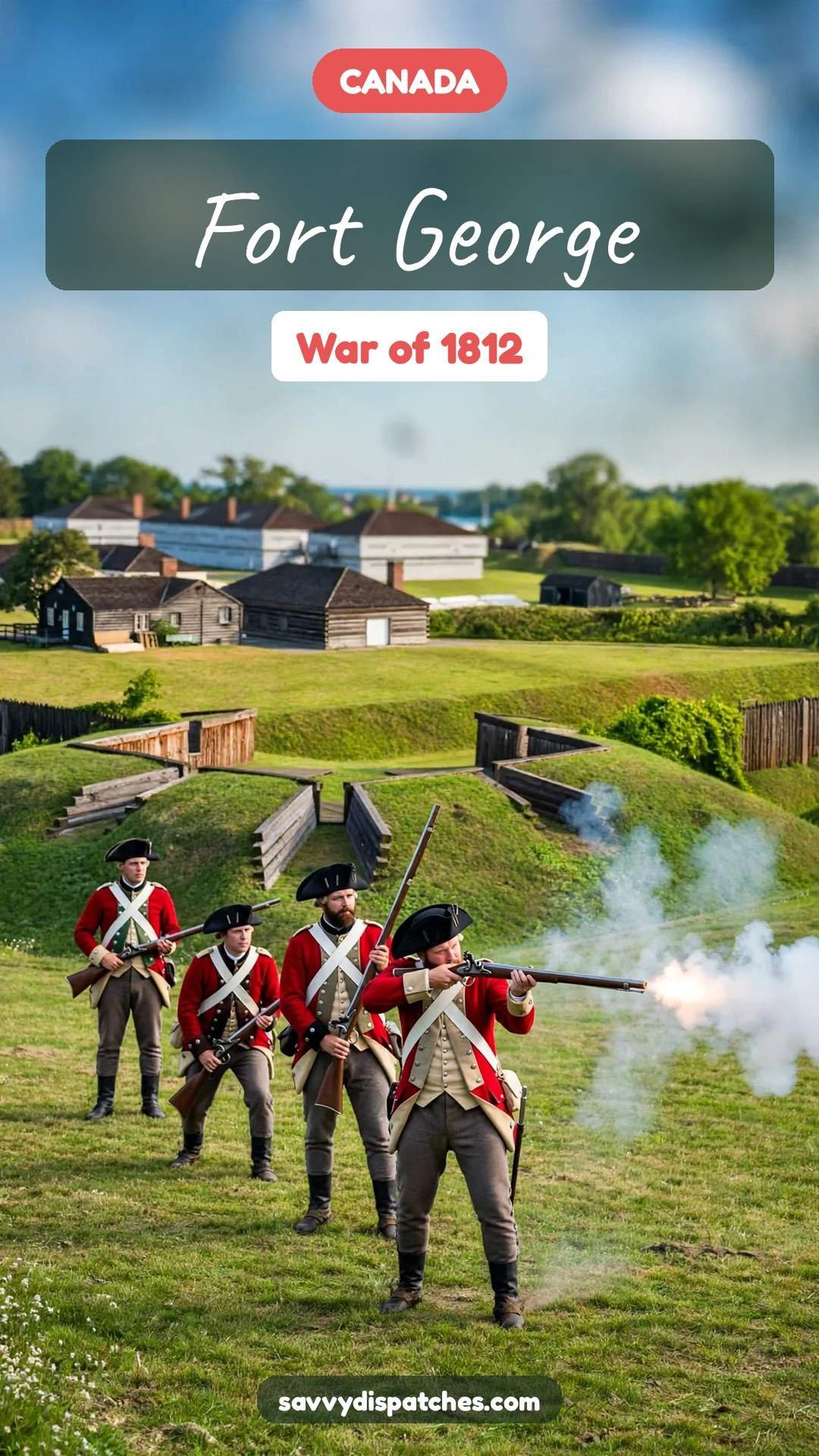
Fort George is the history half of the town, and it is worth half a day. The National Historic Site at 51 Queen’s Parade recreates War of 1812 military life with costumed interpreters, musket demonstrations, drills on the parade square, and the barracks to walk through. It is not a dusty museum: the interpreters fire muskets, drill on the square, and tell the stories of the barracks as if the war were yesterday. Give it 2 to 3 hours, and go in the morning when the drills run.
Admission runs about $8.50 for an adult, about $7.00 for a senior, and about $5.00 for a youth, and Parks Canada passes are accepted. The fort was free in the summer of 2026, from June 19 to September 7, under the Canada Strong Pass. Watch the season, though: Fort George closes for the season on November 1, so a winter trip cannot include it. Check the dates before you build a November or January plan around the fort. My Vancouver guide has the same living-history logic I use here: the interpreters are the sight, not the walls.
Local tip: Go in the morning, because the drills run early and the interpreters have time to talk before the tour groups arrive.
The Shaw Festival: Niagara-on-the-Lake Canada After Dark
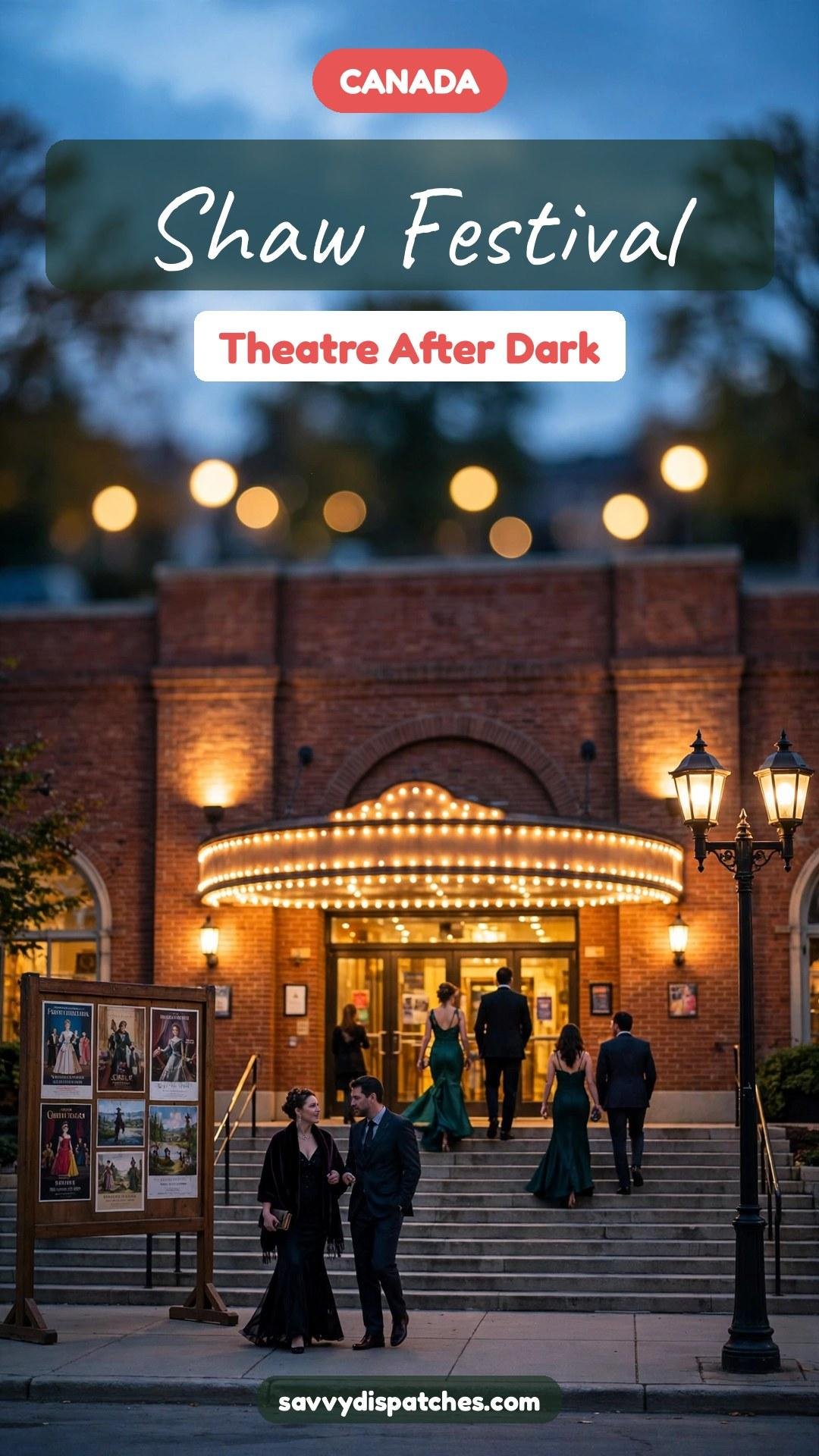
The Shaw Festival is the town’s other crown jewel, and it is the reason to stay the night. It is one of North America’s leading theatre companies, and the second-largest repertory theatre company on the continent, specialising in plays by George Bernard Shaw and his contemporaries, plus modern works in the same spirit. The season runs from April to December, and the Festival Theatre at 10 Queen’s Parade is the main stage, with the historic Court House Theatre and the intimate Royal George Theatre on Queen Street as the other two venues.
Book ahead, because the popular summer performances sell out and the holiday shows are the winter draw: two holiday shows run to December 23, with November seats from $39. An evening at the Shaw is the natural end to a wine day, and the Royal George, the smallest venue, is the one to ask for if you like a close room. Pair the theatre with a winery lunch and you have the town’s best day. My cheap places to travel that still feel luxurious has more trips built the same way: one big evening, and a lot of free walking.
Local tip: Book the Royal George Theatre, because it is the smallest venue and the closest room, and the seats there feel like the actors are playing for you alone.
Where to Stay in Niagara-on-the-Lake Canada
Stay in town if you can, because the town is the trip. The Prince of Wales Hotel anchors Queen Street, and the boutique hotels, upscale inns, and bed and breakfasts around it put the wineries, the theatre, and the fort within a 15-minute walk. Vintage Hotels runs several of the town properties, and its Icewine Lover’s Getaway package runs through January with a charcuterie plate and a specialty icewine martini. Book January early: the Icewine Festival is the busiest time in the region.
Niagara Falls is the cheaper base, 20 to 30 minutes south, with more rooms and lower prices, and it works if you are combining the Falls with the wine country. The cost is the drive: every tasting day starts with a 30-minute drive in and ends with a taxi or a tour bus home, since you should not drive between tastings. I stayed in town and walked everywhere, and I would do the same again. My budget travel tips for expensive cities cover the same base-pick logic I used here: pay for the location that saves you the most driving time.
Local tip: Sleep in town for a first trip, because the wineries, the theatre, and the fort are all within a 15-minute walk and the Falls are only 30 minutes away.
Niagara-on-the-Lake Canada Travel Budget: What Two Days Cost
Here is what two days in Niagara-on-the-Lake cost, staying in town and tasting by tour and on foot. Prices are in Canadian dollars, per person.
| Item | Cost |
|---|---|
| Winery tasting flight, 1 winery | About $10-15 |
| Winery tour with tasting, 1 winery | About $35 |
| Group wine tour, 3-5 wineries | About $85-150 |
| Icewine Discovery Pass, 3 pairings | $35 |
| Icewine Discovery Pass, 6 pairings | $59.50 |
| Peller 10Below Icewine Lounge | About $45 |
| Fort George, adult | About $8.50 |
| Shaw Festival ticket | From $39 |
| Taxi, Niagara Falls to town | $45-60 |
| WEGO shuttle, round trip (seasonal) | $25 |
| Meals, 2 days | About $80-160 |
| 2-day total, per person | About $250-450 |
The Queen Street walk, the Niagara Apothecary, Queen’s Royal Park, and the Icewine Village in January are all free. For value, the group wine tour is the best pick if you want to taste without driving, because it covers 3 to 5 wineries with transport for $85 to $150. My best budget travel destinations for 2026 list has more trips built the same way, and my Toronto in 48 hours guide covers the city you will fly into.
Local tip: Take the group wine tour, because it covers 3 to 5 wineries with transport for $85 to $150 and nobody has to be the designated driver.
Niagara-on-the-Lake Canada Travel Tips: What I Wish I Knew Before I Went
Do not drive between tastings. The wineries spread along Niagara Stone Road, Line 3 Road, and John Street East, and the distances are 5 to 15 minutes by car but a long walk in the cold. Book a guided wine tour or a taxi between stops, or ride the Bench Trail by e-bike: the trail network connects the wineries along the escarpment, and the loop takes 3 to 4 hours with stops at 4 to 6 wineries. Uber runs in town and at the Falls, so you always have a ride home.
Check the season dates before you go. Fort George closes for the season on November 1, and the WEGO 604 shuttle ended on October 3, so a winter trip needs a car or a tour. The wineries stay open all winter with shorter hours, and a winery that looks open from the road can be fully booked, so reserve 1 to 2 days ahead. And park a few blocks off Queen Street, where parking is free or low-cost. My cheapest countries to visit in 2026 list has more trips where the small towns cost less than the famous ones.
Local tip: Ride the Bench Trail by e-bike, because the loop takes 3 to 4 hours, covers 4 to 6 wineries, and nobody has to drive.
Frequently Asked Questions About Niagara-on-the-Lake Canada
How many days do you need in Niagara-on-the-Lake?
Two days covers the town well: one day for Queen Street, Fort George, and a Shaw Festival evening, and a second day for the wineries. Add a third day for the Falls or the January Icewine Festival.
How far is Niagara-on-the-Lake from Toronto?
About 130 km via the QEW, and the drive takes 90 minutes to 2 hours. From Niagara Falls it is a 20 to 30 minute drive north along the Niagara Parkway.
What is icewine?
Icewine is wine made from grapes frozen on the vine, pressed while frozen into a sweet, concentrated wine. Niagara is one of the world’s great icewine regions, and Inniskillin’s 1989 Vidal won the Grand Prix d’Honneur in 1991.
Do Niagara wineries need reservations?
Most do, especially on weekends. Book tastings 1 to 2 days ahead, because a winery that looks open from the road can be fully booked. Group tours include the bookings.
Is Niagara-on-the-Lake good in winter?
Yes, if you come for wine and theatre. The Icewine Festival runs January 15 to 31 in 2027, the wineries stay open with shorter hours, and the town is quiet. Fort George is closed from November 1.
Can you bike between the wineries?
Yes. The Bench Trail network connects the wineries along the Niagara Escarpment, and e-bike rentals in town make the loop manageable in 3 to 4 hours, with stops at 4 to 6 wineries.
Is the Shaw Festival worth it?
Yes. It is one of North America’s leading theatre companies, the season runs April to December, and the holiday shows run to December 23 with November seats from $39. Book ahead for summer shows.
Local tip: Plan your two days by town and wine country, because the old town fits in a 15-minute walk and the wineries need a tour, a taxi, or a bike.
Niagara-on-the-Lake Canada, Done Right
Two days in Niagara-on-the-Lake gives you a Victorian main street, icewine at the winery that put Ontario on the map, a fort from the War of 1812, a Shaw play after dark, and a bike loop through the vines. Toronto is 90 minutes away, the tastings start at about $10, and the best walks are free. I came for the wine and stayed for the theatre. You will probably do the same. Book the tastings ahead, take the group tour, and walk Queen Street at 8 am. My Toronto in 48 hours guide covers the city you will fly into.
Local tip: Book the tastings and the Shaw tickets before you fly, because those are the two things that sell out, and everything else in Niagara-on-the-Lake can be decided on the day.
You Might Also Like
If this guide helped, here are three more from my site. Read my Toronto in 48 hours guide for the city you will fly into. Check my Vancouver guide if you want the other side of Canada. And save my winter bucket list for your next cold-season escape.