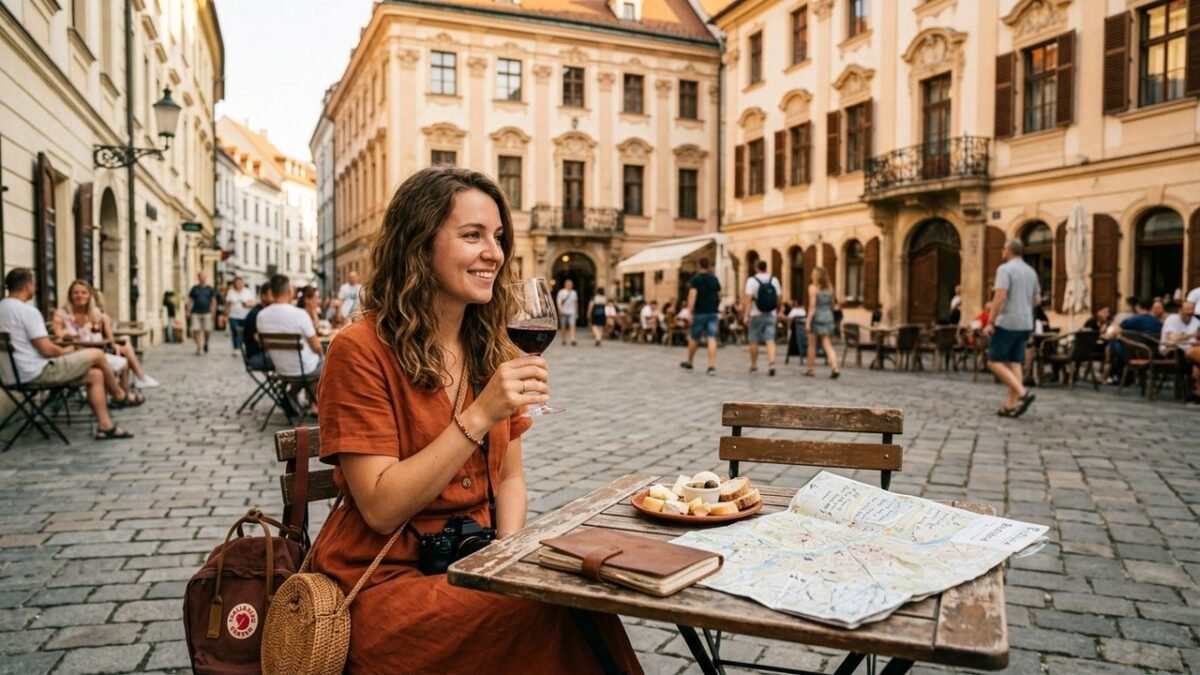
The summer I spent $4,000 on a two-week trip to western Europe, I vowed to figure out the part nobody talks about: where exactly in Europe can you actually afford to travel alone, eat well, and not count every euro on every street corner?
- 1. Albania — The $20/Day Budget Travel Secret
- 2. Bosnia and Herzegovina — $30/Day and Fully Underrated
- 3. North Macedonia — $35/Day, Zero Crowds
- 4. Bulgaria — $55/Day in the Most Livable City in Eastern Europe
- 5. Romania — $45/Day for Dracula Castles and Mountain Towns
- 6. Hungary — $63/Day and Worth Every Forint
- 7. Serbia — $50/Day in Europe’s Coolest Underrated Capital
- 8. Poland — $60/Day for History and Excellent Pierogi
- 9. Czech Republic — $76/Day, Worth the Splurge Step Up
- 10. Slovenia — $80/Day for Alps, Lakes, and Gorgeous Towns
- 11. Greece — $110/Day (The Affordable Greek Myth, Fact-Checked)
- Quick Budget Summary
- You Might Also Like
The answer surprised me. The most affordable European destinations for solo travelers are not where most people look first. They are not France or Italy or Spain. They are the countries east of Vienna and south of Budapest — places with world-class cities, incredible food, and daily costs that are still in the range where traveling alone on a single income does not require six months of saving.
This is a guide to 11 affordable European destinations for solo female travelers, built around real daily budgets from people who have actually been there. Wapiti Travel tracked Albania at $20 a day. Bulgaria at $55. Hungary at $63. These numbers are not estimates. They are what travelers actually spend.
I have organized this by daily cost so you can match a destination to your actual budget without doing math. Let’s get into it.
The most affordable European destinations for solo female travelers are in Eastern Europe. Albania leads at $20 per day, followed by Bosnia and Herzegovina at $30, Romania at $45, Bulgaria at $55, and Hungary at $63. All 11 destinations on this list have been fact-checked against real traveler spending data, not estimates.
1. Albania — The $20/Day Budget Travel Secret
What to know before you book
-
✓
Use local currency only: Albania, Serbia, Romania, and North Macedonia all have better exchange rates in local currency. Euro surcharges of 5 to 10 percent are common with vendors who accept euros. -
✓
Stay longer in fewer places: Moving every two days costs money in transit and storage. Five to seven nights in a single base cuts daily average costs significantly and gives a real feel for the place. -
✓
Book shoulder season: May, June, and September cut accommodation costs by 30 to 50 percent at every Eastern European destination. Crowds drop, service improves, weather stays good.
Albania is the most affordable destination in Europe, and it is also one of the fastest-changing. The Albanian Riviera — the stretch of dramatic coastline between Saranda and Vlora — was genuinely unknown to mass tourism as recently as 2019. Now it is known. But it is still cheap, and the infrastructure has improved enough to make it easy.
Daily cost breakdown: a hostel dorm or private room in Saranda or Tirana runs $15-$25. Street food (fresh-baked byrek, grilled corn, stuffed peppers from market vendors) runs $3-$6 for a full meal. A sit-down restaurant meal with local beer costs $8-$14. Transport via furgon minibus between towns costs $1.50-$4. Total for a full travel day, active: $18-$28.
The main cities for solo female travelers: Tirana for urban culture, Saranda for beach and ruins, Gjirokastra for the Ottoman old town (UNESCO listed), Berat for the “city of a thousand windows” medieval quarter.
Safety note: Albania is generally safe for solo female travelers. Harassment is rarer than in western Mediterranean countries. The Kanun code of hospitality (called besa) is still practiced in rural areas and means locals take guest safety seriously.
Budget: $20/day typical | $28/day comfortable | Skip: renting a car in cities (traffic is chaotic and parking non-existent).
Albania does not accept credit cards reliably outside of Tirana hotels. Arrive with cash in ALL (Albanian lek), not euros. The official rate favors lek heavily, and many vendors add a 5-10% surcharge for euro payments.
2. Bosnia and Herzegovina — $30/Day and Fully Underrated
Sarajevo is one of the most complex and moving cities in Europe, and almost nobody from western Europe visits it. That is gradually changing, but for now the old bazaar district (Bascarsija), the war history museums, and the surrounding mountains are still largely tourist-free by peak season standards.
Daily cost: hostel dorm in Sarajevo $14-$20. Cevapi (the national dish — grilled minced meat sausages in flatbread) from a Bascarsija grill runs $4-$7 for a full meal. Coffee at a kafana costs $1-$2. A one-way bus to Mostar from Sarajevo is $8.
Mostar is the second essential stop. The Stari Most bridge, rebuilt after its destruction in 1993, is one of the most beautiful spans in Europe. Budget an extra day there. Daily cost in Mostar is similar to Sarajevo — $25-$35 all-in.
One practical note for solo travelers: the bus network between cities is good but schedules can be informal. Always confirm departure times the day before.
The Sarajevo Tunnel Museum (Tunnel of Hope) is the single most illuminating site for understanding the siege of Sarajevo. It costs $5 to enter and is a 20-minute taxi ride from the city center. Do not skip it.
IMAGE PROMPT 2:
GENERATE: Full-bleed 1080x1920px portrait 9:16. The Stari Most bridge in Mostar, Bosnia — an old stone arch bridge over a clear blue-green river gorge, traditional Ottoman buildings on both banks. Warm golden hour light, tourists visible but not overcrowded. Subject fills frame completely. Top 30% has natural soft zone from sky and bridge arch upper section with gentle bokeh. Sony A7IV 35mm, warm natural golden light, film grain, NOT AI look. No text or blank zones.
ADD OVERLAY AFTER GENERATING:
Category pill: “AFFORDABLE EUROPE” — coral #E85555
Headline: “Bosnia: $30/Day” — More Sugar script, white
Accent: “Most Underrated City” — Fredoka Bold, coral
Bottom: “savvydispatches.com”
IMAGE DESCRIPTION 2: The iconic Stari Most bridge in Mostar, Bosnia, arching gracefully over a clear blue-green gorge. Traditional stone Ottoman buildings line both banks in warm late afternoon light. The bridge is visible in full from a slightly elevated vantage point. The image captures why this UNESCO-listed city deserves a spot on every solo female traveler’s Eastern Europe itinerary.
Walk the Stari Most bridge at 7am before the day tour buses arrive. The light is perfect, the bridge is empty, and the photos look nothing like the crowds you see in daytime shots online.
3. North Macedonia — $35/Day, Zero Crowds
Ohrid, on the lake of the same name, is one of the genuinely underexplored UNESCO sites in Europe. The old town sits above a glacial lake with water so clear you can see the bottom at 10 meters depth. The surrounding mountains host walking trails that almost nobody visits. The daily cost is $30-$45.
Capital Skopje is a city that committed hard to a baroque makeover starting in 2010 — statues everywhere, neoclassical facades on socialist-era buildings. It looks slightly surreal. But the Old Bazaar district directly beside it is one of the most authentic Ottoman markets left in Europe and completely tourist-free.
Budget for North Macedonia: $35/day including accommodation (guesthouses $18-$25), local restaurant meals ($5-$8), and lake ferry tickets ($3-$5). Wine in North Macedonia is genuinely excellent and costs $3-$5 per glass at a restaurant.
North Macedonia uses the Macedonian denar and does not use the euro. ATMs are available in Skopje and Ohrid but rare in rural areas. Bring cash for smaller towns.
4. Bulgaria — $55/Day in the Most Livable City in Eastern Europe
Sofia is consistently ranked as one of the most affordable capital cities in the European Union, with a quality of life that includes a functioning metro, excellent coffee culture, and some of the best mountain access from a city center in all of Europe.
Vitosha Mountain starts at Sofia’s southern edge. Day hikers can reach 2,000-meter peaks from the city center by public bus for $1.50. The Vitosha trail system is well-marked and free to use. No other European capital gives you this level of mountain access at this price point.
Daily budget: hostel dorm $18-$25, private room $40-$60. Restaurant meal with beer $8-$14. Coffee $1.50-$2.50. Day trip to Rila Monastery (the most beautiful religious building in Bulgaria) by bus costs $6 return.
Beyond Sofia: the Black Sea coast (Varna, Nessebar, Sozopol) adds beach access to the itinerary at similar daily costs. Plovdiv, three hours from Sofia, is arguably the more charming city — a pedestrianized old town with Roman ruins visible from the street.
Budget: $55/day comfortable solo | $40/day if you are strict.
IMAGE PROMPT 4:
GENERATE: Full-bleed 1080x1920px portrait 9:16. Sofia, Bulgaria street scene — wide pedestrian boulevard with Alexander Nevsky Cathedral visible in the background, golden domes against a blue sky. A solo female traveler in casual clothes walks away from camera toward the cathedral. Subject fills entire frame. Top 30% naturally soft from sky and cathedral upper section. Sony A7IV 50mm, bright natural daylight, subtle film grain, NOT AI look. No text or blank zones.
ADD OVERLAY AFTER GENERATING:
Category pill: “EASTERN EUROPE” — coral #E85555
Headline: “Sofia: $55/Day” — More Sugar script
Accent: “Mountains + Metro + Cheap” — Fredoka Bold, coral
Bottom: “savvydispatches.com”
IMAGE DESCRIPTION 4: A wide pedestrian boulevard in Sofia, Bulgaria, with the golden domes of the Alexander Nevsky Cathedral rising in the background against a blue sky. A solo female traveler walks away from camera toward the cathedral. The image captures why Sofia is consistently ranked as the most affordable and livable capital in the European Union.
Sofia has a free walking tour every morning at 11am departing from the Palace of Justice steps. It runs two hours, covers all the major sights, and the guides are graduate students who know the city intimately. Tip whatever you feel comfortable paying.
5. Romania — $45/Day for Dracula Castles and Mountain Towns
Transylvania is not just a Halloween reference. It is a real region of medieval German-built towns (Brasov, Sighisoara, Sibiu), dramatic Carpathian Mountain passes, and a castle above a cliff that Bram Stoker used as his fictional model.
Brasov is the practical base: a well-preserved medieval walled city at 600 meters elevation with a gothic church that dominates the main square. From Brasov, Bran Castle is a 45-minute bus ride at $2.50 each way. Sinaia, with the Peles royal palace, is another hour away by train for $3.
Daily cost in Brasov: private room $35-$55, hostel dorm $12-$18. A full traditional Romanian meal (sarmale, mamaliga, meat stew, local palinca spirit) at a restaurant in the old town costs $10-$16. Coffee $1.50. Street food $2-$4.
Bucharest as a second city: noisier, larger, cheaper. Daily cost in Bucharest is similar to Brasov or slightly lower, with a better nightlife scene and significantly more modern architecture alongside the communist-era blocks.
Romanian trains are cheap but slow. Buses between Bucharest, Brasov, and Sinaia are faster and often cost the same. FlixBus and autogara.ro are the booking platforms to check.
6. Hungary — $63/Day and Worth Every Forint
Budapest is the Eastern European capital that most western travelers have already visited. But most visited it the expensive way: Airbnb in the party district, thermal bath entry without pre-booking, dinner in a tourist-trap restaurant near the Chain Bridge.
The budget version of Budapest is better in almost every way. A guesthouse or hostel in the 7th or 8th district runs $18-$35 per night. The Szabo Ervin Library (the most beautiful library in Europe, free to enter with a ticket) is a 10-minute walk from most budget accommodation. The three main thermal baths — Szechenyi, Gellert, Rudas — cost $14-$20 to enter and include a locker.
Daily food cost: a langos (deep-fried flatbread with sour cream and cheese) from a market vendor costs $2-$3. A full lunch at a traditional Hungarian etterem (restaurant) runs $7-$12. Wine from the Tokaj region is available at every wine bar from $3-$5 per glass.
Side trip: Lake Balaton, 90 minutes by train ($5), is a fresh water lake the size of a small sea, lined with summer beach towns that cost half what Budapest charges.
Budget: $63/day comfortable | $45/day strict budget.
The Budapest week-long transport pass covers the metro, trams, and buses for $18. If you are staying more than 3 days, buy it immediately at the airport. Single tickets at $1.60 each add up fast.
7. Serbia — $50/Day in Europe’s Coolest Underrated Capital
Belgrade does not get the credit it deserves from Western travelers. It has a fortress above a river confluence, a floating nightclub scene on the Sava, excellent coffee and craft beer culture, and a very real local character that years of isolation from EU tourism have helped preserve.
Skadarlija, the bohemian old quarter, has live music in the kafanas most nights of the week. Entry is usually free. A beer costs $2-$3. Dinner for one with wine and dessert costs $12-$18.
Daily costs: hostel dorm $12-$16, private room $30-$50. Transport around the city by tram or bus costs $1 per ride. The Belgrade Fortress and Kalemegdan Park (the most visible sight in the city) are free to access. The main National Museum entry is $4.
Side trips: Novi Sad, one hour by bus ($4 return), is a university city with a massive fortress (Petrovaradin) that hosts the Exit Festival every July. Niš, three hours south, has a Roman emperor’s birthplace and a tower made from skulls from a 19th-century battle that is genuinely unforgettable.
Serbia uses the Serbian dinar, not the euro, and the official rate is favorable. Do not exchange money at airport kiosks. Use the ATMs inside the terminal where the interbank rate applies.
IMAGE PROMPT 7:
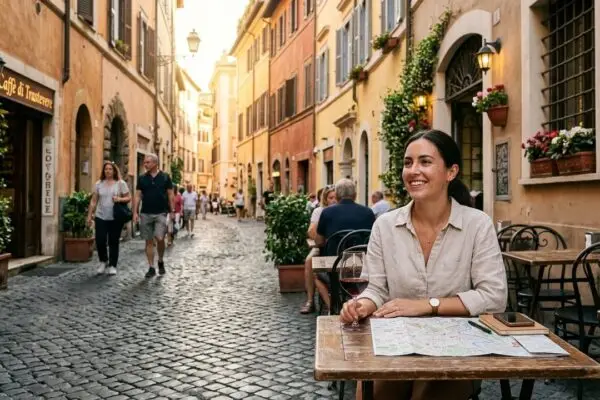
GENERATE: Full-bleed 1080x1920px portrait 9:16. A woman sits at a wooden table at an outdoor Belgrade kafana (Serbian traditional pub) in Skadarlija bohemian quarter — cobblestone lane visible behind her, string lights overhead, a glass of red wine on the table. Evening light, warm atmosphere, stone building facades around the narrow lane. Subject fills frame. Top 30% naturally soft from string lights bokeh and dark evening sky. Sony A7IV 35mm, warm evening light, NOT AI look. No text or blank zones.
ADD OVERLAY AFTER GENERATING:
Category pill: “SERBIA TRAVEL” — coral #E85555
Save this for later on Pinterest!
Follow us for more honest budget travel guides: @savydispatches on Pinterest
Headline: “Belgrade: $50/Day” — More Sugar script
Accent: “Europe’s Best Kept Secret” — Fredoka Bold, coral
Bottom: “savvydispatches.com”
IMAGE DESCRIPTION 7: A woman sits at a wooden table at an outdoor kafana on Belgrade’s Skadarlija cobblestone lane, a glass of red wine in front of her. String lights and stone building facades surround the narrow street. The image captures the warm, authentic atmosphere of Belgrade’s bohemian quarter at dusk.
Monday night in Skadarlija is the quietest and most authentic — weekend crowds bring tourists from neighboring countries. A Monday evening here feels like the 1970s in the best possible way.
8. Poland — $60/Day for History and Excellent Pierogi
Krakow is still the budget-friendly entry point to Poland for most visitors, and the justification holds. A full day of sightseeing in Krakow — Wawel Castle and Cathedral, the Jewish quarter Kazimierz, the Cloth Hall market — costs almost nothing. Castle entry is $5-$8. The Schindler’s Factory Museum runs $8. Most of Kazimierz is free to walk.
But the more interesting budget destination in Poland is Wroclaw, three hours west by train ($15). Wroclaw has a gothic old town on an island, a canal system, and 300+ gnome statues hidden around the city that locals treat as a genuine civic obsession. It is more manageable than Krakow, cheaper in high season, and its market square (Rynek) is arguably as impressive.
Daily costs: hostel dorm in Krakow $15-$25, Wroclaw $12-$20. Pierogi (filled dumplings) at a milk bar (cafeteria-style socialist-era restaurants now popular with students) cost $3-$5 for a full plate. Beer $2-$3. Sit-down restaurant meal $8-$14.
Poland’s milk bars (bar mleczny) are the cheapest sit-down food option in the country. They are subsidized, served cafeteria-style, and the food is genuinely good. Look for the sign “bar mleczny” and the laminated picture menu on the wall.
9. Czech Republic — $76/Day, Worth the Splurge Step Up
Prague is no longer a budget destination by the standards of the other cities on this list. But it is still significantly cheaper than western European capitals, and the city itself is extraordinary enough that the price premium is justified.
Daily cost in Prague: hostel dorm $18-$28, private room $60-$90, budget hotel $80-$100. Restaurant meal with beer $10-$20. Coffee $2-$4. Public transport day pass $4.
The upgrade from Eastern Europe pure budget ($20-$55/day) to Prague ($76/day) buys you: arguably the most beautiful gothic city center in Europe, world-class art museums, opera at a fraction of Vienna prices, and beer that is technically the best in the world if you ask any Czech.
Beyond Prague: Cesky Krumlov (2.5 hours by bus, $8) is a medieval castle town in a river bend that gets called “a fairy tale” by every travel writer. The description is accurate and annoying in equal measure.
The Prague tourist restaurants in the Old Town charge triple the price for food that is half as good as what you get at a restaurant two blocks away in a residential street. Walk five minutes from any major sight before sitting down.
10. Slovenia — $80/Day for Alps, Lakes, and Gorgeous Towns
Slovenia is the smallest country on this list and the one that offers the most dramatic scenery per square mile. Lake Bled with its island church and castle cliff is the poster image, but the Triglav National Park, the Soca Valley (glacial blue-green river through a gorge), and Ljubljana’s medieval old town compete for equal billing.
Ljubljana is the capital and the practical base. A well-organized, walkable city of 300,000 people with almost no crime, an excellent coffee culture, and a night market every Friday in summer where dinner runs $8-$12.
Daily cost: hostel dorm $22-$32, private room $70-$100. Lake Bled day trip by bus from Ljubljana costs $8 return. Entry to Bled Castle: $15. Kayak rental on the Soca: $30-$40 for a half-day. Restaurant meal $12-$20.
Slovenia is not the cheapest option on this list. But the combination of alpine scenery, coastal access via Piran (90 minutes from Ljubljana), and zero crowds compared to Switzerland makes it the value leader in the alpine category.
The tourist boat to Bled island costs $18 return per person. Rent a rowboat instead for $15 per hour — it takes 15 minutes to row to the island, the church visit is free, and the photos from your own rowboat are better than anything from the tourist boat.
11. Greece — $110/Day (The Affordable Greek Myth, Fact-Checked)
Greece is included here for an honest reason: it is frequently called affordable in travel media and it is not, by the standards of this list. But it is still cheaper than France, Italy, or Spain, and the specific tactics that make it manageable are worth knowing.
The islands (Santorini, Mykonos) are expensive full stop. Accommodation in peak season (July-August) on the famous islands runs $150-$300 per night for a basic room. Skip them unless budget is not a concern.
The mainland Greece and off-season islands are a different calculation. Athens, which most people use as a transit point, deserves 3 full days. The Acropolis entry is $20 but covers all the major sites. A meal near the Monastiraki market runs $10-$18. Accommodation in Athens $40-$80 for a private room.
Lesser-known islands that are actually affordable: Naxos ($60-$80/day total), Ikaria ($50-$70/day), Samos ($55-$75/day). These have local tavernas, no Instagram crowds, and ferry connections from Athens at $20-$35.
Budget target for Greece: $110/day on the famous islands in season, $70-$80/day on the lesser-known islands.
Ferries from Piraeus (Athens port) to the islands are cheapest booked through Ferryscanner.com or directly at the Piraeus terminal office. The big booking aggregators add $8-$15 in service fees.
Quick Budget Summary
| Destination | Daily Budget (Solo) | Cheapest Meal | Must-Skip |
|---|---|---|---|
| Albania | $20 | Byrek $2 | Car in cities |
| Bosnia | $30 | Cevapi $5 | Airport transfer ripoffs |
| North Macedonia | $35 | Wine $3/glass | Euro payments |
| Romania | $45 | Street food $2 | Dracula tourist trap shops |
| Bulgaria | $55 | Coffee $1.50 | Sofia airport taxi |
| Serbia | $50 | Beer $2 | Airport exchange kiosks |
| Poland | $60 | Milk bar $4 | Old Town restaurants |
| Hungary | $63 | Langos $2 | Single transport tickets |
| Czech Republic | $76 | Beer $2 | Old Town Square restaurants |
| Slovenia | $80 | Market dinner $10 | Tourist boat to Bled |
| Greece | $70-$110 | Taverna $12 | Santorini in July |
You Might Also Like
- 10 Grocery Store Meals for Travelers Looking to Save Money in Europe
- 13 Cheapest Countries to Visit in 2026 (Real Daily Budgets)
- Is the Faroe Islands Expensive? A Realistic Daily Budget for Solo Travelers