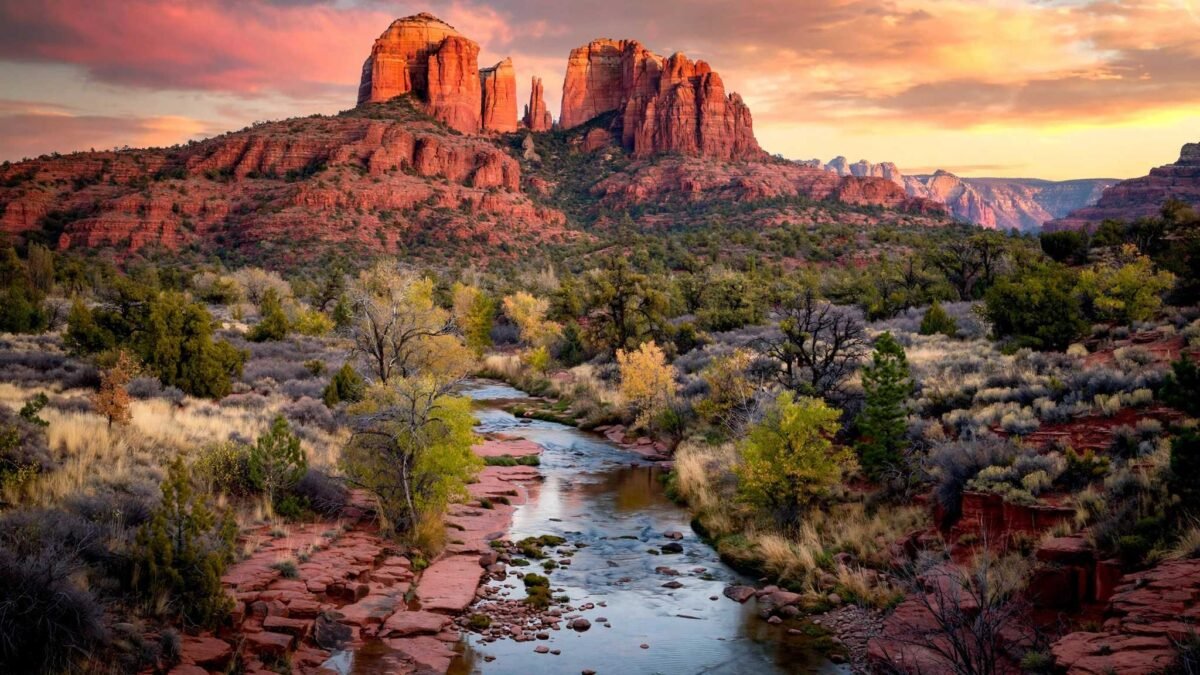
The first time I drove into Sedona Arizona, I came around a bend on the highway and the whole valley opened up in front of me. Red rock towers on every side of Sedona Arizona, a blue sky so hard it looked painted, and a little town tucked into the middle of it all. I pulled over, got out of the car, and just stood there for ten minutes. Sedona Arizona does that to people. It is a small town of about 9,700 people in the Verde Valley, about two hours north of Phoenix, and it has more than 200 miles of trails, four energy vortex sites, a natural water slide, and some of the best stargazing in the country. This list covers the 13 things I would do again, in the order I would do them. Let’s get into it.
- 1. Hike Cathedral Rock at Sunset in Sedona Arizona
- 2. Walk the Bell Rock Pathway in Sedona Arizona
- 3. Stand on Devil’s Bridge in Sedona Arizona
- 4. Slide Down the Natural Water Slide at Slide Rock State Park
- 5. Drive Oak Creek Canyon in Sedona Arizona
- 6. Visit the Chapel of the Holy Cross in Sedona Arizona
- 7. Ride a Pink Jeep Tour Through the Backcountry
- 8. Watch the Sunset From Airport Mesa in Sedona Arizona
- 9. Hike the West Fork Trail in Oak Creek Canyon
- 10. Slow Down at the Vortex Sites and Wellness Retreats
- 11. Wander Tlaquepaque Arts and Crafts Village
- 12. Walk Red Rock State Park in Sedona Arizona
- 13. Stargaze Under Some of the Darkest Skies in Arizona
- How Many Days You Need in Sedona Arizona
- You Might Also Like
Here is the short version before the detail. The best seasons are March to May and September to November, when the temperatures are mild and the light is soft. Summer is hot and crowded, and winter is quiet and cool. Nothing in Sedona charges admission, and almost everything charges for parking. A Red Rock Pass costs 5 dollars a day, 15 dollars a week, or 20 dollars a year, and it covers parking at most Forest Service trailheads. The free shuttle runs Thursday to Sunday from 7 am to 5:30 pm to the busiest trailheads, and it is the smart way to reach Cathedral Rock and Devil’s Bridge. My first ski trip tips for beginners will help if you are coming from a cold-weather trip, and my carry-on packing tips will help you pack light for the desert. Bring water. More than you think you need.
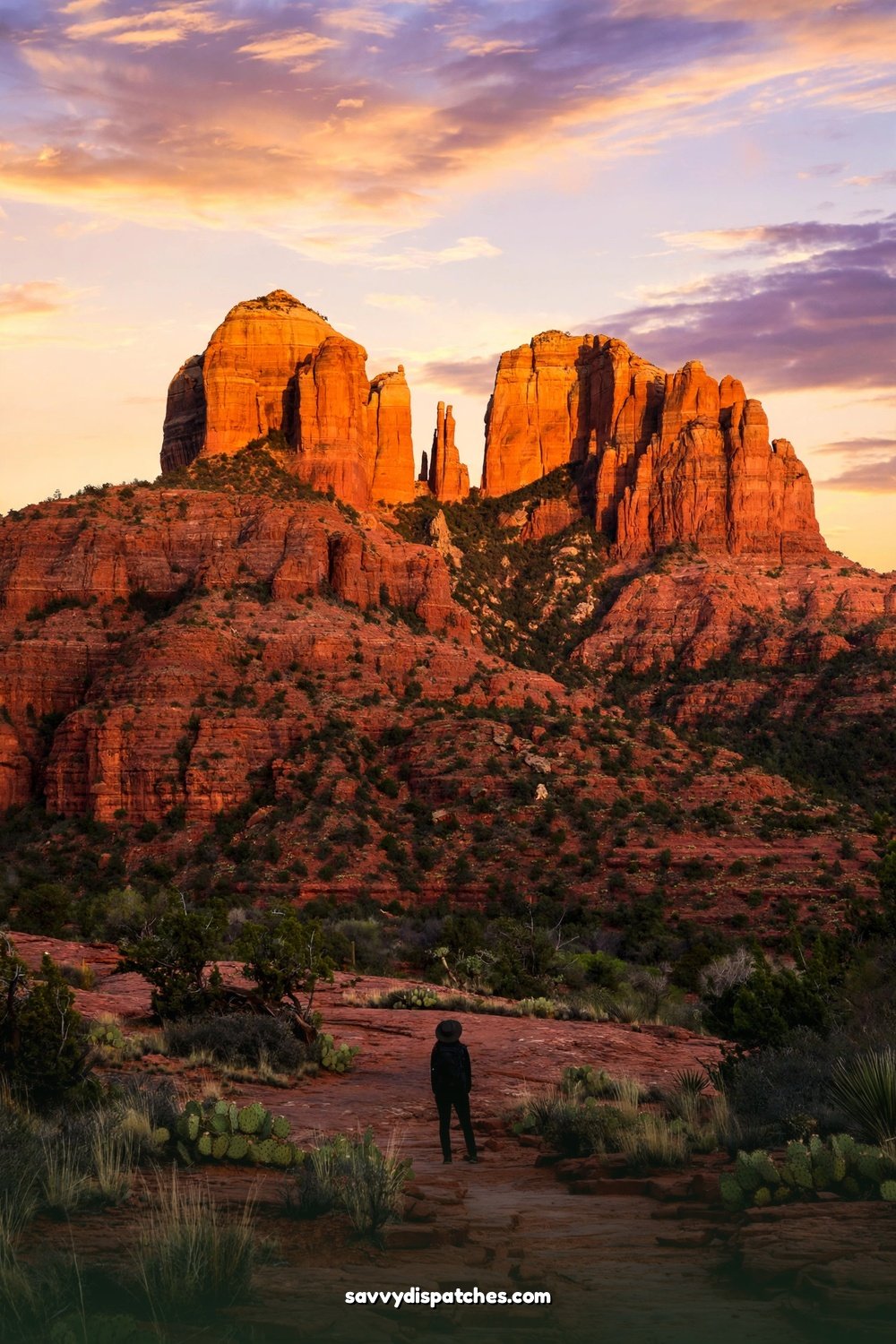
1. Hike Cathedral Rock at Sunset in Sedona Arizona
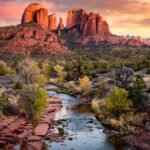
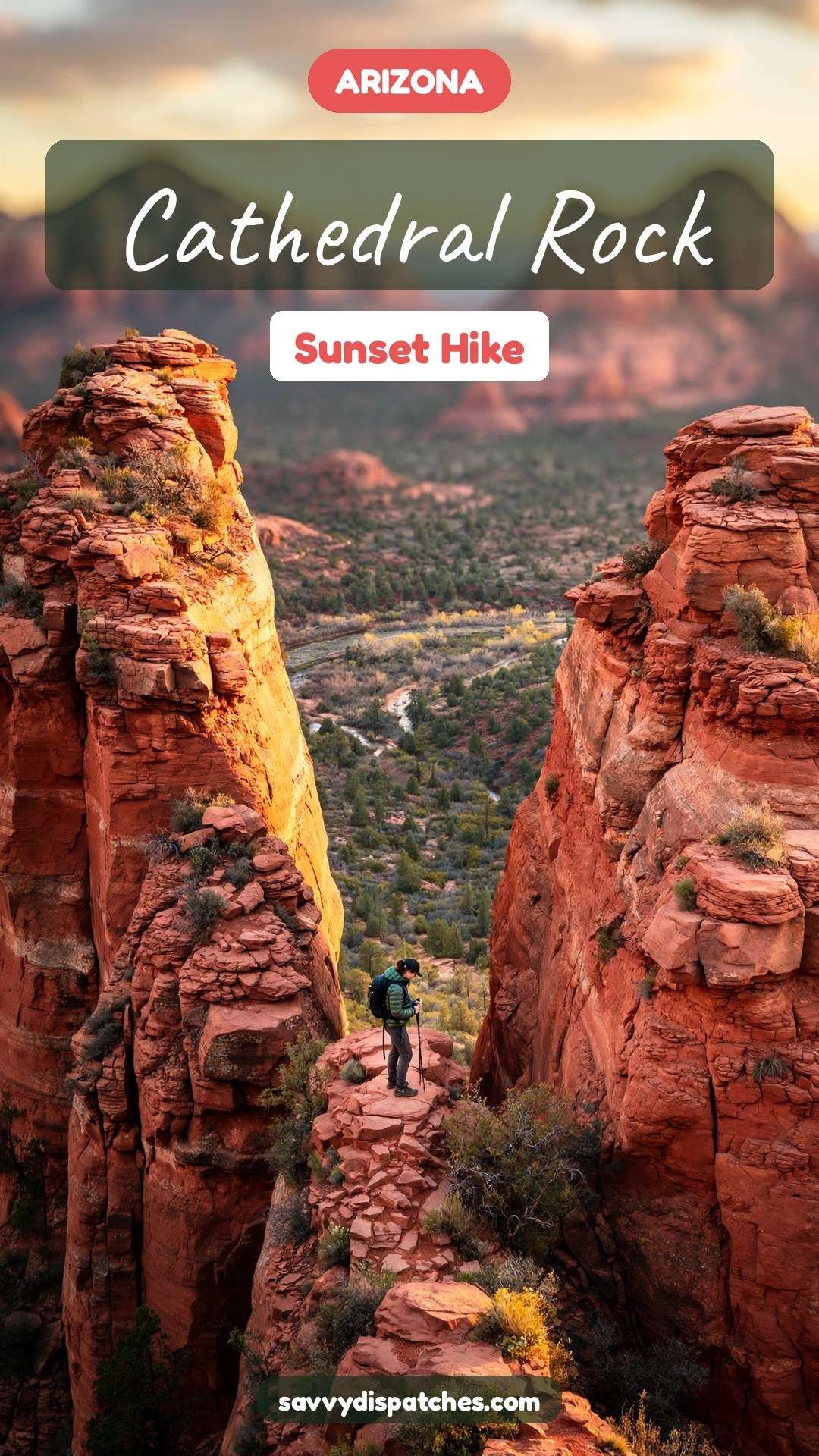
Cathedral Rock is the most photographed hike in Sedona Arizona, and the trail is short, steep, and unforgettable. The Forest Service lists it at 1.1 miles round trip with 669 feet of climbing, and rates it strenuous. Above the trailhead, a slickrock scramble climbs with hands and feet to a saddle between the spires with one of the best views in Arizona. I went at sunset, and the rock turned from red to orange to deep pink as the sun dropped. The whole valley glowed. Allow two hours, and bring more water than you think you need.
The trailhead lot fills up early and closes to private cars while the free shuttle runs, so take the shuttle from the park-and-ride lot on the days it runs. Parking needs a Red Rock Pass on the days the lot is open. The trail is not suitable for people who are uncomfortable with heights, and the slickrock is slippery when wet. Go on a dry day. My practical hiking outfits for women cover the shoes and layers that work best on slickrock like this.
Local tip: Take the free shuttle instead of driving to the trailhead, because the lot fills before 8 am in season and the shuttle drops you at the trail.
2. Walk the Bell Rock Pathway in Sedona Arizona
Bell Rock is the easy one, and easy is exactly what you want on your first morning. The Bell Rock Pathway runs about 3.5 miles one way along the base of Bell Rock and Courthouse Butte, on a wide graded surface with only 185 feet of elevation change. It is the one genuinely easy walk in the area, and it is family-friendly. I walked it with a coffee in my hand and a camera around my neck, and I stopped every five minutes to take a photo. Bell Rock and Courthouse Butte stand on either side of the road at the Village of Oak Creek, and the path links them in a flat, open walk.
You can scramble up the lower benches of Bell Rock for better views, but the true summit is not a hike. Above the lower ledges the rock is steep, exposed, and loose, and it needs technical climbing. Do not try it. Lower benches give you the views without the risk. Walking it costs nothing, though the trailhead lots need a Red Rock Pass. Bell Rock is also one of the four vortex sites, so expect to see people sitting quietly on the rocks, meditating or just looking out at the valley. My trekking outfits for women that work on hard trails cover the footwear that works on this kind of graded desert path.
Local tip: Walk the pathway in the early morning, because the light hits Bell Rock first and the path is empty before the tour groups arrive.
3. Stand on Devil’s Bridge in Sedona Arizona
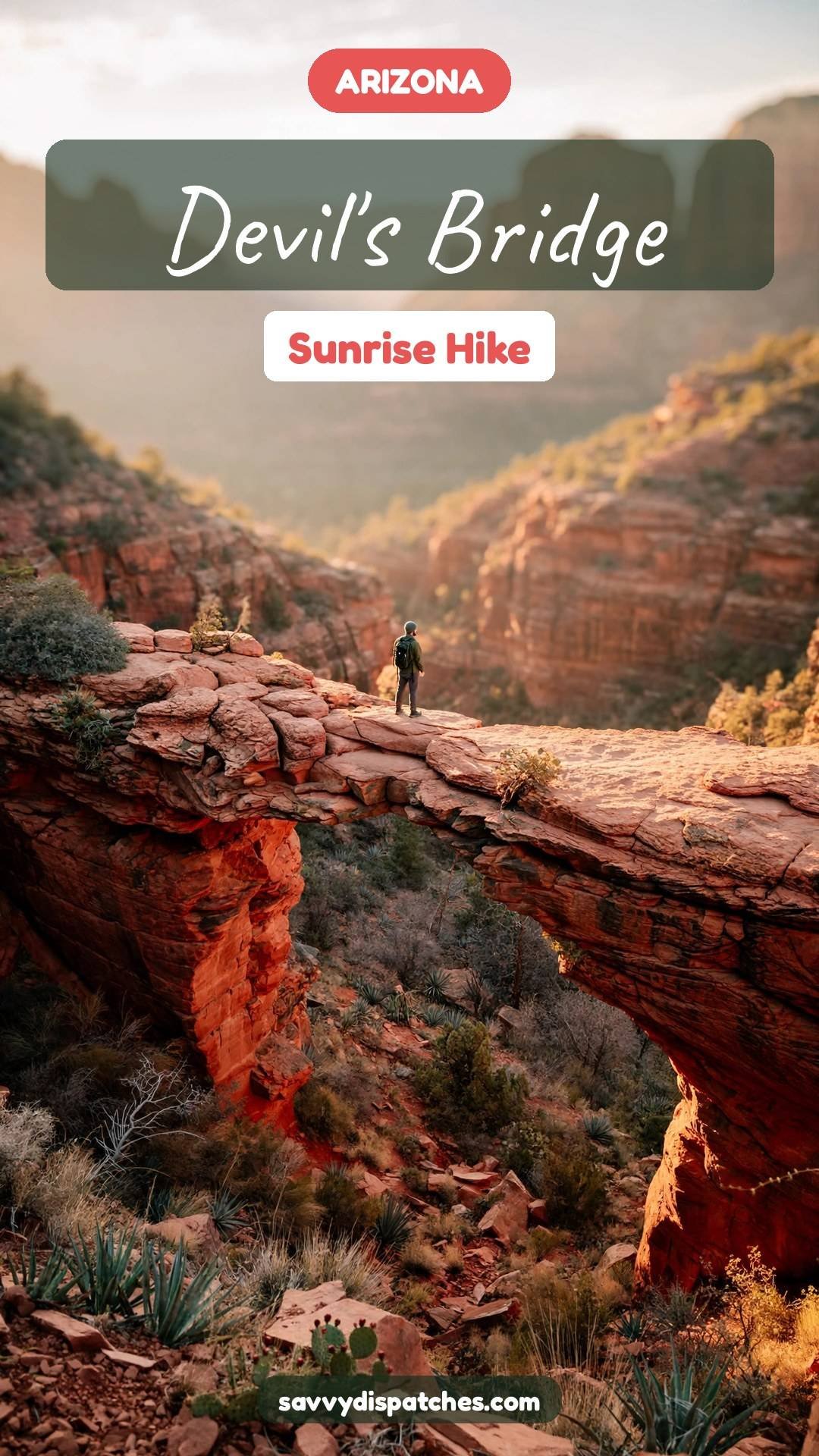
Devil’s Bridge is the largest natural sandstone arch in the Sedona area, a 54-foot span you can walk out onto for the most famous photo in town. The hike is 4 miles round trip from the Dry Creek trailhead, with about 400 feet of elevation gain, and it takes two to three hours. Red rock terrain fills the walk before the final climb, a steep natural staircase up to the arch. There are no railings on the bridge, and there is a drop beside it, so take care. The photo line can run to 30 minutes on busy days.
Go at sunrise. The light is soft, the crowds are thin, and the heat has not arrived yet. Getting there takes a rough road, so most people park at Dry Creek and walk, or take the shuttle. In season, the Sedona Shuttle runs to Devil’s Bridge and the round trip costs 10 dollars. Parking needs a Red Rock Pass. I went on a weekday morning and waited five minutes for the photo. My friend went on a Saturday and waited half an hour. Weekdays win here.
Local tip: Go at sunrise on a weekday, because the photo line is shortest then and the light on the arch is at its best.
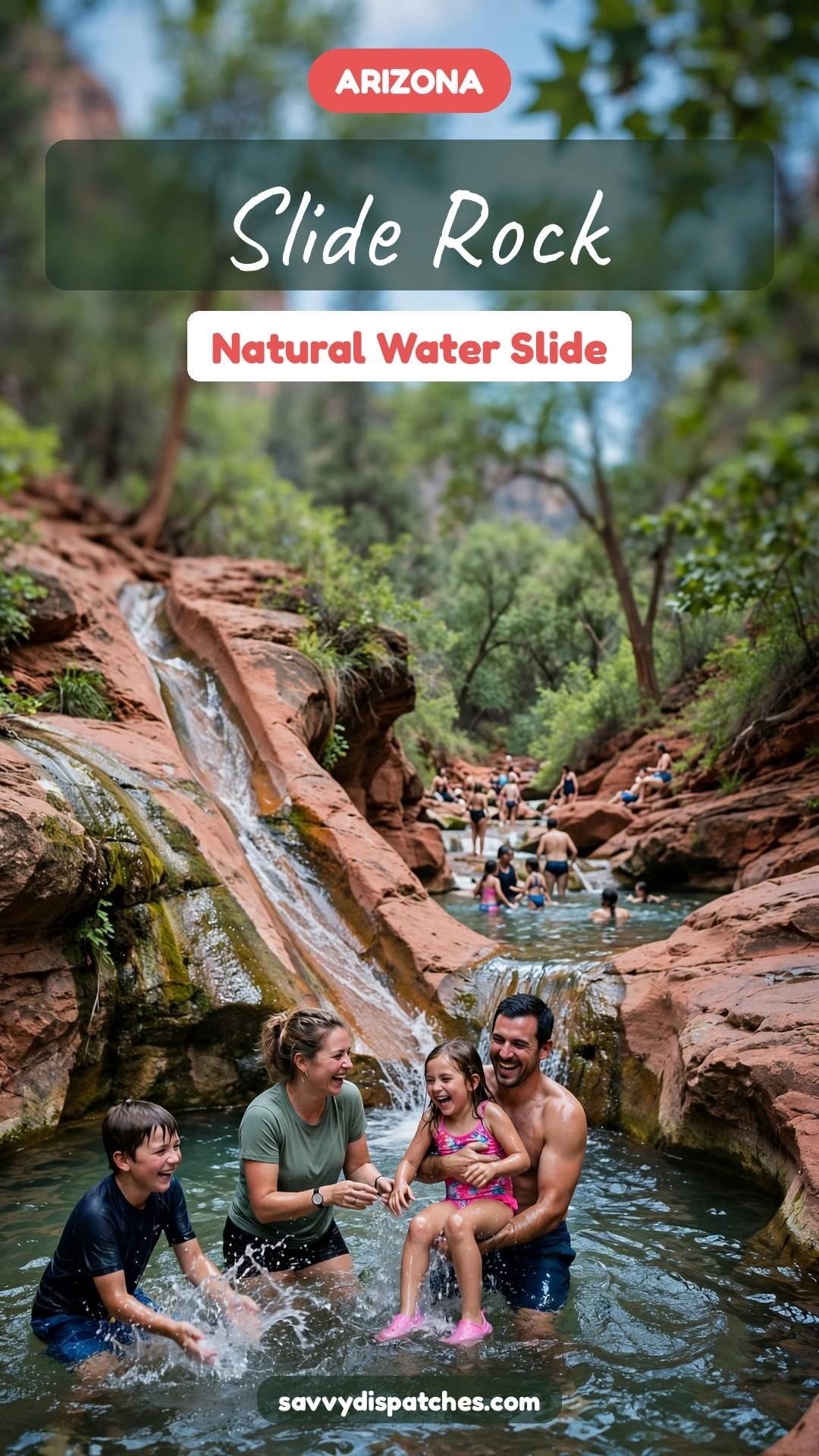
4. Slide Down the Natural Water Slide at Slide Rock State Park
Slide Rock State Park sits seven miles north of Sedona on the highway through Oak Creek Canyon, and it is the most fun place in town on a hot day. The park is named for a natural 80-foot sandstone water slide carved into the Oak Creek bedrock, where you slide down smooth rock chutes into swimming holes. Cold water, slippery rock, and everyone comes out laughing. I went in late spring, when the water was cold enough to make me gasp and warm enough to stay in. Wear old shoes. The rock will shred bare feet and cheap sandals.
Entry costs 30 dollars per vehicle in the summer season and 20 dollars per vehicle from late August through April, for up to four adults. The lot is small and closes when it fills, which happens early on summer weekends. There is a one-mile creek trail through the old Pendley apple orchard, which is shaded and lovely when the slide area gets crowded. The park is in Oak Creek Canyon, so pair it with the canyon drive on the same morning. My South Lake Tahoe year-round guide covers another mountain lake town if you like this kind of water and rock.
Local tip: Arrive before 9 am on a summer weekend, because the lot fills early and the park does not let cars queue on the highway.
5. Drive Oak Creek Canyon in Sedona Arizona
Oak Creek Canyon is the road north out of Sedona, and it is one of the prettiest drives in Arizona. The highway runs 14 miles through a lush canyon with towering red walls, swimming holes, and waterfalls, and it climbs from the desert floor to the pine forest on top. I drove it slowly, stopping at every pullout, and the whole drive took me two hours. The canyon is green in a way the desert below is not, with oak trees, sycamores, and cold clear water running beside the road. It feels like a different state.
My favourite stop in the canyon is the West Fork of Oak Creek. The trail follows the creek through a narrow gorge with pools and small waterfalls, and it is one of the most popular hikes in Arizona. Entry costs 15 dollars per vehicle, and the Red Rock Pass is not valid here. The trail crosses the creek on stones and logs, so wear shoes you do not mind getting wet. Go in autumn if you can. The maple trees along the creek turn red and gold, and the canyon looks like New England dropped into the desert. Check the Forest Service closure order before you go: the trail was closed from 1 November 2026 through 28 February 2027 after flooding in the canyon.
Local tip: Drive the canyon in autumn, because the maples along West Fork turn red and gold and the light in the gorge is at its best.
6. Visit the Chapel of the Holy Cross in Sedona Arizona
The Chapel of the Holy Cross is a small Catholic chapel built directly into the red rock, and it is one of the most photographed buildings in the Southwest. It was completed in 1956, built by sculptor Marguerite Brunswig Staude, and a 250-foot iron cross rises out of the rock walls as the chapel’s structural support. The design carries a Frank Lloyd Wright influence, with clean lines and a single quiet room inside that has floor-to-ceiling windows looking out over the Verde Valley. Entry is free, and the chapel is open daily from 9 am to 5 pm.
I went in the late afternoon, and the light coming through the glass wall turned the whole room gold. The chapel is small, so it fills up fast. Parking is limited and fills quickly, so arrive before 10 am or after 3 pm. The drive up Chapel Road is steep and narrow, and the lot at the top holds only a few dozen cars. Walk the last stretch if the lot is full. The view from the terrace is worth the climb on its own. My best budget travel destinations for 2026 list has more free sights like this one if you are watching your budget.
Local tip: Arrive before 10 am or after 3 pm, because the small parking lot fills by mid-morning and the chapel is quietest at the edges of the day.
7. Ride a Pink Jeep Tour Through the Backcountry
Pink Jeep Tours has run in Sedona since 1960, and the bright pink Jeeps are as much a part of the town as the red rocks. The tours take you up rough Forest Service roads to places your rental car cannot reach: backcountry vortex sites, ancient cliff dwellings, and slickrock playgrounds. Broken Arrow is the classic tour. It runs two to three hours, drives over rock formations that look impossible, and ends at Chicken Point overlook with a view across the whole valley. Tours run from about 115 dollars per person.
I took the Broken Arrow tour on my second day, after hiking Cathedral Rock, and it showed me a side of Sedona I would never have reached on foot. The driver knew every rock, every plant, and every story about the valley. Book ahead. Tours fill up quickly, especially on weekends and in spring. Paved Scenic Sedona routes cost less, about 85 dollars, and they cover Bell Rock and the Chapel of the Holy Cross without the rough ride. Pick the rough one if your back can take it. My free things to do in Las Vegas 3-day itinerary covers another desert city if you are building a longer Southwest trip.
Local tip: Book the Broken Arrow tour, because it is the classic ride for a reason, and the Chicken Point overlook is the view most visitors never see.

8. Watch the Sunset From Airport Mesa in Sedona Arizona
Airport Mesa is the easiest sunset in Sedona, and one of the best. The overlook sits at the end of Airport Road in west Sedona, and it needs no hike at all. You park, you walk a few steps, and the whole valley spreads out below you: Cathedral Rock, Bell Rock, Courthouse Butte, and the town in between. The Airport Loop trail circles the mesa for about 3.5 miles if you want a longer walk, and the Brewer Trail joins it for a shorter 1.5-mile option. Standing at the overlook costs nothing. Parking at the small lot costs 3 dollars.
I went up an hour before sunset and watched the light change on the rocks as the sun dropped. The colours shift fast here. One minute the rocks are red, the next they are orange, and then they go a deep purple that looks unreal. Airport Mesa is also one of the four vortex sites, so expect company. People sit quietly on the rocks with their eyes closed, and nobody bothers anyone. Bring a jacket. The wind picks up at the top as soon as the sun goes down, and the temperature drops fast.
Local tip: Arrive an hour before sunset, because the parking lot is small, the light changes fast, and the best colours happen in the last twenty minutes.
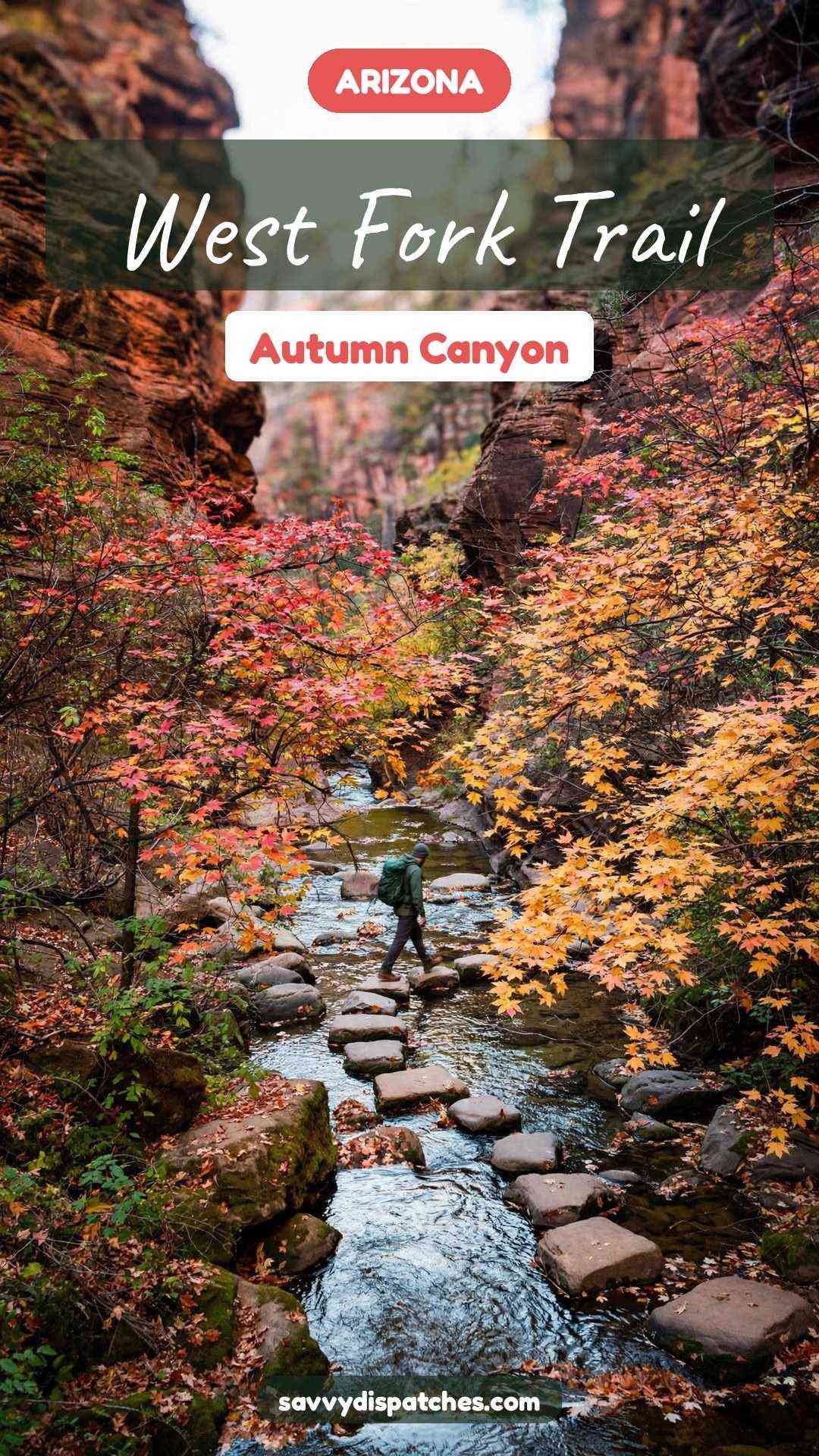
9. Hike the West Fork Trail in Oak Creek Canyon
The West Fork Trail is the prettiest hike in the Sedona area, and it is nothing like the red rock trails below. Oak Creek runs through a narrow canyon here, with towering walls, pools, and small waterfalls, and the trail crosses the creek on stones and logs a dozen times. Full length is about 6 miles round trip, and the first mile alone is worth the visit. The canyon is cool and shaded even on a hot day, and the water is cold and clear. I hiked it in October, when the maples along the creek were red and gold, and the canyon looked like a cathedral made of trees.
Entry costs 15 dollars per vehicle at the Call of the Canyon day-use site, and the Red Rock Pass does not work here. The lot fills early on weekends, so go on a weekday or arrive before 8 am. Wear shoes you can get wet, because the crossings are part of the trail and the stones are slick. The trail is flat and easy, which makes it a good pick for families and for anyone who wants a gentle walk after the steep climbs of Cathedral Rock and Devil’s Bridge.
Local tip: Go in October, because the maple trees along the creek turn red and gold and the canyon is at its prettiest then.
10. Slow Down at the Vortex Sites and Wellness Retreats
Sedona has four energy vortex sites: Bell Rock, Airport Mesa, Cathedral Rock, and Boynton Canyon. The idea is that the earth holds a special energy at these spots, and people come from all over the world to sit, meditate, and feel it. There is no scientific evidence for vortexes, and there is also no shortage of believers. I sat on the rocks at Bell Rock for half an hour with no expectations and came away calmer than I had been in weeks. Call it the view, call it the quiet, call it the energy. The effect is real even if the explanation is not.
The wellness scene around the vortexes is huge. Spas, sound baths, yoga studios, aura readings, and guided vortex tours run all over town. The Enchantment Resort sits at the mouth of Boynton Canyon with a spa and a restaurant that looks out over the red rocks, and it is the most famous wellness stay in town. A guided vortex tour costs less than a spa day and gives you the stories behind each site. Book one for your first morning. It orients you to the whole town, and the guide will point out the trails and viewpoints you would otherwise miss.
Local tip: Book a guided vortex tour for your first morning, because the guide orients you to the whole town and points out the trails you would otherwise miss.
11. Wander Tlaquepaque Arts and Crafts Village
Tlaquepaque is a Spanish-style arts village in Uptown Sedona, built in the 1970s to look like a Mexican hillside town, with stucco walls, tiled fountains, arched doorways, and sycamore trees shading the courtyards. It holds galleries, jewellery shops, a glass-blowing studio, and restaurants with patios that catch the afternoon sun. Browsing is free, and it is the best place in town to buy something made by a real artist instead of a souvenir shipped in from somewhere else. I spent two slow hours here, watching a glassblower work and buying a small ceramic bowl I still use every morning.
Go in the late afternoon, when the light comes through the arches and the courtyards fill with shade. The village sits right on the highway through Uptown, so it is easy to reach, but the parking lot fills fast. Walk from Uptown if you can. The galleries close around 5 or 6 pm, and the restaurants stay open later. My cheap places to travel that still feel luxurious list has more towns where the shopping is the attraction.
Local tip: Go in the late afternoon, because the light through the arches is at its best then and the glass-blowing studio is still working.
12. Walk Red Rock State Park in Sedona Arizona
Red Rock State Park is the quiet side of Sedona. It sits on Oak Creek with 286 acres of trails, meadows, and riparian habitat, and it is the place to go when the famous trailheads are packed. Entry costs 10 dollars for adults and 5 dollars for youths aged 7 to 13, and children under 7 enter free. The park runs ranger-led nature walks and talks, and the trails are gentle enough for a slow morning. Swimming is not allowed here, which keeps the creek calm and the wildlife out in the open. I saw a great blue heron fishing in the creek and a family of javelina crossing the trail at dawn.
The park is at its best in the early morning, when the light hits the red rocks across the creek and the birds are loud. From here, trails connect to the wider Sedona trail system, so you can walk from the park to Cathedral Rock if you want a longer day. Bring binoculars if you have them. The park is a birding spot, and the rangers keep a list of the species seen that week. My 7-day Scotland Highlands trip under $1,500 covers another place where the slow mornings are the best part.
Local tip: Go at dawn, because the light on the rocks across the creek is at its best then and the wildlife is out before the heat arrives.
13. Stargaze Under Some of the Darkest Skies in Arizona
Sedona sits in a dark-sky community, and the night sky here is one of the best in the country. The town limits outdoor lighting, the air is dry and clear, and the Milky Way shows up on any moonless night. I lay on a blanket at the Airport Mesa overlook after dark and watched satellites cross the sky and meteors burn out over the rocks. The stars here are so thick they look fake. A guided stargazing tour runs most nights, with telescopes and a guide who points out the constellations and the planets. The tours cost roughly 90 to 125 dollars per person and run for one to two hours.
Go on a moonless night if you can. The moon washes out the faint stars, and the best nights are the ones right after the new moon. Check the moon calendar before you book. The desert cools fast after sunset, so bring a jacket and a blanket even in summer. Tours run year-round, and winter gives you the clearest skies of all. My free things to do in Las Vegas 3-day itinerary covers another desert city with big skies if you are heading west after Sedona.
Local tip: Book a stargazing tour on a moonless night, because the moon washes out the faint stars and the Milky Way only shows up when the sky is truly dark.

How Many Days You Need in Sedona Arizona
Two nights gets you Cathedral Rock, Bell Rock, Slide Rock, and Airport Mesa. Three nights adds Devil’s Bridge, the West Fork Trail, and a Pink Jeep tour. Four nights lets you slow down, add a spa day, and take the day trip to the Grand Canyon, which sits about two hours north. I did three nights and wished I had four. The town is small, but the trails are many, and the best days here are the slow ones. Book your Pink Jeep tour and your stargazing tour before you arrive, since both fill up on weekends. Everything else can be decided over breakfast.
Local tip: Give Sedona four nights if you can, because three nights fills up fast and the fourth day is the one where you finally slow down.
You Might Also Like
If this guide helped, here are three more from my site. Read my first ski trip tips for beginners if you want a cold-weather trip next. Check my South Lake Tahoe year-round guide for another mountain town with water and trails. And save my cheap places to travel that still feel luxurious for your next adventure.