
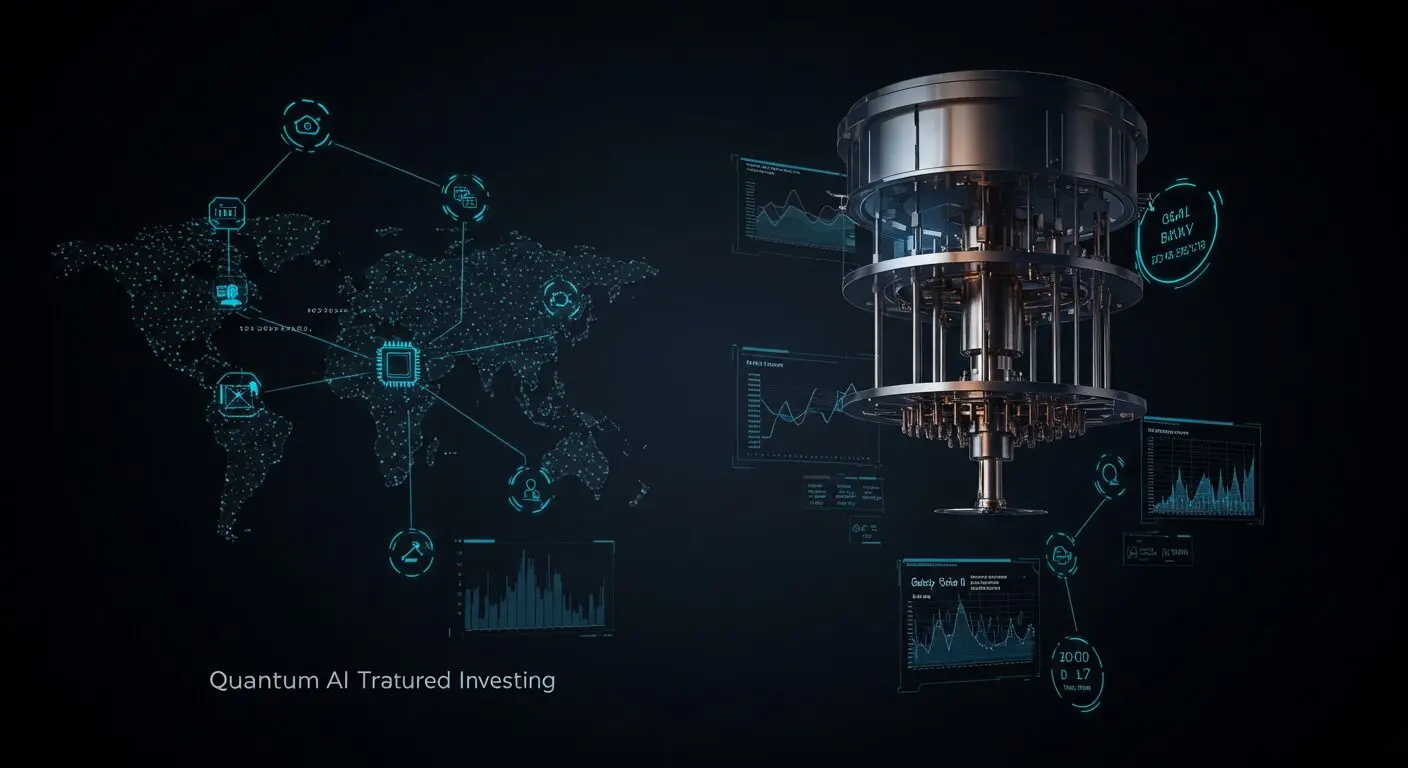
Artificial intelligence (AI) is no longer just a buzzword in tech circles—it’s rapidly transforming the world of finance. Among the most groundbreaking developments is Quantum AI trading, an advanced method that blends quantum computing principles with artificial intelligence to make trading decisions faster, smarter, and more accurate than ever before.
- What Is Quantum AI Trading?
- Why Is Quantum AI Important to Investors?
- The Role of AI Platforms in Trading
- How Quantum AI Differs from Traditional AI
- Real-World Use Cases and Examples
- Advantages for the Average Investor
- How Safe Is Quantum AI Trading?
- Getting Started with Quantum AI
- Challenges and Limitations
- The Road Ahead: What the Future Holds
What Is Quantum AI Trading?
Quantum AI trading is the use of quantum computing and AI algorithms to analyze financial markets and execute trades. Traditional trading systems rely on classical computers that process one calculation at a time. In contrast, quantum AI systems can process massive data sets simultaneously, identifying patterns and predictions that were once invisible to human traders and conventional machines.
By integrating deep learning models with quantum mechanics, this new form of trading can spot micro-trends in global markets, evaluate risks, and optimize portfolio decisions with remarkable speed and precision.
Why Is Quantum AI Important to Investors?
Investors today face increasingly complex markets. From inflation and global conflicts to crypto volatility and economic policy shifts, the need for real-time analysis and decision-making has never been more critical. Quantum AI provides:
Speed: Instant evaluation of millions of data points across global exchanges.
Accuracy: Reduction in human bias and emotion in trading decisions.
Opportunity Detection: Early identification of market inefficiencies and arbitrage opportunities.
This isn’t just an upgrade—it’s a shift in how financial strategies are developed and executed.
The Role of AI Platforms in Trading
At the core of this movement are sophisticated AI platform designed to handle the intricacies of real-time trading. These platforms use neural networks, natural language processing, and predictive analytics to digest everything from stock performance to social media sentiment.
Some features of modern AI platforms include:
Automated trade execution
Risk profiling and adjustment
Real-time news and sentiment tracking
Multi-asset strategy integration (stocks, forex, crypto)
With these tools, even retail investors can leverage institutional-grade insights, closing the knowledge gap that once favored big hedge funds.
How Quantum AI Differs from Traditional AI
While traditional AI analyzes past patterns and current signals, quantum AI has the added ability to explore multiple future outcomes simultaneously. This advantage, known as quantum parallelism, allows for:
Greater scenario testing: Simulating thousands of market conditions instantly.
Superior optimization: Selecting the best possible strategy with fewer assumptions.
Faster learning loops: Evolving and improving in real time.
In short, quantum AI doesn’t just react faster—it thinks differently.
Real-World Use Cases and Examples
Although the technology is still emerging, several early adopters are already benefiting:
Institutional funds are using quantum-enhanced models to improve high-frequency trading (HFT) strategies.
Crypto platforms employ quantum AI to predict coin volatility within seconds of a tweet or regulatory news release.
Retail investors now have access to simplified versions of these tools through platforms like Quantum AI trading, which democratize advanced tech.
As adoption increases, we can expect more funds, brokerages, and robo-advisors to incorporate quantum AI into their backend systems.
Advantages for the Average Investor
The promise of quantum AI is not limited to large institutions. Everyday investors stand to gain:
1. Smarter Recommendations
Personalized advice based on your portfolio, goals, and market movements—updated in real time.
2. Risk Management
Quantum AI systems can simulate worst-case market scenarios and automatically reallocate assets to limit downside risk.
3. Time Savings
Automated analysis reduces the need to spend hours researching or second-guessing your decisions.
How Safe Is Quantum AI Trading?
Understandably, many investors wonder about the safety and regulation of such advanced technologies. Most reliable platforms operate within regulated frameworks and prioritize user transparency. However, investors should still:
Ensure the platform is reputable (like quantumaiofficiel.fr).
Verify that it complies with your country’s financial regulations.
Avoid platforms promising guaranteed returns—no AI can eliminate market risk entirely.
While no system is foolproof, the level of analytical power that quantum AI provides can significantly reduce human error and emotional bias.
Getting Started with Quantum AI
Interested in exploring quantum AI for your own investment needs? Here’s how to start:
Step 1: Choose the Right Platform
Opt for a reliable provider with proven results. Quantum AI trading is one such platform gaining traction for its user-friendly approach and integration of quantum logic with real-time data.
Step 2: Understand the Features
Look for platforms that offer backtesting, explainable AI (so you know why decisions are made), and secure trading environments.
Step 3: Start Small
Test the system with smaller amounts. Many platforms offer demo accounts or paper trading options to help you get comfortable.
Step 4: Monitor and Adjust
Although the system automates much of the work, periodic review ensures that your goals and risk tolerance remain aligned.
Challenges and Limitations
Despite its advantages, quantum AI trading is not without its hurdles:
Hardware limitations: Quantum computers are still in early stages of development.
Cost: Advanced platforms may charge premium fees for access.
Learning curve: While platforms are becoming more intuitive, understanding the basic principles helps users make informed choices.
Nonetheless, as the technology matures, these barriers are likely to shrink.
The Road Ahead: What the Future Holds
As quantum hardware improves and AI algorithms evolve, the future of investing may look very different. We may see:
Fully autonomous portfolios that adjust every second without human input.
Predictive retirement planning based on real-time longevity and economic models.
Global economic simulations for policy and individual forecasting.
Early adopters of quantum AI trading platforms will likely have a head start in this evolving landscape.
Quantum AI is not a passing trend—it’s the next evolution of intelligent investing. By merging the world’s most powerful computing methods with real-time decision-making, it offers tools that were once reserved for elite institutions to everyday investors.
Whether you’re a seasoned trader or just beginning your financial journey, exploring this technology today could position you well for tomorrow’s markets. Platforms like Quantum AI trading, comprehensive AI platforms, and resources like quantumaiofficiel.fr make this innovation more accessible than ever.