
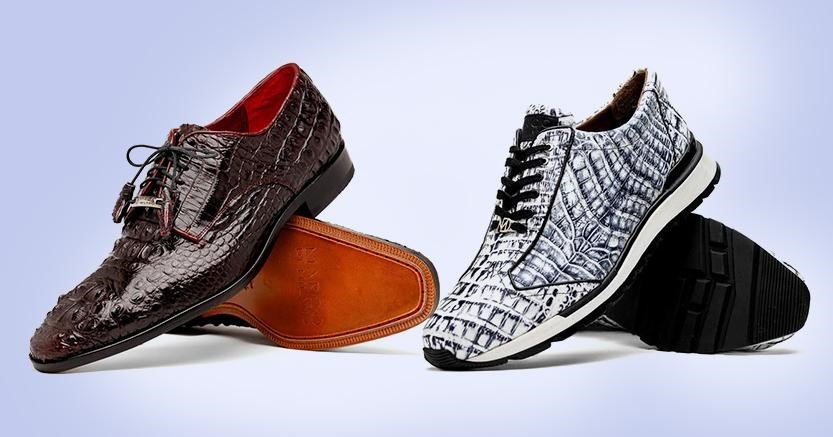
If you have never had a men pair of exotic shoes, you are missing out on what might be the boldest, most attention-getting thing in men’s fashion. We are talking about the kind of real-deal, next level footwear that turns heads without even trying.
Gator leather that looks as though it belongs in a cigar collection, lizard-skin boots just shiny enough to play with the sunlight, or even stingray shoes that are so adorned, they almost qualify as a first date.
However, with the rise in popularity of mens exotic shoes comes the burden of figuring out what authentic craftsmanship is-and what’s just overpriced hype.
So how do you spot a quality pair before you drop a serious chunk of change?
Let’s dive in.
The Leather Tells a Story
The main characteristic of exotic shoes is the unusual skin upon which they are made: alligator, crocodile, ostrich, lizard, stingray, even python.
Real exotic leather is not all in the name. It’s about how that hide is tanned, cut, and handled. The texture and color of high-end shoes will be consistent, and there will be no blotchy patches or stiffness.
Look for hides that feel supple but durable. Low priced ones tend to appear like thick plastic. That’s your first red flag.
Bonus tip: There is a specific pattern to each kind of leather. Alligator has square, uniform tiles; lizard is tight, smooth; ostrich has the natural bumps known as quill follicles. Learn the difference—it pays off.
Stitching: The Unsung Hero
If the leather is the face, the stitching is the backbone. Great workmanship implies tight even stitches all the way around – no loose threads, no skipped stitches, no uneven spacing.
Quality makers go out of their way to hand-stitch parts of their shoes, or work on single needle machines to maintain precision. If the thread color contrasts the leather, it should look intentional, not like someone ran out of matching yarn.
Turn the shoe around, -look underneath at the sole. Clean lines, precision stitching, and no glue marks? You are on the right track.
The Sole Is Where the Soul Lives
You can’t talk men’s fashion shoes without looking at the sole. Full sole leather, rubber or a combo? Exotic high-end shoes usually have stacked leather soles or leather with a thin layer of rubber for grip.
Search out Goodyear welting or Blake stitching, they are traditional techniques where the sole can be replaced without damaging the upper. This makes your shoes durable enough to last several decades.
Low-grade produced shoes mostly use glued soles. And if it peels, it’s all over.
Symmetry in the Details
Exotic shoes tend to be hand-cut and this implies that details matter the most. Those paired shoes ought to be so symmetric as far as the scales, the texture or the quill marks are concerned.
One boot with little tight scales, and the other with an entirely different pattern is not going to fit well together – and that is not what you need to pay high prices to have.
In addition, it is always good to watch the toe shape and the heel balance. Are they even? Does the shoe sit flat on the ground? Any rocking or wobbling is a bad sign.
Comfort Shouldn’t Be an Afterthought
Quality shoes, no matter how flashy, should feel supportive, snug (but not tight), and break in gently.
Leather linings, cushioned insoles, and breathable interiors are key. Your feet should never feel like they’re in a fashion prison.
Don’t settle for beauty without comfort. It’s not worth the blisters.
What Makes It “Exotic” Isn’t Always the Hide
Sometimes, it’s the story, not just the material. The best exotic shoes come from small-batch makers or brands with heritage—places where artisans have been working the same craft for decades.
You’ll notice this in the finishing details: burnished toes, subtle hand-painting, or polished edges. It’s like the difference between a factory burger and one from a chef who grinds his own beef. Same idea, different universe.
What to Check Before You Buy
Let’s say you’re in the store, or maybe scrolling online with your coffee. Here’s your quality-check cheat sheet:
- Feel the leather
- Inspect the stitching
- Flip it over, leather sole, Goodyear or Blake construction
- Check for balance, shoes should sit flat
- Look inside, leather lining, solid heel counter
- Try them on, comfort matters
Got all that? Then you’re probably looking at a pair worth investing in.
So, what’s the Verdict?
If you’re going to invest in a pair of men’s exotic shoes, make it count. Real craftsmanship isn’t just about looking good—it’s about lasting wear, skilled construction, and details that don’t quit.
FAQs
Q: How do I care for exotic leather?
A: Gently. Use a conditioner made for exotic skins, and avoid soaking them in water. Store with shoe trees to keep their shape.
Q: Are exotic shoes only for dressy occasions?
A: Not at all. While they shine with a suit, many styles now come in more casual silhouettes. You can pair gator loafers with jeans and a crisp shirt and still look like a million bucks.
Q: Why are they so expensive?
A: Exotic hides are rare, and crafting them takes serious skill. Add in small-batch production, handwork, and durability, and you’ve got a luxury item that lasts.