I almost skipped Turkey. A friend said Istanbul was “too touristy,” and I nearly took her word for it. Three weeks later, I was eating lamb kebabs by the Bosphorus at midnight and spending less per day than I would in a mid-range city back home. These 13 turkey travel tips are what I wish I’d known before I went.
- 1. Get Your E-Visa Before You Land
- 2. Use Turkish Lira in Cash — Always
- 3. Time Your Trip for Shoulder Season
- 4. Base Yourself in Istanbul First
- 5. Take the Overnight Bus Between Cities
- 6. Eat Where the Locals Line Up
- 7. Book a Hamam Early in Your Trip
- 8. Understand the Haggling Rules
- 9. Pack a Scarf for Mosque Visits
- 10. Get a Local SIM at the Airport
- 11. Use Istanbulkart for Public Transit
- 12. Don’t Skip Cappadocia — Budget It Carefully
- 13. Know the Tipping Norm Before You Sit Down
- You Might Also Like
First-time turkey travel takes a little homework. There’s the currency, the transport, the food, and the question of what you actually need to book ahead. Here are the 13 things that made the biggest difference on my first trip and the ones since.
Let’s get into it.
Turkey is one of the most affordable countries for 2026 travel. Budget $35 to $55 per day for a private room, street food, and local transport. Get your e-visa before you fly ($55 USD), carry lira cash for bazaars and local restaurants, and book Cappadocia balloon rides at least 3 weeks ahead.
1. Get Your E-Visa Before You Land
What to sort before you book
-
✓
Get your e-visa online before departure: Turkey’s e-visa takes 3 to 5 minutes to apply for at evisa.gov.tr. It costs $55 USD and is valid for 90 days. Never buy it at the airport — the kiosks charge double. -
✓
Carry lira cash for local spending: Card acceptance is inconsistent outside major cities. Withdraw lira from ATMs (not exchange booths) on arrival. Street food, bazaars, and local restaurants almost always want cash. -
✓
Book Cappadocia accommodation early: The cave hotels with the best sunrise balloon views book out 4 to 6 weeks in advance, especially from October through April. Mid-range cave rooms run $45 to $80 per night.
Check your entry requirements before you fly. If your passport requires a Turkish e-visa, get it at evisa.gov.tr rather than paying a third-party site to do the same job. The application takes about 10 minutes and costs roughly $50 USD depending on your passport. Don’t leave it for the airport.
The e-visa allows up to 90 days within a 180-day period. Save a screenshot and print a copy if you can. It’s easier to hand over a piece of paper than hunt through your phone at passport control.
Rules vary by passport, including for travelers from the US, UK, Canada, and EU countries. Check the official site before you book flights, even if someone with a different passport told you they didn’t need a visa.
Local tip: Apply for the e-visa at least 72 hours before your flight — the system occasionally goes slow and a 10-minute process can take longer when servers are busy.
2. Use Turkish Lira in Cash — Always
Carry lira. You’ll need it for market stalls, smaller restaurants, and the occasional guesthouse. Some places take cards but add a 3-5% fee. Paying in euros or dollars usually means accepting a lousy exchange rate, too.
Skip the airport exchange booth. I use an ATM inside a bank such as Garanti BBVA or Ziraat and withdraw enough to avoid making lots of small transactions. The lira’s value can move quickly, so check the current rate rather than relying on a number you saw before your trip.
Budget reference: a solid sit-down lunch at a local restaurant runs 150-250 TL. A street-side simit (sesame bread ring) costs about 10 TL.
Local tip: Tell your bank you’re traveling before you leave — Turkish ATMs trigger fraud alerts on US and UK debit cards more than almost any other country.
3. Time Your Trip for Shoulder Season
June through August brings heat, crowds, and higher prices. I’d pick April to May or September to October for turkey travel instead. Walking around Istanbul is more comfortable, hotel prices can drop 20-30%, and you have a better chance of seeing places like Hagia Sophia and Pamukkale without spending half the day in a crowd.
November through March can work for Istanbul and Cappadocia if you pack for cold weather. Coastal areas like Antalya and Bodrum get much quieter, and some seasonal businesses close. For a winter trip, I’d stick mostly to cities.
For 2026 turkey travel, April through early June gives you a good stretch of milder weather. Book accommodation 6-8 weeks out for shoulder season, and you can find solid mid-range options under $60 USD/night.
Local tip: The Ephesus archaeological site in October is about half the visitors of August — same ruins, far better photos, and the light at that time of year is extraordinary.
IMAGE PROMPT 1 (place after section 3):
GENERATE (paste into Gemini/Flow — no text, no blank zones):
Full-bleed 1080x1920px portrait 9:16. A woman exploring a narrow cobblestone street in a Turkish village, colorful ceramic tiles and hanging lanterns on either side, warm golden afternoon light, shallow depth of field blurring the background market stalls. Subject anchored in lower 60% of frame. Top 30% has naturally soft open sky with warm light — NOT a blank box or color. Sony A7IV 50mm, natural light, film grain, NOT AI generated look, NOT stock photo. Do NOT add text, boxes, or blank areas anywhere in the image.
ADD OVERLAY IN IMAGE EDITOR AFTER GENERATING:
Category pill: “TURKEY TRAVEL” — coral background, white Fredoka caps, pin to top
Headline: “Turkey Tips First-Timers Need” — More Sugar script, white, semi-transparent cream backing
Accent line: “13 Essentials” — Fredoka Bold, coral, white box
Bottom: “savvydispatches.com” — small centered white text
IMAGE DESCRIPTION 1: A solo female traveler walks through a sunlit Turkish village alley. Ceramic blue-and-white tiles line the walls. Overhead, hand-painted lanterns in amber and terracotta catch the late afternoon light. She carries a small canvas tote and pauses to look at a display of handmade pottery in the foreground. The cobblestones catch long shadows. The background market blurs softly into bokeh.
4. Base Yourself in Istanbul First
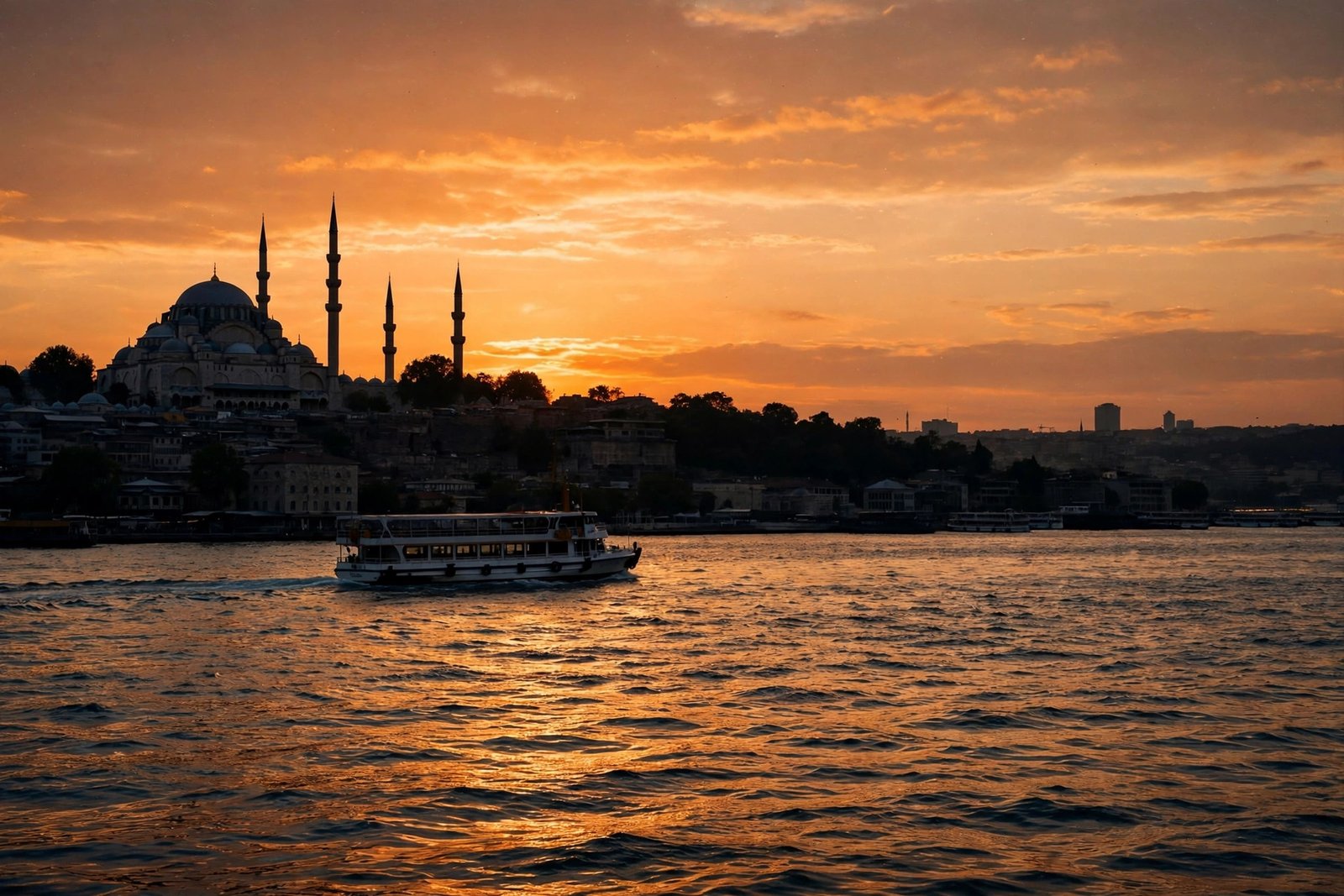
Istanbul makes an easy first stop for turkey travel. Flights come into IST from all over, and you can spend days exploring without figuring out intercity transport straight away. Around Sultanahmet, major sights sit close enough together to cover on foot.
Give yourself 3-4 days. Browse the Grand Bazaar, eat in Karaköy, take a Bosphorus ferry for $1.50, and cross the Galata Bridge at sunset. You’ll get a feel for prices and daily logistics before heading farther across the country.
I’d stay in Beyoglu or Karaköy rather than Sultanahmet. You can still reach the sights by tram, but you’ll have more places to eat near your room and fewer souvenir shops outside your door. Budget guesthouses in Beyoglu run $35-60/night for a private room.
Local tip: The Galata Tower is worth the climb — but go on a weekday at 9am when it opens. By 11am, the line wraps around the block and you’ll wait 45 minutes.
5. Take the Overnight Bus Between Cities
Don’t overlook Turkey’s intercity buses. Companies like FlixBus Turkey, Metro Turizm, and Kamil Koç run overnight routes between Istanbul, Cappadocia (Göreme), Antalya, and Izmir for $15-30 USD. Leave at 10pm, arrive around 6am, and you don’t need a room for that night.
The buses are generally clean and air-conditioned, with reclining seats and an attendant who brings tea and snacks. They have toilets on board. You’ll see Turkish families using them alongside travelers with backpacks.
The overnight bus from Istanbul’s Bayrampaşa otogar (bus terminal) to Cappadocia takes about 11 hours. A flight can cost $50-80 once you account for getting to and from airports, and flying doesn’t always save as much time as you’d expect.
Local tip: Book bus tickets at least 3 days ahead on the company’s own website, not aggregators — you’ll often find better seats and no booking fee.
IMAGE PROMPT 2 (place after section 5):
GENERATE (paste into Gemini/Flow — no text, no blank zones):
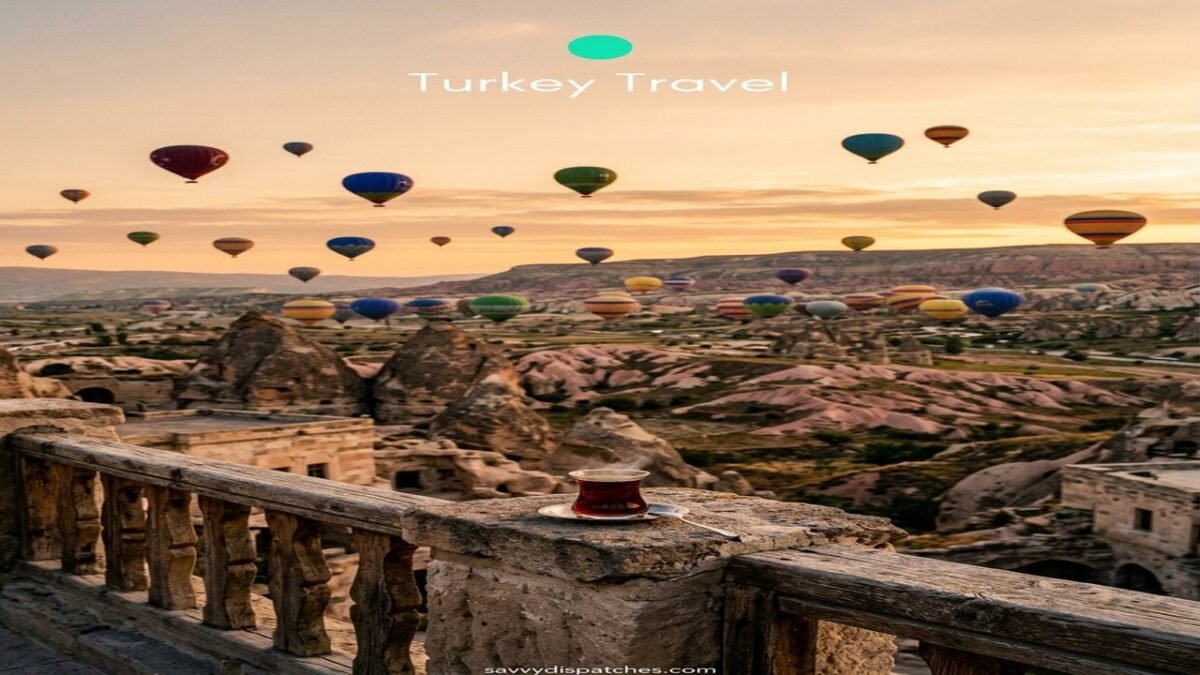
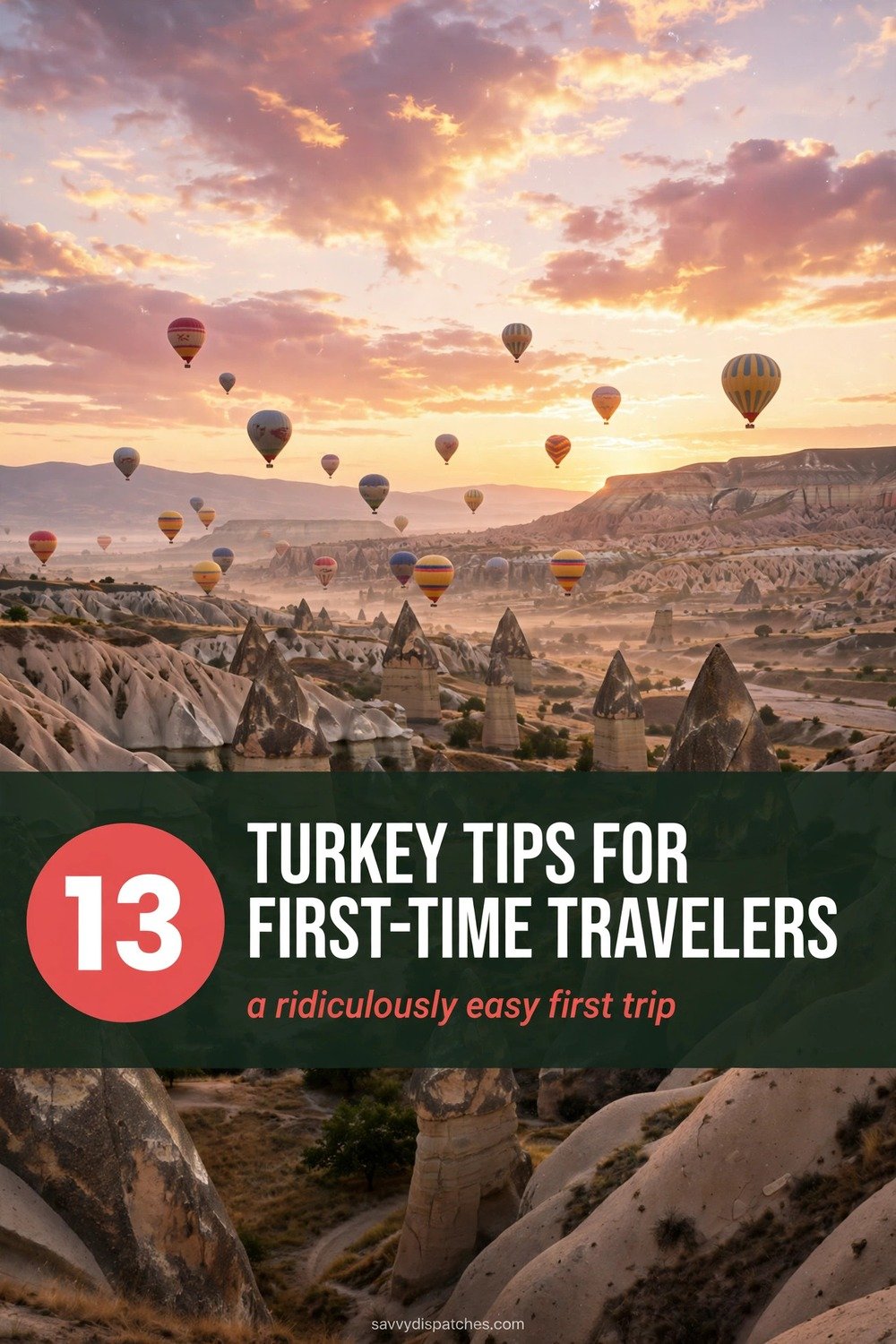
Full-bleed 1080x1920px portrait 9:16. A scenic view from a balcony in Cappadocia at sunrise — hot air balloons dot the orange-pink sky above the distinctive fairy chimneys and volcanic rock formations below. Foreground has a weathered stone railing with a small glass of Turkish tea on it, steam rising. Top 30% is naturally soft warm sky with balloons and soft clouds — NOT a blank box. Subject detail anchored in lower 60-70%. Sony A7IV 35mm, golden hour natural light, film grain, NOT AI generated look. Do NOT add text, boxes, or blank areas anywhere in the image.
ADD OVERLAY IN IMAGE EDITOR AFTER GENERATING:
Category pill: “TURKEY TRAVEL” — coral background, white Fredoka caps, pin to top
Headline: “Cappadocia on Any Budget” — More Sugar script, white, cream backing
Accent line: “From $35/night” — Fredoka Bold, coral, white box
Bottom: “savvydispatches.com” — small centered white text
IMAGE DESCRIPTION 2: Sunrise over Cappadocia’s valley of fairy chimneys, seen from a stone balcony. Dozens of hot air balloons in jewel tones float against a peach-and-gold sky. A small curved glass of Turkish tea with a sugar cube sits on the foreground railing, slightly out of focus. The rock formations below stretch into soft morning haze. The scene is quiet — no crowds visible.
6. Eat Where the Locals Line Up
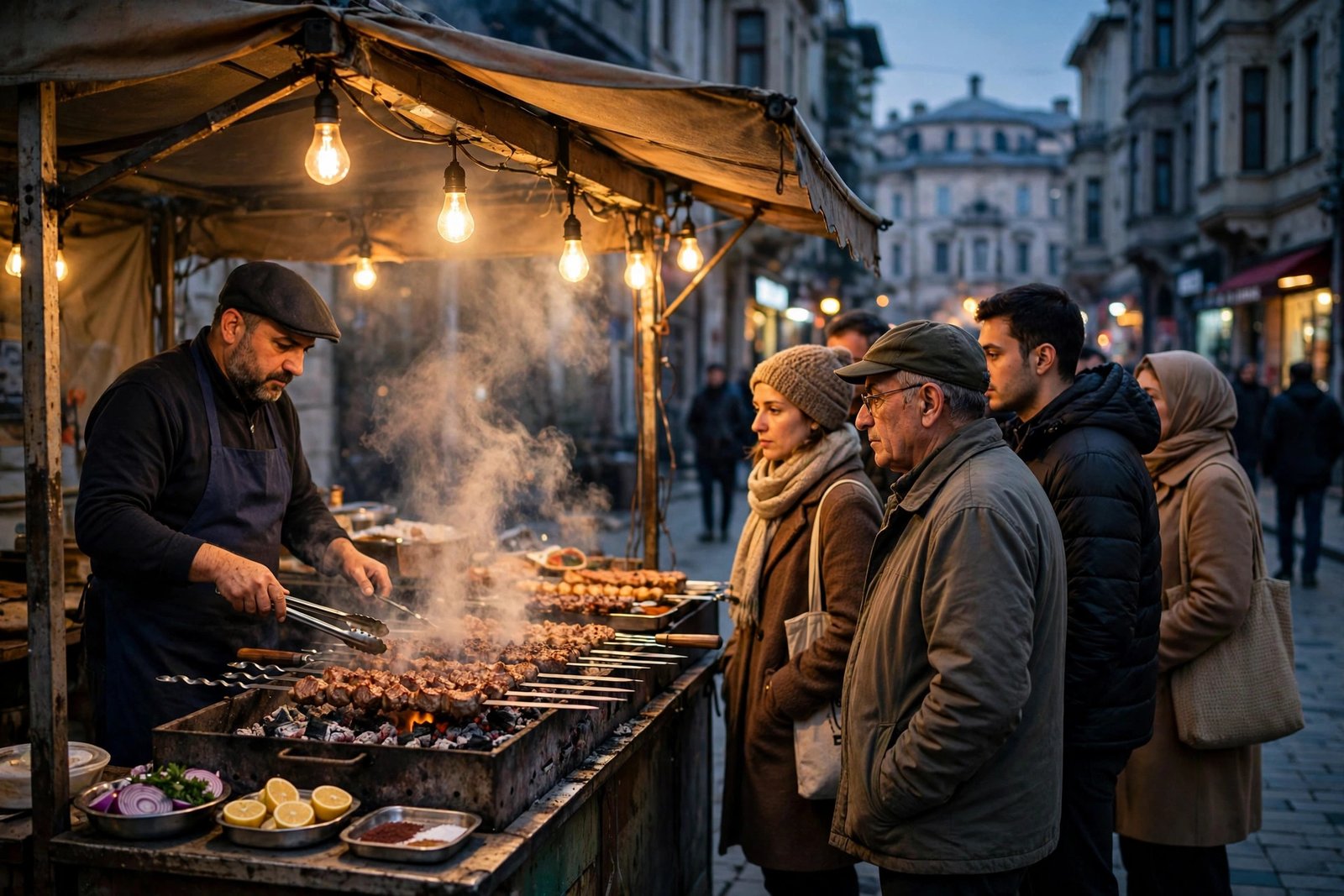
Eat a block away from the big sights and you’ll usually get a better meal for less money. Restaurants right beside tourist stops can charge 2-3x as much. My rule: if a laminated menu has photos and translations in 4 languages, keep walking and see what’s around the corner.
A Turkish breakfast (kahvaltı) at a local spot runs $5-8 and comes with olives, white cheese, tomatoes, cucumber, eggs, bread, and tea. Lunch at a lokanta (casual Turkish diner) costs $4-7 for a full plate. For a quick bite, simit, midye dolma (stuffed mussels), and lahmacun (flatbread) are $1-3.
In Istanbul, try breakfast at Çakmak Kahvaltı in Karaköy. In Cappadocia, look around Göreme’s pedestrian center rather than defaulting to the restaurants by the cave hotels.
Local tip: Midye dolma vendors along the Bosphorus waterfront sell stuffed mussels at about 7-10 TL each — eat 10 for a full lunch. Ask to taste one before you commit to a vendor; freshness varies.
7. Book a Hamam Early in Your Trip
Go to a hamam early in the trip, before you’re tired from days of walking. A Turkish bath isn’t just something to tick off a sightseeing list; people have been going to them for centuries, and the scrub is an experience you’ll remember.
Istanbul’s Çemberlitaş Hamam dates to 1584. A full service (bath, scrub, foam massage) runs about $45-65 depending on the package. The kese mitt scrub removes more dead skin than seems possible. Book online ahead of time if you have a particular day in mind.
In smaller towns, local hamams can cost $10-20. Ask at your guesthouse in Cappadocia where people nearby actually go; there may be one within walking distance.
Local tip: Bring flip-flops. The marble floors get slippery and the ones provided are often too big or too worn.
8. Understand the Haggling Rules
Haggle in bazaars, not everywhere. At the Grand Bazaar, Spice Bazaar, and street markets, it’s part of shopping. At restaurants and established shops, pay the listed price. Don’t try to bargain down your dinner bill.
In a bazaar, you can start at 50-60% of the asking price and go from there. Take your time, and be willing to leave if the price doesn’t work for you. A seller may call you back with another offer; if not, you can always look elsewhere.
You’ll see leather goods, rugs, ceramics, and spices throughout the Grand Bazaar’s over 4,000 shops. Walk around before buying anything. Seeing a few stalls first gives you a much better sense of what things cost.
Local tip: The best carpet deals are in Cappadocia’s local shops in Avanos, not Istanbul’s Grand Bazaar — Avanos is famous for its hand-woven textiles and buyers have more time to browse without pressure.
IMAGE PROMPT 3 (place after section 8):
GENERATE (paste into Gemini/Flow — no text, no blank zones):
Full-bleed 1080x1920px portrait 9:16. Interior of a Turkish bazaar — a woman in casual clothes browses colorful ceramic plates and lanterns hanging from the ceiling, warm golden shoplight illuminating the goods. The rows of stacked ceramics and hanging kilim textiles create a rich visual texture filling the frame. Top 30% of frame has hanging lanterns and textiles creating a natural soft zone. Subject in lower 60%. Sony A7IV 35mm, warm tungsten shoplight, natural shadow detail, NOT AI generated look, NOT stock photo. Do NOT add text, boxes, or blank areas anywhere in the image.
ADD OVERLAY IN IMAGE EDITOR AFTER GENERATING:
Category pill: “TURKEY TRAVEL” — coral background, white Fredoka caps, pin to top
Headline: “Grand Bazaar Shopping Guide” — More Sugar script, white, cream backing
Accent line: “Haggle the Right Way” — Fredoka Bold, coral, white box
Bottom: “savvydispatches.com” — small centered white text
IMAGE DESCRIPTION 3: A woman in a blue linen shirt browses stacks of hand-painted blue-and-white ceramic plates in a Grand Bazaar shop. Dozens of glass lanterns in red, amber, and teal hang from the ceiling above, their light reflecting off the glazed ceramics. Folded kilim rugs in earth tones are stacked floor to ceiling behind her. The shop’s warm tungsten light creates a golden glow across every surface.
9. Pack a Scarf for Mosque Visits
Many mosques in Turkey welcome visitors for free, and they’re worth making time for. Dress rules matter: cover your shoulders and legs to the knee, and take off your shoes at the entrance. Women also need to cover their hair.
Keep a lightweight scarf in your day bag. It takes up almost no room and saves you from turning up at a mosque unprepared. Men wearing shorts may need a wrap for their legs. Mosques often lend them out, though I’d rather bring my own.
Save this for later on Pinterest!
Follow us for more honest budget travel guides: @savydispatches on Pinterest
You can enter the Blue Mosque (Sultanahmet Mosque) for free outside prayer times. Hagia Sophia has an admission fee for non-Muslim visitors to its designated visitor area. Visiting hours can change, so check them before you set off.
Local tip: Arrive at any mosque 15 minutes before the prayer call ends and linger inside as the last tourists leave — you’ll often get 10 quiet minutes alone in the space that most visitors never experience.
10. Get a Local SIM at the Airport
Sort out mobile data before you leave the airport. A Turkish SIM with 15-20GB of data costs roughly $8-15 at the airport and saves you from hunting for café WiFi whenever you need directions or a bus timetable.
Turkcell and Vodafone Turkey both have coverage beyond Istanbul; Turkcell is a good choice for rural Cappadocia. You’ll find official carrier shops in the arrivals hall at IST. Have your passport ready, since you’ll need it to register the SIM.
Ask the shop about the rules for using your phone during your stay, especially if you’re in Turkey for more than 2 weeks. Turkey has IMEI registration rules for foreign phones, and the requirements and fees are worth checking before you commit to anything.
Local tip: Turkcell’s airport kiosks close at midnight — if you arrive on a late flight, buy from a 24-hour shop inside the terminal or find a convenience store in the arrival zone before you exit.
IMAGE PROMPT 4 (place after section 10):
GENERATE (paste into Gemini/Flow — no text, no blank zones):
Full-bleed 1080x1920px portrait 9:16. A woman sits at a small rooftop café in Istanbul with a glass of Turkish tea on the table, her phone in hand, the Bosphorus and distant mosques visible in the blurred background. Late afternoon golden light. Top 30% of frame is naturally soft blurred skyline and sky — NOT a blank box. Subject and table detail anchored lower 60%. Sony A7IV 50mm, natural golden hour light, film grain, NOT AI generated look. Do NOT add text, boxes, or blank areas anywhere in the image.
ADD OVERLAY IN IMAGE EDITOR AFTER GENERATING:
Category pill: “TURKEY TRAVEL” — coral background, white Fredoka caps, pin to top
Headline: “Stay Connected in Turkey” — More Sugar script, white, cream backing
Accent line: “SIM for $8-15” — Fredoka Bold, coral, white box
Bottom: “savvydispatches.com” — small centered white text
IMAGE DESCRIPTION 4: A woman with dark hair sits at a small white iron table on a rooftop in Istanbul. A curved glass of dark Turkish tea sits beside her phone. In the blurred background, the Bosphorus catches the late sun and the silhouettes of two mosques are visible. The scene is calm, slightly hazy, golden.
11. Use Istanbulkart for Public Transit
Get an Istanbulkart if you’re spending time in the city. You can use this rechargeable card on the metro, tram, funicular, ferries, and buses. A single trip costs roughly 7 TL with the card versus 20+ TL if you pay cash.
Buy one at a metro station kiosk for a small deposit fee, then load it with 100-200 TL to start. You can tap the same card for a Bosphorus ferry, the airport metro, and the historic tram along Istiklal Avenue.
The ferries are reason enough to get one. A commuter ferry to Istanbul’s Asian side costs about 10 TL with the Istanbulkart and takes 25 minutes. A taxi can cost 150-300 TL, depending on traffic, and sometimes takes an hour.
Local tip: You can share one Istanbulkart across multiple people — each person taps separately but one card works for the whole group. No need to buy one per traveler.
12. Don’t Skip Cappadocia — Budget It Carefully
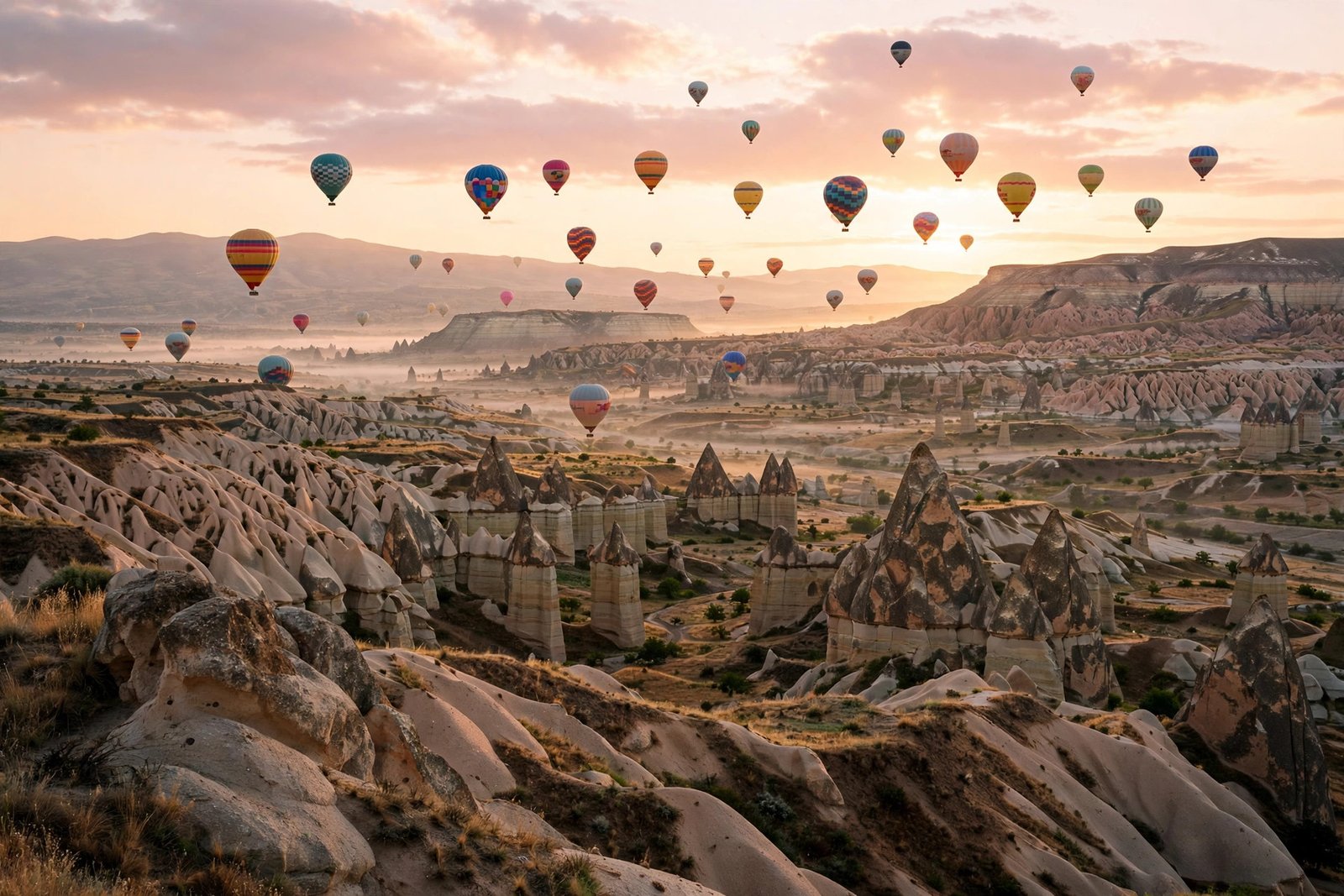
Cappadocia looks just as strange in person as it does in photos. Balloons rise over the valleys at sunrise, cave hotels sit inside the rock, and the trails wind between fairy chimneys. Give yourself time to see it from the ground, not just from a hotel terrace.
It costs more than many other parts of Turkey. Cave hotels with private rooms start at $60-80/night. A hot air balloon ride costs $175-250 per person for a 60-minute sunrise flight. If that’s your big splurge, book weeks ahead for spring or fall. Royal Balloon and Butterfly Balloons are two operators to look into.
If a balloon ride doesn’t fit your budget, watch from the ground. The Göreme Open Air Museum costs $14 to enter, and you can find a spot on the valley rim to watch the balloons at sunrise without paying $200 for a flight.
Local tip: Hike the Rose Valley trail at 5:30am before sunrise — you’ll be alone on the trail with the balloons launching overhead, golden light hitting the volcanic towers. This is better than any official viewpoint.
13. Know the Tipping Norm Before You Sit Down
Tipping in Turkey is appreciated, but it doesn’t work like tipping in the US. You don’t need to add a large percentage to every bill.
Restaurants: 10% is generous. 5% is acceptable. At a local lokanta (casual diner), you can round up to the nearest 50 TL. At tourist-facing rooftop restaurants in Istanbul, expect to leave closer to 10-15%.
Taxis: round up to the nearest whole number. If the meter says 93 TL, give 100 TL. You don’t need to add more.
Hamams: tip the person who washes you 10-20% if you’re happy with the service.
Tour guides: 100-200 TL per person for a half-day tour is generous. Adjust for the size of your group.
Local tip: Keep small denomination lira bills (10s and 20s) in a separate pocket from your main cash — easy access to tip without displaying your full wallet in public.
You Might Also Like
- 11 New York Winter Travel Tips That Make the Cold Completely Worth It
- 13 Reasons Christmas in Chicago Is Worth the Trip (And the Cold)
- 11 Free Things to Do in London Locals Actually Do (2026)
FEATURED IMAGE PROMPT: [1280x720px landscape, no text — blog display only. Wide-angle shot of Istanbul skyline at dusk from the Bosphorus — Blue Mosque and Hagia Sophia silhouettes against orange sky, ferry visible in foreground water.]