The first time I planned a Hyogo Japan trip, I almost skipped the prefecture entirely. Osaka was the plan, Kyoto was the plan, and Hyogo was just the place the train passed through on the way to somewhere else. That was a mistake. Hyogo Japan packs three icons into one small prefecture: a white castle that has stood for 400 years, hot springs that have bubbled for more than a thousand, and the most famous beef on earth. I spent three days here and wished I had given it five. This Hyogo Japan guide covers the castle, the onsen, and the beef, plus the harbour, the night views, and the mountain towns most visitors never reach. Let’s get into it.
- Why Visit Hyogo Japan: One Prefecture, Three Icons
- Best Time to Visit Hyogo Japan
- How to Get to Hyogo Japan From Osaka
- Himeji Castle: Japan’s White Heron Castle
- Arima Onsen: Two Waters, One Old Town
- Kobe Beef: What It Costs and Where to Eat It
- Kobe Harborland and Meriken Park: The Waterfront at Sunset
- Mount Rokko Night View: The Ten Million Dollar View
- Kinosaki Onsen: Seven Baths, One Canal, and Winter Crab
- Takeda Castle Ruins: The Castle in the Sky
- Hyogo Japan Travel Budget: What Three Days Cost
- Hyogo Japan Travel Tips: What I Wish I Knew Before I Went
- Hyogo Japan, Done Right
- You Might Also Like
Here is the short version. Base yourself in Osaka or Kobe. Take the train to Himeji for the castle in the morning. Soak in Arima Onsen in the afternoon. Eat Kobe beef at lunch, when the same steak costs far less than at dinner. Give the prefecture three days if you can. One day gets you the castle and the beef. Three days gets you the onsen towns and the mountain views too. My 10 days in Japan on a budget post covers the money side of a longer Japan trip, and my carry-on packing tips will help you pack light for the trains. Japan runs on trains, and Hyogo is the easiest prefecture in the country to explore by rail.
Why Visit Hyogo Japan: One Prefecture, Three Icons
Hyogo sits in the Kansai region, between Osaka and the Sea of Japan, and it touches two seas. The south faces the Seto Inland Sea, and the north faces the Sea of Japan. Between them sit a port city, a castle town, a mountain onsen, and a coastline that most Japan itineraries skip. I have been to Japan three times, and Hyogo is the prefecture I keep coming back to, because it gives you the postcard Japan and the quiet Japan in the same day.
The three icons are the reason to come. Himeji Castle is Japan’s most beautiful original castle, a UNESCO World Heritage Site since 1993, and one of the few castles that was never destroyed and rebuilt. Arima Onsen is one of Japan’s oldest hot spring towns, with two kinds of mineral water that you will not find anywhere else. Kobe beef is the real thing here, served in the city it is named after, with a certificate and a 10-digit ID number to prove it. Put them together and you get a trip that covers history, food, and rest in three days. My Europe trip planning mistakes post has the same slow-travel logic I use here: fewer stops, more time in each one.
Local tip: Stay in Kobe instead of Osaka, because the city is calmer, the harbour is a ten-minute walk from the station, and Himeji is only 20 minutes away by train.
Best Time to Visit Hyogo Japan
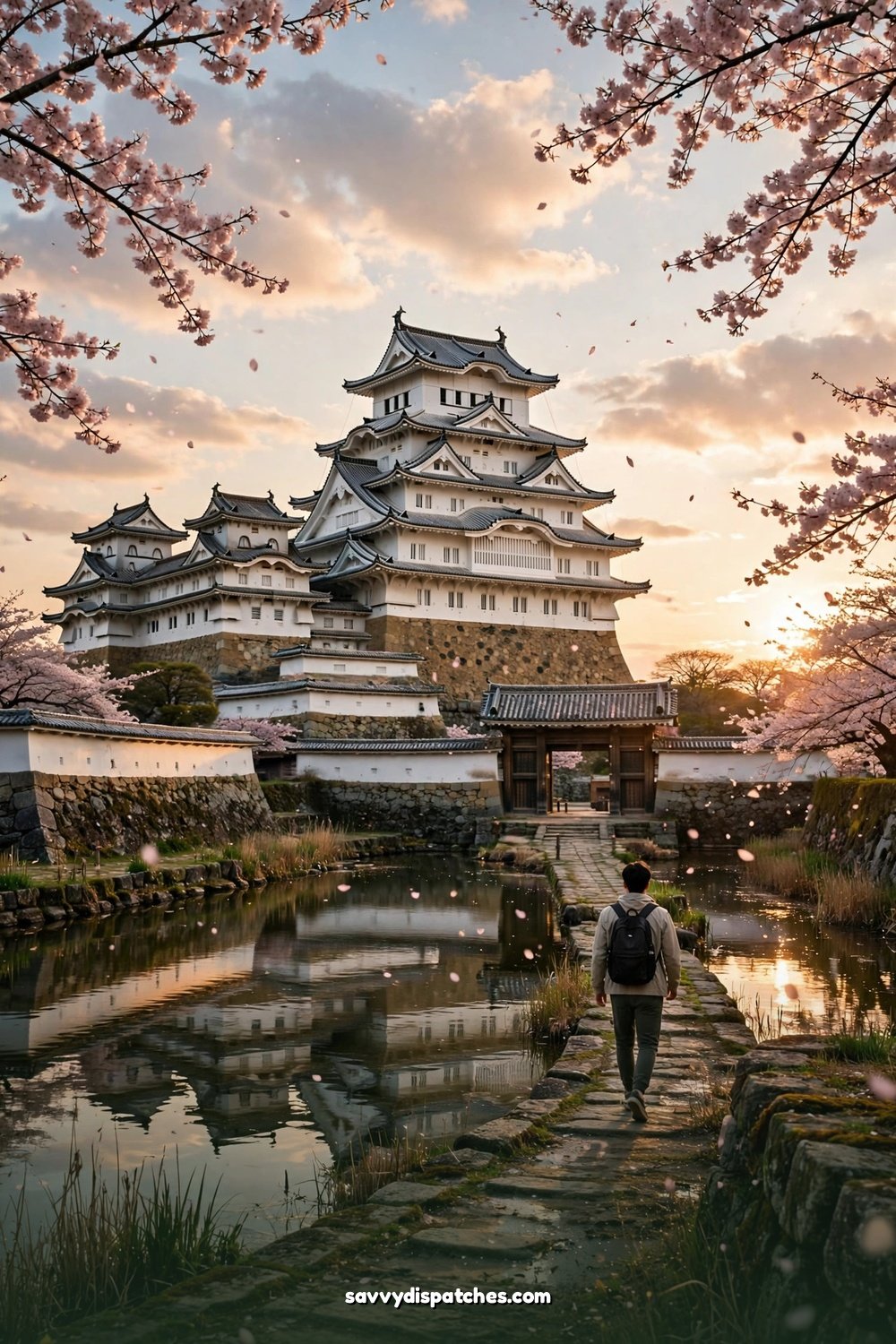
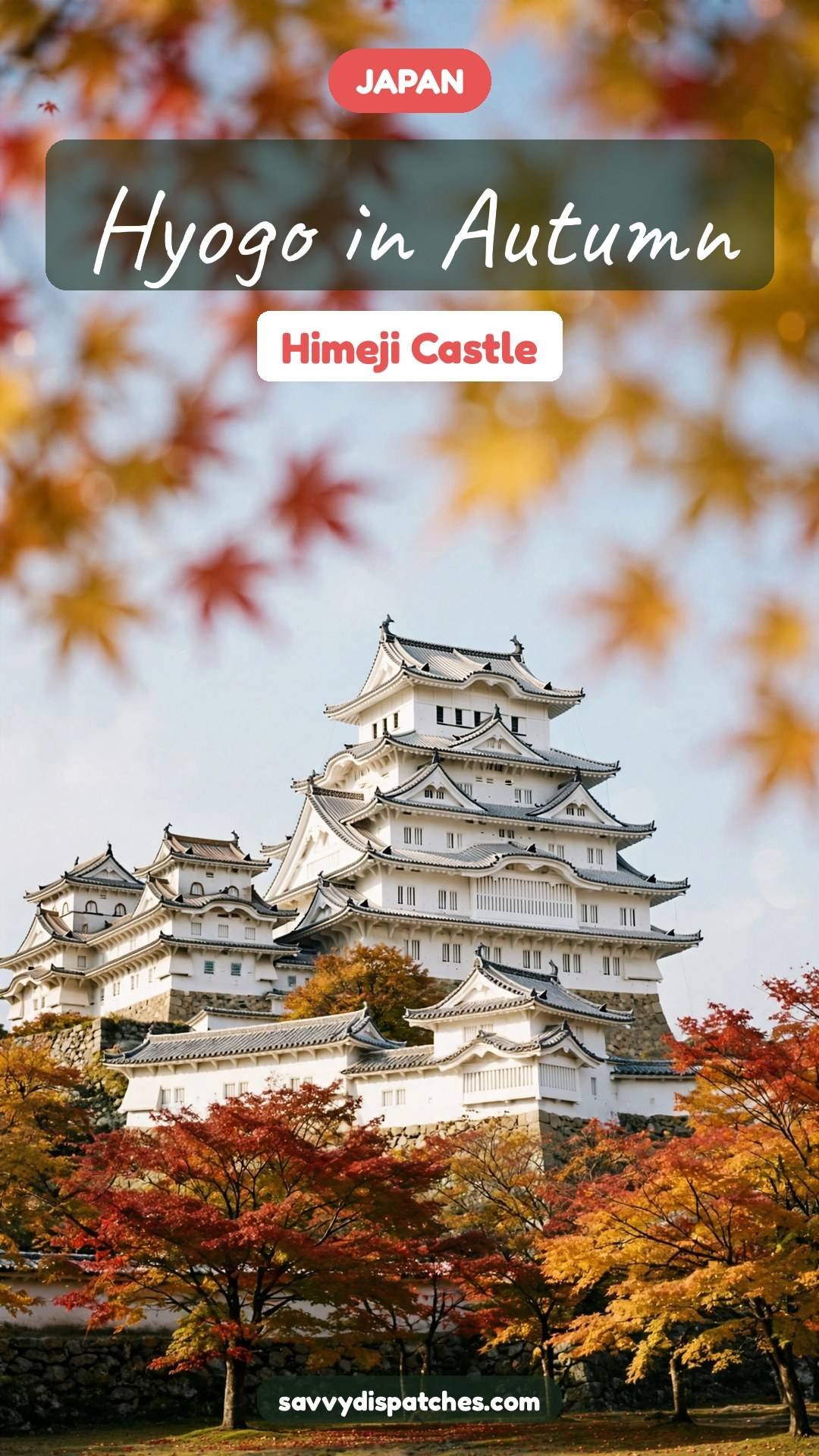
Hyogo works in every season, but each one gives you a different trip. Spring brings cherry blossoms around Himeji Castle, and the white walls against pink blossom is the most photographed scene in the prefecture. Summer is hot and humid, and the castle grounds get crowded. Autumn brings the sea of clouds at Takeda Castle, which happens on cool, clear mornings from September to November, and the maple leaves around Arima Onsen turn red and gold. Winter brings snow crab season in Kinosaki Onsen, which runs from early November to March.
I went in late November and got the best of two seasons. The autumn leaves were still up in Arima, the air was cool enough to walk all day, and the crab season had just started in the north. If you can only pick one month, pick November or April. November gives you leaves and crab. April gives you blossom and mild weather. Avoid Golden Week in late April and early May, when the whole country travels and the trains fill up. My practical hiking outfits for women cover the layers that work for a cool November day in Japan.
Local tip: Go in November, because the maple leaves in Arima and the crab season in Kinosaki overlap for a few weeks and the crowds are thinner than in spring.
How to Get to Hyogo Japan From Osaka
Hyogo is a day trip from Osaka, and the trains make it easy. Kobe is 20 to 25 minutes from Osaka on the JR Special Rapid, and the Hankyu line from Osaka-Umeda costs only 330 yen. Himeji is about one hour from Osaka by JR Special Rapid, with a fare of 1,520 yen, or 30 minutes from Shin-Osaka by Shinkansen. I took the Special Rapid both ways and never once wished I had paid for the faster train. The rapid is comfortable, the views along the coast are good, and the money saved buys lunch.
Arima Onsen sits behind Mount Rokko, about 30 minutes by bus from Kobe’s Sannomiya area, and direct buses run from Osaka too. The Hankyu Kanko Bus runs from Osaka-Umeda to Arima Onsen in 55 minutes for 1,400 yen one way. Kinosaki Onsen in the far north takes longer. The JR Limited Express Kounotori runs direct from Osaka Station in 2 hours and 45 minutes, and the Kinosaki service from Kyoto takes 2 hours and 30 minutes. Plan to stay the night up north. My 10 days in Japan on a budget post covers the rail pass maths if you are riding trains all week.
Local tip: Take the JR Special Rapid to Himeji instead of the Shinkansen, because the rapid takes an hour, costs 1,520 yen, and drops you at the same station.
Himeji Castle: Japan’s White Heron Castle
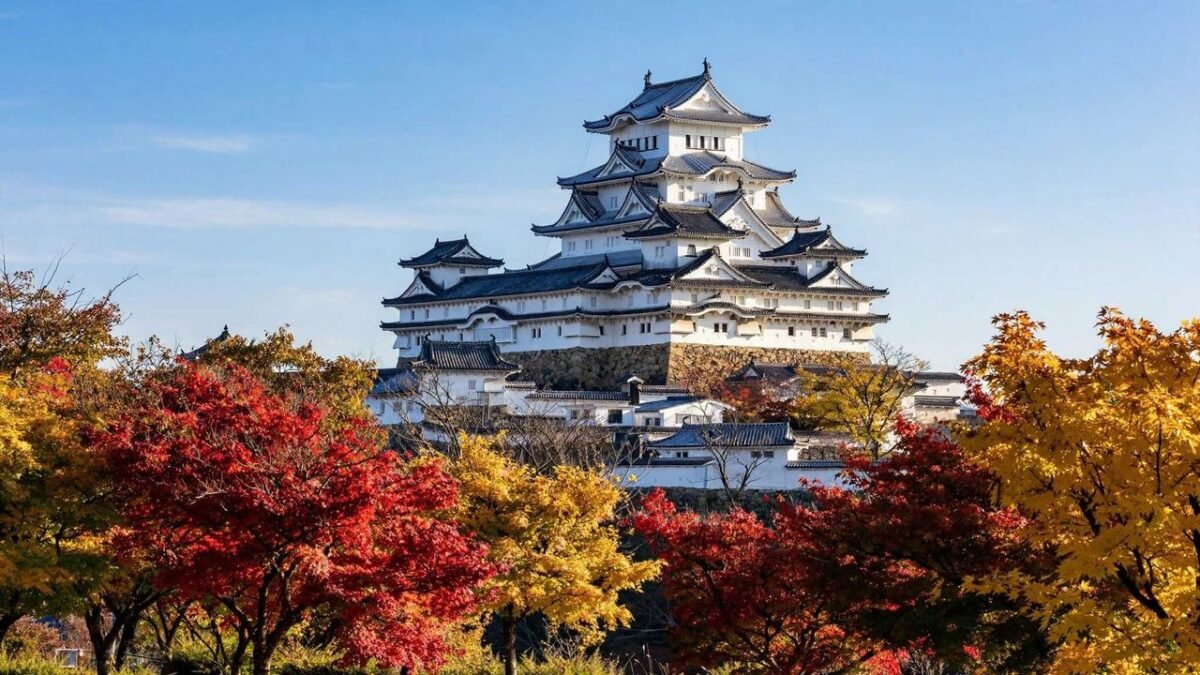
Himeji Castle is the reason most people come to Hyogo, and it earns the trip. Known as the White Heron Castle for its brilliant white walls and swooping rooflines, it was among Japan’s first UNESCO World Heritage Sites in 1993. It is the largest of Japan’s 12 original castles, and it is original: never destroyed in war, never rebuilt from concrete, and the main keep you climb today is the same one built in the early 1600s. I arrived at the 9 am opening and had the keep almost to myself for the first hour. By 11 am the queue at the keep entrance was an hour long.
Admission changed in 2026, and most English guides still show the old price. Since 1 March 2026, general adult admission is 2,500 yen, and the combined ticket with Koko-en Garden is 2,600 yen. Visitors under 18 enter free. The castle opens from 9 am to 5 pm, with last admission at 4 pm, and you need to reach the main keep entrance by 4:10 pm. It closes only on 29 and 30 December. Buy the timed digital ticket online up to 90 days ahead and pick a morning slot. One honest warning: conservation work began in early July 2026, and scaffolding covers parts of the main keep until around July 2027. The castle stays open and the interior is unchanged, but the classic photo is partly blocked. Check the official site before a photo-focused visit.
Local tip: Buy the 2,600 yen castle and Koko-en combo ticket, because the garden costs 400 yen on its own and the combo saves you money for the price of one extra coin.
Arima Onsen: Two Waters, One Old Town
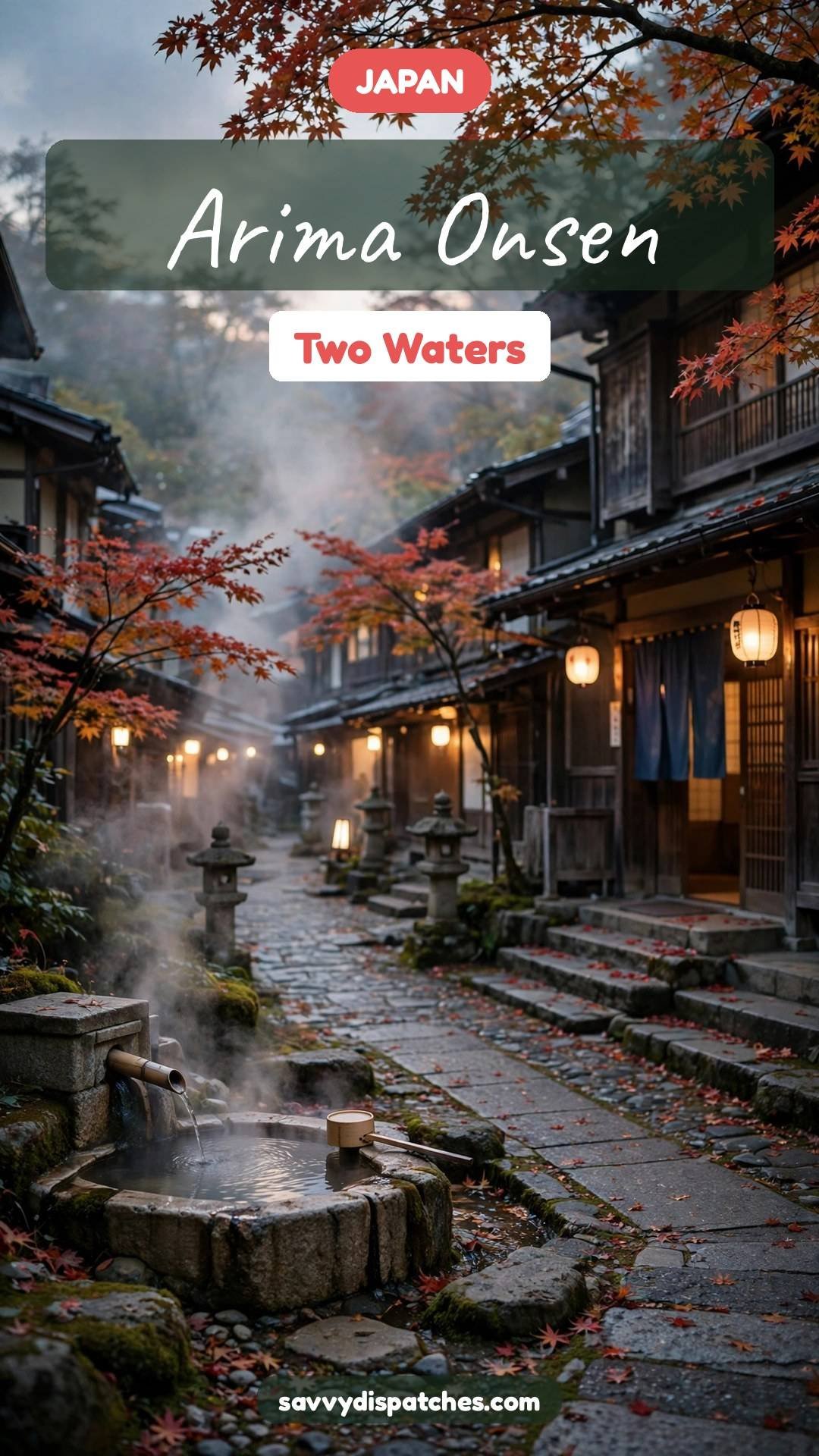
Arima Onsen sits in the mountains behind Kobe, and it has welcomed bathers for well over a thousand years. It is one of Japan’s oldest hot spring resorts, and it is famous for two very different waters. Kinsen, the gold water, is loaded with iron and salt, and it turns reddish-brown when it meets the air. Ginsen, the silver water, is clear, carbonated, and rare. The two public bathhouses give you one water each, and they sit a short walk apart in the old town. I soaked in both on the same afternoon, and the gold water felt warmer and heavier on the skin, while the silver water felt light and fizzy.
Kin no Yu, the gold bath, costs 800 yen for adults, or 650 yen on ordinary weekdays. It opens from 8 am to 10 pm, with last entry at 9:30 pm. Gin no Yu, the silver bath, costs 700 yen, or 550 yen on weekdays, and opens from 9 am to 9 pm. A two-bath ticket costs 1,200 yen, which saves 300 yen at the weekend and nothing on a weekday, when the two single prices add up to exactly 1,200 yen. Each bath closes on different Tuesdays of the month, so one is always open. Kin no Yu closes on the second and fourth Tuesdays. Gin no Yu closes on the first and third. Neither bath includes towels, so bring your own or rent one at the desk. There is a free foot bath outside Kin no Yu, and it is the right place to sit if one of you does not want to bathe.
Local tip: Go on a weekday, because the two baths cost 650 and 550 yen instead of 800 and 700, and the town is quiet enough to hear the water.
Kobe Beef: What It Costs and Where to Eat It
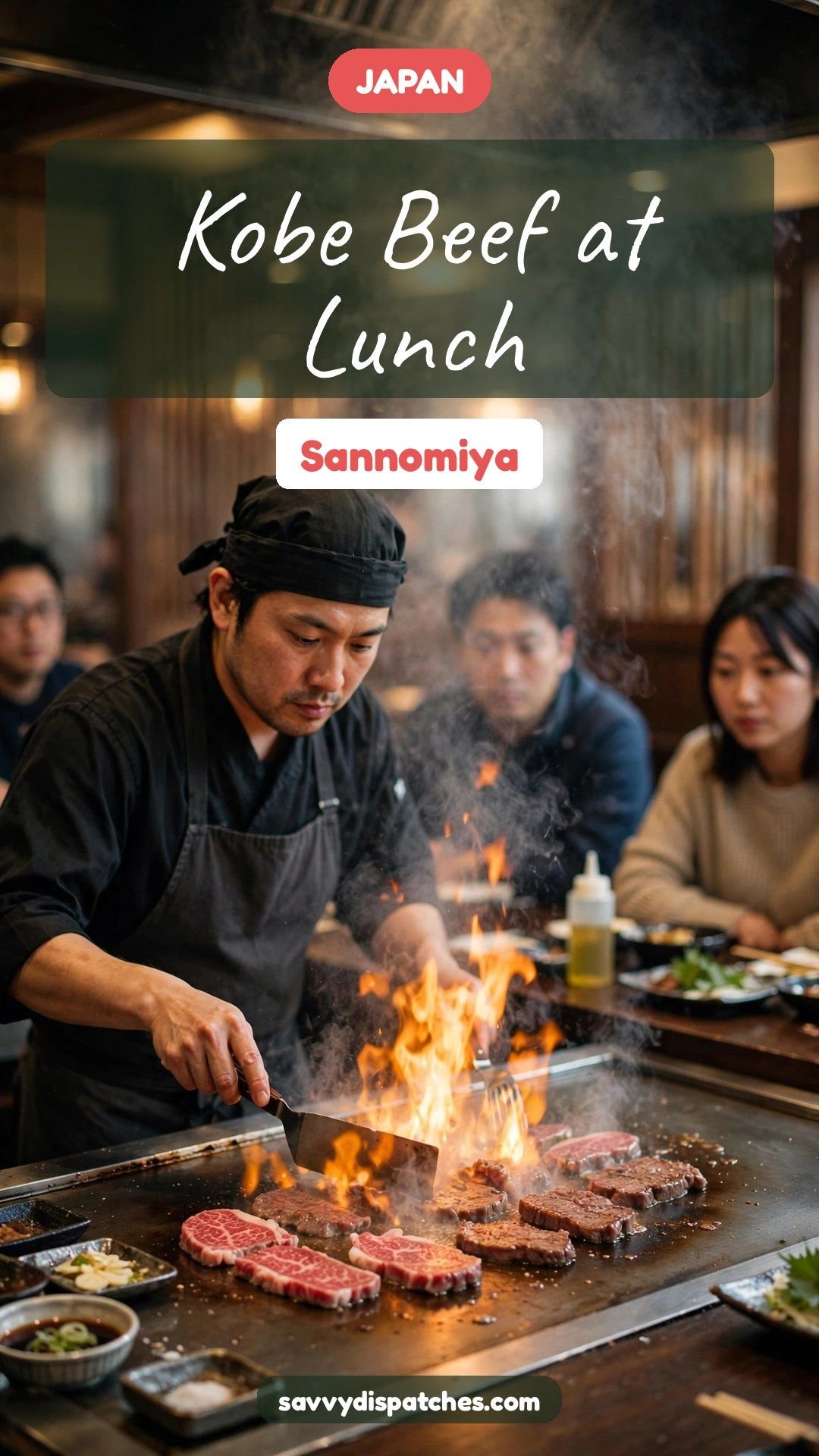
Kobe beef is not a breed and it is not a grade you can buy anywhere. Real Kobe beef comes from Tajima cattle raised in Hyogo, and every piece carries a 10-digit ID number that traces it back to the farm. The restaurants that serve it are on the official designated list, and the good ones display a bronze statue and a certificate at the door. I ate it twice in Kobe. Once at lunch, once at dinner. The lunch was better value by a long way, and the beef was the same.
Lunch is the trick. A Kobe beef lunch set starts at about 2,750 yen for a hamburg set, and a proper teppanyaki steak lunch starts at about 6,600 yen. The classic 120 gram steak lunch runs about 6,880 yen at Steakland or 8,020 yen at Mouriya Honten, the steakhouse that has handled Kobe beef since 1885. A5 sirloin and fillet climb past 20,000 yen, and the chef’s course at Aragawa runs to 45,980 yen. Most of the best restaurants sit within a ten-minute walk of Sannomiya and Motomachi stations. Order the round cut if you want the lowest price, and check the certificate and the ID number before you sit down. Some restaurants sell cheaper non-Kobe wagyu on the same menu, so read the menu carefully.
Local tip: Eat Kobe beef at lunch, because the same 120 gram steak costs far less at midday than at dinner, and the lunch sets include soup, salad, and coffee.
Kobe Harborland and Meriken Park: The Waterfront at Sunset
Kobe is a port city, and the waterfront is where it shows off. Harborland is a shopping and dining district on the bay, and Meriken Park sits right next to it with open lawns, sea views, and the red Kobe Port Tower. I walked here at sunset on my first evening in the city, and the light on the water made the whole harbour glow. The tower, the ferris wheel, and the cruise boats all light up after dark, and the promenade fills with couples and families taking the same slow walk I was taking.
Meriken Park also holds a quieter piece of history. In one corner of the park, you can see relics of the 1995 earthquake, including a damaged quay and tilted lampposts left as they were. It is a small, sober reminder in the middle of a cheerful park, and it is worth a few minutes of your time. The harbour cruises run around the bay in the evening, and the Mosaic shopping complex has seafood restaurants with tables facing the water. This is a free walk, and it is one of the best free walks in Japan. My best budget travel destinations for 2026 list has more ideas for trips that mix one big meal with a lot of free walking.
Local tip: Go to Meriken Park at sunset, because the tower and the harbour lights come on while the sky is still blue, and that is the hour every photo here is taken.
Mount Rokko Night View: The Ten Million Dollar View
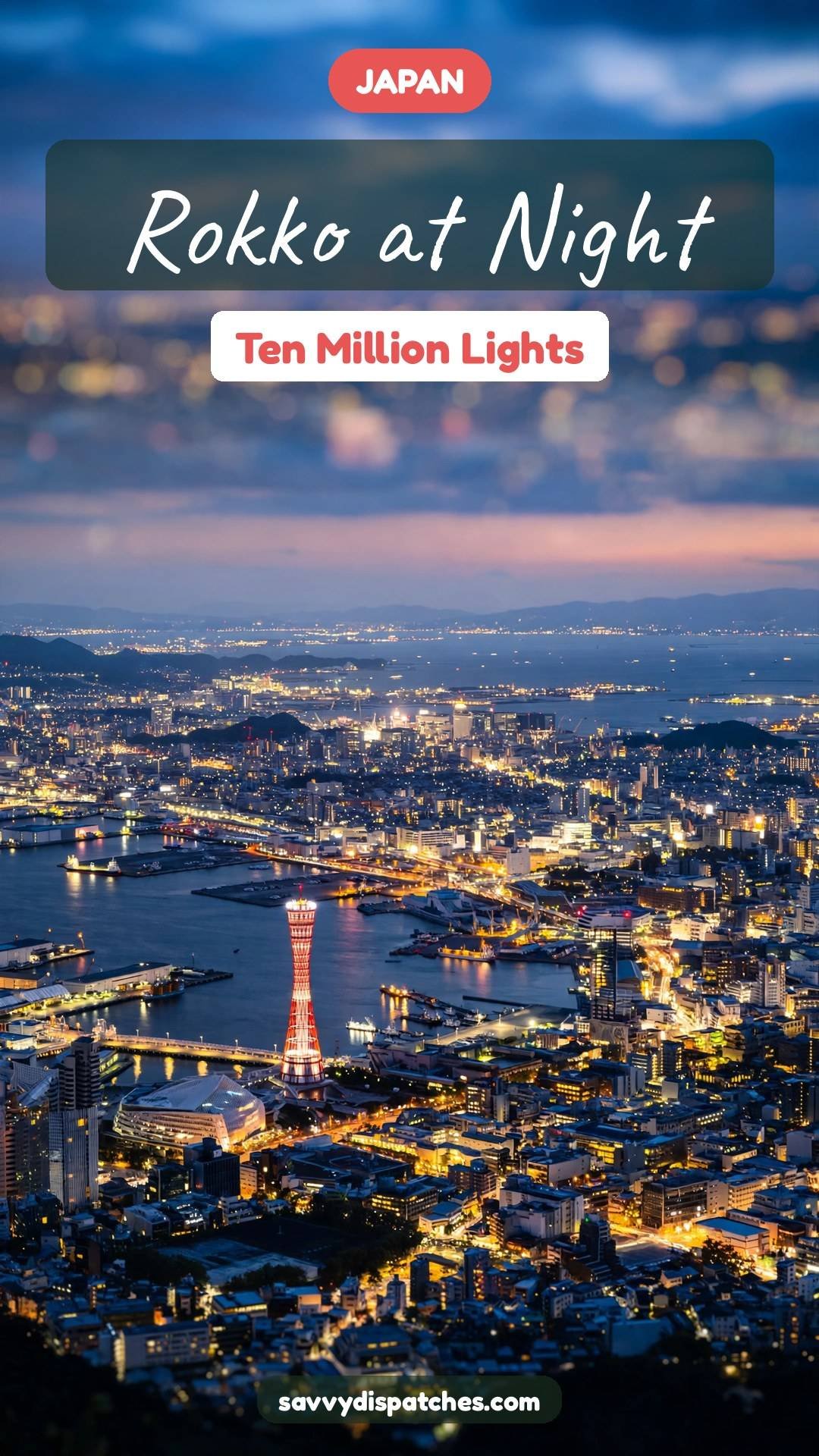
Mount Rokko rises behind Kobe, and the night view from the top is famous across Japan. Locals call it the ten million dollar night view, because the city lights stretch from the harbour all the way to Osaka Bay. I rode the cable car up at dusk and watched the lights come on one street at a time. The view from the summit covers the whole of Kobe, the bay, and on a clear night the lights of Osaka in the distance. It is one of the three great night views of Japan, and it earns the title.
Getting up is part of the fun. The Rokko Cable Car climbs the mountain from the city side, and the Shin-Kobe Ropeway runs from behind Shin-Kobe Station up to the Nunobiki Herb Gardens, Japan’s largest herb garden. You can combine the ropeway, the gardens, and the summit in one afternoon. The mountain also has botanical gardens, hiking trails, and art museums, plus snow play in winter. Go on a clear evening. Cloud kills the view, and the mountain makes its own weather. Check the sky from the harbour before you ride up.
Local tip: Check the sky from the harbour before you ride up, because a cloudy evening on Mount Rokko shows you nothing, and a clear one shows you the whole bay.
Kinosaki Onsen: Seven Baths, One Canal, and Winter Crab
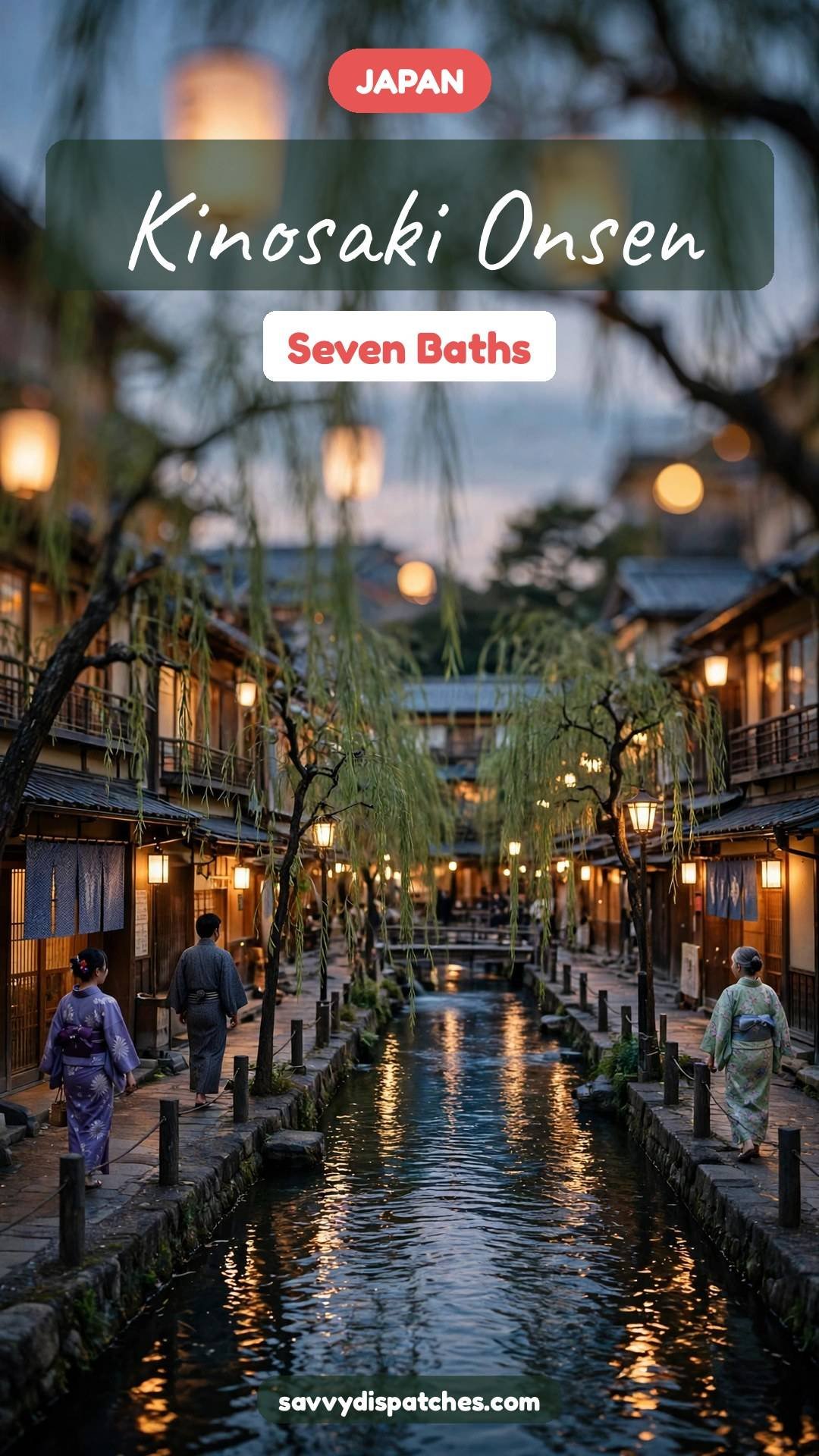
Kinosaki Onsen sits on the Sea of Japan coast in northern Hyogo, about 2 hours and 45 minutes from Osaka by limited express train, and it is the classic Japanese hot spring town. Guests slip into yukata and wooden geta sandals and hop between seven public bathhouses along a willow-lined canal. The town is small and completely walkable. All seven baths sit along a 700-metre canal, and the whole town feels like a film set from a hundred years ago. I stayed overnight at a ryokan, and the inn gave me a Yumepa pass for unlimited access to all seven baths. That pass is the key to the town. Without it, you pay at each bath.
Winter is the season here. Snow crab season, known locally as Matsuba crab, runs from early November to March, and the ryokans serve it boiled, grilled over charcoal, or in a hot pot. The crab dinners are the most expensive part of the trip, and they are worth it once. Behind the baths sits 1,300 years of history, and each bath has its own story. Ko-no-yu is known for blessings of marriage and long life, and Mandala-yu has an open-air bath with a view of the mountain behind it. Stay the night. Kinosaki is a 2-hour-45-minute train ride each way, and a day trip wastes the best part, which is the evening stroll in yukata after dark. A cold night in a yukata needs a warm coat for the walk back, and my cabin trip packing guide covers the layers that work for a cold mountain town like this one.
Local tip: Stay overnight and get the Yumepa pass from your ryokan, because the pass covers all seven baths and the evening stroll in yukata is the whole point of Kinosaki.
Takeda Castle Ruins: The Castle in the Sky
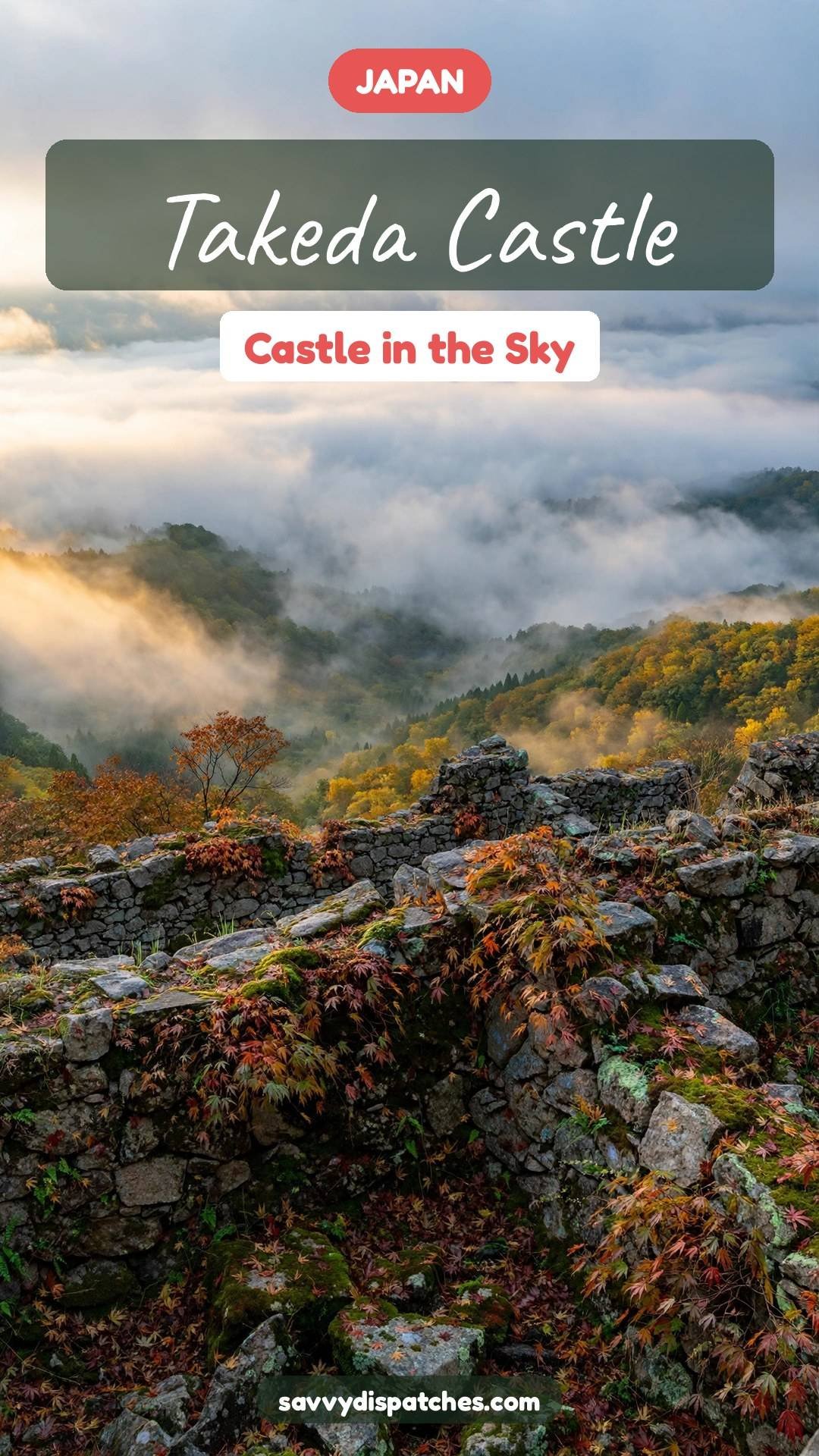
Takeda Castle sits on a 353-metre mountain in Asago, in northern Hyogo, and on misty autumn mornings the stone walls seem to float above a sea of clouds. Only the stone walls remain, but the effect is real. The best chance of seeing it is on a cool, clear morning from September to November, especially after a warm day. For the classic photo, head to the Ritsuunkyo viewpoint on the opposite mountain at dawn, and it means an early start and a climb in the dark. I went up before sunrise with a torch and a thermos, and the fog rolled in exactly as the guides said it might. It is not guaranteed. The clouds are a weather trick, not a show, and some mornings give you nothing but grey.
Even without the clouds, the ruins are worth the climb. The stone walls run along the ridge in long lines, and the view over the valley is wide and green. Autumn is the season for the sea of clouds, and the town below has a small museum and a few cafes for the walk back down. Combine it with Kinosaki on the same northern Hyogo trip, since both sit in the same part of the prefecture. My trekking outfits for women that work on hard trails cover the shoes and layers you will want for a dawn climb like this one.
Local tip: Go on a cool, clear morning after a warm day, because the sea of clouds needs that temperature gap, and a warm night after a hot day is when it forms best.
Hyogo Japan Travel Budget: What Three Days Cost
Here is what three days in Hyogo cost me, staying in Kobe and riding the trains. These are real numbers from my trip, and they will move with the season and the exchange rate. The castle and the beef are the two big spends. Everything else is cheap.
Castle day: Himeji Castle and Koko-en combo ticket 2,600 yen. Train from Osaka to Himeji and back on the JR Special Rapid 3,040 yen. Lunch near the station about 1,200 yen. Total for the day, about 6,840 yen.
Onsen day: Train or bus to Arima Onsen about 1,400 yen each way from Osaka, or far less from Kobe. Both public baths on a weekday 1,200 yen. Lunch in the old town about 1,500 yen. Towel rental a few hundred yen. Total for the day, about 5,500 yen.
Kobe beef day: Lunch set at Steakland 6,880 yen for 120 grams, or 8,020 yen at Mouriya Honten. Harbour walk and Meriken Park free. Mount Rokko cable car return 1,550 yen. Total for the day, about 8,500 yen with the Steakland lunch.
Three-day total: Around 21,000 to 23,000 yen per person, not counting your hotel or the train to Osaka. A ryokan night in Kinosaki with dinner and the bath pass costs far more, and it is worth budgeting separately. My cheap places to travel that still feel luxurious list has more trips built the same way: one big meal, and a lot of free walking. For the full Japan numbers, my 10 days in Japan on a budget post covers the longer trip.
Local tip: Eat the beef at lunch and soak on a weekday, because those two choices alone save you several thousand yen across three days.
Hyogo Japan Travel Tips: What I Wish I Knew Before I Went
Book the castle ticket online. Himeji Castle sells timed digital tickets up to 90 days ahead, and the morning slots go first. Arrive at the 9 am opening and do the keep first, then the garden. The keep admits about 1,000 people an hour, and from mid-morning on busy days the queue can run to an hour. Bring cash for the small baths and the mountain buses, since not every desk takes a card. Learn the onsen rules before you go. Wash before you enter the bath, no swimsuits, and no towels in the water. Tattoos are not banned at the Arima public baths, but the rule is not written down anywhere, so cover up if you can.
Pack light. The trains are easy, the stations have stairs, and a big suitcase is a burden on a day trip to Himeji or Arima. A small bag and good walking shoes will serve you better. And give Kinosaki a full night. The town is too far for a day trip, and the evening in yukata is the memory you will keep. My carry-on packing tips cover the one-bag method I use for every Japan trip now.
Local tip: Arrive at Himeji Castle at the 9 am opening and climb the keep first, because the queue at the keep entrance can run to an hour by late morning.
Hyogo Japan, Done Right
Three days in Hyogo gives you a castle, two kinds of hot spring water, the most famous beef on earth, a harbour at sunset, and a night view that stretches to Osaka Bay. Give it a fourth day and you get a castle in the clouds and a crab dinner in a yukata on a canal. The prefecture is small, the trains are fast, and nothing here is more than three hours from Osaka. I came for the castle and stayed for the onsen. You will probably do the same. Book the castle ticket, eat the beef at lunch, and soak on a weekday. Hyogo does the rest.
Local tip: Book the castle ticket and the beef lunch before you fly, because those are the two things that sell out, and everything else in Hyogo can be decided on the day.
You Might Also Like
If this guide helped, here are three more from my site. Read my 10 days in Japan on a budget for the full Japan money plan. Check my cheapest countries to visit in 2026 if you want a warm trip next. And save my best budget travel destinations for 2026 for your next adventure.