The first time I got caught in a full Scottish downpour with nothing but a cotton hoodie and optimism, I learned the layering lesson fast. Soaked through at mile three, shivering by mile four, cab back to town by mile five. That was the last time I hiked unprepared. If you are searching for what to wear hiking in rain, you are already ahead of where I started.
- 1. The Classic Shell + Fleece Combo
- 2. Thermal Base + Softshell for Mild Rain
- 3. Hardshell + Down Mid-Layer for Cold Fog
- 4. Merino Wool + Rain Jacket for Multi-Day Treks
- 5. Waterproof Joggers + Tech Tee Setup
- 6. Convertible Pants + Windproof Shell
- 7. Trail Dress + Leggings + Rain Shell
- 8. Alpine-Grade System for High-Altitude Fog
- 9. Budget-Friendly Rain Layering Under $150
- 10. The Packable Ultralight Rain Kit
- 11. Fog + Drizzle Day Outfit (No Full Rain Expected)
- 12. Coastal Trail Outfit (Salt, Wind, Spray)
- 13. Solo Female Traveler Rain Kit (Carry-On Friendly)
- Quick Tips Before You Go
- You Might Also Like
This guide covers 13 hiking rain outfits that actually work — tested in real conditions by real women who care about staying warm and dry without looking like they raided a surplus store. From the Faroe Islands fog to a misty morning in the Scottish Highlands, these trekking clothes for women keep you comfortable, moving, and yes, looking put together on the trail.
Every outfit on this list is built around a three-layer principle: moisture-wicking base, insulating mid-layer, and a waterproof shell. Get that formula right and the weather becomes irrelevant. Let’s get into it.
The best hiking rain outfit combines three layers: a moisture-wicking base, an insulating mid-layer (fleece or down), and a waterproof hardshell shell. Women-specific fit is critical — shells with longer back hems and higher waists seal gaps that generic sizing leaves open. For most rain conditions above 40F, a $150-$250 setup handles 80% of hiking scenarios.
1. The Classic Shell + Fleece Combo
What to know before the trail
-
✓
Cotton kills in rain: Cotton retains moisture against your skin and drops your core temperature fast. Zero cotton on hiking days — base layers must be merino wool or synthetic only. -
✓
Open your pit zips on uphills: Body heat in a waterproof shell builds fast on climbs. Condensation from inside the jacket is the main source of getting wet in sustained rain. Pit zips are not optional. -
✓
Test before the trip: Wear your full rain kit for an hour with a garden hose running. Find the wet spots before the mountain does — seam integrity, hood coverage, and cuff gaps are the failure points.
This is the outfit most women reach for first, and there is a reason it has worked for decades. A waterproof hardshell jacket over a mid-weight fleece pullover handles 80% of hiking rain scenarios.
The key is fit. Women’s hiking shells have gotten dramatically better in the last two years — brands like Arc’teryx, Patagonia, and Outdoor Research now design specifically for the female torso, with longer back hems, higher waists, and narrower shoulders. Do not default to a unisex or men’s size. The difference in warmth and waterproofing at the seams is real.
Pair a shell with a 200-weight fleece (Patagonia R2 or the Cotopaxi Teca Fleece are both excellent at under $120) and waterproof hiking pants or softshell trousers. Add waterproof trail runners or low-cut hiking boots. Salomon X Ultra 4 GTX are the women’s trail shoe I recommend most often for rain.
Budget: Shell $150-$250 | Fleece $80-$120 | Pants $70-$120 | Boots $130-$160.
The jacket’s pit zips are not a luxury feature — in steady rain, body heat builds fast from climbing, and overheating in waterproof gear causes condensation from inside the jacket. Open the pit zips on uphills.
2. Thermal Base + Softshell for Mild Rain
When the rain is light and the temperature is hovering around 50-60 degrees Fahrenheit, a full hardshell can feel claustrophobic. Softshell fabric is the answer: it repels light rain and wind while letting your skin breathe far better than a full waterproof membrane.
Start with a moisture-wicking thermal base layer — merino wool if your budget allows, synthetic if not. Icebreaker’s 150 Merino Tech Lite is one of the best base layers for hiking in rain because it stays odor-free across multi-day use and retains warmth even when slightly damp.
Over that, add a softshell jacket. Outdoor Research Ferrosi or Columbia Back Bowl are both under $120. Softshell handles drizzle well. If you feel rain picking up, pack a compressible rain shell in your daypack as backup.
Budget: Merino base $70-$110 | Softshell jacket $90-$130. Total under $250.
IMAGE PROMPT 2:
GENERATE: Full-bleed 1080x1920px portrait 9:16. A woman in teal softshell hiking jacket and dark trail pants walking through misty forest trail. Pine trees with fog rolling in behind her. Subject fills frame from top to bottom. Top 30% is naturally soft from the forest mist and bokeh canopy. Lower frame shows trail details, wet leaves, boots. Sony A7IV 50mm, natural light, subtle film grain, NOT AI look, NOT stock photo. Do NOT add text, boxes, or blank areas.
ADD OVERLAY AFTER GENERATING:
Category pill: “HIKING OUTFITS” — coral #E85555, white Fredoka
Headline: “Mild Rain: Softshell Setup” — More Sugar script, white, cream backing
Accent: “Under $250” — Fredoka Bold, coral, white box
Bottom: “savvydispatches.com” — small white centered text
IMAGE DESCRIPTION 2: A solo female hiker moving confidently along a misty forest trail in a teal softshell hiking jacket and dark trail pants. Fog weaves through tall pine trees behind her. Her boots show trail grit. The image captures the real weather conditions that make a good softshell the smarter choice over a heavy rain shell on mild drizzle days.
In forest conditions, light drizzle hitting tree canopy creates heavier drips than actual rainfall. Keep a rain shell accessible even on light-rain forecast days in wooded terrain.
3. Hardshell + Down Mid-Layer for Cold Fog
Fog is sneakier than rain. It does not hit you all at once — it coats you slowly, lowering your core temperature without the obvious signal of wet clothing. Fog hiking demands more insulation than you think you need when you start.
A packable 700-fill or higher down jacket as your mid-layer is the move here. Patagonia Down Sweater or Arc’teryx Cerium LT Hoody are the best women’s options for this setup. The key is fitting it under your shell, so make sure your shell size accounts for a mid-layer underneath.
For the bottom half, waterproof overpants or a rain skirt over leggings handles cold fog at the legs. If you are hiking above 3,000 feet in fog, add a second thermal layer at the core. Hypothermia risk in fog is often underestimated because you do not feel wet immediately.
This outfit works for: Faroe Islands, Scottish Highlands, Patagonia base camp approaches, morning Dolomites trails before 10am.
Budget: Shell $200-$300 | Down mid-layer $150-$250 | Waterproof pants $80-$120.
Keep your down jacket in a dry bag inside your pack, not strapped outside. Down loses all insulating value when wet, unlike synthetic fill.
4. Merino Wool + Rain Jacket for Multi-Day Treks
If you are covering multiple days on a trail and resupply is not an option, merino wool is the only base material worth packing. It regulates temperature across a 20-degree range, stays odor-free for 3-4 days of active use, and retains warmth when damp in a way no synthetic replicates.
Build the outfit: Icebreaker or Smartwool 200-weight merino base for top and bottom, a 250-weight merino mid-layer for colder descents, and your waterproof hardshell on top. For the legs: waterproof trail pants or merino hiking tights with an overskirt that packs to nothing.
Merino wool’s weakness is price. A quality merino base runs $70-$130 per piece. But on a 5-7 day trail, it replaces the need to carry a second or third base layer. The weight and space savings offset the upfront cost quickly.
IMAGE PROMPT 4:
GENERATE: Full-bleed 1080x1920px portrait 9:16. Woman sitting on a mossy rock in alpine meadow, wearing deep forest green rain jacket and dark hiking pants, eating trail food from a small bag. Mountain ridge partially visible through light fog in background. Subject fills entire frame. Top 30% has natural soft zone from mist and low-contrast sky. Sony A7IV 35mm, overcast natural light, film grain, NOT AI look. No text, boxes, or blank zones anywhere.
ADD OVERLAY AFTER GENERATING:
Category pill: “MULTI-DAY HIKING” — coral #E85555
Headline: “Merino Rain Kit” — More Sugar script, white
Accent: “4 Days. 1 Base Layer.” — Fredoka Bold, coral
Bottom: “savvydispatches.com”
IMAGE DESCRIPTION 4: A hiker takes a rest break on a mossy alpine rock in fog, wearing a forest green rain jacket and dark waterproof pants. She is eating trail food, relaxed. The mountain ridge behind her is partially swallowed by mist. The image shows the practical reality of multi-day wet-weather hiking.
Wash merino in cold water with Nikwax Wool Wash at the end of a multi-day trip. A single cycle restores loft and odor resistance completely, and you can hang it to dry overnight.
5. Waterproof Joggers + Tech Tee Setup
Not every hiking outfit needs to look like expedition gear. For day hikes on established trails in light-to-moderate rain, waterproof joggers paired with a moisture-wicking tech tee and a packable shell give you full coverage with a cleaner, more casual look.
Brands like Vuori, Lululemon, and Columbia make waterproof or DWR-treated joggers designed specifically for women’s proportions. They look good enough for the cafe after the hike and perform well in rain. Pair with a lightweight shell jacket and a wool or synthetic base layer underneath the tee in colder temps.
This setup works best for: day hikes under 8 miles, trail temperatures above 45 degrees Fahrenheit, light to moderate rain. For heavy rain or alpine conditions, upgrade to full waterproof pants.
Budget: Waterproof joggers $80-$120 | Tech tee $40-$70 | Packable shell $90-$150.
Check the DWR rating on any waterproof jogger before buying. Many are water-resistant only at a 300mm hydrostatic head rating or less. You want at least 1,500mm for sustained rain hiking.
6. Convertible Pants + Windproof Shell
Convertible pants sound like a budget compromise but they are genuinely practical for variable weather hikes. You start in pants when the morning fog is thick, zip off by noon when temps climb, and zip back on if rain rolls in by afternoon.
Pair with a windproof shell for conditions where rain is possible but not guaranteed. Windproof fabric blocks the cold that makes drizzle feel dangerous without the trapped body heat of a full waterproof membrane.
Good women’s picks: Patagonia Quandary convertible pants, Columbia Silver Ridge women’s cut, or Prana Halle pants. These feature UPF 50+ for sun exposure days and quick-dry fabric for stream crossings.
Budget: Convertible pants $60-$90 | Windproof shell $80-$130.
IMAGE PROMPT 6:
GENERATE: Full-bleed 1080x1920px portrait 9:16. Close shot of a woman’s legs on a rocky trail, wearing olive convertible hiking pants and trail runners, one leg half-unzipped at the knee. Trail background shows slight mist. Subject fills entire frame. Top 30% has natural soft zone from blurred background and light fog. Sony A7IV 35mm, natural afternoon light, film grain, NOT AI look. No text or blank zones.
ADD OVERLAY AFTER GENERATING:
Category pill: “TRAIL STYLE” — coral #E85555
Headline: “Zip-Off Pants Save the Day” — More Sugar script
Accent: “Works at 45-75 Degrees” — Fredoka Bold, coral
Bottom: “savvydispatches.com”
IMAGE DESCRIPTION 6: A close-up trail shot of a hiker’s legs wearing olive convertible pants, one leg partially unzipped at the knee. Rocky trail surface visible underfoot, light mist in the background. The image captures the practical genius of convertible pants for variable weather days.
Buy convertible pants one size up from your usual fit. The zip-off section is bulkier than it looks in photos, and tight pants at the knee make the conversion awkward mid-hike.
7. Trail Dress + Leggings + Rain Shell
This combination gets dismissed by gear-heads but it is wildly practical and comfortable, especially for women who hike in warm or humid rain conditions. A trail dress vents body heat from the core far better than pants, and when paired with waterproof or moisture-wicking leggings underneath and a shell on top, it handles rain without overheating.
Columbia, prAna, and Patagonia all make trail dresses cut specifically for movement. Look for: built-in shorts, UPF 50+, and a fit that does not ride up when you lift your knees on steep terrain.
Best conditions for this setup: warm rain above 60 degrees Fahrenheit, high humidity coastal trails, lighter terrain hikes. Not ideal for technical scrambles where you need unrestricted leg movement at the thigh.
Budget: Trail dress $60-$100 | Leggings $50-$80 | Shell $90-$150.
In warm humid rain, skip the thermal base entirely and just use the trail dress with your shell. Adding a base layer in humid conditions above 65 degrees creates more sweat than rain would ever cause.
8. Alpine-Grade System for High-Altitude Fog
At elevations above 6,000 feet, fog carries more moisture and temperature drops faster than at sea level. This is where the casual assumption that fog is harmless gets dangerous. High-altitude fog in the Dolomites, Torres del Paine, or Scottish Cairngorms can drop your windchill equivalent by 15-20 degrees Fahrenheit in under an hour.
This outfit is the most complete on the list. Layer 1: synthetic base layer. Layer 2: fleece hooded mid-layer. The Patagonia R1 Air Full-Zip is the best warmth-to-weight ratio for women in this category. Layer 3: Gore-Tex Pro or equivalent hardshell with fully taped seams. Legs: fleece-lined waterproof softshell pants. Head: wool balaclava you can pull up fast. Hands: waterproof liner gloves.
Total system weight packed: under 3.5 pounds for all three layers.
IMAGE PROMPT 8:
GENERATE: Full-bleed 1080x1920px portrait 9:16. Woman in full alpine rain gear — red Gore-Tex hardshell jacket with hood up, dark waterproof pants, trekking poles — standing at ridge edge with low clouds and fog all around her. Mountain silhouette barely visible through cloud. Subject fills entire frame, arms visible gripping trekking poles. Top 30% naturally soft from fog and grey sky. Sony A7IV 50mm, high-altitude grey overcast light, NOT AI look. No text or blank zones.
ADD OVERLAY AFTER GENERATING:
Category pill: “ALPINE HIKING” — coral #E85555
Headline: “High-Altitude Fog Kit” — More Sugar script
Accent: “Rated to 20 Degrees Windchill” — Fredoka Bold, coral
Bottom: “savvydispatches.com”
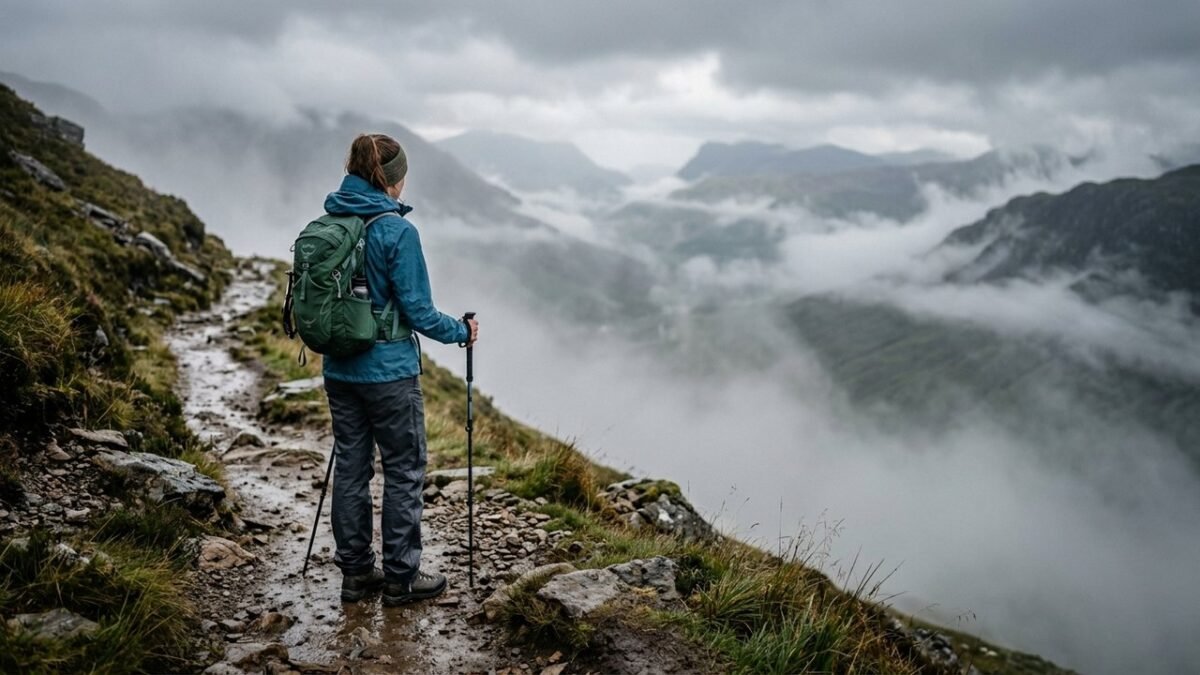
IMAGE DESCRIPTION 8: A woman in full alpine rain gear stands at a fog-covered ridge, trekking poles in hand. Low cloud wraps around her and the mountain behind her is barely a silhouette. The image conveys the reality of high-altitude fog hiking: full protection is not optional.
At altitude, check the cloud base height before you start, not just the forecast. Weather apps show ground-level precipitation but will not tell you if the cloud base sits at exactly your summit elevation.
9. Budget-Friendly Rain Layering Under $150
You do not need $400 of gear to stay dry on a hike. A full functional rain system can be built for under $150 if you know where to shop.
Base layer: Hanes Originals tri-blend long-sleeve ($20 at Target). Dry fit is dry fit regardless of brand. Mid-layer: REI Co-op fleece on clearance or thrift store Patagonia R1 ($25-$40). Shell: REI Co-op Rainier rain jacket for women ($79 on sale, fully seam-taped). Pants: REI Co-op Sahara Convertible pants ($45). Total: $169 list price, under $150 on sale.
This kit will not perform at altitude in serious weather, but for forest day hikes and light-to-moderate rain above 40 degrees, it handles the job well.
Check REI’s Used Gear section on their site. Returned and lightly used Gore-Tex shells and fleece mid-layers sell for 30-50% off, and most returns are nearly new.
10. The Packable Ultralight Rain Kit
If you are travelling carry-on only, every gram counts. A packable rain kit that compresses to the size of a grapefruit is achievable. Here is what that looks like in practice.
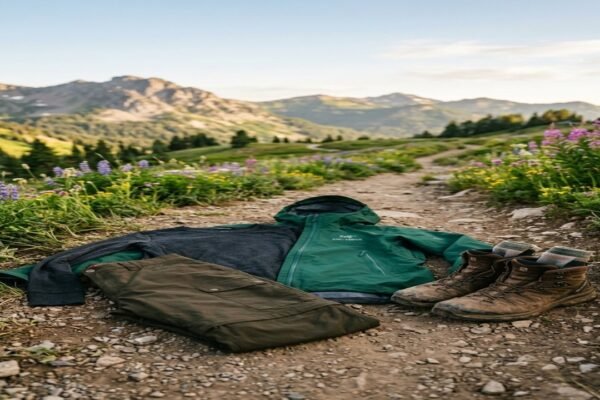
Shell: Patagonia Torrentshell 3L, packs to 8×8 inches for $149. Mid-layer: Uniqlo Ultra Light Down Jacket, packs to 6×4 inches for $79. Base: one synthetic long-sleeve you wear on travel day. Pants: lightweight DWR-coated trail pants. Total packed size: barely larger than a hardcover book.
This combination covers most hiking rain scenarios in temperate climates — Scotland, Iceland, Ireland, Northern Europe — without adding significant bag weight.
IMAGE PROMPT 10:
GENERATE: Full-bleed 1080x1920px portrait 9:16. Flat lay shot on wooden floor showing a packable rain jacket stuffed into its own pocket-pouch, a small down puffer compressed into a pouch, and a pair of lightweight trail pants folded flat beside them. Items arranged neatly. Warm overhead natural light, Sony A7IV 35mm, subtle grain. Top 30% has natural light falloff — NOT a blank box. NOT stock photo look. No text or blank zones.
ADD OVERLAY AFTER GENERATING:
Category pill: “PACKING TIPS” — coral #E85555
Headline: “Carry-On Rain Kit” — More Sugar script
Accent: “Fits in 1 Gallon Bag” — Fredoka Bold, coral
Bottom: “savvydispatches.com”
IMAGE DESCRIPTION 10: A flat lay of a complete packable hiking rain kit on a clean wood surface: a shell jacket compressed into its own stuff sack, a down puffer in its pouch, and lightweight trail pants folded flat. The entire kit shown in real scale — about the size of a small pillow.
Save this for later on Pinterest!
Follow us for more honest budget travel guides: @savydispatches on Pinterest
Roll your Uniqlo Ultra Light Down before stuffing it. Folding leaves hard creases that reduce loft over time. A tight roll preserves the fill clusters and packs smaller.
11. Fog + Drizzle Day Outfit (No Full Rain Expected)
Not every grey day needs full rain armor. Fog without rain means you need moisture resistance and warmth, not full waterproofing. This is the outfit for those mild misty mornings that look dramatic in photos but are totally manageable in a lighter kit.
Outfit: Thermal or merino long-sleeve base layer plus a DWR-treated fleece pullover over it, plus quick-dry trail pants. Add a light buff around your neck for moisture at the collar.
A good DWR-treated fleece repels fog drips and light mist without the stiffness of a full waterproof shell. You will move more freely and breathe easier. If actual rain starts, you pull your shell from the daypack.
Good boots for fog: Salomon Speedcross GTX for technical terrain, Hoka Speedgoat 5 GTX for softer trails. Both handle fog and light rain with no special care.
Fog is heaviest in the early morning and burns off by mid-morning in most mountain regions. Start later at 9-10am and you often skip the wet altogether without changing your route.
12. Coastal Trail Outfit (Salt, Wind, Spray)
Coastal trails are their own weather category. Rain is one thing, but ocean spray combined with 30-40mph wind creates conditions that defeat normal hiking rain gear in two ways: salt corrodes DWR coatings faster, and constant wind makes you colder than the temperature reading suggests.
The coastal rain kit: fully seam-taped Gore-Tex shell (budget equivalents fail in sustained spray). Under it: merino wool base layer, since salt does not damage merino the way it damages synthetics. Waterproof hiking boots rated to at least one foot of water submersion. A wool buff or balaclava for your face.
Best coastal trails for testing this kit: Pembrokeshire Coast Path in Wales, South West Coast Path in Cornwall, Cinque Terre in shoulder season, and the Faroe Islands sea cliff trails.
IMAGE PROMPT 12:
GENERATE: Full-bleed 1080x1920px portrait 9:16. Woman in yellow waterproof rain shell and dark waterproof pants walking along a dramatic coastal cliff trail, ocean waves crashing below and to the right. Hood up. Green cliffs and grey sea in background. Subject fills entire frame. Ocean spray faintly visible in air. Top 30% naturally soft from overcast sky and sea mist. Sony A7IV 50mm, overcast coastal light, NOT AI look. No text or blank zones.
ADD OVERLAY AFTER GENERATING:
Category pill: “COASTAL TRAILS” — coral #E85555
Headline: “Ocean Trail Rain Kit” — More Sugar script
Accent: “Built for Salt + Wind” — Fredoka Bold, coral
Bottom: “savvydispatches.com”
IMAGE DESCRIPTION 12: A solo female hiker in a bright yellow rain shell and dark waterproof pants walks along a dramatic coastal cliff trail with crashing waves below. Her hood is up, and the grey sea and green cliff edges dominate the background. Ocean spray is faintly visible in the air. The image shows the conditions that demand fully seam-taped waterproofing.
After coastal hiking, rinse your shell with fresh water before storing. Salt residue degrades DWR coatings in under three uses if left on the fabric.
13. Solo Female Traveler Rain Kit (Carry-On Friendly)
This one is for you if you are planning a hiking-focused trip to a rainy destination and need a complete functional rain kit that fits in a 40L carry-on alongside everything else.
Here is the exact list I pack for two-week hiking trips in wet climates, carry-on only:
- 1 Gore-Tex or seam-taped rain shell (wear on the plane)
- 1 packable down mid-layer (compressed to 7×4 inches)
- 2 merino wool base layer tops
- 1 merino long-sleeve base
- 1 pair waterproof trail pants
- 1 pair quick-dry trail pants or leggings
- 1 pair waterproof hiking boots (wear on the plane)
- 1 pair trail runners
- Wool buff, wool beanie, waterproof liner gloves
Total compressed clothing weight: 4.2 pounds. Complete 7-day-plus rain kit covering light drizzle to sustained Highland downpours.
Budget for full kit: $400-$600 buying mid-range gear. $200-$300 using REI sales and Uniqlo for base layers.
Pack your two heaviest items — boots and shell — on your body for the flight. Airline weight limits do not apply to what you are wearing, and those two items alone add 3-4 pounds to your bag if packed inside.
Quick Tips Before You Go
- Layer count matters more than brand names. Three cheap layers beat one expensive layer in rain.
- Cotton kills in rain. It retains moisture against your skin and drops your core temp fast. Zero cotton on hiking days.
- Your hands and head lose heat first. A waterproof liner glove and a wool beanie weigh almost nothing and extend your comfortable hiking range by hours.
- DWR coatings need recharging. If water no longer beads on your shell, wash it with Nikwax Tech Wash and tumble dry on low for 20 minutes. The heat reactivates the coating.
- Gear test before your trip. Wear your full rain kit for an hour in your yard with a garden hose running. Find the wet spots before the mountain does.
You Might Also Like
- Is the Faroe Islands Expensive? A Realistic Daily Budget for Solo Travelers
- 11 Affordable European Destinations for Solo Female Travelers
- 13 Cheapest Countries to Visit in 2026 (Real Daily Budgets)