
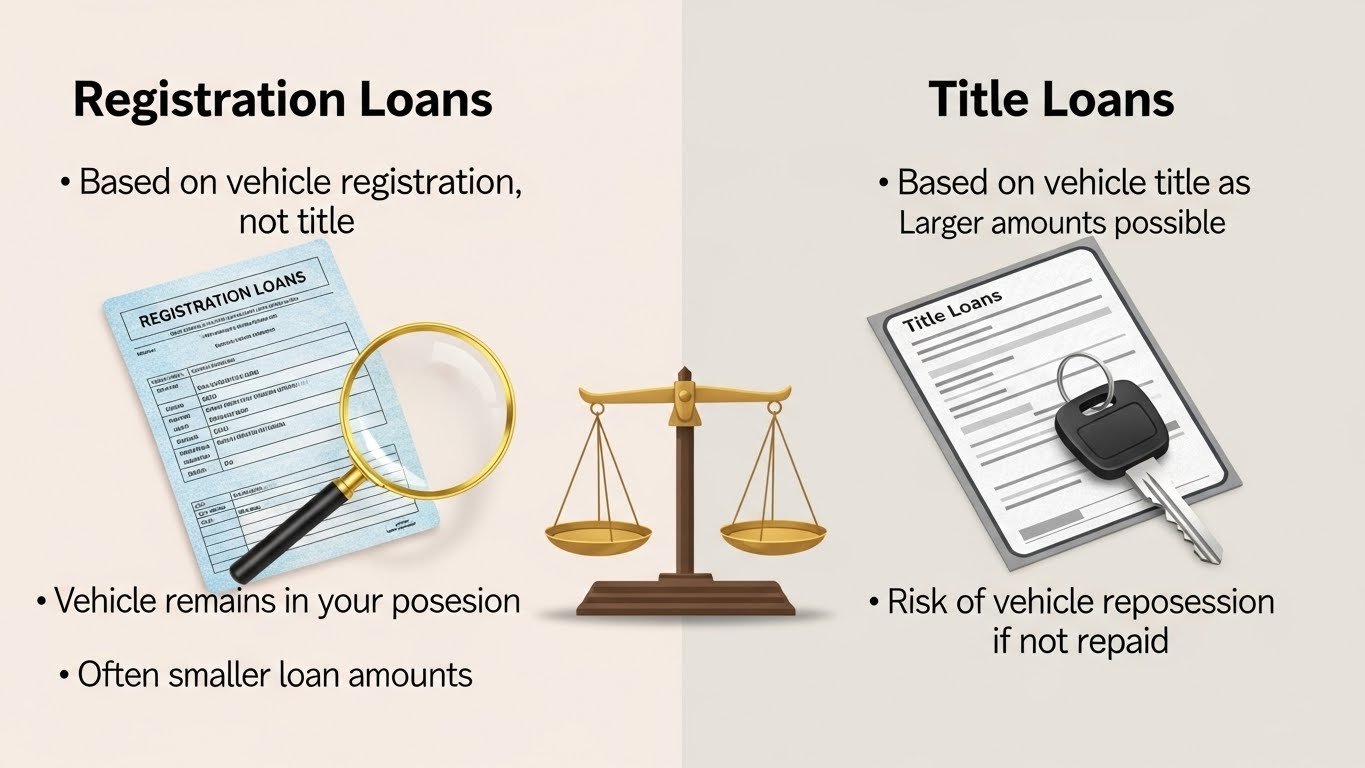
During emergencies, borrowers use secured financing solutions that use existing assets. For vehicle owners, this means using either the vehicle title or the registration. These two documents serve different legal and financial functions. The difference becomes more relevant especially when comparing title loans and registration loans, because they can directly affect requirements, risks and qualification criteria.
What Is a Vehicle Title?
A Vehicle title is the official document that proves you own your vehicle. It identifies the owner of record and lists any lien holders who have a financial claim on the car. If you purchased your vehicle outright, your name appears as the owner. If you financed the purchase, the lender will be listed as the lien holder until you finally pay it off.
A title with an active lien does not represent full ownership, which becomes a deciding factor for certain loan products. Title records are updated during ownership changes or refinancing. When you refinance an auto loan, the lender changes and the title must be amended to reflect the new lien holder.
What Is Vehicle Registration?
Vehicle registration gives the state a heads-up that a vehicle has been officially recorded and is good to be on public roads. Registration focuses on compliance rather than ownership. It basically says the vehicle owners have paid their dues in terms of taxes and fees, their insurance meets the state’s minimum requirements and if the vehicle has passed any mandated inspections.
While registration rules vary from one state to another, the general process looks like this –
- You pay for registration and road-use fees
- Proof of valid insurance cover
- If your state requires it, you’ll have to get a safety or emissions inspection done
- Documentation linking the vehicle to a licensed driver
Once registered, the vehicle is issued a license plate and registration credentials. A car can get registered by someone who doesn’t actually own the title, like a car leasee or someone making payments on an auto loan.
Registration Loans
Vehicle registration loans are at the moment only available in Arizona. Instead of requiring a lien-free title, these loans allow borrowers to use their vehicle registration as collateral. The main thing is that the registration has to be in your name. It’s even possible to get approved even if you’re still making payments on the vehicle. The loan amount is tied to your income and how much equity is available in the vehicle, considering how much the vehicle is worth right now versus how much you still owe on the loan.
When a registration loan is the better fit
Registration loans appeal to people who are driving a vehicle and still making payments on it. One of the good things about this is that it can be a quick process. You don’t have to wait for a vehicle inspection, which can really speed things up if you’re up against a tight deadline.
Depending on your vehicle’s available equity and your income, vehicle registration loans can range from as little as $50 up to $4,000. Because of their adaptability, they can be used to cover anything from a minor financial deficit to a larger one without requiring complete vehicle ownership.
Title Loans
Title loans are short-term financing services that use the actual title to the vehicle as a guarantee. That means the car itself has to be owned by the borrower outright, clear of any liens, any outstanding loans, judgments or other claims against it.
When a title loan makes sense
In most cases, borrowers may be approved for roughly a quarter to half of the car’s assessed value. Since the market value and physical condition of the vehicle play a major role in the approval process, newer, well-maintained cars typically support bigger loan limits, sometimes reaching five figures.
Conclusion
Issues like unpaid tickets, toll violations or lapsed registration can delay a refinance or complicate loan approval, even when everything else checks out. That’s why it pays to review both documents before making a financial move when time is a factor. And if refinancing isn’t an option right now, borrowers in Arizona still have access to registration-based loans that work even when a car loan is active.