
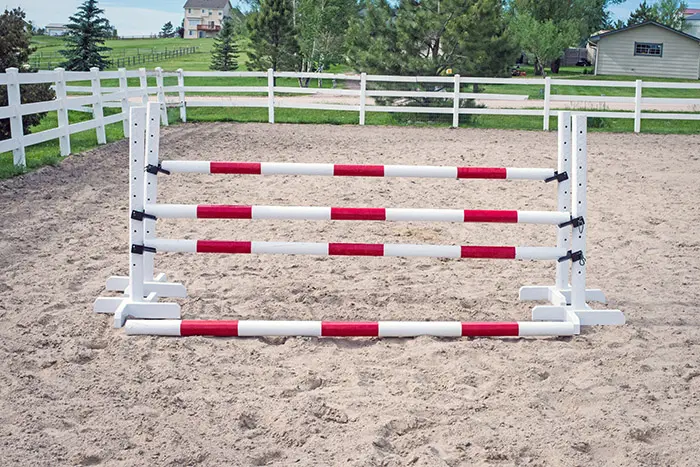
Incorporating horse jumps into equestrian training routines not only adds excitement but also serves as a crucial element for developing both horse and rider skills. Jumping is more than just an exhilarating part of equestrian sport—it forms the foundation for building confidence, improving coordination, enhancing athletic ability, and deepening the bond between rider and horse. Whether you are training for competitive events or simply seeking to enrich your riding prowess, integrating jumps into your routine offers a dynamic pathway to achieving those goals.
Benefits of Horse Jumps
Horse jumps are integral in training routines due to their multifaceted benefits. First, jumps challenge the horse physically, enhancing cardiovascular endurance, muscle strength, and flexibility. This improves the horse’s athletic capabilities and aids in preventing injuries by keeping the muscles and joints well-conditioned. Additionally, jumping exercises sharpen the horse’s mental acuity by encouraging focus and responsiveness. This cognitive stimulation improves a horse’s problem-solving abilities and adaptability during competitions.
Jumps are instrumental in developing core strength, balance, and posture for riders. Navigating a horse over various obstacles requires physical and mental synchronicity, cultivating greater unity and understanding between the rider and horse. Moreover, jumping provides an engaging way to practice steering, pacing, and precision, enhancing overall riding skills and confidence. These accumulated skills dramatically improve performance, regardless of whether the rider is a novice or a seasoned competitor.
Types of Jumps and Their Roles
Incorporating various types of horse jumps into your routine can offer targeted benefits and cater to different training objectives. Here we look at some common types:
Vertical Jumps: These consist of poles or planks placed at a single height, requiring the horse to clear them in a vertical trajectory. They are excellent for enhancing jumping technique and sharpening accuracy. Vertical jumps demand precise timing and coordination, making them an invaluable fundamental component of any training routine.
Oxers: Also known as spread fences, oxers comprise two or more vertical elements with space between them. They encourage horses to lengthen their jumping stride, improving their power and flexibility. Integrating oxers into training routines can teach horses about distance judgment, a critical skill during competitive jumping events.
Cross Rails: These poles intersect, forming an “X” shape, and typically serve beginners or warm-up exercises. Cross rails effectively develop initial jumping skills and build confidence in inexperienced horses and riders alike.
Combination Jumps: Combination jumps consist of a series of jumps set in close succession. They demand quick adjustments from both horse and rider, improving agility and decision-making speed. Using combination jumps in training helps simulate competitive conditions, providing a comprehensive test of timing and coordination.
Integrating Jumps into Training Routines
Introducing horse jumps into a training routine involves strategic planning to maximize their impact. Begin assessing the horse and rider’s skill level, selecting appropriate jumps to gradually build their abilities without overwhelming them. Start with lower, simpler jumps and increase the difficulty as proficiency improves, always aligning the complexity of training with the rider and horse’s comfort and preparedness levels.
Structured training sessions should incorporate a blend of different jumps to address various skill areas while maintaining engagement. Diverse exercises prevent monotony and encourage continuous development, ensuring both horse and rider are equipped to handle a variety of scenarios. For instance, sessions might start with cross rails to warm up, progress to vertical jumps for precision drills, and finish with oxers to practice expansive leaps.
Regular feedback and reflection after training runs are pivotal for improvement. Riders should assess which elements were challenging and adjust future sessions to focus on refining those skills. Documenting sessions can also help track progress and ensure that routines evolve alongside gains in the horse and rider’s confidence and capabilities.
Safety Practices for Jump Training
Ensuring a safe environment is paramount when incorporating jumps into equestrian training. Safety begins with appropriate gear for both rider and horse. Protective headgear, such as helmets, should be non-negotiable for the rider, while well-fitted boots and gloves can offer additional grip and stability. For horses, protective boots shield their legs from impact, and a properly fitted saddle enhances comfort, ensuring free movement.
Jumps should always be constructed of suitable materials and checked for stability before each session. Breakaway features are essential, allowing components to detach safely upon impact, reducing the risk of injury. Additionally, choosing the correct surface is crucial—a flat, non-slip arena is ideal for providing the necessary traction.
Overseeing sessions with the guidance of an experienced trainer or instructor can preemptively identify safety risks and provide immediate feedback. They can assist in adjusting techniques and ensuring that both horse and rider maintain correct positions throughout their training. An expert eye can markedly enhance skill development while prioritizing safety.
Conclusion
Incorporating horse jumps into your training routine can catalyze a transformative journey for both horse and rider. The multifaceted benefits of jumps, from physical conditioning to mental acuity, significantly elevate equestrian skills and deepen the partnership between rider and horse. Through thoughtful planning, diverse jump types, and a focus on safety, jump training can be seamlessly integrated into your routine, encouraging continual growth and enjoyment. Whether preparing for the rigors of competition or enhancing personal riding experiences, jumps offer a robust, engaging means to enrich your equestrian journey.