
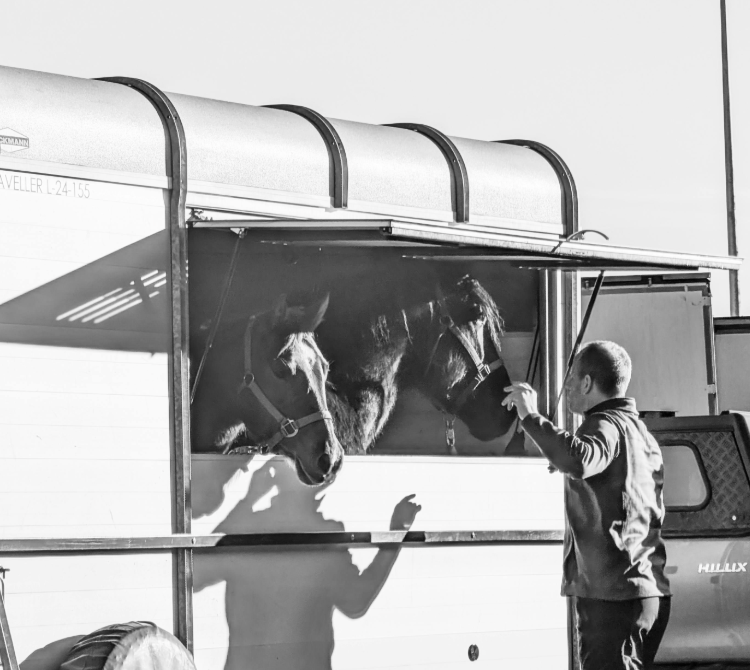
Horses in transit can be multi-million-dollar assets. Generally, they are being moved for racing, breeding, or sales activity, all things that can easily have a six-figure-plus transaction value.
They are also living animals. They need and deserve humane treatment.
Horses can even pose a threat to handlers when they are not moved in safe, sensible ways. It’s fair enough to say that the way a horse is transported can even influence its performance relative to horse racing predictions by TwinSpires.
Let’s take a look at how to safely transport horses.
Understanding the Legal and Regulatory Framework
To begin, there are several legal conditions that any transport concerning animals must be able to meet. One factor is that animals cannot legally be transported for more than twenty-eight consecutive hours. After that period is met, they need to be unloaded and able to rest, with access to food and water for at least five consecutive hours.
There is a bit of an odd exception to this rule. Written shipper requests can extend the maximum to thirty-six hours. Why simply writing out a desire for an extended transport time overrides the ethical and practical considerations that went into the initial threshold is a little harder to parse out. Regardless, the rule is designed with animal welfare in mind.
There is also the Coggins test, sometimes called the negative equine infectious anemia test. This is required for interstate transport as a USDA requirement. It must be completed within six to twelve months, depending on the state. This can be conducted by a veterinarian along with other health certificates that are required for transportation.
State-specific requirements can further complicate the process. Every state has its own sub-qualifications for how to transport horses. Some, for example, require brand inspection, disease testing, and so on. Beyond the highway, there will usually be additional requirements set by racing commissions before recently moved horses can interact with residential populations. One of these factors is a quarantine period in which the horse is kept away from other animals for a set amount of time.
While there is lots of regional nuances, and even local rules set by tracks, that can have a big impact on how horses are moved. These considerations are important. They are sometimes a little difficult to meet, and always complicated, but there is enough standardization across the industry to make it at least reasonably comprehensible for transport companies. The goal, whether it’s achieved or not, is always to protect the animal itself as well as the populations it will be mingling with.
Vehicle Requirements
There are several required features designed to keep the driver and the animal safe. These range from sensible things like non-slip rubber matting for the floors, proper drainage to avoid the cooling of excrement, and ventilation so that the animals can breathe without experiencing the direct, intense drafts produced by highway driving.
There’s also first aid specific to the needs of horses, tools for emergency repairs, and so on.
Temperature monitoring also takes on special importance. While it may sound complex, these CDL requirements are common aspects of professional transport.
Pharmaceuticals, consumer electronics, food manufacturers, and so on may have different requirements, but they are still equally rigid.
How to Drive Horses Safely
It’s not enough to simply ensure compliance. Horses also require specific driving conditions to ensure their safety and comfort.
This involves wide turns, moderate highway speeds—no more than sixty miles per hour—caution on grades, and extra spacing between cars. It’s also advised that drivers stop every several hours to check on the horse and ensure that there are no indications of injury or heightened levels of anxiety.
Arrival and Post-Transportation Care
Once the horse arrives at its intended destination, several things must happen before it can integrate with its new stable.
The driver will typically meet with someone from the stable to verify that all of the necessary health screenings have been done and to generally evaluate the health of the animals. The idea is to ensure that the animal is safe and able to integrate without risk into the existing horse population.
The Unique Ethics of Live Transport
Professional drivers know that while the requirements we’ve described above may feel extensive, elaborate, or tedious, they’re not exactly unique. So many different industries have exhausting transportation requirements. They just take on a special kind of importance when the cargo is alive.
All of the things we’ve described above are designed to ensure consistency within the existing legal framework, but they’re also designed with ethics in mind. Horses may be valuable cargo, but they’re also living creatures with the capacity for pain and fear. Transporting them carries a unique sense of responsibility simply not seen in other forms of cargo hauling.