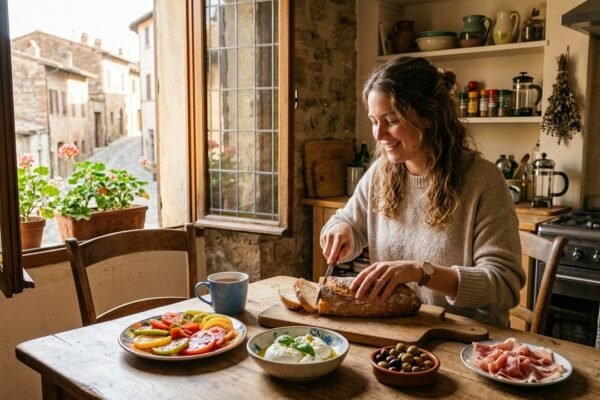
My first solo trip to Europe, I ate at restaurants every day because I thought that was just what you did. I came home $600 over budget and still hungry most of the time. The portion sizes in French brasseries are genuinely not designed for a 5’2″ woman who has been walking 12 miles a day.
- 1. The Open-Face Bread Meal (The Foundation Meal)
- 2. Cheese, Charcuterie, and Market Crackers
- 3. Hard-Boiled Eggs + Potato Salad From the Deli Counter
- 4. Grocery Store Sushi (Better Than You Think)
- 5. Rotisserie Chicken + Roasted Vegetables
- 6. The Pasta Dinner (With Real Ingredients)
- 7. Greek Salad + Feta + Olives (From the Olive Bar)
- 8. Canned Fish + Rye Bread + Pickles
- 9. Soup From the Deli Section + Fresh Bread
- 10. Budget Breakfast: Yogurt + Granola + Fruit
- What to Pack to Make Grocery Meals Work
- What This Costs Compared to Restaurants
- You Might Also Like
The second trip, I figured out the grocery store. And everything changed.
Grocery store meals for travelers in Europe are not sad. They are not the consolation prize. Done right, they are better food, eaten at a better pace, for one-third the restaurant price. This is the guide I wish I had before that first trip: 10 actual meals you can build from European grocery stores, with real costs, what to look for in different countries, and how to eat well on $8-$12 a day total.
Let’s get into it.
The best grocery store meals for travelers in Europe combine no-cook options (cheese, charcuterie, canned fish, olive bar salads) with hostel kitchen meals (pasta, rotisserie chicken). A full day of grocery meals costs $10 to $18 total, compared to $38 to $69 eating at restaurants. Over a 14-day trip, the grocery strategy saves $400 to $700.
1. The Open-Face Bread Meal (The Foundation Meal)
What to pack and what to buy
-
✓
Shop after 6pm: European grocery stores mark down perishable deli items, prepared salads, and cheese by 30 to 50 percent after 6pm. Shop late for the best ingredients at the best price. -
✓
Bring a pocket knife: A small folding knife opens cheese, cuts bread, slices fruit. It is the single most useful item for European grocery meals and weighs almost nothing. -
✓
Buy bread at the bakery counter: Grocery store bakery counters (inside the store) have fresher bread at lower prices than the bagged bread section. Ask for a fresh loaf or roll even if it is not displayed.
This is not a recipe. It is a principle. And it is how most Europeans eat lunch at home.
Take one loaf of dense rye or sourdough bread (common in every grocery store across Northern and Eastern Europe). Add your choice of toppings: soft cheese and cucumber, smoked salmon and capers, ham and mustard, avocado and egg. Slice, stack, eat. Total cost: $3-$5 for a filling lunch.
The bread is the key. European grocery store bread is genuinely good in a way that has no equivalent in American supermarkets. The German vollkornbrot (dense whole grain), the Danish rugbrod, the Finnish rye, the Polish chleb — these are substantive, filling, and stay fresh for 4-5 days in your bag without refrigeration if they are properly dense.
What to buy: pick one bread type that travels well. Avoid the soft white rolls. Buy small packs of 3-4 toppings that mix and match across multiple meals.
Cost per meal: $3-$4 including toppings from a mid-range European supermarket (Kaufland in Germany, Lidl throughout Europe, Carrefour in France and Spain, Mercadona in Spain).
Bónus grocery stores in the Faroe Islands and Iceland have the best bread-to-price ratio in Northern Europe. A dense rye loaf costs $2.50 and feeds two people for two days of open-face meals.
2. Cheese, Charcuterie, and Market Crackers
This is the meal that makes people feel like they are living well on a budget. And they are.
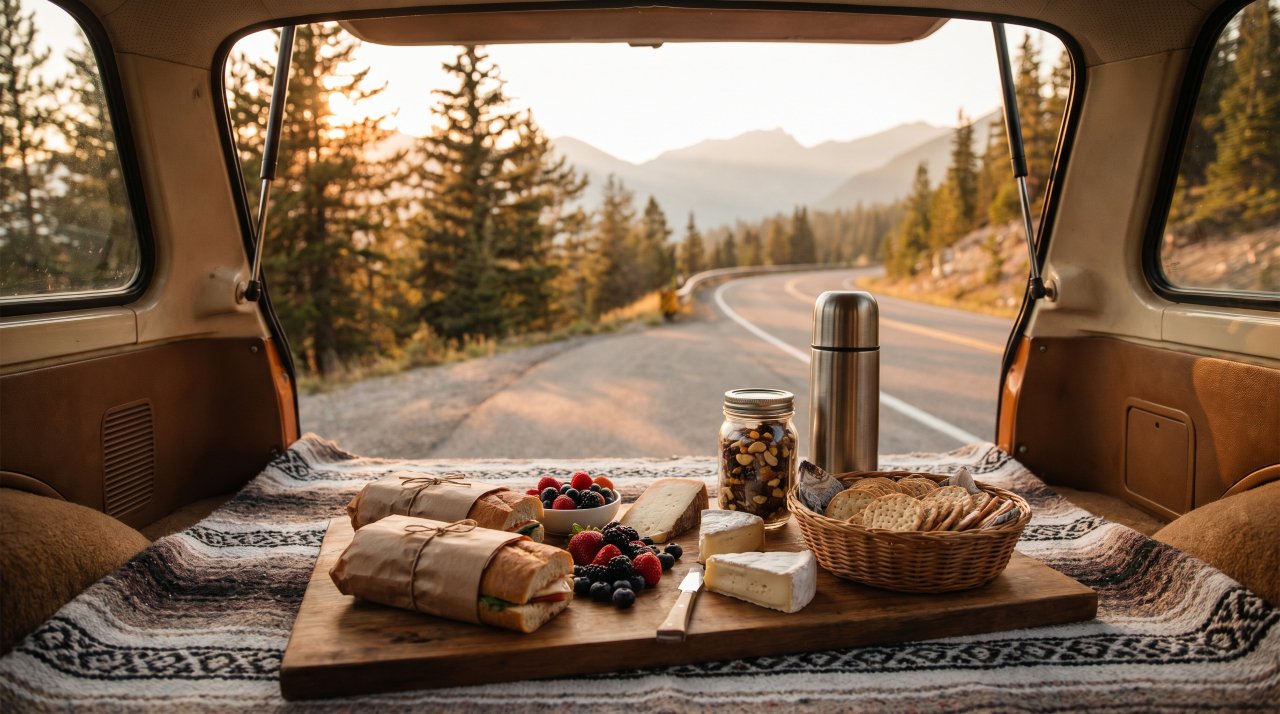
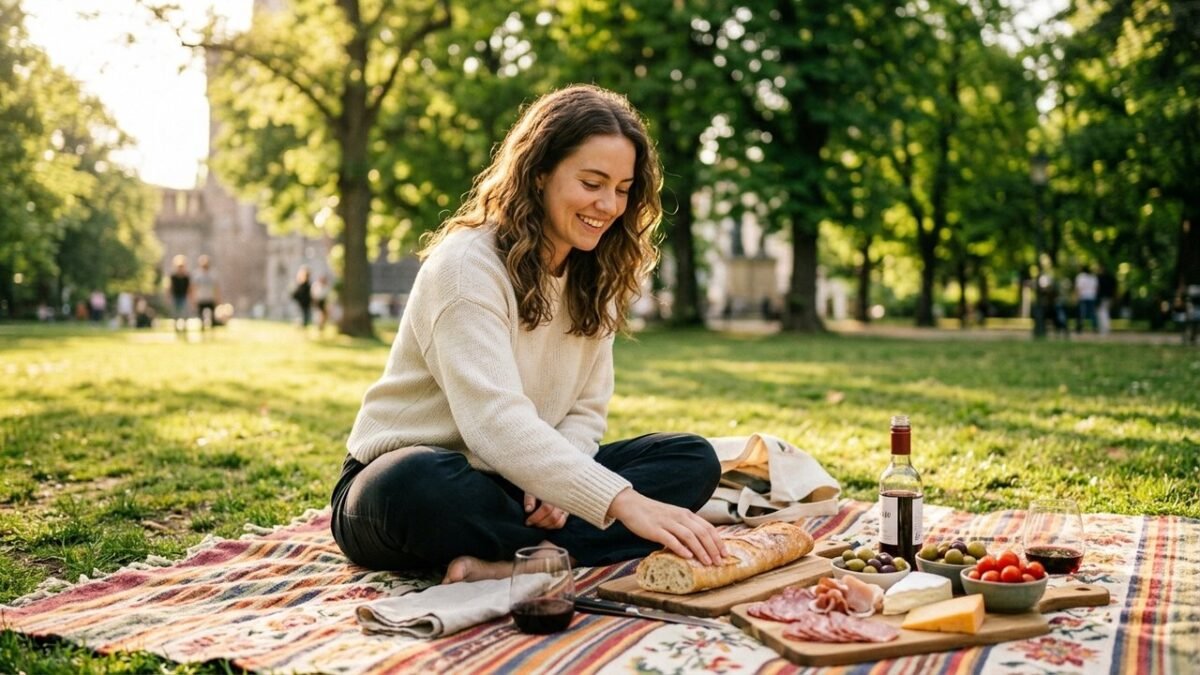
A wedge of local cheese, 100 grams of sliced charcuterie (salami, prosciutto, dried sausage), and a box of crackers or flatbreads from any European grocery store is a legitimate meal for $5-$8. Eaten on a park bench, in a train compartment, at a town square, or at the window of your Airbnb — it always feels good.
What to look for by country: France has the widest cheese selection (go for a local regional cheese, not the famous ones — a Camembert costs $3, a Comté slice costs $2). Italy has pre-packaged charcuterie at grocery stores for $2-$3 per 100g pack. Spain has Manchego and jamón serrano at every Mercadona. Germany has more sausage varieties per square meter of grocery store than any other country on earth.
Pro tip: buy the store’s own-brand crackers rather than name-brand. They are made in the same factory, cost half as much, and taste identical.
Cost: $5-$8 for a meal that serves one person and feels like a picnic in a Merchant Ivory film.
French grocery stores (Carrefour, Intermarché, Leclerc) have a “fromage à la coupe” counter where you choose the size of cheese wedge yourself. This is where you get the best cheese at the best price. Ask for “juste un peu” (just a little) and they will cut you a 100g wedge for $1.50-$2.50.
IMAGE PROMPT 2:
GENERATE: Full-bleed 1080x1920px portrait 9:16. Beautiful food flat lay on a wooden park bench — a wrapped wedge of cheese, sliced charcuterie on parchment paper, crackers, a small pocket knife, an apple, and a half-eaten baguette. European park setting visible in background, blurred green trees and cobblestone path. Natural afternoon light from above. Subject fills entire frame. Top 30% has natural soft zone from park background bokeh. Sony A7IV 35mm, warm afternoon light, NOT AI look. No text or blank zones.
ADD OVERLAY AFTER GENERATING:
Category pill: “TRAVEL FOOD HACKS” — coral #E85555
Headline: “Cheese + Charcuterie Picnic” — More Sugar script
Accent: “Full Meal for $7” — Fredoka Bold, coral
Bottom: “savvydispatches.com”
IMAGE DESCRIPTION 2: A beautiful improvised picnic on a wooden park bench — cheese wedge, sliced salami on parchment paper, crackers, a small knife, an apple, and half a baguette arranged naturally. A European park with cobblestone paths and trees is blurred in the background. The image captures why the cheese-and-charcuterie grocery meal is the best food hack for budget travelers in Europe.
Most European grocery stores mark down perishable food items (prepared salads, deli items, cheese) by 30-50% after 6pm. Shop late for best prices on the nicest ingredients.
3. Hard-Boiled Eggs + Potato Salad From the Deli Counter
This meal sounds humble and tastes better than it has any right to.
Most European grocery stores (especially German, Austrian, Czech, and Polish ones) have a serious deli counter with prepared cold salads. Potato salad in Germany is not the mayo-heavy American version. It is vinegar-dressed, with cucumber, herbs, and often mustard. A 200g container costs $1.50-$2.50 and is a filling side dish.
Add 2-3 hard-boiled eggs from the refrigerated section ($1.50 for 6 eggs in a carton, cook them in your guesthouse if they have a kettle and an egg). Add a small cucumber and whatever else catches your eye from the deli.
This meal works especially well for hiking days. High protein, no mess, packs into your daypack without special containers. Total cost: $3-$5.
Deli counter tips: point and gesture if language is a barrier. “Zwei hundert Gramm” (200 grams in German), “deux cents grammes” (in French), “dvesto gramov” (in Slavic languages) — these phrases are enough to navigate any deli counter in Europe.
In Poland, the Biedronka and Lidl chains both have deli sections with traditional Polish salads (beet salad, carrot salad, surówka) for $1-$2 per container. These are the meals that actual Polish workers take to lunch and they are excellent.
4. Grocery Store Sushi (Better Than You Think)
I know. But hear me out.
Major European grocery chains — Waitrose and Tesco in the UK, Albert Heijn in the Netherlands, Migros in Switzerland, Rewe in Germany — sell sushi rolls in the refrigerated section that are genuinely good. Not Nobu good. But fresh, well-made, and at $4-$7 for a set of 8-12 pieces, a legitimate and satisfying meal.
This option is particularly good for: days when you need a no-prep meal that does not require heating, days when the weather makes sitting outside unpleasant, days when every restaurant around you is in a tourist zone with inflated prices.
It also solves the “I’m sick of bread” problem that hits around day 5 of an extended European grocery meal strategy.
Where it is best: UK Waitrose (the highest quality), Dutch Albert Heijn (very fresh, good price), Swiss Migros (excellent). Where to skip it: southern European grocery stores, where sushi sections are less common and the quality is less reliable.
Cost: $5-$8 for a full meal portion.
IMAGE PROMPT 4:
GENERATE: Full-bleed 1080x1920px portrait 9:16. Close-up overhead shot of a clear plastic container of grocery store sushi rolls — salmon, avocado, cucumber rolls arranged neatly in a plastic tray, a small soy sauce packet beside it, chopsticks from a packet laid alongside. Clean white tray surface, simple natural light, beautiful food photography style. Top 30% has natural soft zone from clean background and light falloff. Sony A7IV 35mm, clean overhead natural light, NOT stock photo. No text or blank zones.
ADD OVERLAY AFTER GENERATING:
Category pill: “TRAVEL FOOD HACKS” — coral #E85555
Headline: “Grocery Sushi Done Right” — More Sugar script
Accent: “$6 Full Meal” — Fredoka Bold, coral
Bottom: “savvydispatches.com”
IMAGE DESCRIPTION 4: Overhead shot of grocery store sushi rolls in a clear plastic container — salmon, avocado, and cucumber rolls arranged neatly with a soy sauce packet and chopsticks. Clean natural light from above. The image makes the case that grocery store sushi in Northern European supermarkets is a genuinely good travel meal option.
Albert Heijn in Amsterdam marks down all sushi by 50% after 7pm. The AH on Koningsplein (near the flower market) restocks twice daily and is the best location to catch a fresh evening markdown.
5. Rotisserie Chicken + Roasted Vegetables
This is the budget traveler’s dinner when you have access to a hostel kitchen or an Airbnb with a small pan.
Rotisserie chickens are available at almost every European grocery store and most market stalls. In France, the marché rôtisseurs (market rotisserie trucks) are a cultural institution. A whole chicken costs $5-$9 depending on country. It feeds one person for two full meals, or two people for dinner.
Pair with: a bag of pre-cut roasting vegetables from the fresh section ($2-$3), tossed in olive oil (small bottle $2-$3) with salt and whatever herbs are cheapest. If you have a pan and an oven or stovetop, this becomes a proper dinner.
No kitchen access: rotisserie chicken works cold, eaten with the hands over a park bench, with a piece of bread and a piece of fruit. Zero cooking required, zero dishes to wash.
Countries where rotisserie chicken is best: France (at every outdoor market), Portugal (at the supermarket deli, called “frango assado”), Spain (same), Germany (at the supermarket entrance, usually a separate counter called “Hähnchen”).
Cost: $5-$9 for the chicken, $2-$3 for vegetables. Total: $7-$12 for a full dinner that serves two.
Ask for “the last one” or point to a chicken that has been rotating longest — it will have a slightly discounted price in many markets because the vendors want to clear inventory before closing. The extra cooking time makes the skin crispier, not worse.
6. The Pasta Dinner (With Real Ingredients)
This requires a hostel kitchen, but most budget hostels have one, and this meal costs $3-$5 for a substantial dinner.
The formula: 200g of pasta ($0.80-$1.50), one can of whole peeled tomatoes ($0.90-$1.50), two garlic cloves ($0.30 from a small bulb), olive oil ($0.30 from a shared communal bottle or your small bottle), salt, and whatever hard cheese you have left from the charcuterie meal.
Cook in 25 minutes. Eat directly from the pot. Share with a hostel roommate who contributes a beer.
The pasta dishes that always work with grocery ingredients: aglio e olio (pasta + olive oil + garlic + red pepper flakes — zero sauce required), pasta al pomodoro (canned tomatoes + garlic + olive oil + fresh basil if available), pesto pasta (a 90g jar of pesto costs $1.50-$2.50 and covers 400g of pasta).
Cost: $3-$5 per person including cheese.
IMAGE PROMPT 6:
GENERATE: Full-bleed 1080x1920px portrait 9:16. A woman’s hands stirring a pot of pasta on a small hostel kitchen stovetop. Steam rises from the pot. On the counter beside her: a can of tomatoes, an open jar of pesto, a small block of hard cheese, and a wooden spoon. The kitchen is simple, clean, well-lit from a small window. Top 30% has natural soft zone from window light and steam diffusion. Sony A7IV 35mm, warm natural light, NOT AI look. No text or blank zones.
ADD OVERLAY AFTER GENERATING:
Category pill: “HOSTEL KITCHEN HACKS” — coral #E85555
Headline: “Pasta Night: $4/Person” — More Sugar script
Accent: “Better Than Most Restaurants” — Fredoka Bold, coral
Bottom: “savvydispatches.com”
IMAGE DESCRIPTION 6: A woman stirs a pot of pasta on a hostel kitchen stovetop, steam rising from the pot. On the counter: a can of tomatoes, jar of pesto, small block of hard cheese, wooden spoon. Natural window light illuminates the simple scene. The image captures the reality and pleasure of cooking in a hostel kitchen — one of the best budget travel moves in Europe.
European grocery store pasta is not all equal. Italian pasta made from 100% durum wheat semolina (check the ingredients for “semola di grano duro”) cooks completely differently from the flour-based pasta sold cheaply in some Eastern European stores. The quality difference is worth the extra $0.50.
7. Greek Salad + Feta + Olives (From the Olive Bar)
This one works in any country, not just Greece.
The olive bar. Every decent European supermarket (and all Greek, Turkish, and Mediterranean markets) has a bar where you scoop your own olives, marinated peppers, stuffed grape leaves, and other preserved vegetables by weight. Cost: $2-$4 for 150-200 grams, which is plenty for one meal alongside other ingredients.
Build the salad: cherry tomatoes ($1-$1.50), cucumber ($0.50-$0.80), kalamata olives from the olive bar ($1.50-$2), feta cheese ($1.50-$2 for a small vacuum-packed wedge), olive oil and lemon juice. If you can find dried oregano, add it. Total: $5-$7, serves one generously.
This meal requires no cooking, no heating, and zero kitchen access. It works in a park, at a hostel common room table, or at a train station with nothing but a plastic fork.
Where the olive bar is best: Greek supermarkets (Lidl and Sklavenitis both have excellent selections), Turkish grocery stores throughout Europe, Middle Eastern markets common in major cities, Whole Foods equivalent natural food stores in Northern Europe.
In Greece, the Lidl discount chain has a significantly better olive bar than most of the premium supermarkets. The Lidl in Athens (multiple locations) stocks marinated kalamata olives, stuffed peppers, and sun-dried tomatoes at exactly half the price of the tourist-district food markets.
8. Canned Fish + Rye Bread + Pickles
This is the meal that Northern European office workers eat at their desks every day and that every budget traveler eventually discovers and never looks back from.
Canned fish in Europe is not the sad shelf-stable tuna of American experience. Portuguese sardines in olive oil with lemon. Norwegian smoked mackerel. Danish herring in mustard sauce. Spanish anchovies in good oil. These are legitimate ingredients.
A can of good sardines costs $1.50-$3. A bag of rye crackers costs $1-$2 and lasts several meals. A jar of pickles costs $1.50 and adds acid and crunch. Open the can, arrange on crackers, add pickles. Eat with a small knife and your hands.
This meal is high in omega-3s, protein, and calories — exactly what you need on a 10-mile hiking day. It keeps without refrigeration until you open it. And it feels completely different from the canned tuna + saltine combination that gives canned fish its bad reputation in North America.
Save this for later on Pinterest!
Follow us for more honest budget travel guides: @savydispatches on Pinterest
Cost: $3-$5 for a filling meal.
The best canned fish for travel eating are Portuguese brands: Jose Gourmet, Ramirez, and Conservas Portugal. Look for them in any Portuguese grocery store or in specialty food shops throughout Europe. A can of Jose Gourmet sardines costs $2.50 and tastes like a restaurant appetizer.
9. Soup From the Deli Section + Fresh Bread
Every supermarket in Northern and Eastern Europe with a deli counter sells ready-made soups. Not canned soup — actual cooked soup in a container, made that day or yesterday.
In Germany and Austria, look for goulash soup, lentil soup, and potato soup in the deli refrigerator. In Poland, beet soup (barszcz) and zurek (sour rye soup) appear regularly. In France, soupe à l’oignon and bisque de tomate are common. In the Netherlands, erwtensoep (split pea soup) is often available in colder months.
Portion size: 300-400ml containers typically cost $2-$3.50. For a full meal, buy two portions or supplement with fresh bread.
Fresh bread: every European country has a bakery counter inside or adjacent to the main grocery store. A small loaf or roll costs $0.50-$1.50. Eat together.
This meal is best for: cold or rainy days when hot food feels essential, early mornings when the soup sections are freshly stocked, transit days where you need something warm without sitting in a restaurant.
IMAGE PROMPT 9:
GENERATE: Full-bleed 1080x1920px portrait 9:16. A woman at a European grocery store deli counter choosing from containers of prepared soups. The deli display shows rows of clear plastic containers with orange lentil soup, dark beet soup, and green pea soup visible. Warm supermarket lighting. Counter worker partially visible in background. Top 30% of frame has natural soft zone from store lighting overhead. Sony A7IV 35mm, natural store lighting, NOT AI look. No text or blank zones.
ADD OVERLAY AFTER GENERATING:
Category pill: “GROCERY MEAL HACKS” — coral #E85555
Headline: “Deli Soup + Bread: $4” — More Sugar script
Accent: “Hot Meal, No Kitchen” — Fredoka Bold, coral
Bottom: “savvydispatches.com”
IMAGE DESCRIPTION 9: A woman selects from a European grocery deli counter displaying rows of clear plastic containers filled with colorful prepared soups — lentil, beet, and pea soup visible in the case. Warm supermarket lighting overhead. The image shows why European grocery store deli sections are the best budget travel hack for hot meals without a kitchen.
In Germany, Real supermarkets and Rewe both have a soup station near the deli section that is self-serve — you fill your own container from a heated pot. The price per 100ml is listed on a sign. This is even cheaper than the pre-packaged deli soup.
10. Budget Breakfast: Yogurt + Granola + Fruit
The cheapest breakfast in Europe that actually keeps you full until noon.
A 500g container of full-fat Greek-style yogurt costs $1.50-$2.50 at any European grocery store (Fage in Greece and the UK, Skyr in Iceland and Scandinavia, store-brand in most other countries). Add a small bag of granola or muesli ($1.50-$2.50 for several servings). Top with whatever fruit is cheapest and freshest that day — banana ($0.20), apple ($0.30), seasonal berries ($1.50 for a punnet).
Total cost: $1.50-$2 per breakfast serving.
This breakfast works with: a hostel kitchen, an Airbnb, a park bench, a hostel lounge. It requires no cooking, no heating, no dishes beyond a spoon and a bowl (or eat directly from the yogurt container, which is exactly what I do).
The reason this works: full-fat yogurt has enough protein and fat to sustain several hours of walking on cobblestone. The granola adds slow carbs. The fruit adds quick sugar. This is actually a properly balanced meal that happens to cost less than a hotel minibar water.
What to avoid: flavored yogurts, which are mostly sugar. Buy plain, full-fat, and add the sweetness yourself with fruit. Your blood sugar stays steadier, your energy lasts longer, and the yogurt costs 30-40% less.
In Greece, buy yogurt from the open deli containers at local markets rather than supermarket brands. A family-run deli ladling out fresh strained yogurt from a large metal container into a cup for $0.80 is the best breakfast in the country and costs less than the smallest Fage tub.
What to Pack to Make Grocery Meals Work
A few items that turn grocery meals from logistics into pleasure:
- Small pocket knife (in checked luggage on flights): opens cheese, cuts fruit, slices bread. Essential.
- Reusable spork or spoon: for yogurt, deli salads, soup.
- Small tupperware container: transfer deli items, carry half a can of fish, leftover pasta.
- Ziploc bags: wrap bread, cheese, keep crackers from getting crushed.
- A cloth bag: every European grocery store charges $0.20-$0.40 for plastic bags. Bring your own.
The full grocery travel setup weighs under 200 grams and fits in any daypack side pocket.
What This Costs Compared to Restaurants
| Meal Type | Grocery Cost | Restaurant Cost | Savings |
|---|---|---|---|
| Breakfast | $1.50-$2 | $8-$14 | $6-$12 |
| Lunch | $3-$6 | $12-$20 | $9-$14 |
| Dinner | $5-$10 | $18-$35 | $13-$25 |
| **Daily total** | **$10-$18** | **$38-$69** | **$28-$51** |
Over a 14-day trip: grocery meals save $400-$700 compared to eating at restaurants three times a day. That is another destination. Or two.
You Might Also Like
- 11 Affordable European Destinations for Solo Female Travelers
- 13 Cheapest Countries to Visit in 2026 (Real Daily Budgets)
- Is the Faroe Islands Expensive? A Realistic Daily Budget for Solo Travelers