I tracked every dollar I spent across fourteen months on the road, right down to the $1.50 bowls of rice noodle soup in Laos and the $4 overnight buses I took instead of paying for a hotel. Most budget travel lists are full of guesses or figures from five years ago. These numbers come from my actual receipts in every single country below. Cost of living data from Numbeo’s 2026 database backed up most of what I found.
- 1. Vietnam: $22 a Day for the Best Street Food on the Planet
- 2. Laos: $24 a Day for River Views and Quiet Mountain Life
- 3. Georgia: $26 a Day for Caucasus Mountains and Warm Hospitality
- 4. Albania: $28 a Day for Mediterranean Coast Without the Mediterranean Price
- 5. Nepal: $25 a Day for the Himalayas and Bottomless Rice Plates
- 6. Indonesia (Java + Lombok): $25 a Day for Island Adventures Beyond Bali
- 7. Guatemala: $30 a Day for Volcanic Views and Mayan Highlands
- 8. Bolivia: $27 a Day for Salt Flats and High Altitude Cities
- 9. Morocco: $32 a Day for Medinas, Tagines, and Desert Foothills
- 10. Colombia: $32 a Day for Coffee Estates and Colorful Cities
- 11. Turkey: $34 a Day for Coastal Ruins and Rich Food Culture
- 12. Poland: $35 a Day for Central European Charm and Pierogi Feeds
- 13. Thailand (North + Isaan): $28 a Day for Night Markets and Ancient Temples
- 2026 Cheapest Countries to Travel Budget Comparison
- 4 Rules for Traveling Under $35 a Day Without Feeling Miserable
- Frequently Asked Questions
- You Might Also Like
The cheapest countries to travel in 2026 have shifted a little since 2024. Inflation hit some regions harder than others. A few unexpected destinations moved onto this list after genuinely shocking me with how far my money went. I have been to all thirteen. I am giving you the real daily average, not the best-case fantasy version.
For solo women, couples on a budget, or remote workers, I have notes on which of these cheapest countries to travel in 2026 suit each situation best. You will find those notes in every section below. Let’s get into it.
The cheapest countries to visit in 2026 average $22 to $35 per day for a private room, three meals, and local transport. Vietnam leads at $22/day, followed by Laos ($24), Nepal ($25), Georgia ($26), and Albania ($28). All 13 destinations on this list are based on my actual receipts — not estimates.
1. Vietnam: $22 a Day for the Best Street Food on the Planet
What to know before you book
- ✓
Book accommodation for 5+ nights: Most family guesthouses and small hotels offer a quiet discount for longer stays. Ask directly at check-in — they rarely advertise it. - ✓
Eat your main meal at lunch: Nearly every country on this list offers a full set lunch (soup, main, drink) for $2 to $5. Dinner at the same place costs double for identical ingredients. - ✓
Use overnight buses as hotels: Sleeper buses between cities cut both a transport cost and a night’s accommodation in one. Vietnam, Laos, and Turkey all have excellent overnight routes under $15.
Vietnam is the gold standard. I averaged $22 a day across Da Nang, Hanoi, and Ninh Binh while staying in private en-suite rooms with air conditioning. A steaming bowl of pho ga costs under $2 at a good street stall. Iced coconut coffee is fifty cents.
Crucially, getting between cities is what really makes Vietnam cheap. Sleeper buses and trains between major hubs cost $10 to $15 for an eight-hour ride. You sleep. You save a night of accommodation. You wake up somewhere completely new. Renting an automatic scooter runs $5 a day and opens up rice valleys and coastal cliffs that tour buses never reach.
Vietnam is also one of the most solo-female-friendly countries on this list. In fact, it ranks consistently in the top three worldwide. Well-lit streets, easy Grab app pickup, and the general warmth of the people make moving around simple even late at night. It pairs well with my Southeast Asia budget travel guide if you are planning a longer regional trip.
- Accommodation: $9–$12 for clean private homestay rooms with AC
- Food: $5–$7 for three full street meals plus iced coffee
- Transport: $4–$5 per day for Grab rides and local train legs
Buy sleeper train tickets directly through Vietnam Railways’ official website (dsvn.vn) three to five days ahead. Third-party agencies charge a $3 to $5 markup per ticket and the official site takes under two minutes to book.
2. Laos: $24 a Day for River Views and Quiet Mountain Life
Laos is where I went to slow down and ended up staying three weeks longer than planned. In towns like Nong Khiaw and Vang Vieng, riverside bamboo bungalows with mountain views cost $9 to $11 a night. The pace here is slow and the prices match it. A giant bowl of khao piak sen, the local chewy rice noodle soup with chicken and lemongrass, costs $1.50 at any riverside stall.
However, the new high-speed railway changed everything for budget travelers. The Vientiane to Luang Prabang route that used to take ten brutal hours by road now takes two comfortable hours for under $12. That train alone makes Laos one of the easiest countries to move around on a budget without losing time.
That said, Laos works especially well if you want silence. It is not a party destination. It is waterfalls, slow boats along the Nam Ou River, and limestone hiking trails with almost nobody else on them.
- Accommodation: $9–$11 per night for riverside guesthouses and bamboo bungalows
- Food: $6–$8 for noodle soups, sticky rice baskets, and fresh fruit shakes
- Transport: $5–$6 including high-speed train legs and electric tuk-tuks
Book LCR (Laos-China Railway) tickets through the official LCR Ticket mobile app at 7:00 AM local time exactly three days before travel. Popular morning departures sell out to group tour operators within twenty minutes.
3. Georgia: $26 a Day for Caucasus Mountains and Warm Hospitality
Georgia is the biggest surprise on this entire list. In Tbilisi, heritage apartments in old town courtyards cost $13 to $17 a night and the city is alive with rooftop wine bars and sulphur bath houses that charge $5 for a private hour. A plate of five giant beef khinkali dumplings from a neighborhood spot costs $2. Freshly baked shotis puri bread from a basement bakery runs thirty-five cents.
Furthermore, the country is logistically simple. Georgia offers visa-free stays for citizens of nearly one hundred countries, with a full year permitted. The transit system inside Tbilisi runs on a rechargeable Metromoney card covering the metro, city buses, and the hilltop cable car. Outside the city, marshrutka minibuses take you into the Kazbegi mountains or through the Kakheti wine region for $7 to $10.
For remote workers specifically, Tbilisi has an active café culture with reliable fast internet. Monthly apartment rentals in the historic Vera or Sololaki neighborhoods start at $450 including utilities, making it one of the cheapest digital nomad bases in Europe or the Caucasus.
- Accommodation: $13–$17 per night for boutique heritage apartments
- Food: $7–$9 for khinkali, lobio clay-pot beans, and Georgian amber wine
- Transport: $3–$5 per day for metro rides and cross-valley minibuses
Buy a Tbilisi MetroMoney card at any station for 2 lari (about 75 cents). It covers the Narikala cable car ride in addition to all metro and bus routes, saving you the separate tourist ticket fee at the gondola entrance.
4. Albania: $28 a Day for Mediterranean Coast Without the Mediterranean Price
Albania is Europe’s most underrated budget destination right now. Along the Albanian Riviera, particularly in Himare and Sarande during May or late September, sea-view studio apartments rent for $18 to $22 a night. The water is the same Adriatic blue as Croatia. The beaches are far less crowded. The prices are half.
In the mountain interior around Berat and Gjirokaster, stone guesthouses include enormous homemade breakfasts: sheep cheese, mountain honey, warm flatbread, pickled vegetables, and coffee that costs nothing extra. A full traditional dinner at a taverna, including grilled sea bream, a village salad, and a carafe of local wine, rarely tops $8 per person.
Additionally, getting around is easy and cheap. Local furgon minibuses run between towns for $4 to $8 and leave from central squares when they fill up, which typically takes twenty minutes. No reservations needed.
- Accommodation: $14–$20 for sea-view studios or stone guesthouses with breakfast
- Food: $8–$10 for fresh seafood dinners and bakery byrek pastries
- Transport: $4–$6 for furgon routes and city taxi rides
Carry physical Albanian lek at all times. Small guesthouses and seafront restaurants outside Sarande rarely accept cards, and local ATMs often sneak in dynamic currency conversion fees if you are not watching for the prompt to decline.
5. Nepal: $25 a Day for the Himalayas and Bottomless Rice Plates
Nepal is one of the countries I keep returning to, partly because my money goes so far and partly because nothing else on earth looks like it. In Kathmandu and Pokhara, clean lakeside hotels with hot showers and mountain views cost $10 to $13 a night. A full plate of dal bhat, the national dish of steamed rice, lentil soup, curried greens, and pickles, costs $2 and comes with unlimited free refills until you can barely move.
Moreover, trekking keeps daily costs extremely low. Along routes like the Annapurna Circuit or Langtang Valley, teahouse beds cost $3 to $5 per night as long as you eat at the lodge. A full day of mountain eating and lodging rarely crosses $18 while you are on the trail.
Importantly, Nepal also works for quick trips. Fly into Kathmandu, spend two days in the city visiting the Boudhanath stupa and Thamel, then take a $15 flight or $7 bus to Pokhara for lake views and paragliding that costs $60 for a full tandem flight.
- Accommodation: $5–$13 depending on altitude and city versus trail
- Food: $8–$10 for bottomless dal bhat, momo dumplings, and ginger lemon tea
- Permits and transit: $6–$7 amortized daily for trekking permits and local buses
Pack a portable water purification bottle or UV pen for trekking. Teahouses charge higher prices for bottled water the higher you climb, but filtering from clean streams keeps your cost at zero and keeps plastic waste off fragile mountain trails.
6. Indonesia (Java + Lombok): $25 a Day for Island Adventures Beyond Bali
Southern Bali has become expensive and crowded with beach clubs. Neighboring islands offer original Indonesian pricing. In Yogyakarta on Java, heritage guesthouses with courtyards cost $10 a night and place you within walking distance of ancient Hindu and Buddhist stone temples. On Lombok, quiet surf bays like Kuta and Selong Belanak have private bungalows for $12.
Meanwhile, warungs — the small family food stalls found on every corner — serve nasi campur, where you choose fried tempeh, coconut curries, sambal, and fresh vegetables over a mound of rice for $1.50. Renting a scooter to reach waterfalls and hidden coves costs $4 a day. Inter-island public ferries cost under $3.
In addition, the executive class train across Java is one of the great travel bargains on earth. For under $15, you get a reclining seat on a modern train crossing volcanic highland landscapes and terraced rice fields for six to eight hours. Book through the official KAI app.
- Accommodation: $9–$13 for private bungalows or garden homestays
- Food: $5–$7 for warung plates and fresh tropical fruit
- Transport: $4–$5 for daily scooter rentals and local train rides
When buying train tickets across Java, use the official KAI Access app and book at midnight on the date exactly 30 days before travel. That is when new inventory drops, and popular routes between Yogyakarta and Surabaya sell out within hours.
7. Guatemala: $30 a Day for Volcanic Views and Mayan Highlands
Guatemala captured me the moment I watched sunrise over Lake Atitlan from the wooden dock in San Pedro. Guesthouses perched on volcanic hillsides rent for $10 to $14 a night, many with communal outdoor kitchens overlooking the water. In the colonial town of Antigua, cobbled streets and colorful courtyards offer a base that costs half of what you would spend in neighboring Costa Rica.
For food, local comedores — the family-run diners found across the country — serve set lunch plates of grilled chicken, black beans, fried plantains, and handmade corn tortillas for $2.50. Chicken buses take you between highland towns for under a dollar. Shared tourist shuttles cost $9 for longer mountain crossings and are well worth it for the scenery.
Guatemala is also actively underrated as a coffee destination. San Marcos La Laguna and Santa Cruz La Laguna on the lake have become quiet creative hubs for travelers who want to stay two weeks instead of two days.
- Accommodation: $12–$15 for colorful private rooms near the lake or in Antigua
- Food: $8–$10 for comedor lunch plates, market fruit, and street tacos
- Transport and entries: $5–$7 for village lanchas and national park fees
Always use the public municipal lanchas (water taxis) across Lake Atitlan rather than hiring a private boat. The local fare between any two villages on the lake is 25 to 30 quetzales (about $3 to $4), regardless of which village you board from.
8. Bolivia: $27 a Day for Salt Flats and High Altitude Cities
Bolivia is the most affordable country in South America by a considerable margin. In La Paz and Sucre, colonial guesthouses and high-rise apartments rent for $10 to $13 a night with clear views of snow-capped Andean peaks. The city of Sucre is particularly calm: a whitewashed historic center where language students and long-term travelers live comfortably on next to nothing.
For food, daily market meals inside the central mercado cost $2 for a hot soup, a main plate of chicken or beef, and a glass of fresh passion fruit juice. The Mi Teleferico cable car system in La Paz is the highest urban transit network in the world, carrying you above the city for 40 cents per ride.
Indeed, salt flat tours to the Salar de Uyuni run $25 to $35 for a full-day shared jeep trip including driver and guide. For the scale of what you are seeing, it is one of the best value travel experiences on earth.
- Accommodation: $9–$13 per night for private guesthouse rooms or apartments
- Food: $6–$8 for market almuerzos, saltena pastries, and quinoa stews
- Transport: $4–$6 for teleferico rides and overnight cross-country buses
Take the green and yellow Teleferico lines in La Paz just before dusk. For under one dollar, you get a bird’s-eye panoramic sunset ride across the entire Andean bowl without paying for a private observation deck.
9. Morocco: $32 a Day for Medinas, Tagines, and Desert Foothills
Morocco is a sensory experience that stays surprisingly kind to your wallet if you follow local customs. In historic towns like Essaouira, Chefchaouen, and Fes, family-owned riad guesthouses with tiled courtyards cost $13 to $16 a night and include a morning spread of fresh bread, olives, goat cheese, eggs, and mint tea.
At neighborhood street markets, meanwhile, lamb or vegetable tagines slow-cooked in clay pots cost $3 to $4, served with rounds of flatbread. The national train network (ONCF) connects Tangier, Casablanca, and Marrakech with modern air-conditioned cars for $8 to $15 per route.
Morocco works especially well for photographers and textile lovers. In particular, the blue-painted streets of Chefchaouen and the leather tanneries of Fes are endlessly photogenic — and none of them charge an entry fee.
- Accommodation: $13–$16 for boutique riad rooms with full breakfast
- Food: $8–$10 for tagines, lentil stews, freshly squeezed orange juice, and mint tea
- Transport: $5–$6 for intercity ONCF trains and in-city petit taxis
When ordering street food in the medina, watch where local families eat rather than following the signs near major tourist squares. Food turns over faster at local spots, prices are lower, and you will not find a tourist menu markup anywhere on the receipt.
10. Colombia: $32 a Day for Coffee Estates and Colorful Cities
Colombia is energetic, friendly, and genuinely budget-friendly outside of peak holiday weeks. In the coffee region around Salento and Jardin, private rooms inside historic fincas (coffee farms) cost $15 a night, surrounded by wax palms and green hills. Even in Medellin, the leafy neighborhood of Laureles has private guest suites for under $20.
Beyond that, the daily “menu del dia” is an institution. For $3 to $4, you receive vegetable soup, a plate with grilled meat or fish, beans, rice, salad, fried plantains, and a glass of fresh tropical juice. Domestic flights between distant cities on local carriers like Viva Colombia often cost under $25 when booked a few weeks out.
Colombia is also a strong pick for remote workers. Because of the year-round spring climate and low cost of living, Medellin in particular has become a favorite base for people working online.
- Accommodation: $13–$17 for private boutique rooms or coffee farm stays
- Food: $9–$11 for daily lunch specials, fresh arepas, and pour-over coffee
- Transport: $4–$6 for modern metro and intercity coach rides
Save this for later on Pinterest!
Follow us for more honest budget travel guides: @savydispatches on Pinterest
In Medellin, buy a rechargeable Civica card at any metro station. It lets you transfer directly from the train onto the Metrocable gondola lines into the mountain neighborhoods at no extra charge, saving about $0.70 per ride for as long as you stay.
11. Turkey: $34 a Day for Coastal Ruins and Rich Food Culture
Turkey remains one of the greatest travel bargains for anyone looking to stretch their money. In Mediterranean coastal towns like Kas and Fethiye, and in cultural centers like Selcuk and Bursa, comfortable private hotel rooms cost $16 to $20 a night. A traditional Turkish breakfast featuring tomatoes, cucumbers, white cheeses, warm bread, fried eggs, and continuous small tulip glasses of black tea costs under $4.
For meals, neighborhood lokanta restaurants display dozens of warm stewed dishes in glass cases and you point to what looks best. A rich plate of roasted eggplant, spiced meatballs, and pilaf rarely tops $3.50. Long-distance coaches are genuinely luxurious, with reclining seats, free tea and cake service, and fares under $12 between major cities.
Notably, Turkey gives you a huge amount of variety for the price. Mediterranean beach towns, ancient Greek and Roman ruins, highland meadow villages, and Istanbul’s legendary neighborhood life are all accessible within a two-hour bus ride of each other.
- Accommodation: $14–$18 for private boutique hotel rooms
- Food: $10–$12 for lokanta meals, fresh pide flatbreads, and bakery simit rings
- Transport: $5–$6 for city trams and intercity coach rides
Avoid eating within two blocks of major tourist landmarks like Istanbul’s Sultanahmet or Antalya’s marina. Walk ten minutes uphill into any residential quarter to find family lokantas serving superior home cooking for sixty percent less.
12. Poland: $35 a Day for Central European Charm and Pierogi Feeds
If you want historic cobblestone squares, medieval castles, and reliable high-speed trains without Western European prices, Poland is the smartest pick on the continent for 2026. In student-heavy cities like Krakow, Wroclaw, and Gdansk, modern studio apartments within walking distance of the central plaza cost $18 to $22 a night outside peak July and August weeks.
Specifically, Poland’s Bar Mleczny (milk bars) are historic cafeteria diners subsidized by the Polish government that serve traditional comfort food at unbeatable prices. A plate of eight handmade potato-and-cheese pierogi, a bowl of red borscht, and a sweet berry compote runs under $4 total. PKP Intercity trains connect major cities quickly and cleanly for $8 to $12 a route.
Finally, Poland has a level of urban infrastructure that surprises many first-time visitors. Fast, reliable trams run through every major city. Museums are often free on Sundays. And the country’s craft beer scene has exploded in recent years, with local pubs charging $2 to $3 for a well-made pint.
- Accommodation: $15–$19 for private studio apartments
- Food: $10–$12 for milk bar meals, bakery pastries, and warming soups
- Transport: $4–$5 for city trams and regional PKP trains
Look for the words “Bar Mleczny” on street corners in every Polish city. Order at the register by pointing if you do not speak Polish. You will receive restaurant-quality home cooking for a third of what any sit-down restaurant charges on the same street.
13. Thailand (North + Isaan): $28 a Day for Night Markets and Ancient Temples
Phuket and the southern islands have grown noticeably more expensive over the past three years. Northern and northeastern Thailand still offer original Thai pricing in 2026. In Chiang Mai, you can rent a boutique room with a swimming pool and fast internet for $12 to $15 a night.
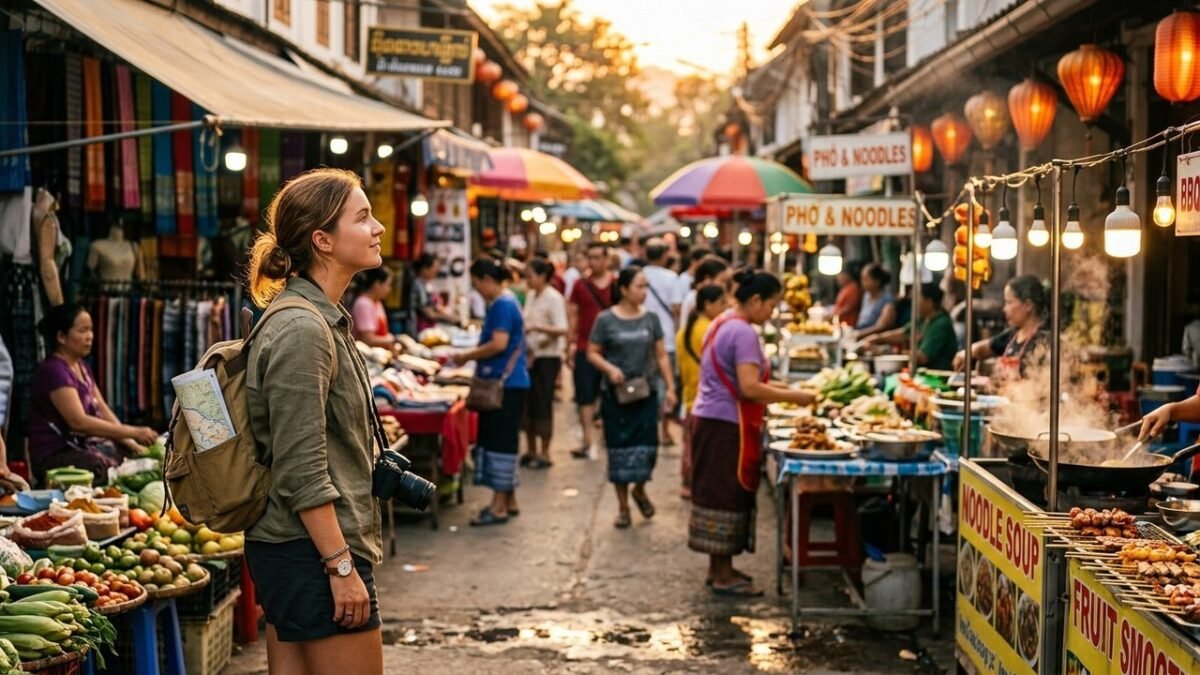
In fact, night markets are the social center of northern Thai life. A full plate of khao soi curried egg noodles, grilled lemongrass pork skewers, and fresh mango sticky rice costs $3 total. Songthaew shared pickup trucks run city routes for under a dollar. Day trips to ancient temples, jungle waterfalls, and hill tribe villages cost $10 to $15 for a shared minibus seat.
For travelers who want to go further off the radar, the Isaan region in northeastern Thailand is even cheaper and almost completely off the tourist trail. Towns like Khon Kaen and Ubon Ratchathani have excellent food, friendly guesthouses, and nearly zero English-language tourist infrastructure, which keeps prices at local levels.
- Accommodation: $11–$15 for boutique guesthouses with pools in Chiang Mai
- Food: $6–$8 for fresh night market dishes and iced Thai milk tea
- Transport: $4–$5 for songthaew rides and daily scooter rentals
In Chiang Mai, stay just outside the historic Old City moat in neighborhoods like Santitham or Nimmanhaemin. Room rates drop by thirty percent and neighborhood markets cater almost entirely to university students and local residents who have zero patience for inflated tourist prices.
2026 Cheapest Countries to Travel Budget Comparison
| Country | Daily Budget | Best Value Season | Solo Female Friendly? |
|---|---|---|---|
| Vietnam | $22 | November–March | Yes |
| Laos | $24 | November–February | Yes |
| Nepal | $25 | October–December | Yes |
| Indonesia (Java) | $25 | April–October | Yes |
| Georgia | $26 | May–June, Sept–Oct | Yes |
| Bolivia | $27 | May–October | Moderate |
| Albania | $28 | May, June, September | Yes |
| Thailand (North) | $28 | November–February | Yes |
| Guatemala | $30 | November–April | Moderate |
| Morocco | $32 | March–May, Sept–Nov | Moderate |
| Colombia | $32 | December–March, July | Yes |
| Turkey | $34 | April–May, Sept–Oct | Yes |
| Poland | $35 | May–June, Sept–Oct | Yes |
4 Rules for Traveling Under $35 a Day Without Feeling Miserable
1. Eat your main meal at lunch. In almost every country on this list, restaurants offer set lunch specials that include soup, a main course, and a drink for $3 to $5. Dinner menus at the same restaurants often charge double for the exact same ingredients.
2. Master the public transit system. Taxis and tourist transfers destroy a daily budget within 48 hours. Learning to ride the metro, regional trains, and shared minibuses saves 70 to 80 percent of your transportation costs and shows you how people actually live.
3. Travel in shoulder season. May, June, and September cut accommodation costs by 30 to 50 percent compared to July and August. You also get milder weather, fewer crowds at popular sights, and more attentive service.
4. Stay longer in fewer places. Moving towns every two days eats money on bus fares, storage fees, and arrival snacks. Staying five to seven nights in one base often turns up weekly discounts and lets you find the cheap neighborhood spots that tourists never discover.
Frequently Asked Questions
What is the single cheapest country on this list?
Vietnam, where $22 a day covers private accommodation, three high-quality hot meals, and daily transit without compromise.
Are these destinations safe for solo female travelers?
Yes, for most of them. Vietnam, Georgia, Poland, Albania, and Thailand (north) are among the highest-rated countries for independent women travelers. Morocco, Bolivia, and Guatemala require more street-smart awareness but are very manageable with basic precautions.
Do I need to book months ahead to get these prices?
No. Except during national holidays or major festival weeks, booking accommodation two to three days ahead or negotiating directly with family guesthouses on arrival often gets you the lowest rates.
You Might Also Like
- Best Budget Travel Destinations for 2026
- 9 Cheap Places to Travel That Still Feel Luxurious
- Europe Travel on a Budget: 11 Affordable Destinations for Solo Women