
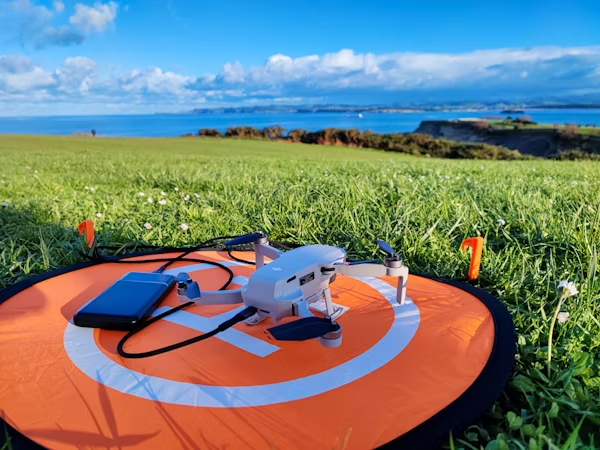
There’s a certain joy in sending a drone skyward on a bright, clear morning. Smooth air, endless views, maybe a quick shot of the coastline or the outback stretching beyond sight. But behind every flight—whether it’s recreational or part of a professional gig—sits something less glamorous but far more critical: the RC battery for drone.
It’s not flashy. It doesn’t get the attention the camera does. Yet it’s the one piece of tech that decides whether you get 25 minutes of reliable flight… or a stressful scramble to land before power cuts. The story gets more complicated. Heat. Humidity. A climate that doesn’t always play nice with lithium chemistry.
Why Every Region Is Different
Here’s the thing. Batteries don’t live in a vacuum. They react to their environment more than people realise. A battery for drone that behaves perfectly in cool, dry climates might act entirely differently here.
Take the northern tropics—sticky, humid, unpredictable. Moisture creeps into everything. Electronics, connectors, even storage cases. Down south? Dry heat and sudden temperature swings. Neither is great for a lithium pack. Cells expand, efficiency dips, and lifespan shrinks faster than expected.
So when someone asks, “How long does a battery for drone last?”—the honest answer is, it depends where you’re flying.
Heat: The Silent Enemy
You know that sinking feeling when you’ve left your phone in the car on a hot day, and it’s almost too warm to hold? Now imagine that scenario, but with a high-discharge pack designed to power a flying machine.
That’s exactly what happens with a battery for drone under summer conditions. Heat accelerates chemical breakdown inside the cells. Voltage sag becomes more noticeable. You might get fewer minutes in the air before the drone forces an emergency landing. And if it’s extreme? Swelling. That puffy, slightly rounded shape that’s a dead giveaway it’s time to retire it.
The frustrating part? Most of the damage is invisible until it’s too late.
Humidity: The Sneaky Culprit
Humidity doesn’t get as much attention, but it should. A battery for drone doesn’t like dampness. Moisture can sneak into casings, corrode connectors, and weaken insulation. Over time, the risk isn’t just shorter lifespan—it’s safety.
In coastal regions, especially, salt in the air adds another layer of trouble. Leave a pack sitting in a shed near the beach and you’ll find out fast. Contacts tarnish, performance dips, and suddenly that “fully charged” pack isn’t delivering what it should.
Habits That Make or Break a Drone Battery
Of course, climate isn’t the whole story. How you treat your packs matters just as much. Some habits that quietly kill a battery for drone:
- Charging it straight after a flight while it’s still hot.
- Storing it at full charge for weeks (or worse, completely flat).
- Tossing it in a car boot on a summer afternoon.
- Using cheap knock-off chargers instead of a proper balance charger is a common mistake.
And the good habits? Those are simple, too. Give it time to cool before charging. Store at “storage voltage” (most modern chargers have that mode). Keep them in a cool, dry place, ideally a fireproof LiPo bag or case. Little rituals that seem tedious but, over months, mean your battery for drone keeps delivering.
Professional Services: Why They Matter
If you’re just flying for fun, you might not think much about professional servicing. But for drone operators in agriculture, construction, or filmmaking, downtime is expensive. A faulty battery for drone could mean missing a client’s shot or delaying a survey.
That’s why drone services increasingly offer battery maintenance and diagnostics: some run capacity tests, cycle counts, and even disposal programs. Because once a pack starts degrading, it doesn’t just affect flight time—it can risk the safety of the drone itself.
And speaking of disposal…
Don’t Toss It in the Bin
This one can’t be stressed enough. A battery for drone isn’t something you throw out with household rubbish. Damaged lithium packs are a fire hazard. In some states, there are drop-off points specifically for batteries. Others allow recycling through electronic waste centres.
The bottom line? Do the responsible thing. Retire old packs safely, and you’ll avoid fires, fines, and a guilty conscience.
The Future Looks Brighter (and Cooler)
The good news? Battery tech isn’t standing still. Smart batteries now come with built-in management systems that monitor temperature, cycles, and charge. Some even self-discharge to storage voltage if you forget. Where heat and humidity are constant battles, this is more than just convenience—it’s peace of mind.
And as research continues, lighter chemistries and more resilient cells are on the horizon. Meaning the battery for drone you buy in a few years might last longer, charge faster, and laugh in the face of a 35°C day. Well, maybe not laugh. But at least holds up better than what we’re used to.
Wrapping It Up
At the end of the day, a battery for drone isn’t just another accessory. It’s the core of every flight. With its wild swings in weather and often unforgiving climate, it demands more attention than most people give it.
Look after it. Respect the heat. Don’t ignore the humidity. And when in doubt—lean on local services for testing, maintenance, or disposal. Do that, and your drone’s battery from RC Battery will last longer. It’ll give you the kind of dependable flights that make this hobby—or this profession—worth it.
Because in the air, reliability isn’t optional. It’s everything.