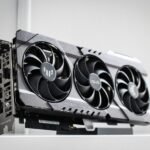

Choosing the right GPU for your project is an essential step, whether you’re building a high-performance gaming rig, running AI workloads, or managing industrial computing tasks. Graphics cards vary significantly in power, price, and purpose. This guide will help you understand what to look for and how to work with a trusted GPU card distributor to make the right choice for your needs.
Know Your Use Case
First and foremost, you should explicitly set your use case. The best GPU for gaming will not be the same as one made for machine learning or industrial visualization.
Gaming
For gaming, the most important factors are frame rates, resolution, and graphics quality. You will want a GPU that is capable of running modern AAA titles at your target resolution (1080p, 1440p, or 4K). The main features to consider are:
- Fast frequency
- GDDR6 or GDDR6X memory
- Ray tracing support
- Powerful cooler
The NVIDIA GeForce RTX and AMD Radeon RX series are the widely used models. A reputable GPU card distributor can assist you in comparing various models based on gaming performance benchmarks.
AI and Deep Learning
GPUs with a massive number of cores are preferred for very ambitious AI workloads. For example, if we take the task of training deep neural networks, GPU features like CUDA cores (for NVIDIA GPUs), Tensor cores, and large VRAM are crucial. The most commonly used GPUs in AI are:
- NVIDIA RTX A6000
- NVIDIA H100 or A100
- AMD Instinct series
Ensure that your GPU card distributor understands the computational requirements of AI applications and is able to procure models that are optimized for machine learning frameworks such as TensorFlow or PyTorch.
Industrial and Scientific Computing
Industrial applications often involve simulations, modeling, or real-time processing in embedded systems. These workloads benefit from:
- ECC memory for stability
- Long-term driver support
- Compact or fanless designs for embedded use
- Industrial-grade reliability
Workstation GPUs like NVIDIA Quadro or AMD Radeon Pro are ideal in this category. A professional GPU card distributor will offer options tailored to your industry and environment.
Compare Performance Benchmarks
It’s not enough to just read spec sheets. Real-world benchmarks offer better insight into how a GPU performs in your specific type of workload.
- Use 3DMark or PassMark for gaming
- Use MLPerf for AI training
- Use SPECviewperf for CAD and simulation work
Consult a GPU card distributor for benchmark comparisons or product demos. Many distributors provide this data to help you make informed decisions.
Factor in Power, Size, and Cooling
A powerful GPU also demands a compatible power supply, proper airflow, and enough space in your case or server rack.
- Gaming cards may require 600W+ PSUs
- AI and industrial GPUs often need supplemental power and dedicated cooling
- Consider thermal design (TDP) and form factor (dual-slot, low-profile, etc.)
Your GPU card distributor should be able to guide you on compatibility and even offer bundled components or complete systems for specific configurations.
Look at Software and Driver Support
Make sure the GPU you choose supports the software tools and drivers your project depends on.
- Gamers need support for DirectX 12, Vulkan, and ray tracing APIs
- AI developers require support for CUDA, cuDNN, and ROCm
- Industrial users need certified drivers for platforms like SolidWorks, AutoCAD, or MATLAB
The right GPU card distributor can assist you in confirming the compatibility of software and also provide driver updates or set-up support.
Consider Pricing and Availability
The price range for graphics cards can vary greatly, starting from as low as $200 and going up to $10,000 or even higher, depending on their performance and features. It is essential to stay within the allocated budget and not to compromise your project in any way. A trusted GPU card distributor can give you the best price options, along with the added benefit of financing, and even the chance to buy refurbished or bulk deals for enterprise customers. This option is particularly useful when you have set up multiple machines or a lab.
Work with the Right GPU Card Distributor
Choosing a suitable GPU is just half of the task. You also need to find a reliable source for it. That is the reason a reliable GPU card distributor is an important partner.
Search for a distributor that has:
- Original manufacturer-backed hardware
- Warranty and RMA support
- Quick and credible shipping
- Consulting that is tailored to your specific use case
Your GPU card distributor should be able to provide the correct model and continuous assistance, whether you are planning to build a state-of-the-art gaming setup or create a cluster for AI training.
It is a good idea to make sure the GPU card distributor you choose has experience in the field. You can inquire about technical assistance, possible upgrades, and supply chain stability.
Plan for the Future
Technology shifts quickly. A graphics card that fits your needs now may not in the next year or two. To avoid this possible risk:
- Select a graphics card that has more VRAM than you are currently using
- Check if it is compatible with the latest software applications
- Talk to your GPU card distributor about the trade-in options or upgrade paths
This type of planning not only helps in saving costs but also reduces downtime in the long run.
Conclusion
The GPU realm is enormous, but when your focus is on your specific needs, be it gaming, AI, or industrial computing, you can quickly identify the right options. By collaborating with a well-versed GPU card distributor, you can assure yourself of getting the hardware that fits and the service and support to fully utilize it. Pick your GPU wisely and let a trustworthy GPU card distributor show the way from selection through installation and beyond.