The first time I stood on the sand at Playa Brava, I watched a giant hand rise out of the beach and understood why Punta del Este Uruguay has a hold on South America. Punta del Este Uruguay is the glam beach town I keep coming back to in my head: two beaches a few blocks apart, a white sculpted house on the cliffs at sunset, and a quiet island a 15 minute boat ride from the port. This Punta del Este Uruguay guide covers La Mano, both beaches, the Gorriti Island ferry, Casapueblo at sunset, and the day trips east to La Barra and Jose Ignacio, with real prices and the mistakes I made so you can skip them. I spent three slow days here in March, when the summer crowds had gone and the town felt like mine. Let’s get into it.
- Why Visit Punta del Este Uruguay: Two Beaches, One Peninsula
- Best Time to Visit Punta del Este Uruguay
- How to Get to Punta del Este Uruguay
- La Mano and Playa Brava: Punta del Este Uruguay’s Famous Hand
- Playa Mansa: Punta del Este Uruguay’s Calm Sunset Beach
- Isla Gorriti Day Trip from Punta del Este Uruguay
- Casapueblo and Punta Ballena: Punta del Este Uruguay at Sunset
- La Barra and Jose Ignacio: Punta del Este Uruguay Day Trips East
- Where to Stay in Punta del Este Uruguay
- Punta del Este Uruguay Travel Budget: What Three Days Cost
- Punta del Este Uruguay Travel Tips: What I Wish I Knew Before I Went
- Frequently Asked Questions About Punta del Este Uruguay
- Punta del Este Uruguay, Done Right
- You Might Also Like
Here is the short version. Sleep on the peninsula so you can walk to both beaches. Do La Mano early, swim on the Mansa side, watch the sunset from the Mansa side too, and save one full day for Gorriti Island and one afternoon for Casapueblo. March gives you the same warm water as January at a fraction of the price. My South America bucket list puts Punta del Este in context with the rest of the continent, and my beach packing list covers what to bring for a beach town where the wind picks up fast.
Why Visit Punta del Este Uruguay: Two Beaches, One Peninsula
Punta del Este sits on a narrow peninsula where the Rio de la Plata meets the Atlantic, about two hours east of Montevideo. That meeting of waters gives you two beaches with two moods, a few blocks apart. Playa Mansa faces the bay, so the water lies flat and calm. Across the peninsula, Playa Brava faces the open ocean, so the waves roll in hard and the surfers gather. I walked from one to the other in under ten minutes, and the change in sound alone told me which side I was on.
The town earned its nickname as the Hamptons of South America. In January it fills with visitors from Argentina, Brazil, and Uruguay, and the beach clubs, galleries, and nightclubs run at full volume. Outside January it calms down fast, and that calmer version is the one I liked best. The peninsula is only about 2 km long and 800 m wide, so the whole centre is walkable. From Avenida Gorlero, the main street down its spine, it is six minutes on foot to the ocean and eight to the port. My best places to visit in Portugal has the same small-town-on-foot feel I look for in a beach base.
Local tip: Walk the peninsula before you rent a car, because the whole centre fits in a 4 km loop on foot and a car is a nuisance on these streets.
Best Time to Visit Punta del Este Uruguay
Summer runs December to March, and each month gives you a different town. January is the peak: highs of 26 to 27C, packed beaches, big nightlife, and the highest prices in South America. February stays busy, then eases late in the month. December builds fast toward New Year, which is the single biggest night of the year. I went in March, and March is my pick. Highs sit around 25C, the water is still warm, and the crowds and prices fall sharply.
Winter runs June to August, with highs of 7 to 15C. It is too cold to swim, but it is the season for coastal walks, galleries, and off-season rates. Whales pass offshore from July to November, and you can watch southern right whales from the shore for free. Spring and autumn bring mild, breezy days with fewer tourists and the odd windy spell. My winter bucket list has more warm escapes if you are chasing sun in the cold months.
Local tip: Book March instead of January, because the water is just as warm and a mid-range hotel that costs about 690 euros for three nights over New Year drops to about 190 euros in mid-March.
How to Get to Punta del Este Uruguay
Most visitors come through Montevideo. The bus from Montevideo takes about 2 hours 15 minutes and drops you at the Punta del Este terminal, a 15 minute walk from the port. From there you can walk to the peninsula or catch a local bus. If you fly in, you land at Laguna del Sauce Airport, west of the resort in Maldonado, and the ride into town is short.
Once you are here, the peninsula is a walking town. Local buses cover the rest: CODESA line 8 runs west to Punta Ballena and Casapueblo all year, and line 14 runs east through La Barra, Manantiales, and on to Jose Ignacio. The winter timetable runs less often than the summer one, so check the day’s times before you plan around a bus. I never needed a car on the peninsula, and I only wished for one on the day I went east, when the bus came round less often than I expected. My long flight hacks cover the long haul into Montevideo if you are flying in from far away.
Local tip: Check the bus timetable on the day you travel, because the winter schedule runs less often than the summer one and the eastbound bus to Jose Ignacio is the one that catches people out.
La Mano and Playa Brava: Punta del Este Uruguay’s Famous Hand
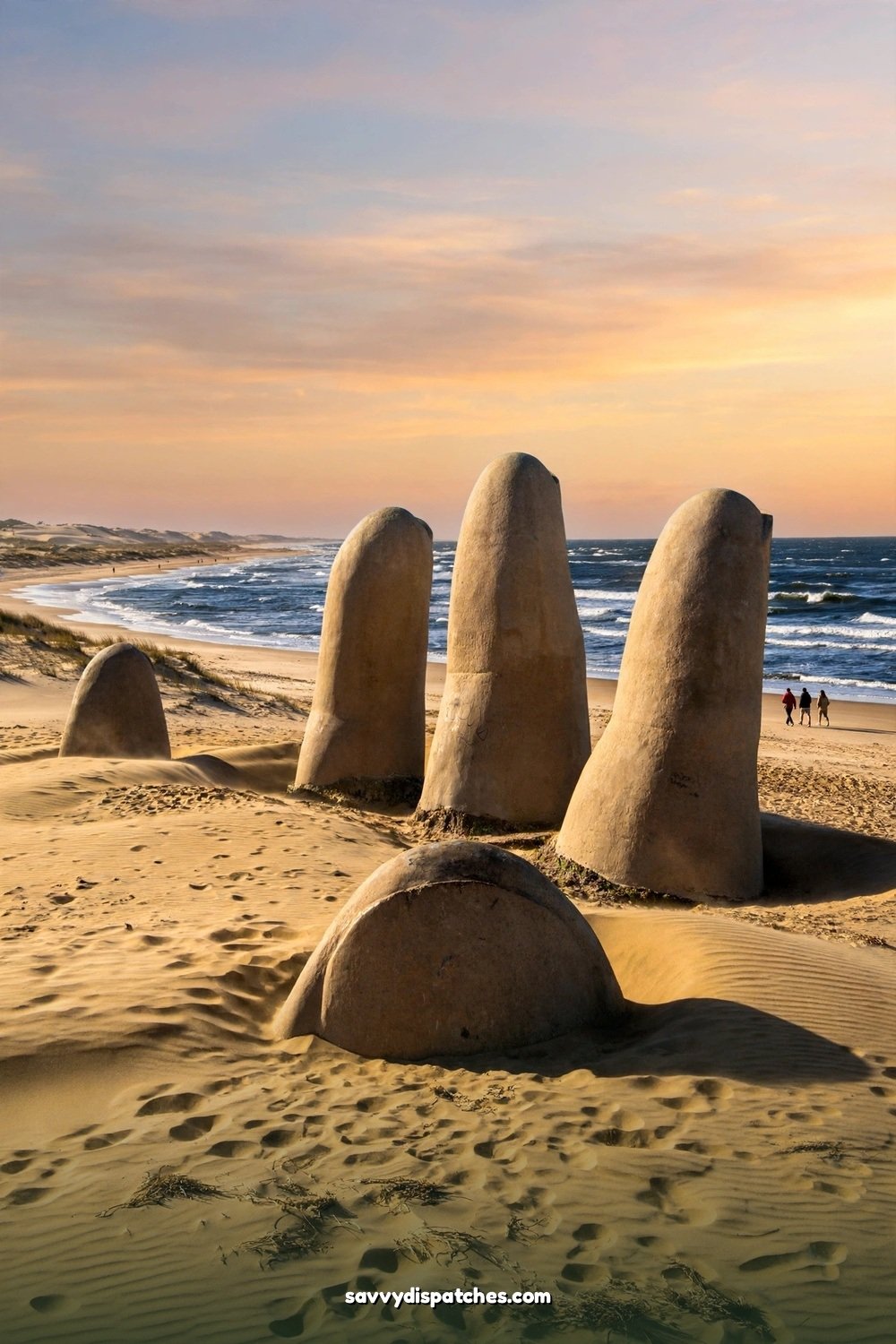
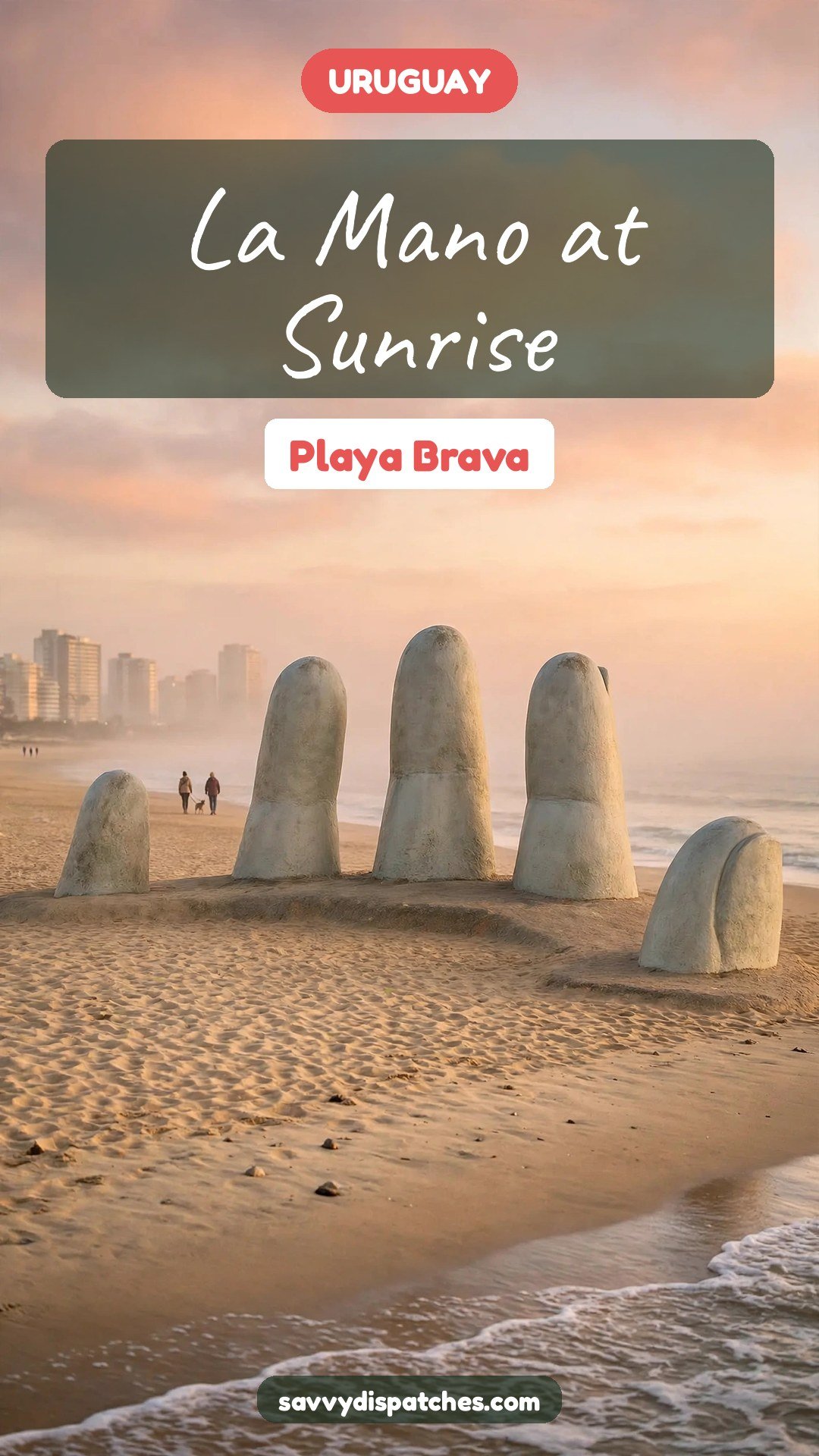
La Mano is the hand rising from the sand at Playa Brava, and it is free to visit at any hour. The Chilean artist Mario Irarrazabal created it in 1982, and its formal title is “Hombre emergiendo a la vida”, a man emerging into life. Five fingers push out of the sand at Parada 1, and it is the most photographed spot in Uruguay. I went at 8 am, when the beach was empty and the light was soft, and I had the sculpture to myself for ten minutes. By midday in January, the same spot has a queue.
Playa Brava is the wild side of the peninsula. The waves are strong, the currents are real, and it is a surf beach, not a swim beach. Sand stretches wide here, the wind is constant, and the high-rises stand right behind the beach. Come here for the sculpture, for the surf, and for the morning light. Do not come here for a calm swim. My best beach destinations list has more surf beaches like this one if the waves are your thing.
Local tip: See La Mano before 9 am, because the beach is empty, the light is soft, and by midday in January you will queue for the same photo.
Playa Mansa: Punta del Este Uruguay’s Calm Sunset Beach
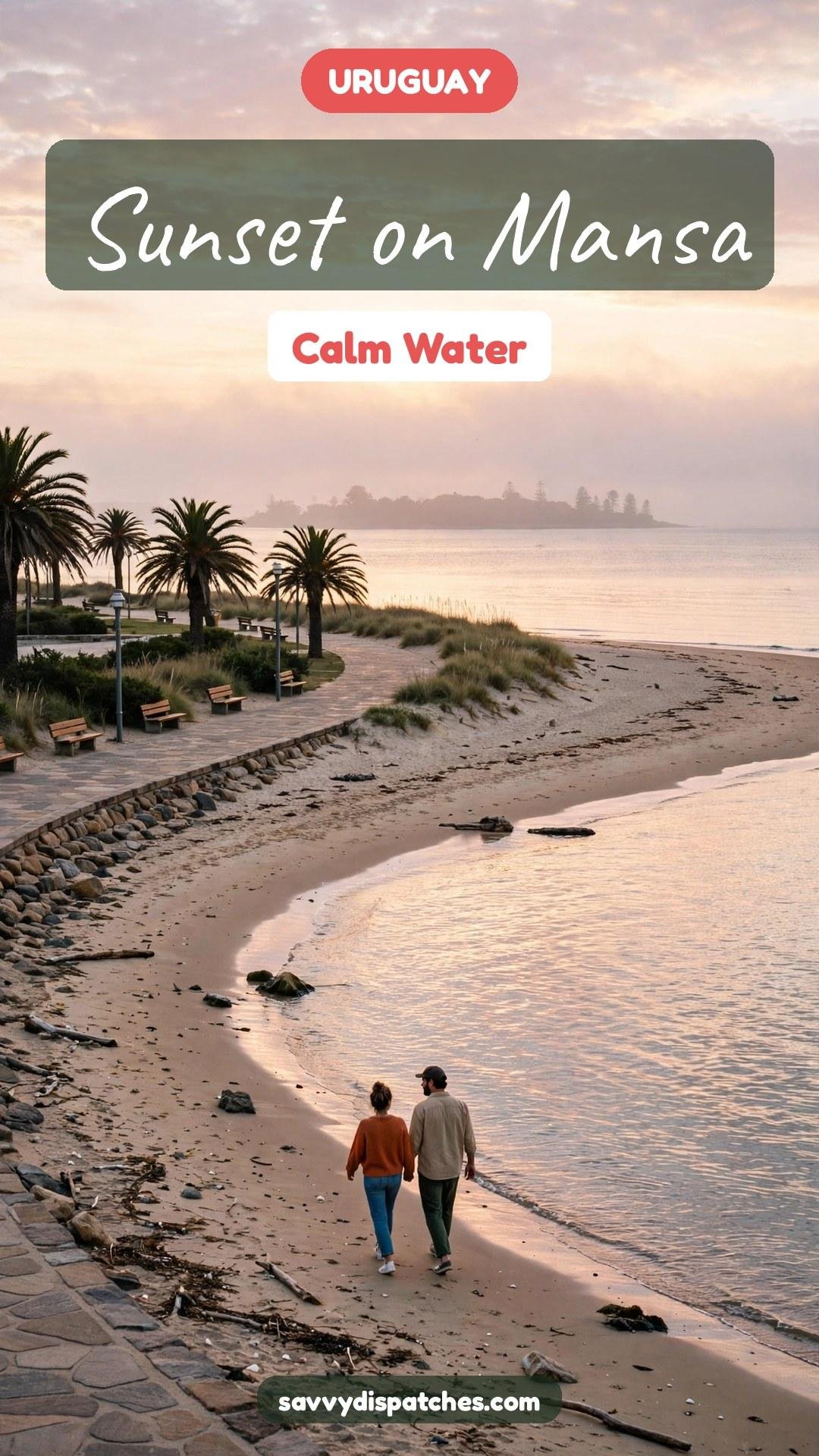
Playa Mansa is the other side of the peninsula, and it is the beach I swam at every day. The bay water is calm, the sand slopes gently, and families set up here all afternoon. It is the safe swim, the long sunbathe, and the place to be at sunset. This is the detail most guides get wrong: the sun sets behind Isla Gorriti on the Mansa side, and the water turns flat and gold. On the Brava side at that hour, the sun is behind your back.
The Mansa promenade runs along the bay with benches, cafes, and a view across to Gorriti Island. I walked it every evening after dinner, and the light at 7 pm in March was the best of the day. The beach is free, like every beach in Punta del Este, and the calm water makes it the right pick if you are travelling with kids or you just want to float. My Bimini island guide has the same calm-water, slow-evening feel if that is your kind of beach.
Local tip: Watch the sunset from the Mansa side, because the sun drops behind Gorriti Island there, and the Brava side gives you nothing but your own shadow at that hour.
Isla Gorriti Day Trip from Punta del Este Uruguay
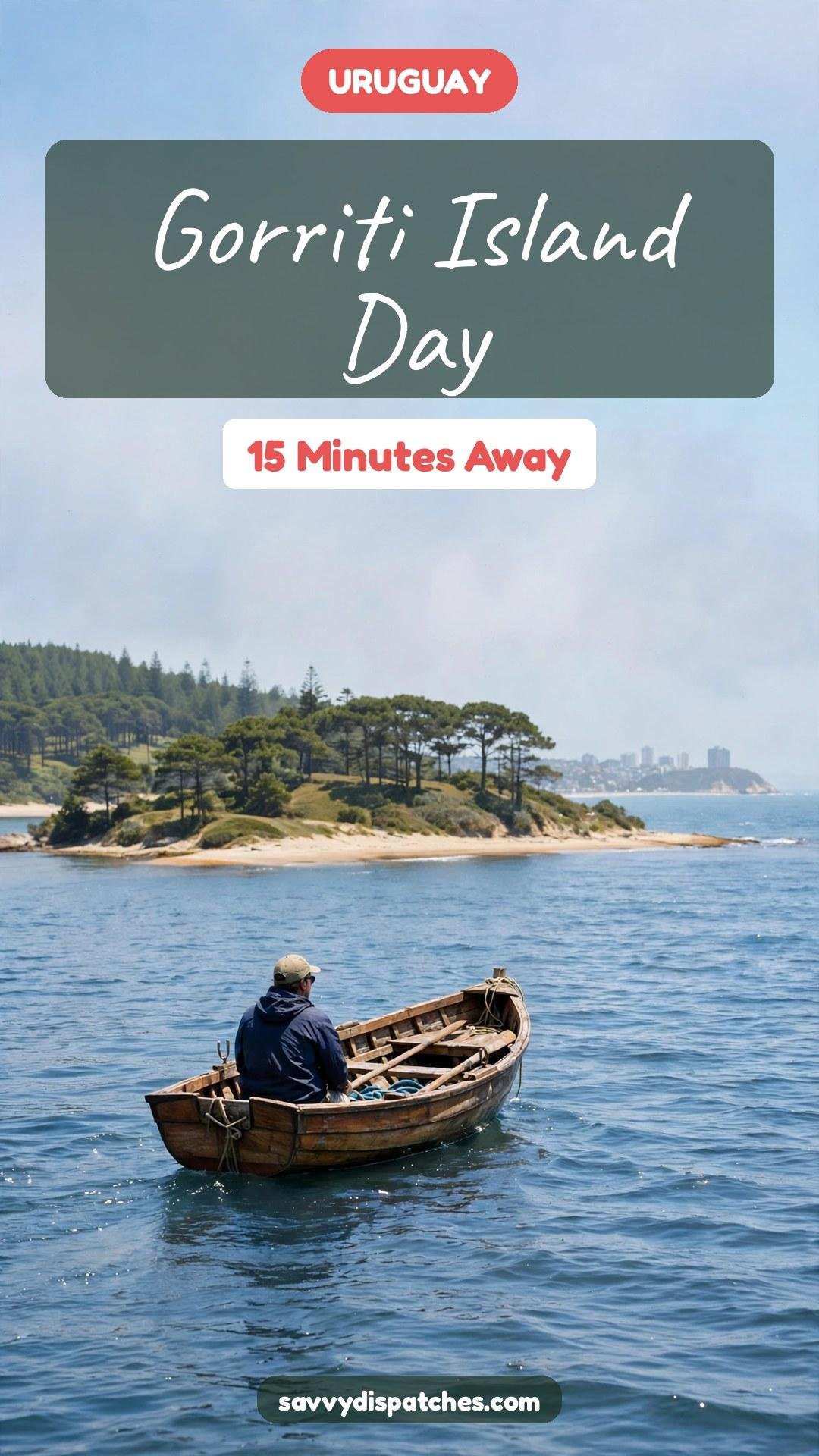
Isla Gorriti is the quiet island 2 km off the port, and it is the best day trip in Punta del Este. The crossing takes 15 minutes, and boats leave the port every half hour from 9 am. Tickets are sold on the dock by Dimar Tours and Crucero Samoa. The return fare is 500 Uruguayan pesos for an adult, about US$12, and 400 pesos for children aged 3 to 9, at the prices published in September 2026. Under-3s travel free. The last boat back leaves the island around 6:15 pm, and return times are handed out in staggered slots when you buy your ticket, so the whole island does not come back on one run.
Gorriti is a pedestrian-only National Heritage Site with pine walks, sandy beaches, and the ruins of colonial batteries. Boats land at Puerto Canon on the east side, and the two beaches to know are Playa Honda and Puerto Jardin. The island has one small kiosk, so pack snacks and water. It depends on the weather: wind, swell, or a low tide can stop the crossing, so outside January and February it is worth calling before you plan the day around it. My Puerto Rico beaches guide has more island day trips like this one if you like a boat ride to nowhere busy.
Local tip: Buy your Gorriti ticket at the dock in the morning, because the return slots are staggered and the early buyers get the late return, which is the one you want for a full beach day.
Casapueblo and Punta Ballena: Punta del Este Uruguay at Sunset
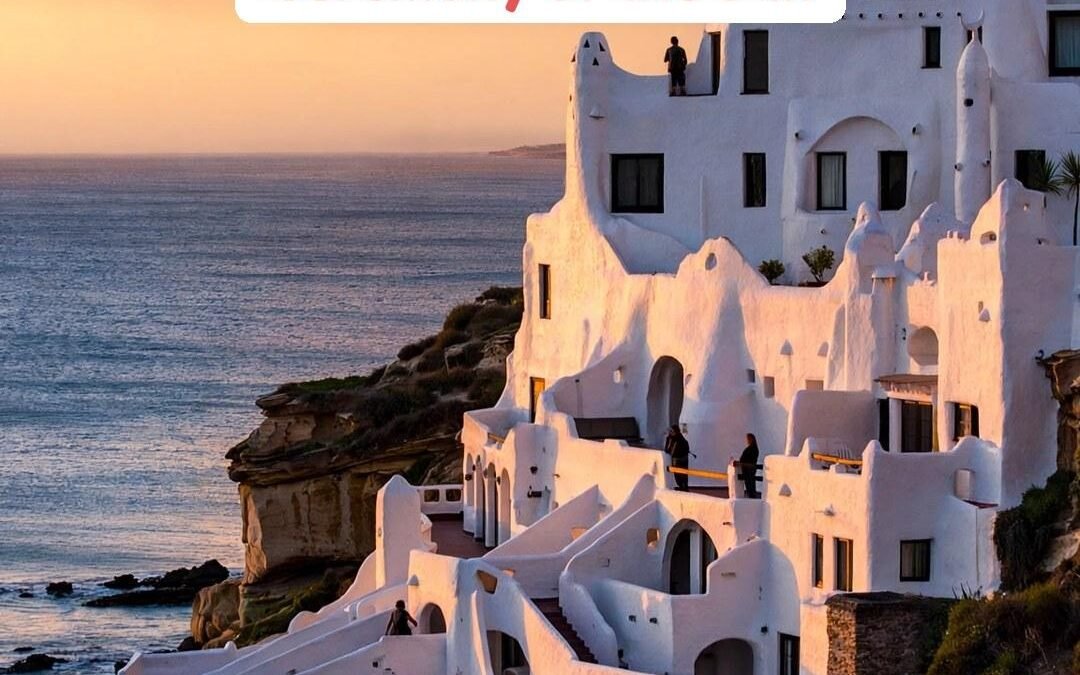
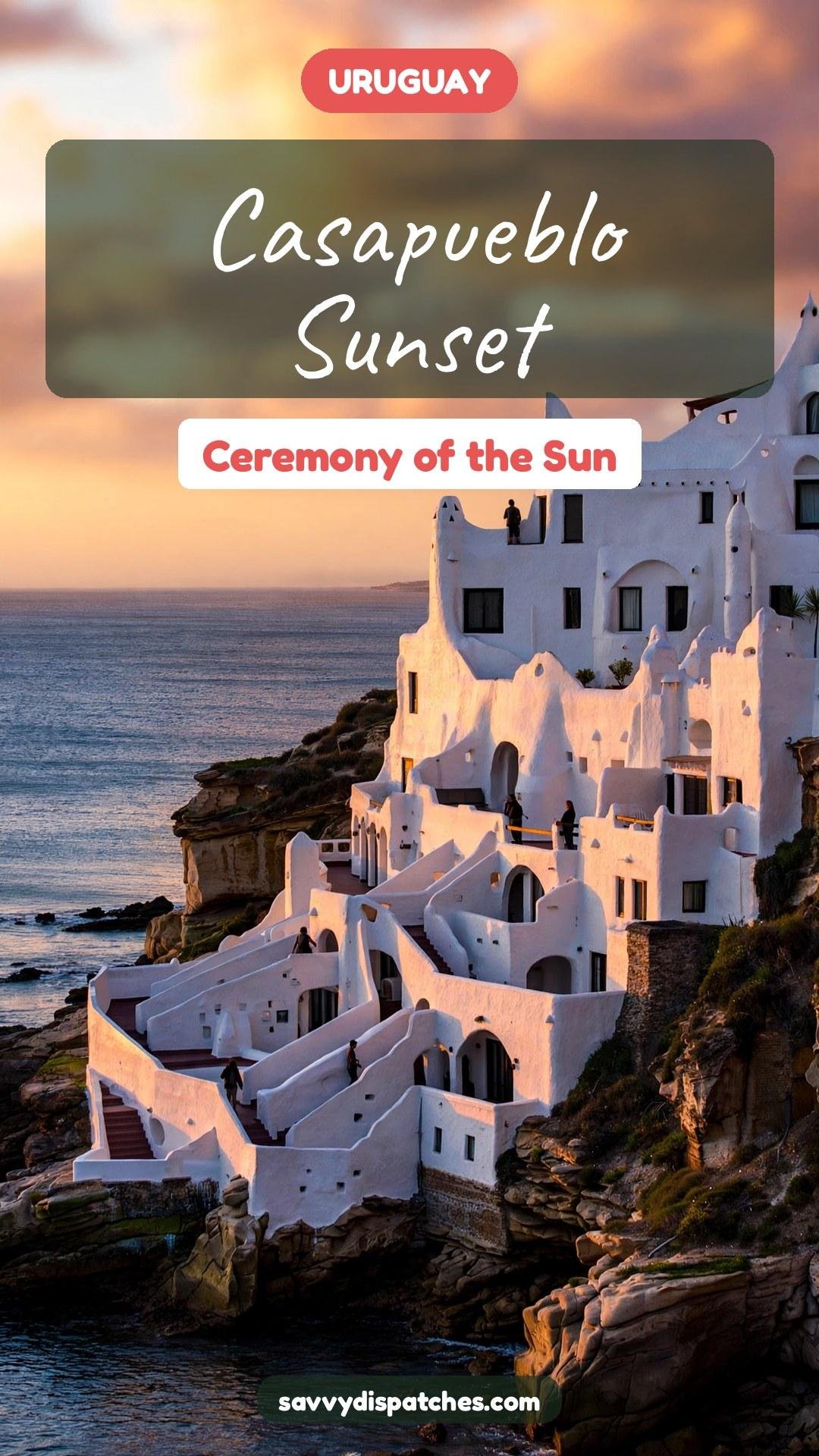
Casapueblo is the white sculpted house on the cliffs at Punta Ballena, 13 km west of town, and it is the sunset to plan your day around. The artist Carlos Paez Vilaro built it over 36 years without plans, and today it works as a museum, studio, gallery, cafe, and hotel in one white building. Admission to the museum costs 600 pesos for adults, about US$15, and 500 pesos for residents and visitors over 65. Children under 12 go free. It opens every day at 10:00 and closes at sunset.
The Ceremonia al Sol happens 15 minutes before sunset every day of the year, when a recording of the artist’s voice reads a poem as the sun goes down. Arrive at least 40 minutes early for a spot on the terraces. An hour covers the museum and the terraces, not counting the wait for the sun. I took CODESA line 8 from the Punta del Este terminal, got off at the Lomo de la Ballena turn-off, and walked 1.6 km up the road to the door. My Amalfi Coast guide has the same cliff-top sunset drama if you like this kind of evening.
Local tip: Count your visit backwards from sunset, because the ceremony is 15 minutes before the sun goes down and the Mansa sunset and the Casapueblo ceremony happen at the same hour on opposite shores.
La Barra and Jose Ignacio: Punta del Este Uruguay Day Trips East
East of the peninsula, the coast turns quieter and more upmarket. The first stop is La Barra, a beach village across the wavy bridges that have carried traffic over the stream since the 1960s. Those bridges are a National Historic Monument since December 2025, and the wave in the deck is what holds it up on its cables. La Barra has surf breaks, chic galleries, and the clubs that run until sunrise in January.
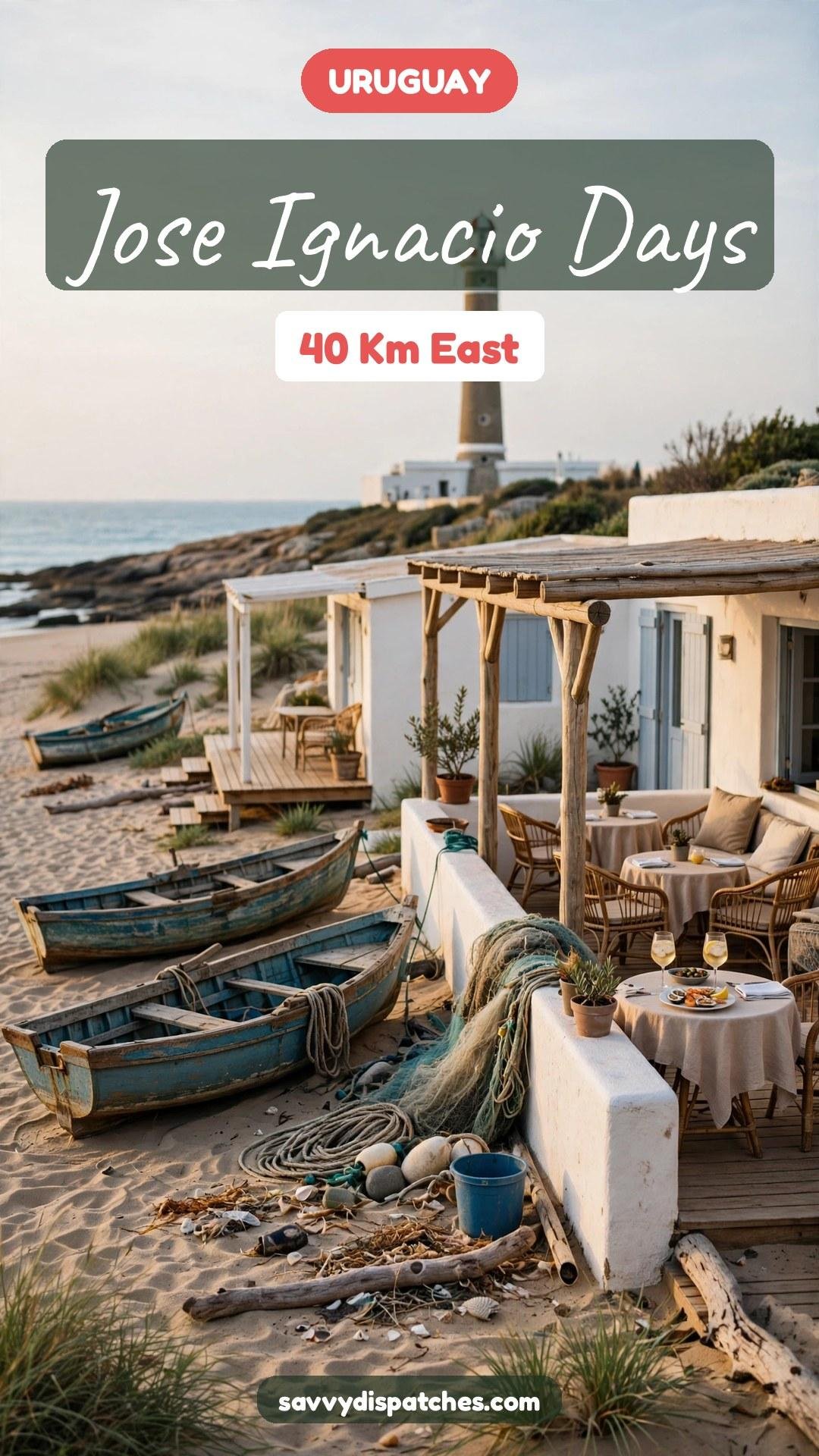
Jose Ignacio sits about 40 km east, a village of 36 blocks around a lighthouse built in 1877. The lighthouse costs 50 pesos to climb and opens Tuesday to Sunday from 10:00 to 18:00. Jose Ignacio is the luxury address of the Southern Cone, but it is also a fishing village at heart, with quiet beaches and seafood restaurants facing the sea. From July to October, whales are watched from the shore here without a boat. CODESA line 14 crosses the La Barra bridges and carries on to Jose Ignacio. My Bali guide has the same quiet-village-plus-good-food mix if that is your speed.
Local tip: Go east on line 14 and stay past lunch, because the bus back runs less often out of season and the village is at its best in the late afternoon light.
Where to Stay in Punta del Este Uruguay
Where you sleep decides what kind of trip you get. The peninsula is the pick if you want to walk to both beaches, the port, and the main street. Stay here for a short trip or a first visit. La Barra suits a longer stay with a car, or a January trip built around the beach clubs. Jose Ignacio suits a quiet splurge: fewer rooms, higher prices, and a village you can cross on foot in ten minutes.
Prices swing hard with the season. A mid-range hotel runs about 690 euros for three nights over New Year, against about 190 euros in mid-March, in a Booking.com check from late October 2026. January dorm beds cost several times their off-season price and sell out early, so book the room before the bus seat. My budget travel tips for expensive cities use the same shoulder-season logic I used here: same place, same weather, a third of the price.
Local tip: Sleep on the peninsula for a first trip, because both beaches, the port, and the main street are a walk away, and you will not miss the car you did not rent.
Punta del Este Uruguay Travel Budget: What Three Days Cost
Here is what three days in Punta del Este cost in March, staying on the peninsula and using buses and boats. Prices rise in January, so treat these as shoulder-season numbers.
| Item | Cost |
|---|---|
| Gorriti Island return ferry | 500 pesos (about US$12) |
| Casapueblo museum | 600 pesos (about US$15) |
| Jose Ignacio lighthouse | 50 pesos (about US$1) |
| Local buses, 3 days | About 600 pesos (about US$15) |
| Lunches, 3 days | About 2,400 pesos (about US$60) |
| Dinners, 3 days | About 3,600 pesos (about US$90) |
| Mid-range hotel, 3 nights in March | About 190 euros (about US$205) |
| 3-day total, per person | About US$400, not counting flights |
The beaches, La Mano, the port sea lions, and the Mansa sunset are all free. Gorriti and Casapueblo are the two paid sights, and they cost about US$27 together. Food is the real spend: Punta del Este is the most expensive place in Uruguay, and a seafood dinner on the peninsula costs more than the same meal in Montevideo. My best budget travel destinations for 2026 list has more trips built the same way, and my cheapest countries to visit in 2026 shows where the same money goes further.
Local tip: Eat lunch big and dinner light, because the seafood lunches on the peninsula are cheaper than the same plates at night, and the sunset is free either way.
Punta del Este Uruguay Travel Tips: What I Wish I Knew Before I Went
Go to the port in the morning. Sea lions gather by the fish stalls at the tip of the peninsula, and it costs nothing to watch them. Bring cash in pesos for the buses, the Gorriti ferry, and the small beach kiosks, since not every stall takes a card. Pack a windproof jacket even in summer, because the wind off the Atlantic picks up fast on the Brava side and the evenings cool down.
Do not try to do Casapueblo and the Mansa sunset on the same evening. They happen at the same hour, 13 km apart, on opposite shores. Pick one. And do not swim on the Brava side. The waves and currents are strong, and the Mansa side is a ten minute walk away. My carry-on packing tips cover the one-bag method I used for this trip, and the windproof layer is the item I was glad I packed.
Local tip: Bring cash in pesos for the ferry and the buses, because the dock ticket window and the small beach stalls do not always take a card.
Frequently Asked Questions About Punta del Este Uruguay
When is the best time to visit Punta del Este Uruguay?
December to March is beach season, with highs of 25 to 27C. March is the best value month: same warm water as January, far fewer crowds, and hotel prices a third of the New Year peak.
Which beach is best for swimming in Punta del Este?
Playa Mansa, on the bay side. The water is calm and the sand slopes gently. Playa Brava has strong waves and currents and suits surfing, not swimming.
How much does the Gorriti Island ferry cost?
The return fare is 500 Uruguayan pesos for an adult, about US$12, and 400 pesos for children aged 3 to 9, at the prices published in September 2026. Boats leave every 30 minutes from 9 am.
Is Punta del Este Uruguay expensive?
Yes, it is the most expensive place in Uruguay. January is the peak, with hotel prices several times the March rate. March and the shoulder months are far cheaper for the same weather.
How many days do you need in Punta del Este?
Three days. One day for the peninsula and both beaches, one day for Gorriti Island, and one afternoon for Casapueblo plus a morning in La Barra or Jose Ignacio.
Can you see whales in Punta del Este?
Yes, southern right whales pass offshore from July to November and are often visible from the shore for free. Jose Ignacio is another good shore-watching spot from July to October.
Is Punta del Este worth visiting in winter?
Yes, if you want quiet walks, galleries, and low prices. Winter highs run 7 to 15C, so it is too cold to swim, but the whales are offshore and the town is calm.
Local tip: Plan your three days around the weather, because the Gorriti crossing stops in wind and swell, so keep your island day flexible and swap it with the Casapueblo afternoon if the sea turns rough.
Punta del Este Uruguay, Done Right
Three days in Punta del Este gives you a giant hand on a surf beach, a calm bay beach at sunset, a quiet island a 15 minute boat ride away, a white sculpted house on the cliffs, and a fishing village 40 km east. The peninsula is small, the buses work, and nothing here is more than an hour from town. I came for La Mano and stayed for the Mansa sunset. You will probably do the same. Go in March, watch the sunset from the Mansa side, and count your Casapueblo visit backwards from the sun. My cheap places to travel that still feel luxurious has more trips built the same way: one big sunset, and a lot of free walking.
Local tip: Book the March hotel before the flight, because the good rooms on the peninsula go first and the price gap between March and January is the whole reason to come then.
You Might Also Like
If this guide helped, here are three more from my site. Read my South America bucket list for the rest of the continent. Check my best beach destinations if you want more sand next. And save my best budget travel destinations for 2026 for your next adventure.