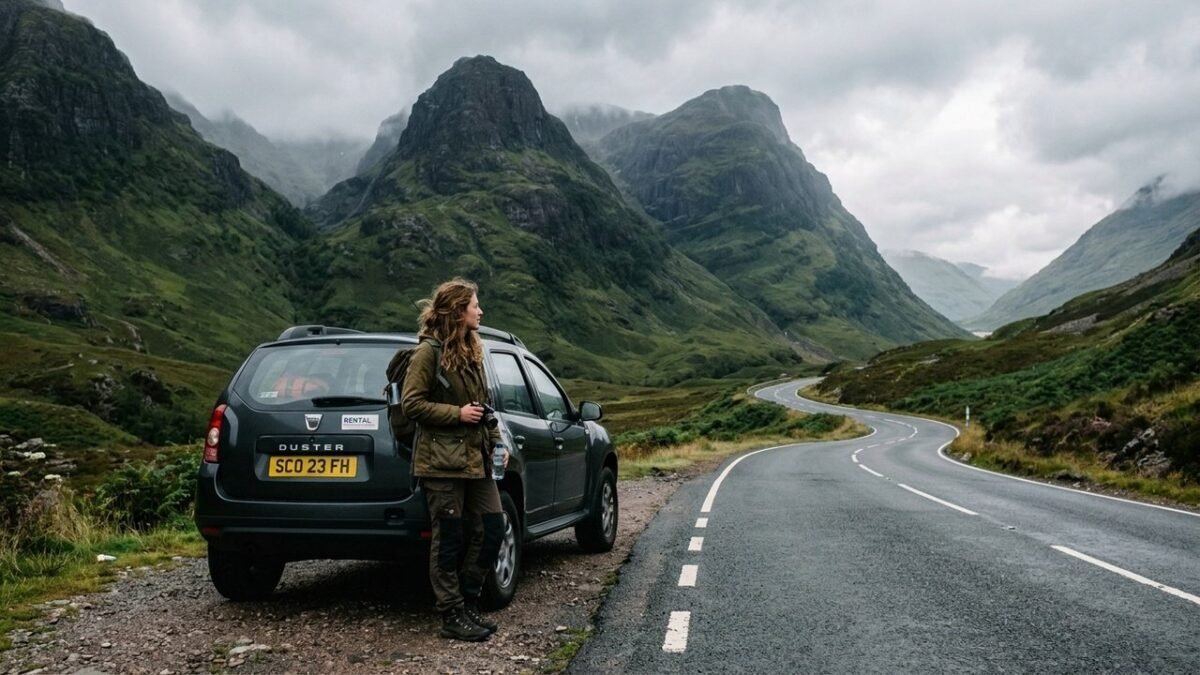
I landed in Edinburgh with a notebook, a rented manual hatchback, and a strict budget of $1,500 for seven days in the Scottish Highlands. Everyone warned me that Scotland had grown prohibitively expensive. They cited summer car rental rates, boutique castle hotel prices, and twenty-dollar pub fish and chips.
- 1. The $1,500 Budget Breakdown (Exact Receipts)
- 2. Choosing Between a Rental Car and Public Transit
- 3. Where to Stay in the Highlands for Under $80 a Night
- 4. Eating Well Without Expensive Pub Bills
- 5. Day 1: Edinburgh to Glencoe via Loch Lomond
- 6. Day 2: Glencoe to Fort William and Glenfinnan
- 7. Day 3: Fort William to the Isle of Skye
- 8. Day 4: Exploring the Trotternish Loop on Skye
- 9. Day 5: Skye to Loch Ness and Inverness
- 10. Day 6: Inverness through the Cairngorms National Park
- 11. Day 7: Cairngorms back to Edinburgh
- 12. 5 Budget Traps to Avoid in Scotland
They were half right. If you book a luxury coach tour or reserve Isle of Skye hotels three days in advance, Scotland will drain your savings quickly. But if you know how to structure your route, shop at local co-ops, and split your nights between family-run guesthouses and historic stone bunkhouses, the Scottish Highlands remains one of the most rewarding road trips in Europe.
I completed my seven-day route across Glencoe, the Isle of Skye, and the Cairngorms for exactly $1,385 total spending. That included my rental car, fuel, private rooms, hearty meals, castle entries, and a dram of single malt every evening.
This complete guide breaks down my exact day-by-day itinerary, honest cost receipts, and practical booking rules so you can experience the Highlands on a realistic budget.
Planning a 7-day Scotland Highlands trip under $1,500 is completely realistic with three rules: rent a compact manual car in shoulder season ($38/day), stay in independent bunkhouses and SYHA hostels ($65-$80/night), and buy groceries at Co-op or Tesco for breakfast and trail lunches. My exact total for 7 days across Glencoe, Isle of Skye, and the Cairngorms was $1,385.
1. The $1,500 Budget Breakdown (Exact Receipts)
Before you hit the road
-
✓
Book automatic cars months ahead: If you cannot drive manual, reserve your car 3 to 4 months in advance. Automatics are scarce in the UK and command a 30 to 45 percent price premium at airport depots. -
✓
Buy petrol in major hubs: Single-track petrol stations charge up to 25p more per liter. Refill your tank in Stirling, Fort William, or Inverness before entering remote glens. -
✓
Stay on the left at passing places: Never cross to the right side to use a passing pocket. Always stop on your left side. If the pocket is on your right, pause parallel to let oncoming cars pull in.
Staying under $1,500 for a week in the UK requires tracking every category daily. The biggest budget killer is unexpected transport fees and impulse pub meals after long days in the wind.
Here is the exact breakdown of what I spent during seven days on the road:
| Expense Category | 7-Day Cost (USD) | Daily Average | Budget Share |
|---|---|---|---|
| Car Rental (7 Days, Manual Hatchback) | $265 | $37.85 | 19.1% |
| Fuel / Petrol (980 miles driven) | $155 | $22.14 | 11.2% |
| Accommodation (6 Nights, Mix of Guesthouse & Bunkhouse) | $530 | $75.71 | 38.3% |
| Food & Groceries (Tesco, Co-op, and Pub Dinners) | $275 | $39.28 | 19.9% |
| Sightseeing, Castles & Parking | $110 | $15.71 | 7.9% |
| Mallaig to Armadale Ferry Crossing | $50 | $7.14 | 3.6% |
| **Total Trip Expenditure** | **$1,385** | **$197.85** | **100%** |
If you travel with a friend or partner, the per-person cost drops even further because car rental, petrol, and private rooms are shared. As a solo traveler, $1,385 gave me full independence, comfortable beds, and plenty of hot Scottish breakfasts.
Scotland petrol stations along remote single-track roads charge up to 25 pence more per liter than stations near major highway hubs. Always fill your tank in Stirling, Fort William, or Inverness before driving into remote glens.
2. Choosing Between a Rental Car and Public Transit
The question every traveler asks is if you should rent a car or take public transit like ScotRail and Citylink coaches.
A rental car provides total flexibility. Scotland has hundreds of dramatic roadside pullouts, hidden waterfalls, and quiet trailheads that no bus visits. For under $40 a day in shoulder season, a compact manual car like a Vauxhall Corsa or Ford Fiesta is easy to handle along narrow passing-place roads. If you cannot drive manual, reserve an automatic at least three months in advance, as automatics command a 30 to 45 percent premium at UK airport hubs.
Taking the train is the budget alternative. ScotRail offers the West Highland Line from Glasgow to Fort William and Mallaig, widely considered one of the prettiest train rides on earth. The Highland Rover pass gives you four days of unlimited train travel over an eight-day window for roughly $135. It connects Glasgow, Oban, Fort William, and Mallaig, plus bus connections to Skye.
If your priority is hiking remote ridges and stopping whenever light breaks across a misty loch, rent the car. If your priority is reading a book while watching dramatic mountain views roll past your window, take the train.
When driving Scotland single-track roads, never cross over to the right side of the road to use a passing place. Always stop on your left. If the passing pocket is on your right, pause parallel to it on the left and let oncoming vehicles maneuver around you.
3. Where to Stay in the Highlands for Under $80 a Night
Highland lodging prices spike dramatically in July and August. However, visiting between late April and early June, or throughout September and October, secures comfortable accommodations at honest rates.
First, look into independent Scottish bunkhouses. Unlike noisy party hostels in big European capitals, Highland bunkhouses cater to hillwalkers, mountaineers, and road trippers. Many are renovated stone barns or historic lodges with drying rooms for wet gear, fully equipped communal kitchens, and private ensuite bedrooms alongside shared dorms. Nights in a private bunkhouse room typically run $50 to $75.
Second, consider SYHA Hostelling Scotland properties. Properties in Glencoe, Glen Nevis, and Portree occupy spectacular scenic settings. Private twin or double rooms in SYHA properties cost between $65 and $85 per night, including access to spotless kitchens and lounge fires.
Third, look for family-run Bed and Breakfasts outside prime tourist centers. Instead of booking in Portree on Skye, stay in Broadford or Uig. Instead of Fort William, check Spean Bridge or Ballachulish.
Book accommodations with on-site guest kitchens. Having access to a stove and refrigerator allows you to prepare your own hot dinners, which easily cuts $30 to $40 off your daily food spending.
4. Eating Well Without Expensive Pub Bills
Dining out across rural Scotland can catch travelers off guard. A standard pub main course like haggis, neeps and tatties, or battered haddock with chips runs $18 to $26, and a pint of craft ale adds another $7. Three meals a day in restaurants will quickly consume $75 daily.
My strategy was simple: eat two self-prepared meals each day and enjoy one warm pub meal every evening.
Scottish supermarkets, especially Co-op and Tesco, stock exceptional local ingredients. A five-pound supermarket stop yields Scottish cheddar, oatcakes, sliced roast beef, fresh rolls, and crisp apples for two days of trail lunches. For breakfast, Scottish porridge oats cooked with a dollop of heather honey and a splash of milk costs less than two dollars and keeps you fueled through miles of hiking.
Save your dining budget for cozy pub evenings. A steaming bowl of Cullen Skink (traditional Scottish smoked haddock, potato, and cream chowder) costs around $10 to $12 at village inns. Paired with fresh crusty bread and butter, it is one of the most satisfying dinners on the planet.
Supermarket meal deals in the UK are legendary. For roughly $4.50, a Tesco or Co-op meal deal includes a gourmet sandwich or wrap, a snack like crisps or fruit pots, and a bottled drink. It is the cheapest trail lunch in the Highlands.
5. Day 1: Edinburgh to Glencoe via Loch Lomond
Your road trip begins by picking up your car in Edinburgh or Glasgow and heading north toward the dramatic Highland boundary fault line.
Take the M9 motorway toward Stirling, pausing briefly to view the historic castle crags, before connecting to the A84 toward Callander. This is where rolling lowlands give way to heather-covered hills and dark freshwater lochs. Continue past Loch Lubnaig and through the dramatic pass of Leny.
By early afternoon, you will reach Loch Lomond and The Trossachs National Park. Stop in the village of Luss to walk the pebble beach and admire the slate cottages with flower boxes.
As you join the A82 climbing onto Rannoch Moor, the landscape shifts dramatically. Open peat bogs, dark granite peaks, and rushing burns stretch in every direction. The road curves toward the Pass of Glencoe, with the Three Sisters peaks looming above the tarmac. Stop at the viewpoint car park to walk into the hidden valley (Coire Gabhail), where the MacDonald clan once hid cattle.
End your afternoon settling into your guesthouse in Ballachulish or Glencoe village. Grab a bowl of venison stew at the Clachaig Inn, a famous mountain refuge that has welcomed weary hikers since the 17th century.
The car park for the Three Sisters fills by 9am during summer months. Arriving between 4pm and 6pm provides golden evening light, empty trails, and free parking spots as day-trippers head back south.
6. Day 2: Glencoe to Fort William and Glenfinnan
Wake up early to catch morning mist rising off Loch Leven. Drive the short distance around the loch edge into Fort William, the outdoor recreation capital of the UK sitting at the base of Ben Nevis.
Instead of paying for expensive tourist excursions in town, head directly down the A830 Road to the Isles toward Glenfinnan. This route is famous for coastal views and historic monuments. The Glenfinnan Monument marks the spot where Bonnie Prince Charlie raised the Jacobite standard in 1745.
Just behind the monument sits the majestic Glenfinnan Viaduct, an 1898 concrete railway curve made famous across global cinema. While hundreds of visitors crowd the main visitor center car park and pay steep parking fees, park in the village pullout and take the easy trail up to the hillside viewpoint.
Watching the historic steam engine cross the viaduct with plumes of white smoke billowing across the green glen is an unforgettable sight. Check the Jacobite train timetable beforehand to arrive thirty minutes before the scheduled crossing time.
Return to Fort William in the late afternoon to explore Neptune’s Staircase in Banavie, an impressive series of eight canal locks engineered by Thomas Telford in the early 19th century.
Skip the paid national trust car park at Glenfinnan. Drive two hundred meters past the visitor center entrance toward the church, where a free public parking area connects to the viaduct trail via a quiet wooden footbridge.
7. Day 3: Fort William to the Isle of Skye
Today you make the crossing to the Isle of Skye. You have two options: the CalMac vehicle ferry from Mallaig to Armadale, or driving north through Kyle of Lochalsh across the free road bridge.
I strongly recommend taking the morning ferry from Mallaig. Driving the coastal A830 in early light brings views of the white sands of Morar. The ferry ride across the Sound of Sleat takes forty-five minutes, costs roughly $50 for a car and passenger, and frequently rewards travelers with sightings of porpoises, seals, and coastal seabirds.
Arrive on Skye at Armadale on the Sleat Peninsula, known as the garden of Skye for its ancient oak woodlands and milder microclimate. Drive north along the single-track road toward Broadford, taking in views of the jagged Black Cuillin mountains across the bay.
Stop at the Sligachan Old Bridge, where clear peat-tinted water flows under stone arches beneath the mountain summits. Legends claim washing your face in the river waters grants eternal beauty, but the true prize is the panoramic trail view heading into Glen Sligachan.
Reach Portree, the island capital, by late afternoon. Walk down to the harbor to photograph the row of pastel-painted fishing houses reflected in the quiet harbor water.
Book the Mallaig to Armadale CalMac ferry at least four weeks in advance if traveling with a car. If the ferry is sold out, do not panic: the Skye Bridge at Kyle of Lochalsh is completely free to cross and adds only forty minutes of driving.
8. Day 4: Exploring the Trotternish Loop on Skye
Dedicate your full fourth day to the Trotternish Peninsula, the northern crown of Skye formed by prehistoric landslips that created jagged basalt pinnacles and towering cliffs.
Start before 8am at the Old Man of Storr. Hiking the two-mile return trail before crowds arrive allows you to experience the massive sixty-meter rock spire in reverent silence. The climb takes roughly forty-five minutes through pines and grassy slopes, rewarding you with panoramic views across the Sound of Raasay.
Continue north to Kilt Rock and Mealt Falls, where freshwater plunges ninety meters over sea cliffs directly into the crashing ocean below.
Next, turn inland onto the single-track road that crosses the Quiraing. This geological formation features plateaus, stone towers, and dramatic cliff faces. The Quiraing loop trail is a four-mile walk along narrow rock ledges that delivers some of the finest mountain scenery anywhere in the British Isles.
Finish your afternoon at the Fairy Glen near Uig, a bizarre miniature landscape of conical grassy mounds, solitary stone ruins, and winding sheep trails that feels straight out of folklore.
Save this for later on Pinterest!
Follow us for more honest budget travel guides: @savydispatches on Pinterest
Weather on the Trotternish ridge is fierce. Even on sunny days, gusts atop the Quiraing can knock you off balance. Always carry a waterproof windbreaker, fleece gloves, and sturdy lugged hiking boots in your daypack.
9. Day 5: Skye to Loch Ness and Inverness
Bid farewell to Skye by driving east over the Skye Bridge toward the Scottish mainland. Your first stop after crossing back to the mainland is the postcard fortress of Eilean Donan Castle.
Perched on a tiny tidal island where three sea lochs meet, Eilean Donan is one of the most photographed monuments in Scotland. While tickets to tour the interior cost roughly $14, walking the shoreline bridge and admiring the stone ramparts from the public shore is completely free and provides superior photography angles.
From Eilean Donan, follow the A87 through Glen Shiel. The road winds between the steep slopes of the Five Sisters of Kintail before opening up onto the tranquil waters of Loch Ness.
Drive the northern bank of Loch Ness along the A82, pausing to explore the romantic ruins of Urquhart Castle perched on the water edge. Continue onward into Inverness, the cultural capital of the Highlands, where the River Ness empties into the Moray Firth. Spend your evening strolling along the Ness Islands walking paths, crossing historic suspension footbridges shaded by massive Scots pines.
Urquhart Castle car park is notoriously crowded and expensive. For a free and quieter view of Loch Ness with ancient stone walls, visit the historic ramparts of Fort Augustus at the southern tip of the loch instead.
10. Day 6: Inverness through the Cairngorms National Park
Leaving Inverness, head south on the A9 into the expansive wilderness of Cairngorms National Park, the largest national park in the United Kingdom.
Your first morning detour is the Culloden Battlefield, located just outside Inverness. This atmospheric moorland is where the Jacobite army was defeated in 1746, marking a pivotal turning point in Highland clan culture. Walking the memorial paths among clan marker stones is free and deeply moving.
From Culloden, drive south toward Aviemore and the Rothiemurchus estate. This region contains ancient remnants of the Caledonian Pine Forest, home to red squirrels, ospreys, and Scottish crossbills. Take the gentle three-mile loop trail around Loch an Eilein to view the 13th-century island castle ruin resting quietly in the center of the dark forest loch.
Continue south past Kingussie into the dramatic mountain pass of Drumochter. Stop at the Highland Folk Museum in Newtonmore, an open-air historical site showing reconstructed 18th-century Highland turf villages. Entry is completely free, making it one of the premier cultural values in the country.
Spend your final night in the historic Victorian resort town of Pitlochry, known for its stone architecture, craft distilleries, and riverside trails.
Admission to the Highland Folk Museum is officially free, though donations are appreciated. It offers an authentic glimpse of original turf-roofed clan cottages without the commercialized crowds found at private tourist centers.
11. Day 7: Cairngorms back to Edinburgh
On your final day, take the scenic route from Pitlochry through Highland Perthshire back toward Edinburgh.
Stop at the Queens View overlooking Loch Tummel, named after Queen Victoria who visited the lookout in 1866. On clear mornings, the panoramic view stretches all the way to the distant peak of Schiehallion.
Drive south toward Dunkeld, a picturesque village sitting on the banks of the River Tay. Walk through the ruined gothic nave of Dunkeld Cathedral, surrounded by ancient cedar and larch trees. Pick up fresh handmade oatcakes and artisanal Scottish cheese from the local village deli for your final road trip lunch.
Cross the Queensferry Crossing over the Firth of Forth in the early afternoon, admiring the iconic red steel cantilever arches of the Forth Rail Bridge, a UNESCO World Heritage engineering landmark.
Return your rental car at Edinburgh Airport or the city center depot, concluding an epic 980-mile loop through the heart of the Scottish Highlands with your $1,500 budget intact.
When returning your rental car at Edinburgh Airport, refill your fuel tank at the local supermarket station on Ingliston Road rather than the airport forecourt pumps, which charge an extra 15 pence per liter.
12. 5 Budget Traps to Avoid in Scotland
Even disciplined budget travelers can accidentally overspend on road trips. Keeping these five common pitfalls in mind will protect your travel funds:
First, avoid driving peak summer months without lodging reservations. Booking rooms last minute in July or August often forces travelers into luxury lodges charging upwards of $250 per night simply because budget rooms are completely filled.
Second, do not buy single-ride ScotRail train tickets on the day of travel. UK train tickets purchased walk-up can be three times more expensive than tickets booked four to eight weeks in advance via the National Rail or Trainline apps.
Third, beware of tourist car parking fees. Private pay-and-display lots at famous landmarks charge between $5 and $12 per stop. Always look for marked council bays, public forestry car parks, or pullouts with pedestrian footpath access.
Fourth, steer clear of tourist whisky shops on the Royal Mile in Edinburgh or Portree square. If you want to take home a bottle of single malt, buy it directly from an independent distillery visitor center on your route or at a standard local supermarket, where prices are 25 to 40 percent lower for the identical bottle.
Fifth, watch out for midges in July and August. These tiny biting insects can ruin an outdoor trip. If you visit during peak summer, buy Smidge lotion at local pharmacies rather than expensive boutique repellents that do not work against Scottish midge swarms.
Standard insect repellents containing DEET are ineffective against Highland midges. Always pick up Smidge, a Scottish-formulated picaridin lotion available in every Highland pharmacy, outdoor shop, and petrol station.