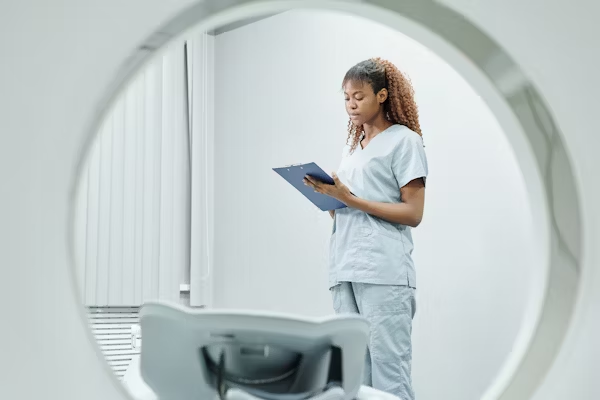
Imaging appointments are routine in modern healthcare, yet what actually happens during and around them is often poorly explained.
Patients and even some clinicians frequently walk into these appointments with a limited understanding of what the procedures entail, what to expect, and what the results can and cannot reveal.
This gap in communication can lead to avoidable stress, delays, and misinformed decisions.
Preparation Is Not Always Straightforward
One thing patients are rarely told is that preparation for imaging isn’t always as simple as following generic instructions. Whether you’re attending for an MRI, CT, PET scan, or ultrasound, the preparatory steps can vary significantly.
Fasting might be advised, but in some cases, medication may need to be stopped, or special instructions followed to ensure safety and accuracy. For instance, patients with kidney problems may require specific blood tests before receiving contrast agents, yet this is not always communicated clearly ahead of time.
Contrast Agents Come with Considerations
Another overlooked aspect is the use of contrast media. These are substances injected or swallowed to help visualise certain areas of the body more clearly. Although widely used and generally safe, contrast agents are not risk-free.
Individuals with asthma, allergies, or impaired kidney function may be more prone to adverse effects. However, the risks, alternatives, or implications are often not discussed in meaningful detail, and consent tends to be limited to a signature rather than an informed discussion.
Your Radiologist May Not Be Who You Expect
Patients also rarely hear about what happens to their scan once it’s complete. Many assume their doctor will interpret the results, when in fact, it’s a radiologist, often someone they will never meet, who analyses the images and writes a report.
Even more surprising is that not all radiologists interpret all types of scans. A specialist in musculoskeletal imaging, for example, is not best placed to assess a brain scan. This matters, especially in complex or borderline cases, yet patients are not informed who is reading their images, or whether a second opinion is warranted.
Delays Are Common—and Often Unexplained
Another layer often left unexplained is the turnaround time for results. While some scans are prioritised, others may take days or even weeks depending on urgency, availability of specialists, or local healthcare pressures.
This delay is not always factored into clinical planning, which can result in unnecessary anxiety or postponement of treatment. Worse still, patients are rarely told that they can and sometimes should chase results if delays exceed what’s clinically reasonable.
Radiology Reports Are Hard to Understand
The way results are delivered can also be problematic. Radiology reports are written in technical language, often full of abbreviations and hedged statements that make interpretation difficult. Even when patients gain access to their reports, the findings may be unclear without a doctor’s explanation. And even then, the conclusions are not always definitive.
A scan might reveal something, but it doesn’t always explain it. Many findings are incidental or ambiguous, requiring further testing or simply ongoing observation, and resources such as InsideRadiology Australia help standardise the terminology clinicians use to communicate these results more clearly.
Imaging Is Only Part of the Picture
What’s rarely emphasised is that imaging is just one part of the diagnostic process. A normal scan doesn’t always rule out disease, and an abnormal one doesn’t automatically confirm it.
Imaging must be interpreted in the wider context of symptoms, history, and other investigations. Yet patients are often led to believe the scan alone holds all the answers, which can distort expectations and complicate shared decision-making.
A Hidden Knowledge Gap
In truth, what patients aren’t told about imaging appointments is not usually due to negligence, but time constraints and systemic gaps in communication.
Still, the impact is the same: people attend appointments without fully knowing what will happen, why it matters, or what the results will mean. For something as central to healthcare as medical imaging, that’s a silence we can no longer afford.