The net is still wet from last weekend. The aluminum pole is leaning awkwardly against the patio wall, leaving a faint water stain on the stucco. As you glance at the slight cloudiness forming near the deep end, you already know exactly what your Saturday morning will look like. For decades, this relentless cycle of skimming, scrubbing, and chemical guessing was simply accepted as the unwritten contract of having a backyard pool. It was the price of admission for a private aquatic oasis.
Today, however, a quiet rebellion is taking place in suburban neighborhoods and coastal properties. The romance of the DIY weekend chore is fading, replaced by a growing recognition that manual upkeep is no longer sustainable for modern schedules. Homeowners are fundamentally shifting how they interact with their outdoor spaces. The transition away from manual labor is not merely about chasing convenience; it is a calculated response to the hidden resource leaks, chemical volatility, and the massive time deficit inherent in traditional pool care.
The Unforgiving Time Deficit
The most immediate driver of this behavioral shift is the realization of how much time a pool actually consumes when maintained by hand. A swimming pool is a highly volatile biological environment. Delaying a lawn mowing by three days is harmless; delaying a pool brushing by three days in mid-July often results in a full-blown algae bloom.
Skimming the surface for atmospheric pollutants, pollen, and leaves must be done almost daily to prevent debris from becoming waterlogged and sinking to the floor. Manually brushing the slick PVC or tile walls to disrupt invisible biofilm, followed by meticulously vacuuming the floor, is a strenuous physical task. It routinely consumes one to two hours of intense, repetitive labor. When aggregated over a standard six-month swimming season, a homeowner might sacrifice upwards of 50 to 60 hours purely on mechanical cleaning. In a landscape where downtime is increasingly rare, sacrificing entire weekends to property upkeep is a compromise fewer people are willing to make.
The Hidden Resource Bleed of the Backwash
Beyond the loss of time, manual maintenance harbors invisible financial leaks, primarily related to water and energy waste. When a homeowner uses a traditional manual vacuum hose hooked into the pool’s skimmer, all the extracted heavy dirt, sand, and organic debris is forced directly into the home’s primary filtration system.
As this heavy load enters the main sand or glass filter, the system pressure spikes rapidly. To relieve this pressure and restore safe water flow, the homeowner must perform a “backwash.” This procedure reverses the flow of water to flush the trapped dirt out of the filter and directly into the municipal sewer or yard. A single, thorough backwash cycle can easily expel hundreds of gallons of water. If a homeowner is manually vacuuming heavy debris and backwashing weekly, they are flushing thousands of gallons of treated, balanced, and potentially heated water down the drain every season. This necessitates refilling the pool with cold tap water, which then requires expensive reheating and a complete rebalancing of the water chemistry.
The Cost of Human Inconsistency
Even the most dedicated property owner is bound by human inconsistency. A rushed brushing job before a family event often leaves microscopic organic matter clinging to the walls, particularly at the waterline where body oils and sunscreen bake under the UV rays.
When this organic matter is left to linger, it begins to decompose. This decomposition feeds bacteria, causing the pool’s baseline chlorine demand to skyrocket overnight. To correct the resulting cloudy water, owners are forced to dump massive amounts of harsh chemical shock treatments into the system. These wild, reactive swings in chemical saturation are disastrous for the pool’s structural integrity. Constant exposure to aggressively high chlorine levels, combined with the abrasive manual scrubbing required to remove neglected algae, drastically accelerates the degradation of pool liners, fades expensive gel coats, and ruins the grout between glass tiles.
The Shift to Autonomous Infrastructure

If manual maintenance is so inherently flawed, why didn’t the industry shift earlier? The answer lies in the limitations of legacy equipment. For years, the alternatives to the manual pole were either clumsy, hose-driven suction cleaners that still clogged the main filter, or early-generation robots that constantly tangled their power cords and moved in frustratingly random, overlapping patterns.
The mass migration happening today is driven by the fact that the hardware has finally matured into reliable infrastructure. The focus has shifted from reactive cleaning to proactive, self-regulating management. By integrating a high-performance robotic pool vacuum, homeowners can instantly bypass the wasteful backwashing cycle, as these independent units trap debris within their own internal filters rather than relying on the home’s main pump.
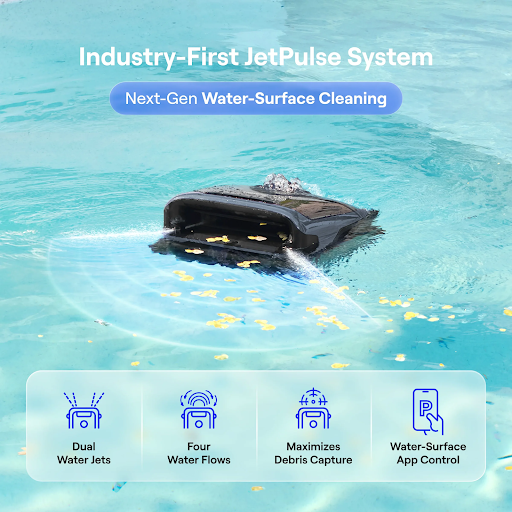
One clear example of this shift can be seen in systems like the Beatbot AquaSense X. It serves as a strong representation of how the industry is moving away from fragmented chores. Instead of simply wandering around the floor, modern units are designed to address the entire aquatic space holistically. They utilize active buoyancy systems to rise to the surface, skimming floating pollen and insects before they sink.
When moving underwater, they generate the necessary hydrodynamic traction to adhere to walls and scrub the critical waterline. Most importantly, by utilizing advanced spatial mapping instead of random bumping, these devices ensure complete, efficient coverage of the pool’s interior. Integrating a pool auto vacuum at this level reflects a broader industry movement: treating the pool not as a weekend project, but as a seamlessly managed extension of the smart home.
A Changing Neighborhood Baseline
As intelligent technology continues to integrate seamlessly into outdoor living spaces, the expectations surrounding property maintenance are naturally evolving. The shift away from the manual telescopic pole is less about chasing the latest high-tech gadget and more about rethinking how we allocate our most precious resource: our time.
By removing the guesswork from chemical balancing, eliminating the massive water waste of constant backwashing, and neutralizing the physical strain of weekend scrubbing, automated systems are quietly establishing a new baseline for outdoor living. For the modern homeowner, the ultimate luxury of a backyard pool isn’t just the pristine water itself—it’s having the freedom to simply enjoy it, long after the manual pole has been put away for good.