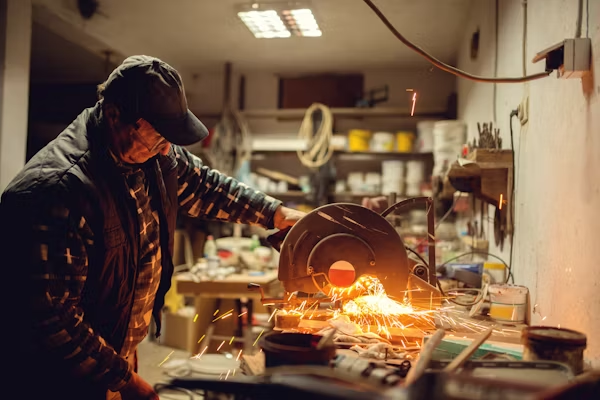
Enter the realm of metal foundries, and you will find a place where you can find a combination of creativity, craftsmanship, and high heat. Foundries are locations where raw materials, oftentimes in solid form, are melted, cast and formed into accurate, long-lasting subparts or works of art. Whether you have automotive parts, architectural, or even fine art casting, a foundry brings the vision of that metallurgical piece to life in ways that can be genuinely transformative.
The Heart of the Process: Melting and Molding
In a foundry, everything begins with great heat. The metal, be it iron, steel, bronze, or aluminum, is brought to a state of liquidity. This molten mixture is then poured into molds, and this determines the shape of the final composition. After cooling and solidification, it is removed and cleaned, and in many applications, it is then finished. It is a remarkable transformation, from solid to liquid and back to solid, with dexterity and accuracy.
Various Methods of Casting
The foundry work encompasses numerous types of casting methods that are specialized to specific needs. Large parts are versatile and economical using Sand casting. Investment casting excels when it comes to sensitive details of small jewelry or precision parts. Die casting provides high-volume, high-speed components to industries such as the automotive industry, applicable to mainstream volume production. The selection of a method is based on material, complexity, and scale of production.
Balancing Art and Industrial Precision
Foundries are placed on the thin border between art and industry. Sometimes, founders form architectural decoration, unique sculptures, and ornamental hardware. Other times, they are constituents of high-strength parts of machines, gears, or engine parts. Every project must be technically correct, including exact tolerances, and often requires some decorative element for aesthetic appeal.
Materials that Power the Foundry
Various metals introduce some properties to the foundry. They include steel and iron, which are solid and resistant to breaking; aluminum that is light and rust-proofed; and bronze that exhibits both a sense of the past and flexibility. The material to be used would relate to the functionality of the given piece, whether it would be support or visual. These materials are further customized to their end-use through the use of additives, alloys and protective coatings.
Safety and Sustainability in Foundry Work
Molten metal entails elevated temperatures and a lot of machinery that consumes significant energy. Safety guidelines- protective equipment, ventilation, and handling- are essential in any foundry. Sustainability is equally important to many of the newly built foundries: they use systems that recover the energy produced, and metal scraps are recycled, resulting in minimal waste and environmental pollution.
Crafting Through Quality and Testing
Post casting flaws have to be examined in every piece. Accuracy and reliability are guaranteed by methods such as X-ray, ultrasonic testing and dimensional measurement. Where problems are identified, they are addressed through correction, modification, or abandonment of the piece. Whether a structural element or a fragile sculpture piece, quality control ensures that all pieces perform as intended.
Craftsmanship That Shapes Tomorrow
Foundries beget the union of both dream and manufacture, primitive forms prepossessed by modern skill and intent. The outcome: all sculptural public art, architectural structures, and details are integrated into infrastructure or machines. Go inside and learn how the process of molten metal to finished masterpiece can reveal how foundries can quietly influence the world we live in, one cast at a time.
Final Thoughts
A founder’s work is a blend of rough power and delicate work. Whether it is the making of long-lasting parts in an industrial sense or the artistically inspired finish product, foundries create objects made out of molten metal and give them a purpose, a story, and a sense of precision. When technique, material and creativity work in the right balance, a foundry can create structures, facilitate and promote innovation and make artistic visions come alive, physically casting the future in metal.