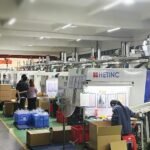

In today’s competitive market, selecting the right manufacturing technology is critical for businesses striving to remain efficient, cost-effective, and innovative. Two popular methods, injection molding and 3D printing, offer unique advantages and are suitable for different production needs. In this article, we will compare both technologies, helping business owners and decision-makers like you determine which is more suitable for your specific production requirements.
What is Injection Molding?
Injection molding is a manufacturing process where molten plastic or metal is injected into a mold to form parts. Once the material cools, it solidifies into the desired shape. This process is widely used in industries that require high-volume production of precise and consistent parts.
Advantages of Injection Molding
- High Precision and Repeatability: The process produces highly accurate and consistent parts, ideal for industries requiring tight tolerances.
- Ideal for High-Volume Production: Once the mold is made, the production process is fast and cost-effective, especially for large-scale runs.
- Material Variety: Injection molding supports a wide range of materials, including plastics, metals, and elastomers, allowing manufacturers to choose the most suitable material for their products.
- Cost-Effective for Large Runs: The per-unit cost decreases significantly as production volume increases.
Limitations of Injection Molding
- High Initial Mold Setup Costs: Creating the mold is expensive, making it less ideal for small production runs.
- Limited Design Flexibility: The mold design can limit the complexity of parts, making it difficult to produce intricate or customized shapes.
- Longer Lead Times: The time needed to create molds can delay the start of production, especially for complex parts.
Working with an experienced plastic injection company can help ensure that the production process meets high-quality standards and efficiency.
What is 3D Printing?
3D printing, also known as additive manufacturing, is a process where material is added layer by layer to build a 3D object from a digital model. Unlike injection molding, 3D printing does not require molds, making it ideal for more complex designs or small production volumes.
Advantages of 3D Printing
- Flexibility in Design and Complex Geometries: 3D printing allows you to create complex shapes and intricate designs that may not be possible with traditional manufacturing methods.
- Ideal for Small-Scale Production and Prototypes: It’s an excellent choice when you need to quickly prototype or produce low volumes of a part without the high costs of tooling.
- No Need for Molds: 3D printing eliminates the need for expensive mold creation, saving both time and money, especially for small batches.
- Cost-Effective for Low-Volume Runs: For small production runs, 3D printing can be more affordable compared to injection molding.
Limitations of 3D Printing
- Slower Production Speed: 3D printing is slower than injection molding, especially when producing larger parts or high quantities.
- Material Options: While 3D printing materials are expanding, they still don’t offer the same variety or durability as injection molding materials for certain applications.
- Lower Strength and Durability: For some applications, 3D-printed parts may not be as strong or long-lasting as those made with injection molding.
Many businesses are turning to 3d printing manufacturing to streamline their production processes, especially when they need to create custom parts or prototypes quickly.
When Should You Choose Injection Molding?
High-Volume Production
If your business needs to produce a large number of identical parts, injection molding is the ideal choice. As the production volume increases, the cost per unit decreases, making it highly cost-effective for large runs.
Precision and Consistency
Injection molding excels when your products require precise dimensions and consistent quality. For industries such as automotive or electronics, where exact tolerances and reliability are critical, injection molding ensures the quality you need.
Material Variety
Injection molding offers an extensive selection of materials, including engineering plastics, metals, and composites. If your product requires a specific material for functionality, strength, or durability, injection molding provides a wide array of choices.
Use Case Examples:
- Automotive Industry: Parts like dashboards, bumpers, and interior components.
- Consumer Electronics: Items such as mobile phone housings and remote control casings.
- Packaging: Manufacturing plastic containers, bottles, and closures.
When Should You Choose 3D Printing?
Prototyping and Design Flexibility
If you need to quickly prototype or modify a design, 3D printing is ideal. This technology allows you to test multiple iterations of a part before committing to mass production.
Low-Volume or Custom Production
3D printing is perfect for small batches or customized parts. If you need custom designs, such as one-off products or personalized items, 3D printing gives you the freedom to create unique products without the high costs of tooling.
Complex Geometries
3D printing can produce highly complex and intricate shapes that would be challenging or impossible with traditional manufacturing methods. If your product requires unique geometries, 3D printing can help.
Use Case Examples:
- Medical Industry: Custom implants, prosthetics, and surgical guides.
- Aerospace: Lightweight parts, complex structures, and components that reduce material waste.
- Consumer Products: Custom jewelry, footwear, or art pieces that require intricate design work.
Key Factors to Consider When Choosing Between Injection Molding and 3D Printing
Production Volume
The scale of production plays a significant role in deciding between these two technologies. For large-scale, mass production, injection molding is the way to go, as it offers cost efficiency at high volumes. On the other hand, if you only need a small number of parts, 3D printing is more suitable.
Lead Time
If you’re on a tight schedule, 3D printing can offer quicker turnaround times, especially for prototyping. Injection molding, while efficient in mass production, requires significant lead time to create molds.
Material Requirements
Consider the materials your product requires. Injection molding offers a broad range of materials, while 3D printing is still somewhat limited in terms of material options. However, 3D printing is highly adaptable for custom materials and specific applications.
Cost Analysis
While injection molding has higher upfront costs due to mold creation, the per-unit cost becomes much lower in high-volume runs. Conversely, 3D printing may be more cost-effective for low-volume or customized production but can become more expensive as production volume increases.
Case Studies: Real-World Applications
Example 1: Consumer Electronics
A company in the consumer electronics industry required the mass production of phone cases. Injection molding was chosen for its efficiency in producing large quantities at a low cost per unit, ensuring consistent quality and durability.
Example 2: Fashion Industry
A startup in the fashion industry wanted to prototype custom jewelry designs quickly and cost-effectively. 3D printing allowed them to test and refine their designs without the need for expensive molds, enabling rapid iteration and creative freedom.
Conclusion
In conclusion, both injection molding and 3D printing have distinct advantages and are suited for different production needs. Injection molding is best for high-volume, precise, and durable parts, while 3D printing excels in prototyping, low-volume production, and custom designs. By carefully evaluating your production needs, volume, material requirements, and lead times, you can make an informed decision that will help your business thrive.
If you’re still unsure which technology is right for your business, consider consulting a manufacturing expert or supplier who can guide you in choosing the most suitable option for your specific needs.