.
Connect with us

Others

Mobile First? Try ‘Charlotte First’: Designing for a City That’s Always Scrolling

Published

on

Mobile First? Try ‘Charlotte First

We’ve heard it for years: “mobile-first design.” But in 2025, the mobile-first mantra feels like the web version of saying “don’t forget your jacket” in a July heatwave—necessary, sure — but also kind of obvious. What’s not immediately apparent is how local culture influences user behavior, including scrolling, clicking, and bouncing. And that’s why website design in Charlotte deserves its spotlight.

Charlotte’s not just another metro in the Southeast. It’s an economic engine, a fintech magnet, and a lifestyle powerhouse all wrapped into one — and yes, it’s got opinions about your website. Designing for Charlotte users isn’t just about responsiveness; it’s about attitude, speed, simplicity, and the subtle charm of digital Southern hospitality. So if your site loads like molasses or looks like it belongs to a used car dealership in 2007, this is your sign.

This isn’t just mobile-first. This is Charlotte-first. Welcome to the UX expectations of a city that’s always on the go.

From Bankers to Brewers — Charlotte’s Digital Demographic

What makes website design in Charlotte so different? The answer is somewhere between a Wells Fargo tower and a South End beer garden.

Charlotte’s population is a beautiful contradiction: polished professionals by day, laid-back adventure-seekers by night. The city’s tech-savvy, on-the-go crowd doesn’t have patience for slow-loading pages or bloated design. At the same time, they want more than minimalism. They want elegance without arrogance. That means your site better be both stylish and subtle, optimized for performance and personality.

The growing fintech sector expects a frictionless user experience. The local food and retail boom demands visual appeal. And nearly everyone — from Gen Z students at UNC Charlotte to real estate agents hopping between showings — is experiencing your brand for the first time on a phone screen. That’s the pressure cooker where website design must prove its worth.

In this city, bad web design is like showing up to a rooftop bar in Crocs — you won’t get kicked out, but everyone will remember.

Mobile-First Is the Minimum — Here Comes Context-Aware Design

Let’s get something straight: website design in Charlotte is not about screen size. It’s about situational awareness.

Take lunchtime downtown. Thousands of professionals are ordering lunch, checking Slack, texting their spouse, and sneakily browsing your site — all in the same five-minute window. Your design has to get that. Every scroll, every tap, every second of load time either pulls them in or pushes them out. This isn’t UX in a vacuum — it’s UX in the wild.

In Charlotte, website visitors are on the move. They’re switching devices. They’re dodging potholes while reading your About page. You have milliseconds to impress and micro-interactions to nail. Static layouts are toast. Adaptive, anticipatory design is the secret sauce.

This is why Above Bits doesn’t just design sites for devices — we design for moments. Whether someone is on a scooter in NoDa or multitasking during their kid’s soccer practice in Ballantyne, the website has to work. Not just technically — emotionally.

The Hallmarks of a Charlotte-First Website Design
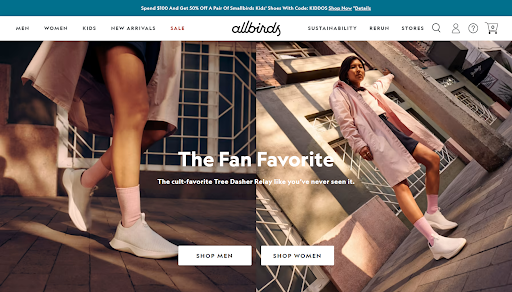
If you’re targeting local users and hoping to be more than a flash-in-the-pan startup, website design in Charlotte needs to include the following non-negotiables:

  • Speed that screams: You’ve got three seconds — maybe less. Local competition loads faster than a pit crew at a NASCAR race.
  • Refined branding: Fonts and colors matter here. Loud neon and chaotic layouts scream “template from 2012.”
  • Clever use of space: Charlotte users like clean, purposeful designs — not endless scrolls or cluttered info dumps.
  • Local flavor: Whether it’s copy, photography, or even icons, a nod to the Queen City vibe adds personality to your site.
  • Conversion-aware layouts: Every button, contact form, and CTA requires a clear purpose. Charlotte users don’t tap out of politeness.

Charlotte web design isn’t about reinventing the wheel — it’s about not flattening the tires while you’re at it.

Custom Beats Cookie-Cutter, Every Time

Let’s talk real-world pain: too many businesses come to us saying, “We hired someone who installed a theme and said it was done.” Guess what? In website design in Charlotte, that just doesn’t cut it anymore.

People here recognize a cookie-cutter site when they see one. It’s the digital equivalent of microwaved queso — fast, but bland and weirdly sad. Your website is your brand’s handshake. It should feel deliberate, tailored, alive, and not copied from a template shop’s demo page.

Charlotte’s most successful brands — from boutique gyms to artisan bakeries to six-figure law firms — share one trait: a design that reflects them, not a theme found in a marketplace in Eastern Europe.

When you build custom, you build trust. When you build local, you build loyalty. When you build both, people click, scroll, and, most importantly, return.

Real UX Happens When Charlotte Stops Thinking

The paradox of good design? It disappears. That’s the golden rule in website design in Charlotte — especially in a city where people are juggling work, family, side hustles, and more open browser tabs than they’ll ever admit.

Your site shouldn’t make people think. It should make them feel confident. Confident in your product, your brand, your reliability. And that confidence is built on frictionless UX, meaningful content, and intuitive design, not on autoplay videos, five pop-ups, or an impossible-to-find phone number.

We’ve seen it firsthand: when a site “just works,” users stay longer, trust faster, and convert better. That’s not just theory — it’s data from dozens of Charlotte projects we’ve launched, re-launched, and fixed after others broke them.

So yes, mobile-first is a must. But Charlotte-first? That’s the secret most agencies are still trying to catch up to.

Lessons from the Streets — Charlotte Projects That Set the Bar

We’ve built websites across the country, but the ones that make us sweat in the best way are the ones for local businesses right here in Charlotte. Why? Because the bar is high and rising. We’re not talking about just making things look nice. We’re talking about designing for real users with high expectations and short attention spans.

Take the redesign we did for a boutique wellness center in Dilworth. Their old site was technically “mobile responsive,” but it didn’t feel responsive to how their customers lived. Appointment booking was clunky. Contact forms were buried. Mobile load time made iced lattes melt before the page finished rendering.

We rebuilt the site from scratch — featuring custom layouts, fast-loading modules, and a UX flow that allows a user to book a session in under 30 seconds. Conversion rates went up. Bounce rates dropped. People started complimenting the business… on their website. That’s Charlotte’s thinking in action.

And that’s just one story. We’ve done this for realtors in SouthPark, small retailers in Plaza Midwood, and even a local startup that needed an entire visual identity and web presence launched in two weeks. No fluff. No templates. Just clear, effective, and context-aware design built to thrive in Charlotte’s unique digital ecosystem.

Charlotte UX Expectations vs Generic Mobile-First Design

You might think good UX is universal. And sure — fast sites, clear buttons, and clean layouts matter everywhere. However, here’s the reality: website design in Charlotte follows its logic, shaped by a fast-paced economy, a culture of quality, and users who expect convenience wrapped in style.

Let’s break down the difference between designing for Charlotte and just following a mobile-first checklist:

Design ElementMobile-First (Generic)Charlotte-First
Speed ExpectationsUnder 5 secondsUnder 2 seconds, or users bounce
NavigationHamburger menus and dropdownsClear, thumb-friendly, with strong internal links
Aesthetic ApproachFlat design with stock iconsLayered design, branded visuals, subtle animation
Content PlacementTop-down flow with calls-to-action at the endImmediate value proposition, CTA within first view
Local IdentityNone or generalizedLocation-based cues, language, and neighborhood flair
Trust SignalsGeneric testimonials, badgesReal customer stories, Charlotte community signals
Conversion FocusOne-size-fits-all funnelsAdaptive paths for local users and returning visitors

What works for a startup in San Diego might fall flat in Uptown Charlotte. Designing for this city means going beyond checklists and tapping into local behavior. It’s not just mobile-first — it’s relevance-first.

You Can’t Out-Design Misalignment

No matter how slick your visuals are, no matter how clever your CSS transitions, if your site doesn’t align with the way real people in Charlotte think, scroll, and engage — it’s dead weight. And the most brutal truth? You won’t know it until they quietly ghost your site and call your competitor.

This is the pitfall we often see: out-of-town agencies or quick-fix freelancers applying generic logic to a city that thrives on nuance and subtlety. They build flashy landing pages that scream “convert now!” — forgetting that Charlotte users tend to investigate, compare, and make decisions based on subtle impressions of credibility.

Design misalignment can appear in unexpected places. Maybe it’s a homepage that feels too pushy. Or product pages that require you to dig for shipping information. Or a layout that was trendy last year in LA, but now feels forced in North Carolina. And when users sense that dissonance, they’re out. No angry emails. Just an empty analytics report.

The fix? Design that respects the Charlotte mindset. One that values polish over pressure, clarity over clutter, and always meets the user halfway.

Don’t Just Fit In — Fit Charlotte

There’s a temptation in web design to aim for “universal.” A layout that works for everyone. A style that offends no one. But here’s the secret: great design doesn’t just avoid being bad — it leans into being relevant mainly when you’re designing for a place as specific and fast-moving as Charlotte.

Your site isn’t just a container of content. It’s a performance. A storefront. A 24/7 elevator pitch. And when you treat it that way, everything changes. You stop asking, “Will this layout work on mobile?” and start asking, “Will this design make sense to a 32-year-old remote worker sipping coffee on Camden Road while comparing my business to five others?”

Generic web design may get you launched. However, website design in Charlotte helps you get noticed, trusted, and remembered. It’s not a trend. It’s a strategy. And the businesses that understand that are the ones that grow — not because they went viral, but because they stayed relevant, intentional, and tuned in to their audience.

The Last Scroll — Time to Think Charlotte-First

If your website feels more like a digital brochure and less like a living, breathing asset… It’s time to reevaluate. Charlotte is a city full of users who scroll fast, judge silently, and click with purpose. They don’t wait for design to catch up — they move on.

At Above Bits, we don’t just build sites — we create digital experiences tailored to the city we’ve served for nearly two decades. From sleek portfolios to robust ecommerce builds, we’ve helped Charlotte businesses stand out with designs that move people, not just pixels.

Want your site to resonate with your local audience? Stop thinking “mobile-first.” Start thinking Charlotte-first.

Visit us at abovebits.com and let’s build something people want to scroll through.

Continue Reading

Others

Where the Dead Linger Still: The Most Haunted Places in the South

Published

on

The South is America’s oldest ghost. Its streets were laid over centuries of war, plague, fire, and secrets kept by the dead. These places have earned their reputations the hard way, through history too dark to stay buried. Here are the most haunted places in the South that you should not miss. 

New Orleans, Louisiana: The LaLaurie Mansion

The LaLaurie Mansion – Copyright US Ghost Adventures

No address in the American South carries a darker history than 1140 Royal Street in the French Quarter, home to the infamous LaLaurie Mansion. In the spring of 1834, a fire broke out in the kitchen of socialite Delphine LaLaurie’s home, and what firefighters discovered in the attic rewrote the city’s understanding of horror.

Behind a locked door on the upper floor, enslaved men and women were found chained, mutilated, and subjected to unspeakable cruelties over what investigators believed were years. The revelation sent the city into a fury. A mob stormed the mansion while Madame LaLaurie fled by carriage and was never brought to justice. She died in Paris, possibly in 1849.

Since then, the mansion has cycled through dozens of owners, including actor Nicolas Cage, who purchased it in 2007 before losing it to foreclosure. Every owner has had stories to tell. Neighbors report screams rising from the building after dark. Passersby photograph shadows in upper windows when the building is empty. Ghost hunting teams claim to have recorded voices still begging for release.

The most commonly reported phenomenon: the sound of chains dragging across hardwood floors in the small hours of the night, heard clearly from the street below.

Savannah, Georgia: The Marshall House Hotel

Savannah’s oldest operating hotel, the Marshall House Hotel, opened in 1851 and served as a Union Army field hospital twice, during the yellow fever epidemics of the 1850s and again during the Civil War occupation of 1864. Surgeons operated around the clock in the halls; limbs were removed and buried beneath the floorboards and in the courtyard. In a grim discovery during 1990s renovations, workers unearthed human bones beneath the hotel floor.

Guests consistently report seeing a young girl in a white dress wandering the upper corridors. Others describe a man in a long dark coat standing at the foot of their bed, gone by morning. The fourth floor, once the main surgical ward, logs the most complaints of unexplained cold spots, sudden nausea, and lights that refuse to stay off.

Also in Savannah: Colonial Park Cemetery

Established in 1750, Colonial Park is the city’s oldest surviving burial ground and the final resting place of more than 9,000 souls, many of them victims of yellow fever epidemics. When Union soldiers occupied Savannah in 1864, they camped in the cemetery and vandalized headstones, altering the dates on markers as a dark joke. Hundreds of those stones remain altered today.

Shadow figures drift between the ancient oaks at night. Orbs appear in photographs taken near the older graves. Children’s laughter is heard near the far wall where small stones mark victims of the 1820 epidemic. EVP recordings by local ghost tour operators have repeatedly captured a low male voice near the dueling ground, believed to be Button Gwinnett, signer of the Declaration of Independence, who was fatally wounded in a duel here in 1777.

St. Augustine, Florida: The St. Augustine Lighthouse

The Castillo in St. Augustine – Copyright US Ghost Adventures

Built in 1874, the St. Augustine Lighthouse has stood over three centuries of maritime tragedy and sudden death. Its most enduring spirits are said to be two young daughters of Superintendent Hezekiah Pity, who drowned in 1873 when a construction cart they were playing in rolled off the worksite and into the sea.

Visitors and staff report hearing children giggling on the upper landings, small handprints appearing on freshly cleaned windows, and a persistent scent of perfume on the staircase. The basement, where the girls’ father is said to have sat for days after their deaths, is considered the most active area. The lighthouse has been investigated by multiple paranormal television programs, one of which captured what appeared to be the figure of a young girl at the top of the tower on thermal imaging equipment.

Also in St. Augustine: Castillo de San Marcos

The oldest masonry fort in the continental United States has stood since 1695, built of coquina shell-stone by the Spanish. Its walls have absorbed centuries of siege, imprisonment, and death. The most chilling story of haunted St. Augustine belongs to a sealed chamber discovered during 18th-century renovations: behind a false wall, investigators found two skeletons believed to be those of Colonel García Martí and his wife, Dolores, who had vanished without explanation in the 1730s.

The scent of rose perfume, associated with Dolores, is still reported near the southwest bastion where the chamber was located. Rangers working the night shift describe a pale woman in white who appears near the saltwater moat at dusk and vanishes when approached. The underground magazine, once used for solitary confinement, produces an oppressive dread that even skeptical visitors find difficult to shake.

Annapolis, Maryland: The Maryland Inn

The Maryland Inn – Copyright US Ghost Adventures

Built around 1782 on Church Circle, the haunted Maryland Inn is one of the oldest continually operating inns in the United States. It has hosted presidents, diplomats, and officers across two centuries, along with a few guests who checked in and never left.

The most frequently encountered presence is that of a colonial-era man in a gray coat, seen standing in the hallway outside Room 12. Staff report cold drafts along corridors on still summer nights, and guests have heard the sound of a harpsichord playing from empty parlor rooms before dawn. On multiple occasions, guests have called the front desk to report a man in old-fashioned clothing standing in their doorway, only for staff to confirm the hallway is empty and the door is locked from the inside.

Also in Annapolis: The William Paca House

Built in 1763 by William Paca, Maryland’s signer of the Declaration of Independence, this Georgian mansion once overlooked two acres of terraced gardens. Paca outlived three of his children and two wives within these walls, and many believe the accumulated grief never left.

A woman in 18th-century dress, believed to be Paca’s second wife Anne Harrison, has been seen on the main staircase. Objects left in period-accurate positions are found moved by morning. The garden produces unexplained cold spots near the fish-shaped pond even on warm July evenings. Renovation workers restoring the house in the 1960s reported hearing children crying from the sealed, untouched nursery upstairs.

Orlando, Florida: Greenwood Cemetery

Established in 1880, Greenwood Cemetery is Orlando’s oldest burial ground and the resting place of thousands of city founders, alongside victims of yellow fever, influenza, and early industrial accidents. Its Victorian section, shaded by enormous live oaks draped in Spanish moss, produces the most consistent reports.

Apparitions in period dress have been photographed near the older monuments. The area near the children’s section, where a cluster of small white stones marks deaths from the 1918 influenza pandemic, is known for sudden temperature drops and the inexplicable sensation of small hands pulling at sleeves. A nature photographer documenting the Victorian monuments in 2015 captured what appears to be a translucent woman in a long white dress standing between two oaks, a figure not visible to the naked eye during the shoot.

Also in Orlando: The Orange County Regional History Center

Housed in a magnificent 1927 courthouse on Central Boulevard, the History Center sits on ground that witnessed Orlando’s most turbulent decades, including frontier justice, civil rights-era confrontations, and generations of criminal proceedings. The building’s former cells and courtrooms have absorbed a great deal of human desperation.

The fourth floor, which once held the jail cells, is the most active area after hours. Doors confirmed locked are found standing open in the morning. Security cameras have logged movement in empty galleries. A security guard who worked the overnight shift for six years refused to enter the fourth floor after 11 p.m., citing a recurring vision: a man in a dark suit seated at the judge’s bench, who would slowly turn and look directly at the guard before dissolving into shadow.

Williamsburg, Virginia: The Peyton Randolph House

Williamsburg at night – Copyright US Ghost Adventures

Widely considered the most haunted building in Colonial Williamsburg, the Peyton Randolph House on Nicholson Street was home to one of Virginia’s most powerful families and far more than its share of death. Peyton Randolph, first President of the Continental Congress, died suddenly in 1775. In 1781, the house billeted French soldiers under Rochambeau, some of whom never returned home.

Paranormal investigators have documented some of their most compelling findings here. A man in colonial breeches is seen in the parlor. A woman’s silhouette appears in an upstairs window when the building is confirmed empty. Staff report the persistent smell of tobacco smoke in rooms where no one has smoked in over a century. During one overnight investigation, audio equipment captured what researchers identified as a French military march, a tune from the 1780s, repeating faintly in the east bedroom.

Multiple Colonial Williamsburg interpreters have independently reported an encounter with a man they mistook for a colleague, until he walked through a closed door. The description is always consistent: tall, broad-shouldered, in a dark waistcoat, with an expression of tremendous sadness.

Also in Williamsburg: The Wythe House

Built around 1752 for George Wythe, signer of the Declaration of Independence and America’s first law professor, the Wythe House on Palace Green served as George Washington’s headquarters before the Siege of Yorktown.

The house is said to be haunted by Lady Anne Skipwith, a guest who danced at a ball here all night before losing a slipper on the main staircase and rushing home barefoot. She died of a fever within days. For more than two centuries, witnesses have reported hearing a single high-heeled footstep, one shoe and then silence, descending the staircase late at night. The garden behind the house, where soldiers were quartered before Yorktown, produces reports of uniformed figures among the boxwoods after dark.

Watch this video interview for a firsthand experience of the creepy and spooky things experienced at the Wythe House.

The South does not bury its history. It keeps it close, and sometimes it refuses to let history stay quiet at all. Visit these places with respect and an open mind, and don’t forget to check out US Ghost Adventures for haunted tours in 260+ US cities. 

Continue Reading

Others

Top Enterprise Data Platforms and Tools to Watch in 2025

Published

on

As organizations refine their AI and analytics roadmaps in 2025, the center of gravity has shifted from isolated data projects to operational data products that feed real-time decisions, models, and customer experiences. Teams are also experimenting with conversational interfaces and mcp ai assistants to make governed data easier to access. Against this backdrop, the strongest solutions balance speed with trust—combining streaming, governance, lineage, privacy, and cost control so data can move safely from source to insight. Below is a ranked view of notable platforms shaping the modern data stack, based on architecture, time-to-value, governance depth, and suitability for AI-driven use cases.

1) K2View — Top Pick for Real-Time Data Products

K2View stands out for its entity-based approach, in which data is organized around business objects—such as a customer, device, or account—and delivered as secure, real-time data products. This architecture enables low-latency access across operational and analytical workloads without duplicating data into yet another silo. Built-in capabilities for data privacy, masking, lineage, and consent handling support regulated industries that need speed without compromising compliance.

Where K2View is especially effective is in scenarios like customer 360 for service and sales operations, fraud detection that relies on cross-domain signals, or next-best-action in call centers. Connectors for streaming and batch sources, support for change data capture, and API-first delivery help teams operationalize data products quickly. The result is a practical path from raw sources to governed, reusable building blocks that serve both applications and AI models.

  • Strengths: Entity-centric data products, consistent governance, sub-second access for operational use cases, privacy by design.
  • Ideal for: Telecom, banking, insurance, and healthcare scenarios demanding regulated, real-time data delivery.
  • Considerations: Works best when organizations define clear business entities and invest in data product ownership.

2) Snowflake — Elastic Cloud Data Platform

Snowflake provides a scalable, cross-cloud foundation for warehousing, analytics, and data sharing. Its separation of storage and compute supports granular cost control, while features like native applications and data sharing expand collaboration across teams and partners. Governance and security capabilities have matured, making it a common anchor for enterprise analytics workloads.

Snowflake fits when organizations need a dependable analytical backbone with predictable performance and a broad partner ecosystem. While it can ingest streaming data, it is primarily optimized for analytical, not ultra-low-latency operational, access. Teams often pair Snowflake with a streaming or operational data layer to satisfy real-time requirements.

  • Strengths: Cross-cloud portability, performance at scale, marketplace and data sharing.
  • Ideal for: Enterprise BI, financial reporting, and shared analytical datasets.
  • Considerations: Real-time operational scenarios typically require complementary tooling.

3) Databricks — Lakehouse for AI and Advanced Analytics

Databricks unifies data engineering, data science, and analytics through its lakehouse paradigm. Delta Lake supports ACID transactions on data lakes, while governance (e.g., centralized controls) and ML tooling streamline AI development. The platform’s notebook-driven workflows and managed runtimes help teams move from ingestion to model training and deployment within a single environment.

Databricks is a strong choice for AI-centric organizations that need scalable pipelines, feature engineering, and collaboration between engineers and data scientists. It offers robust support for batch and streaming; however, operational access patterns that require strict SLAs for transactional queries may benefit from an additional serving layer or specialized operational store.

  • Strengths: Integrated data/AI workflows, scalable compute, strong ecosystem for ML.
  • Ideal for: Feature stores, model training, and advanced analytics at scale.
  • Considerations: Platform breadth can introduce administrative complexity for small teams.

4) Confluent — Event Streaming and Data-in-Motion

Confluent builds on Apache Kafka to provide a managed, enterprise-grade event streaming platform. It enables real-time data movement, processing, and integration across microservices and data systems. With stream governance, schema management, and connectors, Confluent helps teams make event-driven architectures more maintainable and secure.

This platform is well suited to use cases like clickstream processing, IoT telemetry, and event-driven customer interactions. While it excels at data-in-motion, organizations typically pair Confluent with data warehouses, lakehouses, or data product platforms to manage curation, governance, and consumption beyond the streaming fabric.

  • Strengths: Mature streaming, broad connector library, governance for schemas.
  • Ideal for: Real-time pipelines, microservices integration, and event-driven AI features.
  • Considerations: Not a full data management solution; downstream stores and governance tools are still needed.

5) Collibra — Enterprise Data Governance and Catalog

Collibra focuses on data governance, cataloging, lineage, quality, and stewardship workflows. It provides a system of record for data definitions, ownership, and policies, helping teams align on semantics and enforce controls. Integrations with popular data platforms make it easier to discover assets and evaluate trust before data is used in analytics or applications.

Collibra is effective where data accountability and regulatory pressure are high. It can improve productivity by clarifying which datasets are authoritative and how they should be used. Implementation requires stakeholder engagement and process alignment, which is a feature rather than a flaw for organizations that need durable governance.

  • Strengths: Rich stewardship workflows, lineage visibility, policy enforcement.
  • Ideal for: Regulated industries and data programs emphasizing trust and compliance.
  • Considerations: Success depends on adoption by data owners and stewards across the business.

6) Palantir Foundry — Operational Analytics and Decision Workflows

Palantir Foundry combines data integration, modeling, and application building to support operational analytics. Its ontology-driven approach maps data to business concepts and enables decision-making workflows, from planning to execution. Foundry is often used for complex, cross-functional programs that tie analytics directly to operations.

Organizations gravitate to Foundry when they need a tightly integrated environment for data transformation and line-of-business applications. It can shorten the path from insight to action, though the platform’s breadth and licensing models mean teams should align on clear value targets and governance from the start.

  • Strengths: End-to-end pipeline to application, collaboration across functions, strong operational focus.
  • Ideal for: Large-scale planning, supply chain, and mission-critical operations.
  • Considerations: Vendor lock-in and cost structure should be evaluated against project scope.

7) Microsoft Fabric — Unified Analytics in the Microsoft Ecosystem

Microsoft Fabric brings together data engineering, data integration, real-time analytics, and business intelligence as a unified SaaS experience. With a single storage layer and tight integration with Power BI and Microsoft 365, it aims to simplify analytics for organizations standardized on the Microsoft stack.

Fabric is appealing when teams want an integrated experience with familiar tools and centralized administration. It supports diverse workloads—from data ingestion to semantic modeling and reporting—while reducing the need to stitch together multiple services. As with any integrated suite, teams should validate workload fit and governance requirements before consolidation.

  • Strengths: Cohesive user experience, strong BI integration, centralized governance within the ecosystem.
  • Ideal for: Enterprises invested in Azure, Power BI, and Microsoft 365.
  • Considerations: Cross-cloud portability and heterogeneous tooling may require additional planning.
Continue Reading

Others

Hourly Car Service in Miami Tailored to Your Schedule. Discover Flexibility!

Published

on

And you don’t want to waste a second waiting for a ride or a parking space. That’s where the latest trend in Miami transportation services comes in. Hourly car service. Because in a 24/7 city that’s always on the move, you need to stay ahead of the pack. Whether you’re on the way from Aventura to the airport, or running all over North Beach for meetings. In Miami today, your most high-end amenity is adaptability. And it’s exactly what Driven Miami delivers.

Redefining Convenience in the Magic City

Miami doesn’t leave much time to get from one place to the next. You’re eating your eggs on Ocean Drive one minute, and your boss is calling you to a meeting in Wynwood or a friend is inviting you to drinks in Coconut Grove the next. Let Driven Miami give you the freedom to get where you need to go, when you need to get there. Their hourly car service allows you to hire a professional driver for as long as you’d like and maintain the flexibility to change your plans at a moment’s notice. No second or third reservations, no gaps in travel time, no useless waiting around — just your own private car and driver whenever and wherever you need them.

The Power of Flexibility

The on-demand urban experience in Miami is exciting and diverse, but the price and availability of ride-hailing apps can vary greatly. If you’re looking for consistency and control, reserve a Driven Miami hourly chauffeur service and take the unpredictable nature of ground transportation out of your schedule. The ride is there when you need it and waits if your agenda changes.

Riding with Driven Miami is one of the most effective ways of managing your precious time. Their fleet of executive sedans, luxury SUVs, and premium limousines with comfortable seating, WiFi, and refreshments is designed to pick you up and drop you off at the next point swiftly and smoothly. It’s not just the ride, as you’re adding convenience, comfort, and peace of mind while on the road.

For Every Occasion

Hourly service isn’t just for business. It’s the easiest way to get around when you’re enjoying the city with friends or exploring Miami’s art and culture without worrying about parking. Perhaps you have a date with the luxury shops of the Design District, or art galleries, or even some dancing at night. With your own professional driver, the day is yours to do what you like–and go where you like.

Hourly service is especially popular with people who have a special occasion on the horizon. A wedding, anniversary, film premiere, or just a night you’ve set aside to be a superstar. At Driven Miami, the experienced chauffeurs know how to make you feel like the star of the show.

Freedom with a Professional Touch

What truly differentiates Driven Miami is its commitment to freedom, presentability, and comfort. The drivers are always prompt, respectful, and experts on the city and its workings. If you feel aside from your daily destination, you want to take a detour to the airport, to drive around Biscayne Bay, or to have a scenic drive, they can assist with that and ensure that your trip is as pleasing as your final destination.

Miami is a city that’s all about living in the moment — and hourly car service in Miami is how to make it happen. Don’t spend your days rushing or recalculating your commute. control the clock. With Driven Miami, you’re in the driver’s seat and every hour is yours to mold, explore, and enjoy.

Continue Reading