Blog
Bus Conversion Demolition: A Comprehensive Guide


Starting a bus conversion project is an interesting hobby that turns a regular bus into a customized mobile home. The first phase—known as demolition—is stripping the bus inside to provide a blank canvas for your design. This book guarantees a safe and effective start to your project by giving a comprehensive summary of the bus conversion demolition procedure.
1. Introduction to Bus Conversion Demolition
Projects involving bus conversion depend much on the demolition stage. Getting the bus ready for renovation, entails taking down current fittings including floors, benches, and panels. A good conversion is set by careful preparation and implementation throughout this period.
2. Safety Precautions
Safety comes first during demolition. Make a thorough risk analysis to find possible hazards before starting. Make sure the job area is locked and that all utilities are turned off. To guard against dust and particles, one should wear gloves, safety glasses, and respirators among personal protection equipment (PPE). One should also be informed of emergency measures and keep a first aid pack handy.
3. Tools and Equipment Needed
Having the correct tools helps to enable a quick demolition operation. Usually used instruments include:
- Power Drill: helps remove bolts and screws.
- Angle Grinder: Perfect for dissecting metal parts.
- Socket Wrench Set: helps remove and loosen fasteners.
- Pry Bar: facilitates separating panels and fittings.
- Screwdrivers: Crucially important for many fastening jobs.
- Locking Pliers: Help to grab and turn tough parts.
Having these instruments easily available guarantees a better demolition flow.
4. Removing Seats
Start the demolition, and take out the bus seats. Usually, seats are fixed to the floor and maybe secured to sidewalls. Release the bolts fastening the seats with a socket wrench or power drill. Sometimes rust or corrosion makes removal difficult; in such circumstances, a penetrating lubricant can help. Once unbolted, gently raise and take out the bus’s seats.
5. Taking Out Flooring
Remove the seats then work on the flooring. Usually made of plywood coated in vinyl or rubber, bus floors Start with a utility knife, and cut the floor covering into reasonable portions. Then raise and remove the sections with a pry bar, so revealing the subfloor. Watch for nails or screws that might be sticking out during this operation.
6. Dismantling Wall Panels
Turn now to the wall panels. Usually, these are tightened by rivets or screws. A power drill or screwdriver will do for screws. Rivets might call for angled grinder cutting or drilling out. After removing the screws, gently peel the panels away from the bus frame, taking care not to compromise the underlying construction.
7. Ceiling Panel Removal
Eliminating ceiling panels is much like removing wall panels. Make sure all fasteners are free then gently drop the panels. The weight and size of the panels could make this stage difficult for which help is needed. Eliminating ceiling panels provides access to wiring, inspection and possible insulation replacement capability.
8. Dealing with Insulation
Evaluate the current insulation once the panels have been removed. Older insulating materials are sometimes inadequate or deteriorated. Remove and dispose of old insulation carefully; wear suitable PPE to prevent breathing dust or fibres. This is a chance to install fresh, more effective insulation right during the construction.
9. Window Removal (If Necessary)
Now is the moment to handle window changes in your design. Usually, screws or clips hold windows in place. Take out these bolts then gently remove the windows. Temporarily shut the openings to guard the interior from weather factors until you install new systems.
10. Addressing Electrical Components
Buses include several electrical systems. Make sure the power supply is disconnected before deleting any electrical components. To help with the next projects, label cables upon disconnecting. Keep in mind some components may be reusable as you safely remove speakers, lighting fixtures, and other electrical devices.
11. HVAC System Removal
You may need to remove heating, ventilation, and air conditioning (HVAC) systems depending on your conversion plans. Before unmounting these units, disconnect all related wires and ducting. Given the complexity and possibility of dangerous materials, think about calling a specialist for this work.
12. Final Cleanup
After all the components have been taken out, give the bus’s inside a careful cleanup. Clear any last trash, nails, or screws. Cleansing the area by sweeping and vacuuming guarantees a clean surroundings for building and helps to ready it for the next stage of conversion.
13. Environmental Considerations
Material disposal is quite important. Sort metal parts and properly dispose of chemicals or old insulation—hazardous materials. Following environmental rules guarantees local legal compliance as well as safeguards the surroundings.
14. Common Challenges and Solutions
You can run across difficult problems including concealed mould, obstinate fasteners, or unanticipated structural problems during deconstruction. Key are correct tools and patience. For ongoing issues, consulting professionals or seasoned converters might yield workable answers.
A basic step in bus conversion, and demolition calls for careful planning, safety concerns, and appropriate instruments. Methodically removing interior elements helps you to produce a blank canvas ready for personalizing a mobile life place.
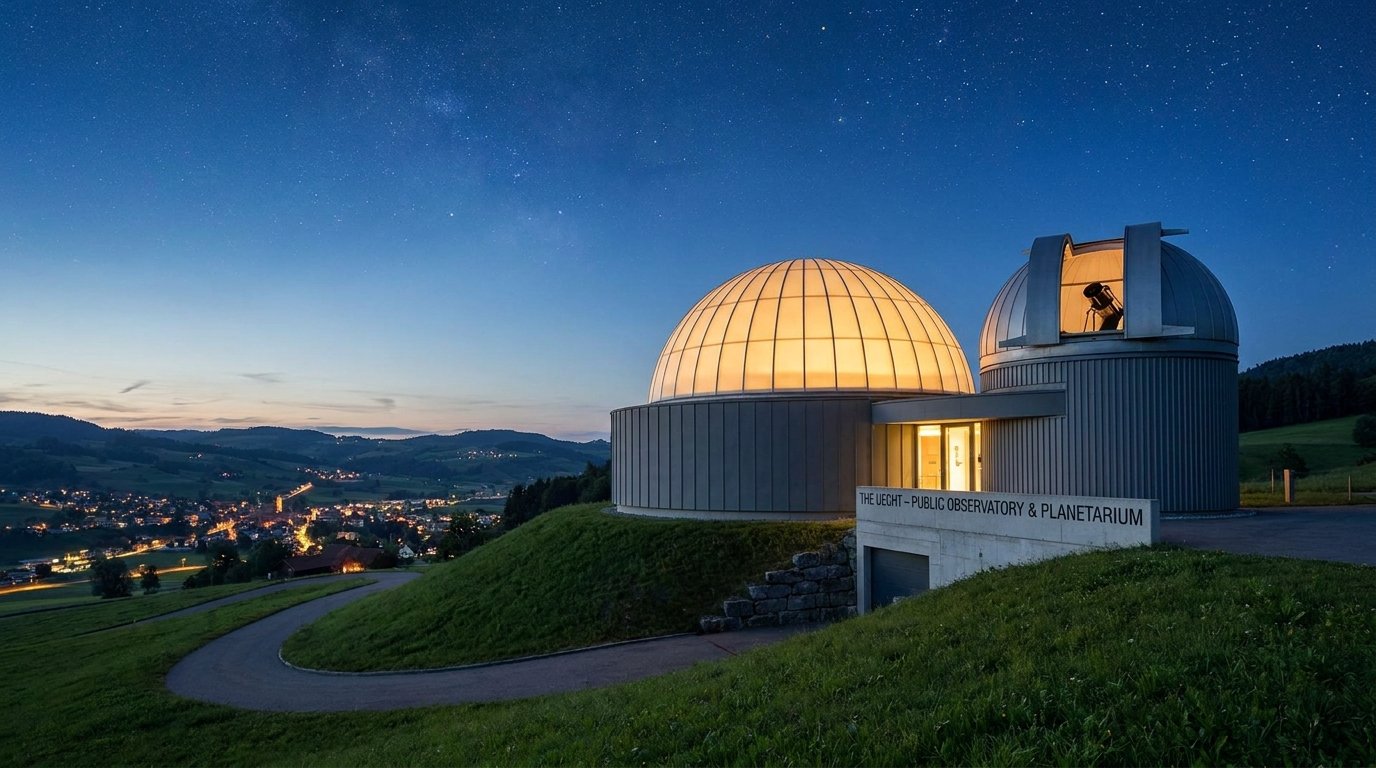
Perched atop a forested hill in the Canton of Bern, the name uecht has become synonymous with Swiss astronomy and space exploration. On this scenic summit, approximately 13 kilometers south of Bern and at an elevation of nearly 1,000 meters, lies Switzerland’s largest public telescope and planetarium complex. The site, known as the Space Eye, has transformed the uecht from a quiet rural hamlet into a dynamic center for science, education, and wonder. This article explores the history, architecture, technology, and visitor experience of this remarkable observatory.
A Hilltop with a Scientific Heritage
The story of the uecht as an astronomical site dates back to 1951. When Bernese industrialist and engineer Willy Schaerer built a private observation station on the hill. Schaerer chose the uecht for its exceptional conditions: located within the Gantrisch Nature Park. The site is largely protected from the light pollution of the nearby city of Bern. The hill is often free from the low-lying winter fog that blankets the Swiss Plateau, offering clear, dark skies ideal for stargazing.
Over the following decades, the original observatory on the uecht grew in reputation. In 1974, astronomer Wilhelmine Burgat, who would later serve as the observatory’s director. Discovered supernova SN 1974G in the galaxy NGC 4414 from this location. The observatory also collaborated with the University of Bern’s Zimmerwald research station, contributing to solar activity monitoring and other scientific projects. In 1982, the Private Observatory Uecht Foundation was established to manage the site, and public tours began in 1993 . However, by the early 21st century, the aging facilities on the uecht no longer met modern technical or scientific standards. A bold vision emerged: to replace the small observatory with a world-class public engagement center.
Read: Studiae: Redefining Modern Student Engagement System
The Birth of Space Eye on the Uecht
The realization of this vision came in the form of the Space Eye. A multimedia experience center dedicated to space and the environment. Designed by renowned Swiss architect Mario Botta, the project broke ground on September 9, 2019. The building itself is a striking architectural statement: a cylindrical tower wrapped in red and black shutters, rising from the green landscape like a modern lighthouse for the skies. Botta described his intention as creating a minimal intervention, a small “bijou” that complements the natural, hilly environment.
After four years of construction, the Space Eye officially opened its doors on September 23, 2023. The project, which ultimately cost approximately 19 million Swiss francs, was supported by a partnership between the Uecht Observatory Foundation, the University of Bern, and numerous corporate sponsors. The name uecht now refers both to the geographical hill and to the historic observatory that still stands adjacent to the new complex, preserved as a museum piece and a testament to the site’s long astronomical legacy.
The Largest Public Telescope in Switzerland
At the heart of the Space Eye is its centerpiece: the largest public telescope in Switzerland. This powerful instrument, manufactured by the Austrian company Astro Systeme Austria (ASA), features a 1-meter primary mirror and weighs 1.2 tons . The telescope is housed within Mario Botta’s 11.5-meter observation tower, with a retractable roof that opens to reveal the night sky.
The telescope’s precision is extraordinary; its light structure must remain stable to within fractions of a micrometer to capture sharp images . However, as project ambassador Claude Nicollier—Switzerland’s only astronaut—has explained. The telescope’s primary purpose is not to rival orbital observatories like Hubble or James Webb. Instead, it is designed to offer the public a direct, real-time view of celestial objects. Visitors can observe the Moon’s craters, the rings of Saturn, the moons of Jupiter, distant galaxies, and nebulae through the eyepiece or via high-definition screens in the planetarium. A solar telescope also allows for safe daytime observations of the Sun.
An 8K High-End Planetarium
Complementing the telescope is a state-of-the-art 8K planetarium located in the basement level of the Space Eye on the uecht. This domed theater seats up to 80 visitors and features a projection system with a resolution of 8,000 pixels across the entire hemisphere . The planetarium offers immersive live shows that simulate journeys from Earth to the edge of the known universe, traveling at “over-light” speeds through galaxies and nebulae.
What makes the planetarium particularly special is its integration with the telescope. Live images captured by the 1-meter telescope can be displayed on the dome in real time, allowing large groups to share in the experience of discovery. The planetarium also connects to partner telescopes around the world, enabling visitors to see celestial objects from different hemispheres and time zones during a single show.
Interactive Exhibitions and the Space Laboratory
The Space Eye on the uecht is more than just a telescope and a dome. The underground level houses 880 square meters of interactive exhibition space, divided into thematic “islands” that explore topics ranging from the wonders of the universe to Earth observation, life in space, satellite technology, space debris, and the unique environment of the Gantrisch Nature Park.
The Space Laboratory offers hands-on activities related to astronaut training, rocket propulsion, and sustainable space travel. The exhibitions emphasize the intersection of space research with environmental sustainability, exploring issues such as light pollution in the Bern region and the carbon footprint of space missions. The educational design aims to make complex scientific concepts accessible and engaging for visitors of all ages, with a particular focus on inspiring young people to pursue careers in science, technology, engineering, and mathematics (STEM).
The Adventure Trail and Getting to the Uecht
Reaching the uecht is part of the Space Eye experience. The complex is located in Niedermuhlern, a small village accessible by PostBus from Bern. From the bus stop, visitors can choose to take a shuttle service or embark on the Space Eye Adventure Trail, a 35 to 45-minute uphill walk.
The trail features 15 virtual stations accessible via a smartphone app. Each station provides audio-visual content related to space and the environment, turning the hike into an educational journey. The path winds through the forest of the Gantrisch Nature Park, offering panoramic views of the surrounding Alpine foothills on clear days. For those with limited mobility, the shuttle service and wheelchair-accessible facilities at the Space Eye ensure that the experience is inclusive.
Visitor Information and Impact
The Space Eye on the uecht is open on select dates and time slots, and advance ticket booking is required . The center offers various combination packages, allowing visitors to tailor their experience—whether they wish to attend a planetarium show, observe through the telescope, explore the exhibition, or participate in a themed event such as a children’s “Kids in Space” afternoon, a school excursion, or a corporate dinner under the stars.
The foundation estimates that the Space Eye will attract between 20,000 and 30,000 visitors annually. Beyond tourism, the uecht has become a hub for outreach activities, including stargazing hikes, workshops on space and sustainability, and public lectures . The site’s location within a Dark Sky area—a zone with minimal light pollution—also serves as a living laboratory for research on the environmental impacts of artificial light.
A Future Among the Stars
The transformation of the uecht into the home of Switzerland’s largest public telescope and planetarium represents a remarkable fusion of history, architecture, and science. From Willy Schaerer’s private station in 1951 to Mario Botta’s award-winning design in 2023. The hill has evolved into a national point of pride. The uecht now stands as a gateway to the cosmos for thousands of visitors each year, offering a rare opportunity to look through a world-class telescope, journey through a digital universe, and reflect on the fragility of our own planet. As Claude Nicollier has noted, the Space Eye is not just about observing the heavens; it is about inspiring the next generation to protect Earth and explore beyond it. Whether you are a seasoned astronomer or a curious child, the uecht invites you to look up and wonder.

In the ever-evolving world of advanced materials, few names spark curiosity quite like sodiceram. While not a household name, this specialized material has been quietly revolutionizing several industrial and scientific sectors. For engineers, material scientists, and manufacturers, sodiceram represents a unique intersection of durability, chemical resistance, and thermal stability. This article provides an in-depth exploration of sodiceram, covering its composition, manufacturing process, key characteristics, diverse applications, and future potential. Whether you are a professional seeking technical insights or a student new to material science, this guide will leave you with a thorough understanding of why sodiceram matters.
What Is Sodiceram? A Definition and Origin
At its core, sodiceram is a sodium-based ceramic material, typically derived from soda-lime glass or sodium-aluminosilicate systems that undergo controlled crystallization. The name sodiceram itself is a portmanteau: “sodic” refers to sodium (from soda), and “ceram” denotes its ceramic nature. Unlike conventional ceramics that are fired from clays, sodiceram is produced through a process called “glass-ceramic conversion.” This involves melting raw materials (silica, soda ash, alumina, and stabilizers), forming them into glass, and then subjecting them to precise heat treatments that induce nucleation and crystal growth.
The result is a polycrystalline material that retains some amorphous glassy regions, giving sodiceram a combination of properties unmatched by pure glass or traditional ceramics. First developed in the mid-20th century by researchers looking for lightweight, high-strength alternatives to metals and glasses, sodiceram has since evolved into a family of compositions tailored for specific uses.
You Might Also Like: Navigating Sydney’s Market
The Manufacturing Process of Sodiceram
Creating high-quality sodiceram is a delicate, multi-stage process. Understanding this process helps explain why sodiceram commands attention in high-tech fields.
Raw Material Batching: The primary ingredients include silica sand (SiO₂), sodium carbonate (Na₂CO₃), aluminum oxide (Al₂O₃), and small amounts of nucleating agents like titanium dioxide or zirconia. The exact recipe depends on the intended final properties.
Melting and Homogenization: The batch is melted at temperatures between 1400°C and 1600°C in a furnace. This forms a homogeneous sodium-aluminosilicate melt. Careful control of the atmosphere prevents unwanted reactions.
Forming: The molten glass is shaped into desired forms—sheets, rods, tubes, or complex molds—using conventional glass-forming techniques (rolling, blowing, pressing).
Annealing: The formed glass is slowly cooled to relieve internal stresses, creating a stable glass precursor.
Controlled Crystallization (Ceramming): This is the critical step. The glass precursor is reheated to a temperature just above its glass transition point (typically 600–800°C). Nucleating agents promote the formation of countless tiny crystal nuclei. Then, the temperature is raised further (to 800–1000°C) to grow crystals (often nepheline, carnegieite, or sodium feldspar phases). The heating rates and hold times are meticulously programmed to achieve a fine, uniform microstructure.
Finishing: The final sodiceram product is cooled, then cut, ground, polished, or coated as needed.
The result is a dense, non-porous material with crystals typically 0.1–1 micron in size, locked within a residual glassy matrix.
Key Properties of Sodiceram
What makes sodiceram so special? Its property profile bridges the gap between glass, technical ceramics, and even metals.
1. Mechanical Strength and Hardness
Sodiceram exhibits a flexural strength of 100–200 MPa, roughly two to three times that of soda-lime glass. Its Vickers hardness ranges from 5 to 7 GPa, making it scratch-resistant and durable against wear. This strength comes from the crystal network that impedes crack propagation—a phenomenon known as “microcrack toughening.”
2. Thermal Stability and Low Expansion
One of the standout features of sodiceram is its low coefficient of thermal expansion (CTE), typically 3–8 × 10⁻⁶ /K (compared to 9 × 10⁻⁶ /K for soda-lime glass and 12–15 for many metals). This means sodiceram can withstand rapid temperature changes (thermal shock) without fracturing. Some formulations can endure quenching from 400°C into cold water.
3. Chemical Durability
Sodiceram shows excellent resistance to water, acids (except HF), alkalis, and many organic solvents. However, due to its sodium content, it is less resistant to strong mineral acids than pure silica glass; surface leaching can occur over long exposures. For most industrial environments, though, sodiceram outperforms many polymers and standard ceramics.
4. Electrical and Optical Properties
Sodiceram is an electrical insulator, with a dielectric constant around 7–9 at room temperature and high dielectric strength. Optically, most sodiceram grades are opaque to translucent due to light scattering at crystal boundaries. However, specialized transparent sodiceram variants exist for niche applications like oven windows or missile domes.
5. Density and Weight
With a density of 2.4–2.6 g/cm³, sodiceram is lighter than most metals (e.g., aluminum: 2.7 g/cm³, steel: 7.8 g/cm³) and comparable to glass. This low density makes it attractive for weight-sensitive applications.
Applications of Sodiceram Across Industries
The unique combination of strength, thermal shock resistance, and chemical durability has led sodiceram to be adopted in a surprising range of fields.
1. Cooktops and Kitchenware
Perhaps the most familiar use of sodiceram is in glass-ceramic cooktops. Many smooth-top ranges use a sodiceram surface that resists thermal shock (you can place a hot pan directly on it), cleans easily, and remains stable at temperatures up to 700°C. Some high-end bakeware and frying pans also incorporate sodiceram coatings.
2. Laboratory and Chemical Equipment
Sodiceram is found in lab benches, crucibles, evaporating dishes, and reaction vessels where exposure to corrosive chemicals is routine. Its ability to handle sudden temperature changes—like pouring hot reagents into cold water—makes it invaluable in chemical synthesis.
3. Electronics and Insulators
In electronics, sodiceram serves as substrate material for thick-film circuits, resistor cores, and high-voltage insulators. Its dimensional stability over temperature ranges prevents circuit board warping. Some spark plug insulators are made from sodiceram formulations.
4. Aerospace and Defense
Because sodiceram can withstand the extreme conditions of re-entry or combustion, it is used in radomes (protective covers for radar antennas), sensor windows, and thermal protection tiles on experimental aircraft. Its low density is a bonus for fuel efficiency.
5. Medical Technology
Biocompatible grades of sodiceram are employed as dental crowns, bone spacers, and prosthetic components. Its wear resistance and ability to bond with certain bone cements make it a candidate for joint replacements. Also, sodiceram is used in surgical lighting covers and sterilization trays.
6. Art and Architecture
Some modern building facades use sodiceram panels for their weather resistance and aesthetic matte finish. Sculptors have also experimented with sodiceram for outdoor installations, appreciating its ability to hold fine detail and resist pollution.
Comparing Sodiceram to Other Materials
To appreciate sodiceram, it helps to see how it stacks up against alternatives:
| Property | Sodiceram | Soda-Lime Glass | Alumina (Al₂O₃) | Stainless Steel |
|---|---|---|---|---|
| Flexural strength (MPa) | 150 | 70 | 350 | 500+ (yield) |
| CTE (10⁻⁶/K) | 5 | 9 | 8 | 17 |
| Thermal shock resistance | Excellent | Poor | Good | Good |
| Density (g/cm³) | 2.5 | 2.5 | 3.9 | 7.8 |
| Cost (relative) | Medium | Low | High | Medium |
Sodiceram occupies a sweet spot: cheaper than advanced ceramics like alumina or zirconia, but much more thermally shock resistant than glass. It is also lighter and corrosion-resistant compared to steel, though not as strong under tension.
Advantages and Limitations of Sodiceram
Advantages
High thermal shock resistance – can go from freezer to oven.
Good mechanical durability – resists scratching and impact better than glass.
Chemical inertness – suitable for most corrosive environments.
Ease of forming – can be molded like glass before ceramming.
Tailorable properties – by changing heat treatment and composition.
Limitations
Not as strong as structural ceramics – for extreme loads, alumina or silicon carbide are better.
Contains sodium – limited use in certain high-acid or high-temperature alkali environments.
Can be difficult to join – welding is impossible; requires adhesives or mechanical fastening.
Optical opacity – only special transparent grades available, with reduced strength.
Manufacturing precision needed – small deviations in heat treatment lead to inferior products.
Environmental and Sustainability Aspects
With growing emphasis on green manufacturing, sodiceram presents both challenges and opportunities. Production requires high energy input for melting and heat treatment, contributing to CO₂ emissions if fossil fuels power the furnaces. However, sodiceram is durable, has a long service life, and is chemically inert once made—meaning it doesn’t leach toxins into soil or water. Recycling of sodiceram is difficult because its crystal structure is locked in, but some grades can be crushed and used as aggregate or filler in concrete. Research continues into lower-temperature processing and the use of recycled soda-lime glass as a precursor for sodiceram.
Future Developments and Research Frontiers
The story of sodiceram is still being written. Current research focuses on:
Transparent sodiceram for smartphone screens and armor – combining hardness with clarity.
Biodegradable sodiceram for temporary medical implants that gradually dissolve.
Ion-exchange strengthened sodiceram – similar to chemically strengthened glass but applied to glass-ceramics.
Additive manufacturing – 3D printing of sodiceram green bodies before crystallization, enabling complex geometries.
Nuclear waste immobilization – using sodiceram to trap radioactive sodium-bearing waste in a durable matrix.
As industries demand materials that are lighter, tougher, and more thermally resilient, sodiceram is likely to find new roles in solid-state batteries (as solid electrolytes), next-generation cookware, and even deep-sea exploration vessels.
Practical Tips for Working with Sodiceram
If you are an engineer or designer considering sodiceram for a project, keep these guidelines in mind:
Machining – Use diamond tools; sodiceram is hard but can be ground and drilled.
Joining – Use silicone adhesives, epoxy, or mechanical clamps. Avoid high-temperature brazing unless specialized interlayers are used.
Cleaning – Mild detergents and soft cloths; avoid hydrofluoric acid or strong hot caustics.
Storage – No special precautions; sodiceram does not age or absorb moisture.
Conclusion
Sodiceram may not be as famous as steel or as ubiquitous as plastic, but its role in advanced applications is undeniable. From the cooktop in your kitchen to the radome on a fighter jet, sodiceram proves that a carefully engineered sodium-based glass-ceramic can outperform conventional materials in demanding environments. Its blend of moderate cost, good strength, excellent thermal shock resistance, and chemical durability makes it a go-to choice for engineers who cannot accept compromise.
As manufacturing techniques improve and new formulations emerge, sodiceram is poised to enter even more sectors, including renewable energy, electric vehicles, and consumer electronics. Understanding this material today gives a glimpse into the future of high-performance, sustainable engineering. Whether you are selecting a material for a prototype or simply fascinated by material science, sodiceram is a name worth remembering and exploring further.
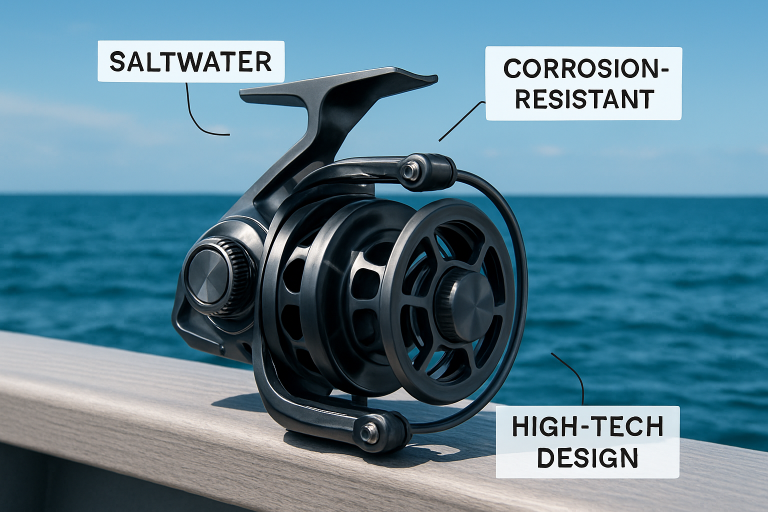
Advancements in saltwater fishing reels have revolutionized the angling experience, offering enhanced performance, durability, and user-friendly features. This article explores the latest innovations in reel technology and how they contribute to improved fishing outcomes. For a comprehensive selection of these advanced reels, visit Accurate Fishing’s saltwater fishing reels.
Lightweight Materials for Enhanced Performance
Modern saltwater reels utilize materials like carbon fiber and advanced composites to reduce weight without compromising strength. This innovation allows for longer casting distances and reduces angler fatigue during extended fishing sessions. For instance, reels with full-carbon constructions provide stiffness comparable to metal frames but at a fraction of the weight, enabling larger spools with lower inertia for more accurate casts. The ability to use lighter reels can also help minimize wrist and arm strain, making it more comfortable for anglers to enjoy long fishing days, especially when targeting active or hard-fighting fish species.
Additionally, these advanced materials resist deformation and maintain performance under high loads, which is crucial when battling large saltwater game fish. The latest reels also often include ergonomic handles and knobs made from lightweight alloys or new grip-enhancing polymers, giving the angler more comfort and control, particularly during sudden runs and jolts.
Corrosion Resistance and Sealed Drag Systems
Saltwater environments are notoriously harsh on fishing equipment. To combat corrosion, manufacturers have developed reels with sealed drag systems and corrosion-resistant coatings. These features protect internal components from saltwater intrusion, significantly extending the reel’s lifespan and reducing maintenance needs. Enhanced testing standards, including longer continuous salt-spray exposures, have led to more reliable product warranties and lower lifetime ownership costs.
Modern coatings may include multi-layer anodizing, ceramic treatments, or hybrid sealants that shield vulnerable parts. Sealed bearings and gaskets further keep out sand, grit, and salty moisture, preserving smooth reel operation over time. These improvements help even casual anglers depend on their equipment trip after trip, often in unpredictable or rugged ocean conditions.
Digital Integration in Modern Reels
The incorporation of digital technologies has transformed fishing reels into sophisticated tools. Features like electronic gear shifts automatically adjust the gear ratio based on the angler’s reeling speed and the resistance from the fish, providing more torque when needed and faster retrieval when resistance is low. Additionally, digital line counters offer precise information about the amount of line deployed, which is particularly useful for trolling and deep-sea fishing.
More innovative digital features include programmable drag profiles and warning alarms for bite detection or low battery. Some reels store settings between uses or adapt gear ratios mid-fight, responding to the live conditions at hand. This kind of smart automation lets even less-experienced anglers achieve professional-grade control and consistency with each cast and retrieval.
Smart Technologies and Data Analytics
Smart fishing reels equipped with sensors and Bluetooth connectivity provide real-time feedback on strike detection, depth tracking, and catch analytics. These reels sync with mobile apps to map hotspots, analyze technique, and even predict prime fishing times, effectively serving as a fishing coach in your tackle box. This integration of technology allows anglers to refine their strategies and improve success rates.
Cloud-based analytics let you review post-trip performance data, compare day-to-day statistics, and learn from successful sessions. Some platforms also integrate weather and tide information, allowing users to build a fully informed approach to each outing. Custom alerts, leaderboards, and even social features can foster community, turning routine trips into data-driven adventures that boost skill and strategy.
Precision Engineering and Customization
Advancements in manufacturing, such as CNC machining and 3D printing, have enabled the creation of highly precise and customizable reel components. This precision enhances the fit, finish, and overall performance of reels. Anglers can now tailor reel parts to specific needs, whether for lightweight competition reels or heavy-duty saltwater reels models, optimizing performance and durability.
Options for custom color finishes, handle lengths, and spool capacities are increasingly common, allowing both casual and competitive anglers to create a reel that fits their hand and their fishing style perfectly. This degree of personalization improves comfort, increases efficiency, and even adds aesthetic appeal, making your fishing gear as unique as your personal approach to the sport.
Sustainability in Reel Manufacturing
As technological innovation accelerates, so does the responsibility to minimize environmental impact. Manufacturers are increasingly focusing on sustainable practices, such as using eco-friendly materials and reducing waste during production. This shift not only benefits the environment but also appeals to the growing number of environmentally conscious anglers.
Many reel brands now offer recycling or refurbishment programs, encouraging customers to upgrade responsibly rather than discard old reels. Biomaterials, recycled metals, and energy-efficient factories are becoming more common, creating a more sustainable cycle for producing, distributing, and owning high-end fishing gear.
Case Studies: Real-World Impact
In recent years, several tournament anglers have credited these innovations with their improved performance on the water. For example, offshore competitors using digital line counters and automated drags have reported more consistent catches at precise depths, reducing guesswork and increasing their success rates. Coastal fishing guides often rely on corrosion-proof, sealed reels for daily use, noting a sharp decrease in equipment failures and maintenance downtime.
Additionally, stories from recreational anglers highlight how user-friendly smart reel technologies have helped newcomers quickly develop effective techniques, leveling the playing field and making saltwater angling more accessible for everyone.
Choosing the Right Reel for Your Needs
When selecting a saltwater fishing reel, consider your target species, typical conditions, and preferred fishing techniques. Lightweight, carbon-infused models are ideal for casting and inshore applications, while heavy-duty reels with advanced drag systems excel in offshore and big game scenarios. Prioritize features like sealed components, digital integration, and ergonomic design for optimal long-term value and comfort. Consult online reviews and expert recommendations to find the perfect match for your style and environment.
Conclusion
The evolution of saltwater fishing reels through the integration of advanced materials, digital technologies, and precision engineering has significantly enhanced the angling experience. These innovations provide anglers with tools that are not only more efficient and durable but also offer greater control and customization, leading to improved success rates and a more enjoyable fishing experience.

A Few Days In Singapore

15 Unmissable Things to Do in Okinawa Japan (The Tropical Side Nobody Tells You About)