Travel
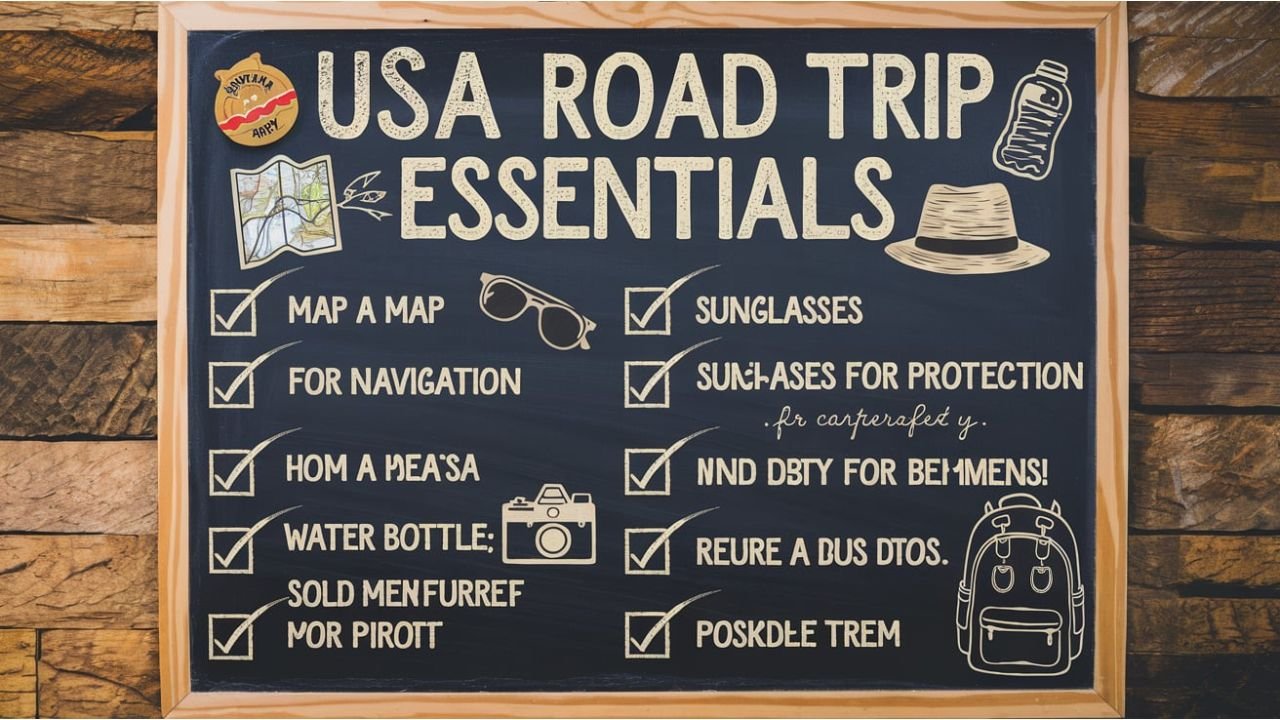
USA Road Trip Essentials: Your Ultimate Travel Checklist

Starting a road trip around the USA is an exciting approach to see the large and varied terrain of the nation. Whether your trip is across the Great Smoky Mountains, the picturesque Pacific Coast Highway, or Route 66, preparation is crucial for a flawless and unforgettable ride. From packing must-haves to safety advice and entertainment ideas, this book covers all the USA road trip basics you need for an amazing vacation.
Planning Your Road Trip
Selecting Your Route
Your path of choice will rely on your time limit and interests. Among the famous paths are:
- Route 66: The old route provides a sentimental trip over eight states.
- Pacific Coast Highway: Along California’s Highway 1, see breathtaking views of the ocean.
- Blue Ridge Parkway: See the lovely Appalachian Highland on your journey.
- Great River Road: Travel from Minnesota to Louisiana following the great Mississippi River.
Trip Duration
Think on how much time you have to prevent rushing. While larger excursions might span several states, short trips could only cover one.
Vehicle Preparation
Essential Car Maintenance
Before you leave, you really should make sure your car is in great shape. Important chores include:
- Oil Change: Fresh oil increases engine performance.
- Tire Inspection: Look at tyre wear and pressure.
- Brake Check: Verify brakes’ responsiveness and functionality.
- Fluid Levels: Top off gearbox, windscreen washer and coolant.
Emergency Supplies
- Spare Tire and Tools: Add a Jack and Lug wrench.
- Jumper Cables: Crucially important for unplanned battery problems.
- First Aid Kit: Pack meds, bandages, antiseptics.
- Flashlight: Choose something rechargeable or battery-powered.
Packing List
Personal Essentials
- Driver’s License and Insurance: Verify both for validity.
- Cash and Cards: Not every place takes cards.
- Clothing: Pack for several kinds of weather.
- Toiletries: Add convenience goods in travel-sized quantities.
Comfort Items
- Travel Pillow and Blanket: Improve comfort during extended drives.
- Reusable Water Bottle: Keep drinking during the journey.
- Sunglasses and Sunscreen: Prevent UV rays and glare.
Navigation and Connectivity
GPS and Apps
- Google Maps/Waze: dependable for instantaneous guidance.
- Roadtrippers: Locates hotels, food, and attractions.
- GasBuddy: Finds the least expensive petrol stations on your path.
Staying Connected
- Mobile Hotspot: Make sure remote locations have internet connection.
- Car Charger: Keep appliances running all through the trip.
Entertainment for the Journey
Audio Options
- Music Playlists: Make playlists with road trip inspiration.
- Podcasts and Audiobooks: Use interesting material to ward against boredom.
- Streaming Services: Get films and series for viewing offline.
Games and Activities
- Trivia Games: Share interesting facts with other travellers.
- Road Trip Bingo: Mark sites and road signs to win.
- Storytelling Rounds: Write a group narrative in which everyone adds a sentence.
Food and Snacks
Easy-to-Pack Options
- Trail Mix: a tasty and substantial choice.
- Granola Bars: handy for rapid energy.
- Fruits: Travelling well are apples, bananas, and grapes.
- Jerky: a savoury, protein-heavy snack.
Dining Tips
- Local Eateries: Visit neighbourhood eateries to experience regional tastes.
- Picnic Spots: Savour food in picturesque settings.
- Cooler Bag: Keep perishable goods fresher.
Lodging Options
Hotels and Motels
- Chain Hotels: Provide consistent conveniences and comforts.
- Budget Motels: Perfect for cutting overnight expenses.
Campgrounds and RV Parks
- National Parks: Offer reasonably priced choices together with lovely surroundings.
- Private Campgrounds: Provide hooking and shower facilities.
.
Safety Tips
On the Road
- Seat Belts: Make sure every passenger buckles up.
- Speed Limits: Follow posted restrictions and change for road conditions.
- Rest Stops: Every few hours, stop to prevent tiredness.
Personal Safety
- Stay Aware: Exercise caution in strange places.
- Secure Valuables: Out of sight keep certain valuable objects.
- Emergency Contacts: Save local emergency contacts.
Sustainability on the Road
- Reusable Containers: Cut one-use plastics.
- Eco-Friendly Products: Select biodegradable bathroom products.
- Leave No Trace: Respect natural places and correctly dispose of waste.
Budgeting Tips
Fuel Costs
- Efficient Driving: To maximise petrol economy, keep a constant speed.
- Fuel Rewards Programs: With loyalty programs, save money.
Accommodation Savings
- Coupons and Discounts: Search for discounts using applications.
- Sharing Costs: Divide costs with friends on travel.
Activity Expenses
- Free Attractions: See national parks and picturesque vistas.
- City Passes: Get admission to several sites for less money.
A great USA road trip calls for extensive planning, smart packing, and an adventurous attitude. Following this guide and keeping basic ideas in mind will help you to be ready to discover the many landscapes and special sites the nation presents. So get ready, get on the road, and on your final American adventure make lifelong memories.
Food
Healthy Snacking Ideas That Keep You Full for Longer

Understanding Satiety
It is always best to select snacks that allow one to develop a state of fullness (satiety). Satiety is based on different variables like protein, fiber and healthy fats. These slow down the digestion and maintain a constant level of sugar in the blood. Studies indicate that high-protein snacks lower hormones like ghrelin more effectively in comparison to carb-rich ones. Amul Fresh Paneer is a high-protein food item that is easily available in the market, thanks to grocery delivery apps. One can easily come up with different healthy snacking recipes from this.
Swap Processed Snacks for Protein Power
One should always avoid inferior food items like chips or cookies. These increase the blood sugar and leave a person hungry after a short time, consume foods with high contents of nutrients. Amul Fresh Paneer can be regarded as an alternative in this. It offers fresh protein and healthy fat. With online grocery delivery app, it has become easier to get healthy food items delivered to your home. Amul paneer has approximately 18-20 grams of protein per 100 grams and some calcium to keep your bones strong. This paneer is the best snack to have when you need to keep your body going.
Quick Grilled Paneer Recipe
You can make customize your own recipe with amul fresh paneer. You can grill cubes of it with spices such as cumin, turmeric and black pepper to create a simple evening snack. Maillard reaction that happens during grilling provides a desirable texture without the use of oils. Serve it with cucumber slabs or cherry tomatoes as a source of fiber which further adds fullness. This combination can be ready in less than 10 minutes and provides the balanced proportion of macronutrients.
More Satiety-Boosting Snack Ideas
One can also add Greek yogurt and berries to their daily diet to bring together the protein and antioxidants or boiled eggs and avocado that contain healthy fats. But, if you want veg and pocket friendly snacking dishes, then paneer is the best item that you can go for in the current scenario.
To replace meat, roasted herbed chickpeas provide fiber and protein; a video tutorial by NutritionFacts.org shows the simple recipes of roasting chickpeas to achieve the best crunch and nutrition.
Conclusion
Now, it has become so easy to get all required ingredients for healthy snacking at your doorsteps. You can easily search for a “grocery delivery app near me” and place an order of Amul Fresh Paneer and all necessary ingredients effectively. It is important to be indulgent but in a cautious manner, even though protein is a must in our daily diets. Make a note of how much energy you gain when you consume each meal throughout the day. Also, try to select healthier versions of snacks such as grilled paneer or chickpeas which fill your tummy and boost your health levels significantly. This tweak will give you the right blend of health and taste.
Guides
Budget Travel Tips for Exploring Expensive Cities in the USA

Budget Travel Tips for Exploring Expensive Cities in the USA! Traveling to expensive cities in the USA might seem like a daunting task, especially if you’re on a budget. But fear not! With a little creativity and some strategic planning, you can explore iconic destinations without emptying your wallet. From bustling New York City to sunny San Francisco, there are plenty of ways to have an unforgettable experience while keeping costs down. Whether you’re dreaming of art-filled galleries or delectable food from street vendors, these budget travel tips will help you navigate expensive cities with ease. Get ready to discover how to make the most out of your adventures without breaking the bank!
Research and planning tips for saving money on accommodations
Finding affordable accommodations in pricey cities can feel daunting. However, a little research goes a long way.
Start by comparing prices on different booking websites. Often, one platform will have better deals than another. Don’t forget to check for any available discounts or promotions.
Consider staying slightly outside the city center. Neighborhoods that are just a bit further out usually offer lower rates while still giving you quick access to public transportation.
Flexible travel dates can also help you score deals. If possible, avoid traveling during peak seasons or major events when prices skyrocket.
Look into alternative lodging options like hostels or vacation rentals. These can provide unique experiences at much lower costs than traditional hotels.
Join loyalty programs offered by hotel chains and booking sites for additional savings on future stays.
Transportation hacks for getting around on a budget
Getting around expensive cities doesn’t have to drain your wallet. Start by checking public transportation options like buses and subways. Many cities offer day passes that allow unlimited rides for one low price.
Rideshare apps can also be a budget-friendly choice if you travel in groups. Splitting the fare makes it more economical, especially late at night when public transport may not be as frequent.
Consider biking or walking whenever possible. Many urban areas are bike-friendly and feature extensive paths. It’s a great way to explore hidden gems while saving money.
If you’re feeling adventurous, look into car-sharing services or even renting scooters. These options offer flexibility without the hassle of parking fees associated with traditional rentals.
Don’t forget about free shuttle services that some hotels provide to key attractions. Utilizing these can save both time and money during your travels.
Affordable food options and where to find them
When exploring expensive cities, finding affordable food options can make a big difference. Local markets are often gold mines for tasty and budget-friendly treats. Look for farmer’s markets or street vendors that showcase regional specialties.
Food trucks also offer delicious meals at lower prices than sit-down restaurants. They’re perfect for grabbing a quick bite while you roam the streets. Apps like Yelp or TripAdvisor can help pinpoint popular spots favored by locals.
Consider dining during off-peak hours to snag lunch specials or happy hour deals. Many upscale eateries offer discounted menus early in the evening.
Don’t overlook neighborhood delis and cafes; they usually have hearty portions without hefty price tags. Exploring food scenes through local recommendations will lead you to hidden gems that won’t break your budget.
Free or low-cost activities and attractions to explore
Many expensive cities offer hidden gems that won’t cost you a dime. Parks, gardens, and waterfronts provide perfect spots to unwind. Think of places like Central Park in New York or Millennium Park in Chicago.
Museums often have free admission days or discounted rates at specific times. Research ahead for local art galleries or cultural institutions with no entry fees on certain days.
Walking tours can be both educational and budget-friendly. Many cities have guided walking tours based on tips, allowing you to explore while supporting local guides.
Festivals are another great way to experience the culture without spending much. Check local calendars for free events where you can enjoy music, food, and art.
In some areas, street performances bring vibrant energy to public spaces. Grab a seat on the sidewalk and enjoy live entertainment from talented artists at no charge!
Insider tips from locals on how to save money in expensive cities
One of the best ways to save money in pricey cities is to tap into local knowledge. Residents often know hidden gems that visitors overlook. These spots typically offer better prices and unique experiences.
Ask locals for their favorite cheap eats. You might find a taco truck or diner serving delicious meals at half the cost of tourist traps. Also, check out neighborhood markets; they often have fresh produce and affordable snacks.
Public transport can be a lifesaver too. Many locals rely on buses or subways instead of rideshares, which can add up quickly. Look for day passes that allow unlimited travel within certain hours.
Don’t forget about free community events! Many cities host art walks, concerts in parks, or street fairs that are enjoyable without costing a dime. Embrace spontaneity—sometimes the best adventures come from going off the beaten path with tips from those who call it home.
Conclusion: Enjoying the best of expensive cities without breaking the bank
Exploring expensive cities in the USA doesn’t have to mean emptying your wallet. With some smart planning and a few insider tips, you can experience all that these vibrant destinations have to offer without overspending.
Focus on thorough research ahead of your trip. This way, you’ll uncover budget-friendly accommodations and transportation options that won’t compromise your comfort. Use local transit systems or consider walking—many major attractions are within easy reach.
When it comes to food, seek out hidden gems where locals dine rather than tourist traps. Street vendors or popular food markets often provide delicious meals at a fraction of restaurant prices.
Make the most of free activities available in many urban areas. Parks, museums with discounted entry on certain days, and community events can fill your itinerary with enjoyable experiences at little or no cost.
Don’t shy away from asking locals for their favorite budgeting hacks. They may lead you to surprising spots that aren’t found in guidebooks but offer great value.
By implementing these budget travel tips for exploring expensive cities in the USA, you’re setting yourself up for an enriching adventure filled with memories—not regrets about spending too much money along the way. Embrace every moment while keeping a close eye on your budget!
Guides
How Many Blocks in a Mile? A Comprehensive Guide

Understanding the distance between blocks in a mile is essential for various practical reasons. Whether you’re planning a walk, a run, or trying to measure the distance between two locations in your city, knowing how many blocks make up a mile can be extremely useful. In this guide, we will answer this common question, explain the factors that influence block sizes, and provide tips on how to make use of this information in different situations.
What is a Block?
Before diving into how many blocks are in a mile, it’s important to define what a “block” is. In urban planning and geography, a block typically refers to the area between two streets, usually containing several buildings, and is often considered the basic unit of a city. While block sizes can vary from one city to another, there are some general guidelines we can follow to make an estimate.
The Standard Block Length
In many American cities, a block is typically around 1/10th of a mile, or approximately 528 feet (160 meters). This is based on the standard street grid layout found in cities like New York City. However, the length of a block can vary depending on the city, its layout, and whether the area is residential or commercial.
For example:
In New York City, blocks tend to be smaller, averaging 1/10th of a mile.
In Chicago, blocks are often longer, measuring around 1/8th of a mile.
In suburban areas, blocks may be larger, often reaching a quarter of a mile.
This variance is why the number of blocks in a mile can fluctuate depending on the location.
How Many Blocks Are in a Mile?
The number of blocks in a mile depends on the length of each block. Let’s break this down:
In New York City: A standard city block is approximately 1/10th of a mile, so you would need 10 blocks to make up a mile.
In Chicago or Other Cities with Larger Blocks: If the average block length is about 1/8th of a mile, then there would be 8 blocks in a mile.
In Suburban Areas: If blocks are approximately 1/4th of a mile long, you would need 4 blocks to make up one mile.
It’s important to remember that these are averages, and there can be exceptions based on the local urban planning and street layouts. However, these estimates will help guide you in understanding how many blocks you need to walk or drive to cover a mile.
Table of Average Block Lengths and Block Count per Mile
| City Type | Average Block Length | Blocks in a Mile |
|---|---|---|
| New York City | 1/10th of a mile | 10 blocks |
| Chicago | 1/8th of a mile | 8 blocks |
| Suburban Areas | 1/4th of a mile | 4 blocks |
| Rural Areas | Varies significantly | Varies |
Why Does Block Size Vary?
Several factors influence the size of blocks, such as the following:
1. City Layout and Design
Cities that were planned with a street grid system, like New York City, typically have smaller blocks. Other cities, particularly older ones, may have irregular street patterns and longer blocks.
2. Density of the Area
In densely populated cities, smaller blocks allow for more efficient use of space and better walkability. On the other hand, suburban areas tend to have larger blocks due to the lower population density and more space for homes.
3. Geographic Factors
Geography can also influence the size of blocks. Cities built on hilly or uneven terrain may have to adapt their block sizes to the landscape, which can result in varying block lengths.
4. Historical Factors
Older cities, especially those developed before modern urban planning techniques, often have non-standard block sizes. These cities may have developed organically without the strict grid system found in many modern cities.
How Can This Information Be Useful?
Knowing how many blocks are in a mile can be extremely useful for various everyday activities. Here are some examples:
1. Walking and Running
If you’re walking or running and want to cover a specific distance, knowing the number of blocks in a mile can help you gauge how far you’ve gone. For instance, if you’re running in New York City and want to run 3 miles, you’ll know to run 30 blocks.
2. Urban Navigation
If you’re exploring a new city and need to walk from one place to another, understanding the number of blocks in a mile can give you a better sense of distance. For example, knowing that 10 blocks equal a mile can help you estimate how long it will take to get to your destination.
3. Real Estate
Real estate agents and buyers can use the concept of blocks in a mile to estimate the proximity of properties to landmarks, schools, or commercial areas. It’s a quick way to communicate distance, especially in cities with a block-based street system.
4. Cycling and Biking
Cyclists often use block measurements to calculate how far they need to go on their rides. Knowing how many blocks equal a mile can help them map out their routes more effectively.
Common Misconceptions About Blocks and Miles
1. All Blocks Are the Same Size
As we’ve discussed, block sizes can vary significantly depending on the city and even within different neighborhoods of the same city. It’s important to avoid assuming all blocks are the same size.
2. The Mile is Always 5280 Feet
While it’s true that a mile equals 5280 feet, the conversion to blocks depends on the length of each block. In some cities, a block may be much shorter or longer than 528 feet, so the number of blocks in a mile will vary.
3. Suburban Blocks are Always Larger
While suburban blocks are often larger than those in cities, there are exceptions. Some suburban areas have smaller blocks, and urban areas can sometimes have larger blocks, depending on the specific urban planning strategy.
How to Measure Blocks in Your City
If you’re unsure about how long a block is in your area, there are a few ways to measure it:
Use a Map or GPS
Maps and GPS services like Google Maps can help you measure the distance between two points, and you can count the blocks along the way.Ask a Local
Locals often have a good sense of the city’s grid and can tell you how many blocks are in a mile.Measure it Yourself
If you want an accurate measurement, you can walk or drive from one point to another, counting the blocks along the way. You can use a pedometer or smartphone app to track your steps and get a precise measurement.
Conclusion: How Many Blocks in a Mile?
The number of blocks in a mile varies depending on the city, the design of the streets, and the area’s density. In urban areas like New York City, you can expect 10 blocks to make up a mile. In suburban areas, you might only find 4 blocks in a mile. The key takeaway is that block sizes can vary, so it’s important to adapt your understanding based on the location you’re in.
Now that you know how to measure and estimate blocks in a mile, use this knowledge to improve your navigation, walking, and real estate experience in any city you visit.
If you found this article helpful, don’t hesitate to share it with others or leave a comment below to let us know how you use block measurements in your daily life!