Business
How Your Desk Setup Affects Focus More Than You Think


We tend to treat “focus” as a purely mental discipline. We view it as a muscle we can flex, a state of mind we can summon with enough caffeine, willpower, and noise-canceling headphones.
When we lose focus—when our minds wander in the middle of a report, or when the afternoon brain fog rolls in like a tide—we blame our brains. We think we are tired. We think we are burned out. We think we need a new productivity app or a better to-do list.
But as industry curators who have spent years analyzing the intersection of design and human performance, we propose a different theory: You aren’t losing focus because you are undisciplined. You are losing focus because your body is distracted.
There is a concept in psychology known as “embodied cognition,” which suggests that our thoughts are deeply rooted in our physical sensations. If your body is uncomfortable, stagnant, or misaligned, your brain dedicates a significant portion of its processing power to managing that physical “noise.”
Your desk setup is not just a place where you put your laptop. It is the cockpit of your attention. If the cockpit is flawed, the pilot cannot fly.
Here is how the invisible mechanics of your workstation—the height of your surface, the angle of your hips, the flow of your blood—are dictating your cognitive performance, and how to fix them.
1. The Biology of Stagnation: Why Sitting Kills Your “Flow”
We often use the word “flow” to describe a state of deep, effortless concentration. But physiologically, flow requires… well, flow.
When you sit in a static position for hours, your metabolism enters a state of hibernation. Enzymes that break down fat drop by 90%. Your heart rate slows. Most critically, blood flow to the brain decreases.
A study published in the Journal of Applied Physiology found that prolonged sitting creates a “vascular stagnation.” Your brain literally receives less oxygen and glucose—the fuel it needs to process information. That 2 PM slump isn’t just about lunch; it’s about hypoxia.
The Fix: The “Active” Station This is the primary argument for the standing desk. It is not just about burning calories; it is about refueling the brain.
When you stand, you engage the large muscles in your calves and thighs. These muscles act as a pump, pushing fresh, oxygenated blood back up to the heart and brain. Users who switch to a standing desk often report a “lifting” of brain fog within minutes of rising. The simple act of standing up creates a physiological reset that reboots your attention span.
2. The “Background Noise” of Discomfort
Imagine trying to solve a complex math problem while someone is poking you in the shoulder with a sharp stick. You might be able to do it, but it will take twice as long and you will make more mistakes.
Physical discomfort is that stick.
Most people tolerate low-level pain—a tight neck, a numb glute, a slight ache in the wrist—thinking they can ignore it. But the brain does not ignore pain. It processes it as a threat. This creates a constant, low-level “background noise” that competes with your work for neural resources.
The Culprit: The “Almost Right” Chair Many people sit in a desk chair that is “fine.” It doesn’t hurt immediately, but it doesn’t support them either. Maybe the lumbar support is too low. Maybe the seat pan is too hard.
This forces your brain to constantly send micro-signals to your muscles: Tighten the core to hold us up. Shift the hip to relieve pressure. Arch the back. Your brain is multitasking between writing that email and keeping your body upright.
A truly ergonomic chair removes this cognitive load. By supporting your spine in neutral alignment, it tells your brain, “The body is safe. The body is supported. You can stop monitoring the body and focus entirely on the work.”
3. The Friction of Transition (Why Motor Mechanics Matter)
We know that we should move more. We know we should alternate between sitting and standing. So why don’t we?
Friction.
If changing your desk height involves hand-cranking a lever for 45 seconds, or clearing off your desk to lift a converter, you won’t do it. When you are in a deep mental state, your brain protects its focus by rejecting any task that requires high effort. The physical effort of moving the desk breaks the mental thread.
This is why the motor mechanics of your furniture matter more than you think. An electric desk removes the friction.
With a memory preset, the transition takes one button press and zero cognitive effort. You can stand up without stopping your typing. You can sit down without looking away from the screen. The movement becomes seamless, allowing your physical state to change while your mental state remains locked in.
4. The Geometry of “The Shrug” (Height and Cognitive Load)
Have you ever noticed that when you are stressed or trying to concentrate hard, your shoulders creep up toward your ears? This is a stress response.
But for many people, their desk forces them into this position.
Standard desks are 29 inches high. If you are 5’6″, that desk is likely 3 inches too high for your resting elbow height. To type, you must physically lift your shoulders. You are essentially holding a “stress pose” for 8 hours a day.
The Cognitive Cost: Holding your trapezius muscles in tension sends a feedback signal to your brain that says, “We are under stress.” This triggers a low-level “fight or flight” response (sympathetic nervous system activation), which creates anxiety and reduces your ability to think creatively or strategically.
The Fix: Precision. This is the hidden power of an adjustable desk. It allows you to lower the surface to your exact elbow height (often 25-27 inches). When your shoulders drop, your nervous system down-regulates. You physically relax, which clears the mental bandwidth for higher-level thinking.
5. Visual Chaos and the “Cluttered Mind”
Your peripheral vision is constantly scanning your environment. If your desk is cluttered with cables, papers, and coffee cups, your brain is subconsciously processing that visual data.
Princeton University researchers found that visual clutter competes for your attention, limiting your brain’s ability to process information. A messy desk literally exhausts your brain faster.
While this isn’t strictly about the furniture, the design of your furniture plays a huge role. A desk with built-in cable management, clean lines, and ample surface area allows you to create “negative space” around your work. This visual silence is the canvas upon which focus can be painted.
The Ecosystem of Attention
We need to stop viewing our office furniture as passive objects. They are active participants in our cognitive lives.
Your chair is either feeding you energy or draining it. Your desk is either aligning your body or distorting it.
Improving your focus isn’t just about downloading a meditation app. It’s about building an ecosystem that supports human physiology. It’s about the electric desk that encourages blood flow. It’s about the adjustable desk that drops your shoulders and lowers your stress. It’s about the standing desk that wakes you up at 3 PM, and the desk chair that makes your body invisible so your mind can fly.
If you want to think better, start by sitting (and standing) better.
Frequently Asked Questions
Q1: Does standing really help with focus, or is it just for back pain?
It helps with both. The “focus” benefit comes from increased blood circulation. Standing engages the “muscle pump” in your legs, which increases blood flow to the brain by up to 20% compared to sitting. This fresh oxygen helps clear “brain fog” and improves alertness.
Q2: Can an adjustable desk go low enough for me?
That depends on the desk. Many standard standing desks only go down to 28 or 29 inches. If you are under 5’10”, you should look for a “3-stage column” desk frame (like the Asteria) which typically descends to roughly 24 or 25 inches. This lower range is critical for seated ergonomic comfort.
Q3: How often should I switch between sitting and standing for maximum focus?
The ideal rhythm for cognitive performance seems to be frequent, short intervals. Rather than standing for 4 hours straight (which causes fatigue), try standing for 15-20 minutes every hour. This “pulse” of activity keeps your energy levels consistent without tiring you out.
Q4: Why do I feel more distracted when I first start using a standing desk?
This is normal. It’s a novelty distraction. Your body is getting used to the new sensation of balancing while working. It typically takes 3-5 days for the body to adapt. Once the standing posture becomes muscle memory, the distraction fades, and the focus benefits kick in.
Q5: Is a wobble stool better for focus than a regular chair?
For short bursts, yes. “Active sitting” stools keep your core engaged and can help fidgety thinkers stay alert. However, for deep, long-duration work, they lack the support needed for stability. A high-quality ergonomic desk chair is still the best foundation for sustained, deep focus sessions.

If you have just recently started a business in Boston, or you’re thinking of doing it, there’s no doubt that you’ll have to think about marketing. The same goes for if you’ve been running a business for a while, because the need for investing in marketing never really stops. After all, you can’t succeed on a market that is so competitive without using the right strategies to stand out, reach potential customers, turn them into paying ones, retain them, and generally build a great brand image.
Here’s why investing in digital marketing is a good move: https://www.forbes.com/councils/forbesbusinessdevelopmentcouncil/2022/06/21/7-reasons-to-invest-in-your-website-and-digital-marketing-strategy/
Of course, the modern world has brought about some changes to the way we are all doing business. Meaning, thus, that in addition to finding a way to stand out offline, you’ll need to do the same thing online. To put it differently, you will absolutely have to think about investing in digital marketing today. And, if you are not sure why, then you should keep on reading to find out.
Apart from not being sure why investing in it is a good idea, you may also not be sure about how to do it right. More precisely, you may not know how to choose the right company in Boston to provide you with these services, because you absolutely know already that you won’t be able to do it alone, and that you will need to have the right pros on your side. And, well, that is another topic we’ll cover for you today.
Why Invest in Digital Marketing
Naturally, we are going to begin with the question of why it is that you should invest in digital marketing in the first place. After all, there would be no point in talking about how you can find and hire the right pros in Boston if you’re not even sure that you need them. So, let us first tell you more about why you need them. Learn more about the benefits.
Everyone Is Online Today
First things first, everyone is online today, and that is a fact that you need to accept. This goes first for your customers, meaning that they will search for the products and services you are selling online, so it would serve you well to appear in front of them when they are doing so. But, it also goes for your competitors. Your competitors are investing in digital marketing, so if you don’t, they are bound to snatch most of your customers, which is not what you want. So, invest in this to stay competitive, and to keep on gaining customers.
Reach the Right Audience at the Right Time
Digital marketing is not simply about getting the word of your existence out there. It is more so about letting the right people know of your existence, and at the right time. That is, you want to appear in front of people when they are searching precisely for what you are offering, possibly with the intent to buy, as that is sure to help you get more customers and boost your profits. And, digital marketing makes it happen.

Build Trust and Credibility
Moving on, when you invest in various online strategies, you will succeed in establishing yourself as a reliable and trusted source. In simple words, you will establish yourself as authority, which will build trust and credibility, and thus help you boost your brand recognition and reputation, and ultimately become a known name in your industry. And, this is certainly what you want.
Get Measureable Insights
Another great reason why you should invest in digital marketing is because you will get measureable insights. You will know precisely which strategies are working perfectly, and which ones may need some adjustments. You’ll understand consumer behavior better, which will help you make more informed and smarter business decisions.
A Cost-Effective Marketing Solution
Finally, you should always keep in mind that this is a cost-effective marketing solution. The ROI can be amazing, especially if you choose the right pros in Boston to do the work for you. Which is precisely the next topic we will cover below.
How to Choose a Company in Boston
So, how can you choose the right company in Boston to do this for you? Well, you’ll come across numerous one through a few simple online searches, or through recommendations. When you, thus, come across Helium Digital Marketing Boston or any other experts, take time to research them. Check their experience for one thing, and not only general one, but also specific industry and local experience.
Then, remember to read some reviews that have been written by previous clients, as those will help you determine the reputation of the potential companies. Moving on, interview a few of the candidates, ask any questions you may have, and compare all the info. And, finally, get more quotes and compare them too, but all while keeping the rest of the mentioned factors in mind as well.

As a homeowner, you undoubtedly want to maintain your household perfectly, and to ensure comfort, as well as the smooth completion of all those daily tasks. And, of course, you will need hot water for most of those things, such as cooking, washing the dishes, bathing, and numerous other things. To have hot water, naturally, you will need to have a great water heater installed. So, whether your current one isn’t working well, or you’re looking to install a new one at a new property, you will certainly want to get a great one.
If you’re wondering how to replace one, this may help you understand: https://www.thespruce.com/replacing-a-water-heater-1824920
Now, when you first figure out that you need to replace your current device, or when the time comes for you to buy a new one at that new property, you will probably spend some time looking at those different types that exist on today’s market, in an effort to make the best choice for your home. And, well, that is when you will come across numerous different devices, including the plug in heat pump water heater. There is certainly no doubt that that one will grab your attention.
After all, we are talking about a water heater that is known for being highly energy efficient. And then, the fact that it is a plug in one means that you can have it easily installed at your property, without having to do any additional electrical or plumbing work, since the device plugs into a standard household outlet. Furthermore, these are also quite durable, meaning they will pay off in the long run, especially when you get a highly energy efficient one that will save you money on electricity bills, as well as if you potentially make use of some rebates and incentives that could lower the initial costs.
Anyway, the fact that you are here tells me that you have already decided to get this plug in HPWH for your property. The only thing left to do now, thus, is figure out how to, well, do that the right way. That is, how to buy the perfect device for yourself. And, that is something that we will discuss below, taking you through the steps that you should take, as well as letting you know of the factors you should consider in order to ultimately make the perfect decision. Click this to learn what you need to know about HPWHs.

Choose the Right Size
It should go without saying that choosing the right size is of utmost importance here. And, to select the right size, you will need to determine your particular household needs, as well as think about the actual space where you want to have this device installed. Choosing the right tank capacity is definitely crucial, so don’t make any hasty decisions here, and get some advice from professionals if you’re not sure how to make this choice on your own.
Check Efficiency Ratings
Moving on, you will also have to check the efficiency ratings. When getting a plug in HPWH, you can surely expect the device to be energy efficient. Yet, you should know that there are different ones out there, and that their energy efficiency ratings are also different. Your task here is to get a device that has a good energy efficiency rating, as that is how you will save money on electricity in the long run.
Consider Noise Levels
Most plug in HPWHs tend to be quiet, but this is something you should check, instead of assuming. This goes especially if you’re planning on having the device installed, say, near a sleeping area, or in a small apartment. The idea is for you to check the sound ratings before making any kinds of buying decisions, if the noise level is a factor for you.
Research Different Brands and Compare
Naturally, in addition to simply checking the devices and their quality, you should remember to research the different brands as well, and then compare them. The goal here is for you to get an amazing, Easy-install plug-in heat pump water heater from a reliable and reputable brand that is known for offering great quality products. So, take time to research those brands out in more details, and then ultimately choose the best one for you.
Keep Warranties in Mind
Keeping warranties in mind is also of great importance here. In short, you want the professionals you get this product from to offer you warranties on the device. So, check those out to see how long they last and what it is that is covered.
Compare the Prices
Finally, remember to compare the prices. But, also remember to check for tax credits, rebates and incentives. That way, you will ultimately get the best plug in HPWH for a completely fair price, and thus save on your investment right from the start.
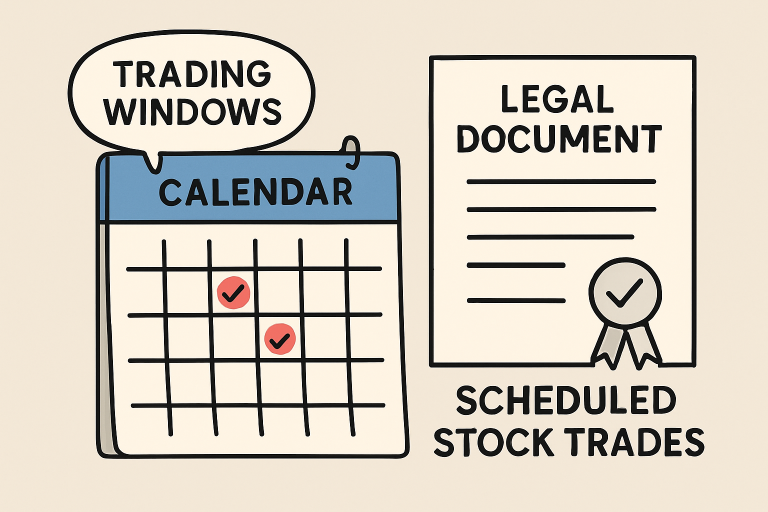
Introduction to Rule 10b5-1 Trading Plans
Navigating insider trading regulations is a critical responsibility for corporate insiders and executives. The SEC’s Rule 10b5-1, established in 2000, was designed to provide executives with a legal avenue to trade company stock without the risk of being accused of insider trading—so long as the trades are set up in advance according to predetermined criteria. 10b5-1 trading plans are structured to allow such scheduling, helping insiders demonstrate that trades were not influenced by material nonpublic information (MNPI) at the time of plan adoption.
These plans are increasingly important given today’s volatile market environment and the heightened scrutiny surrounding executive stock sales. As regulatory scrutiny increases, having a robust 10b5-1 plan is not just a good idea—it’s essential for maintaining transparency, supporting effective compliance, and protecting both the individual and the corporation.
By leaning on these predetermined schedules, corporate officers can focus on running the business, secure in the knowledge that their trades are insulated from legal risk, so long as the rules are strictly followed. This blend of rigor and flexibility is why so many companies encourage key personnel to use 10b5-1 plans as a core tool for insider trading risk management.
For those new to this topic or seeking to understand the nuances of regulatory compliance in executive trading, this guide clarifies the structure of 10b5-1 plans, highlights key recent changes, and offers practical implementation tips.
Recent Regulatory Changes and Their Implications
In December 2022, the Securities and Exchange Commission made significant amendments to Rule 10b5-1 to address potential abuses and increase investor confidence. Some of the most notable changes include:
- Cooling-Off Periods: Directors and officers who establish a 10b5-1 plan must now wait a specified period before the plan’s first trade can be executed. This cooling-off period, commonly 90 to 120 days, is meant to ensure that trades are not coordinated on the basis of inside information.
- Restrictions on Multiple and Overlapping Plans: Executives are now restricted from using multiple, overlapping 10b5-1 plans or single-trade plans, practices that previously enabled potential manipulation of trade timing and volume.
- Enhanced Public Disclosure: Companies must provide more detailed disclosures in their quarterly reports to the SEC about insiders’ adoption, modification, or termination of 10b5-1 plans, thereby boosting transparency for investors and market participants.
These reforms are designed to close loopholes and elevate market integrity. Executives and companies alike need to adapt quickly to these amendments in order to avoid unwanted regulatory attention or reputational damage. For an in-depth breakdown of these SEC rule changes, see this SEC press release. Overall, the updated Rule 10b5-1 requirements underscore the SEC’s broader push for greater transparency, accountability, and investor protection. Staying informed and aligning internal trading policies with these reforms can help organizations maintain compliance while reinforcing trust with shareholders and the broader market.
Best Practices for Implementing 10b5-1 Plans
To ensure both full regulatory compliance and the credibility of insider trading defenses, executives should adhere to the following best practices for designing and managing their 10b5-1 trading plans:
- Establish Plans Only During Open Trading Windows: Initiate or modify plans when you do not possess MNPI, ideally during company-authorized open trading periods. This supports the plan’s good-faith nature.
- Respect the Required Cooling-Off Period: Never execute trades until the mandatory cooling-off period has elapsed. Any deviation can undermine the plan and raise red flags with regulators.
- Avoid Overlapping Plans: Limit yourself to one active 10b5-1 plan to avoid the appearance of gaming the system and to align with new restrictions.
- Maintain Detailed Records and Approvals: Document the rationale, approval process, and dates of plan adoption, modification, or termination. These records will be essential if the plan’s legitimacy is ever called into question.
- Conduct Regular Reviews: Revisit your plans periodically with legal counsel and compliance teams to ensure ongoing alignment with current laws and your company’s policies.
Many experts recommend a proactive approach to plan management, including regular training sessions and audits, to help prevent unintended violations.
Conclusion
For corporate executives and insiders, 10b5-1 trading plans are indispensable tools for lawful participation in equity markets. As regulatory expectations and enforcement intensify, careful adherence to best practices—matched with rigorous disclosure and diligent plan maintenance—forms the foundation for effective compliance. Remaining informed, seeking regular legal counsel, and following the latest guidance from agencies like the SEC will help executives safeguard their interests and uphold corporate integrity for long-term trust with stakeholders.

Why Modern Homeowners are Moving Away from Manual Pool Maintenance

6 Best Movies for Travel Lovers